How David Truly Defeated Goliath the Giant
Before the stone left David's sling, something older and stranger had already struck Goliath. The giant felt it the moment David walked toward him.
Table of Contents
 Click for full size
What Goliath Felt Before the Stone Was Released
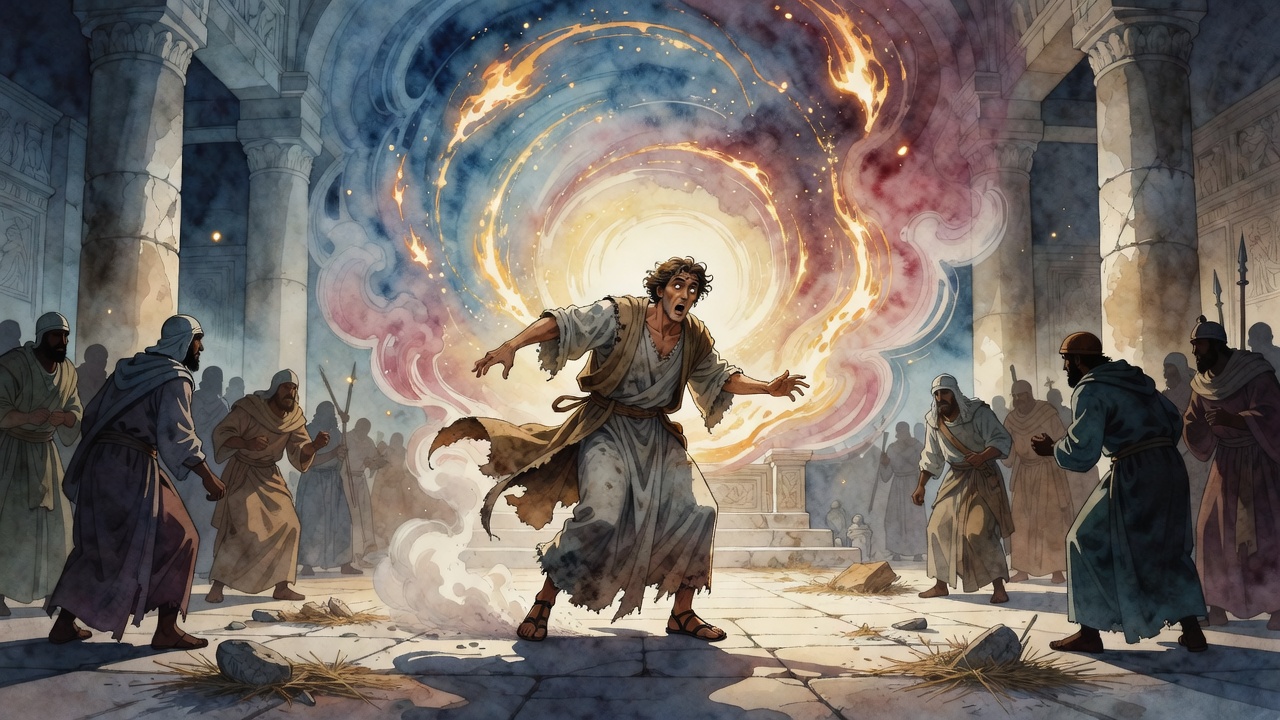
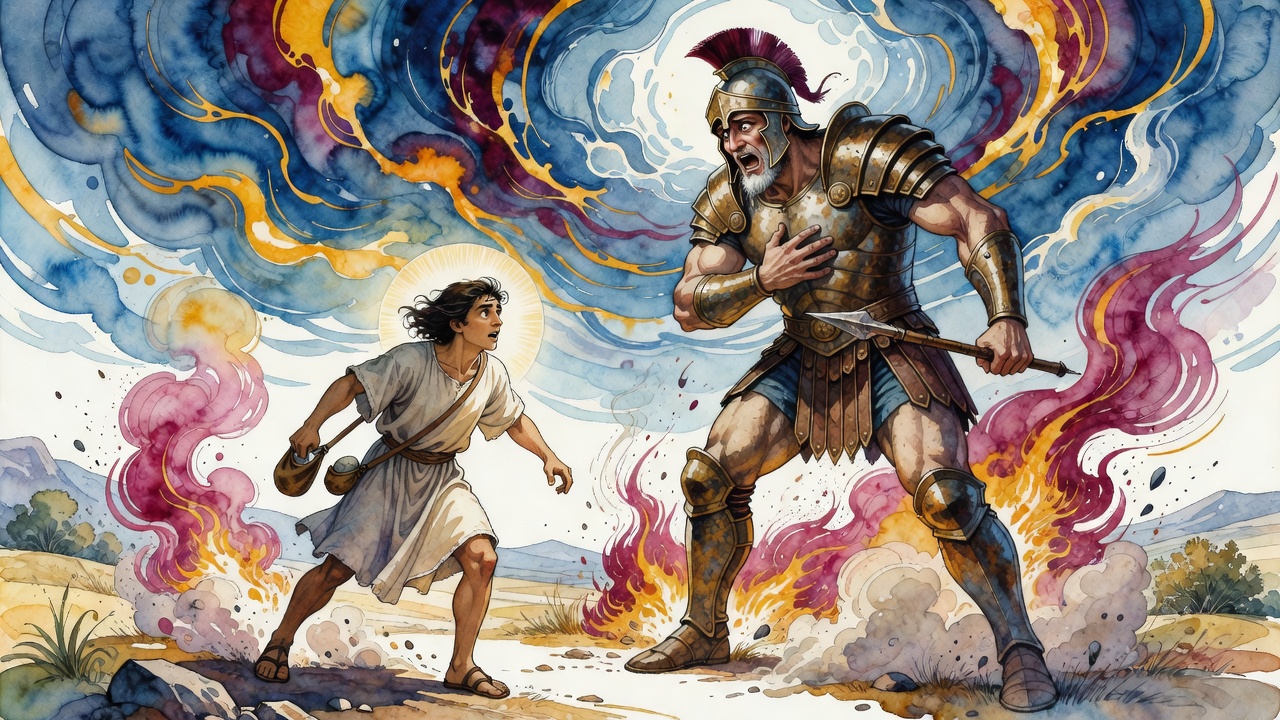
The moment David began his approach across the valley, Goliath felt something that no weapon in the Philistine arsenal could have prepared him for. Not fear exactly, the tradition is careful about this, but a force emanating from the young shepherd that struck the giant like a concentrated beam of spiritual pressure. The tradition calls it the evil eye, and in Jewish understanding, that phrase names something real.
In the world preserved in the Talmud Bavli and the aggadic midrashim, the evil eye is not folklore. It is the measurable weight of a gaze backed by extraordinary inner force. David's gaze, focused with the full intensity of faith and mission, was enough. Goliath was seized with leprosy before the first stone flew. His body, which had terrified two armies for forty days, was already compromised by the time the sling began to turn.
The Stone That Sought Its Target
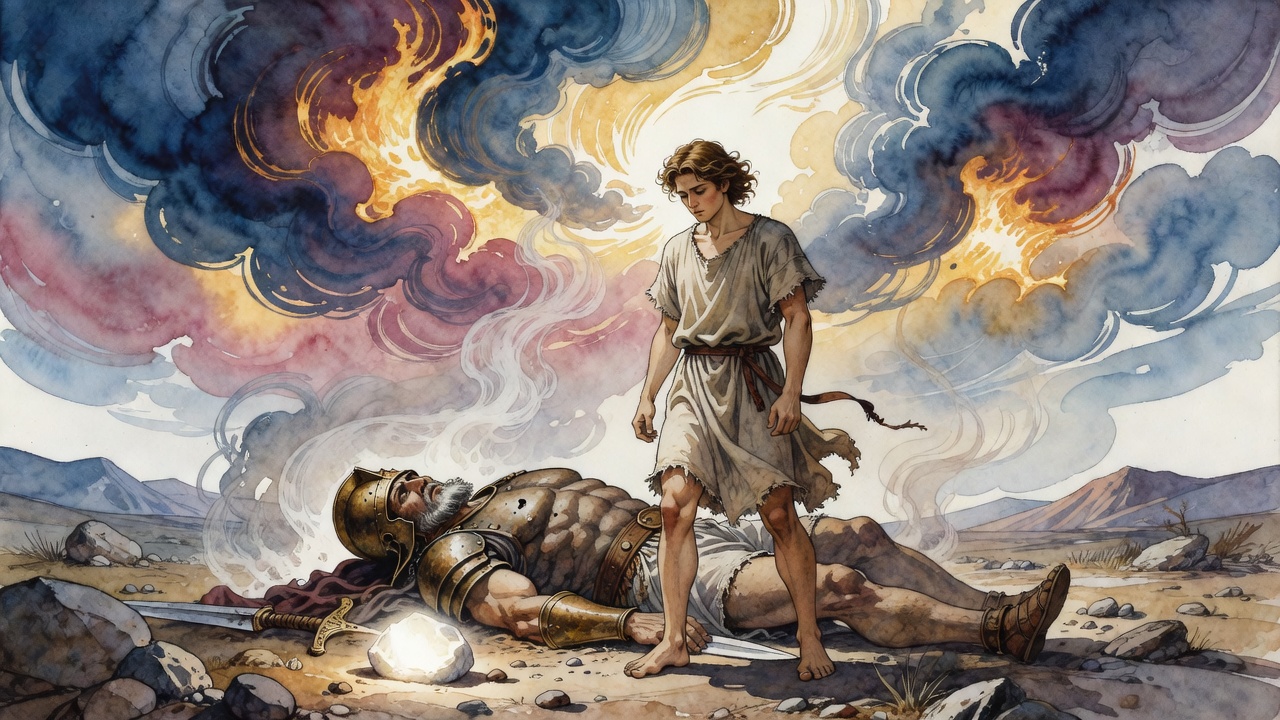
The five smooth stones David took from the streambed were not chosen randomly. The tradition records a dispute between the stones themselves, each one arguing to be the one that would bring down the enemy of Israel. God resolved the argument by merging them: all five fused into one, and that single stone carried the combined virtue of all five as it left the sling.
The stone did not strike Goliath in the forehead by accident or by the physics of a well-aimed throw. It passed through his armor. The bronze helmet, the plates and scales that had been part of Goliath's invulnerability, offered no resistance to a projectile that was not simply moving through space but was moving toward a destination that had been appointed before the battle began. The stone entered and the giant fell, not because David was an exceptional shot, but because the universe had arranged for it to happen and David had simply agreed to show up.
The Name on the Sword
When Goliath was down, David drew the giant's own sword to take the head. This detail matters in the tradition because of whose sword it was. Goliath had been carrying, according to the aggadic sources, a weapon of immense symbolic significance. He was a descendant of Orpah, Ruth's sister who turned back from Naomi at the crossroads, and the sword he carried was connected to the violence that had tracked his lineage since that departure.
The grandson of Ruth defeated the grandson of Orpah. The two sisters, two choices, two paths taken at the same junction in Moab, had produced consequences that converged on this valley. David did not merely kill a dangerous soldier. He resolved something that had been unresolved since the moment two women stood at a road's edge and chose different directions.
What the Psalms Told the Army
David went into that valley reciting. The tradition records that he uttered a psalm as he walked, not to steady his nerves but because the psalm was part of the weapon. Words directed toward God have force in this understanding of how the world works, and David, who would eventually compose a hundred and fifty of them, was not separating his fighting from his prayer. They were the same thing.
This is part of what the tradition means when it calls David a man after God's own heart. Not sinless, not perfect, not uncomplicated. But someone who understood that his actions and his relationship with God were not two separate tracks. When he walked toward Goliath, he was doing both at once.
← All myths