Three Angels Visited Abraham and None Could Do Two Jobs
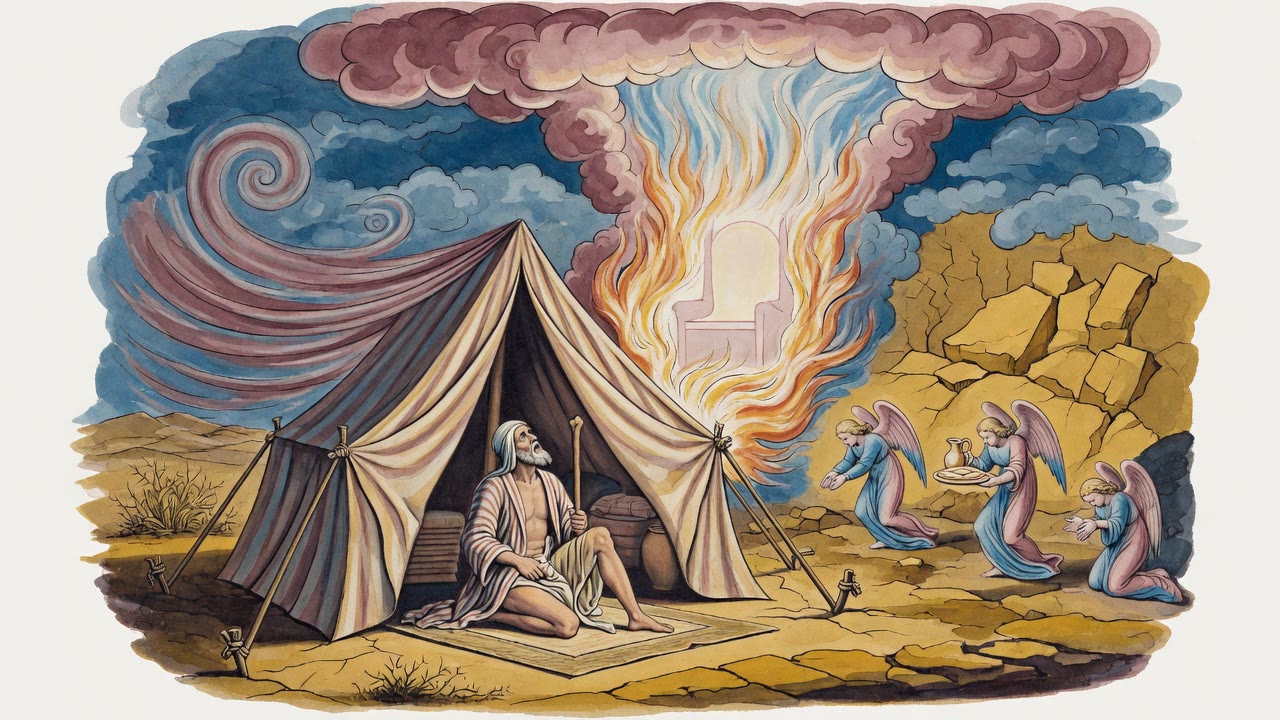
Three men appeared at Abraham's tent. The Aramaic tradition says each was an angel sent for one task, because no divine messenger can carry two missions.
Table of Contents
 Click for full size
Three Strangers at the Tent Door
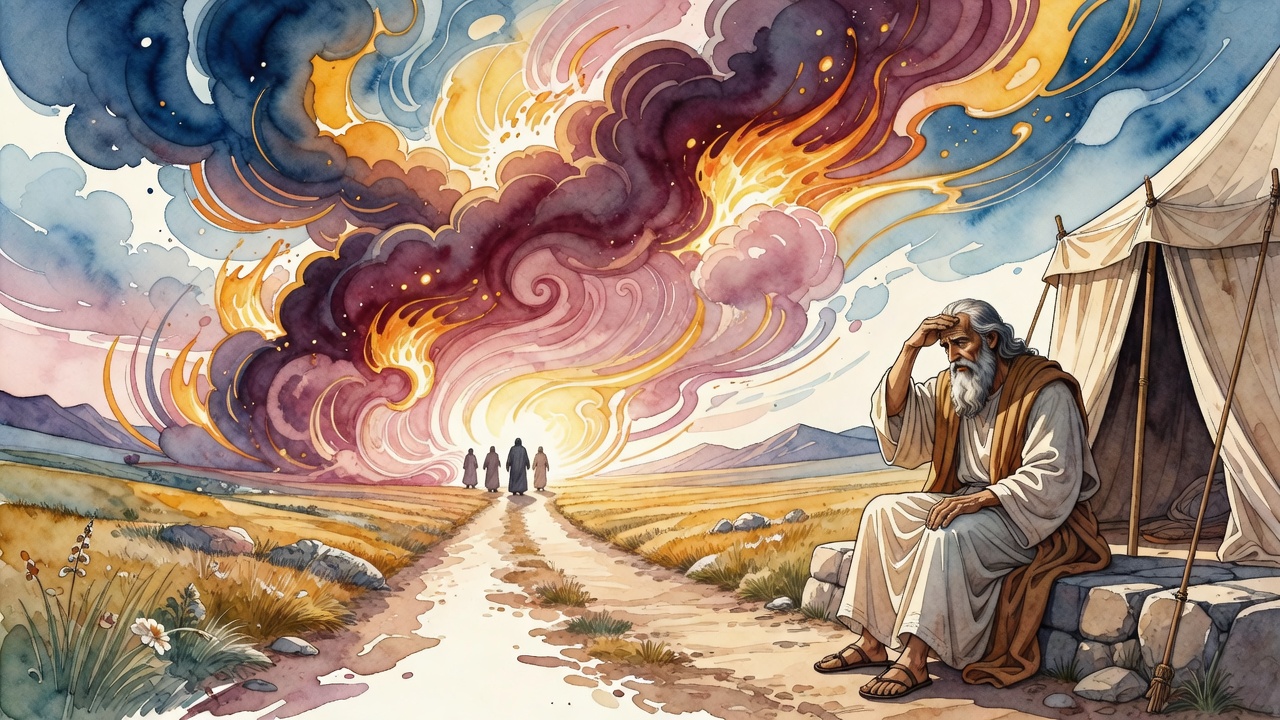
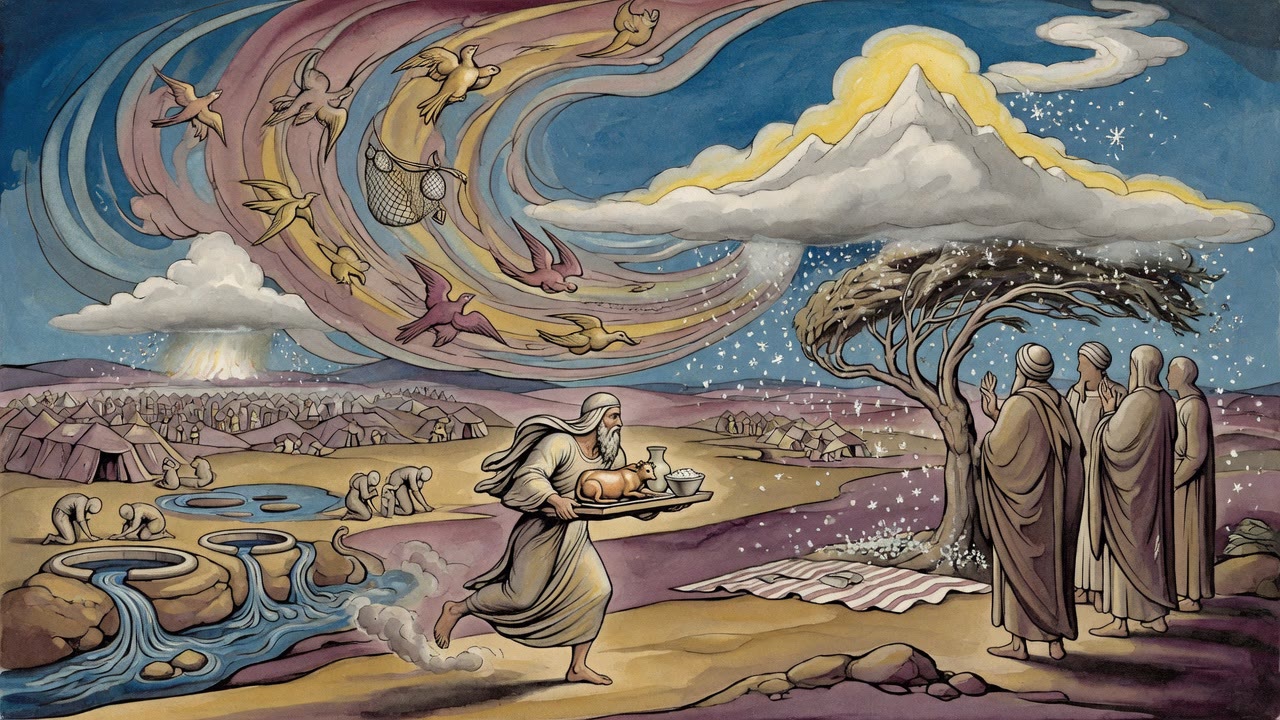
The three strangers appear at Abraham's tent in the heat of the day, and the Hebrew text calls them anashim, men. Abraham runs to meet them, bows to the ground, prepares a feast, and stands while they eat under the tree. Then one of them announces that Sarah will have a son within the year, and Sarah laughs from inside the tent. Afterward, two of them leave for Sodom, and the third remains to argue with Abraham about the fate of the city.
The Hebrew text does not name the visitors or explain why there are three of them. Targum Jonathan on Genesis 18, composed in the land of Israel between the 4th and 7th centuries CE, names them and explains the number: one came to announce Isaac's birth, one came to rescue Lot, one came to destroy Sodom. Three missions. Three messengers. And the reason three were needed, the Targum states explicitly, is that "it is not possible for a ministering angel to be sent for more than one purpose at a time."
The One-Angel-One-Mission Principle
This rule does not appear in the Hebrew text of Genesis. It comes from rabbinic theology, and the Targum embeds it directly into the narrative. The principle holds that divine messengers are functionally specialized. An angel carrying news of a birth cannot simultaneously carry an order of destruction. The two missions require different qualities of divine intention, and they cannot be combined in a single vehicle.
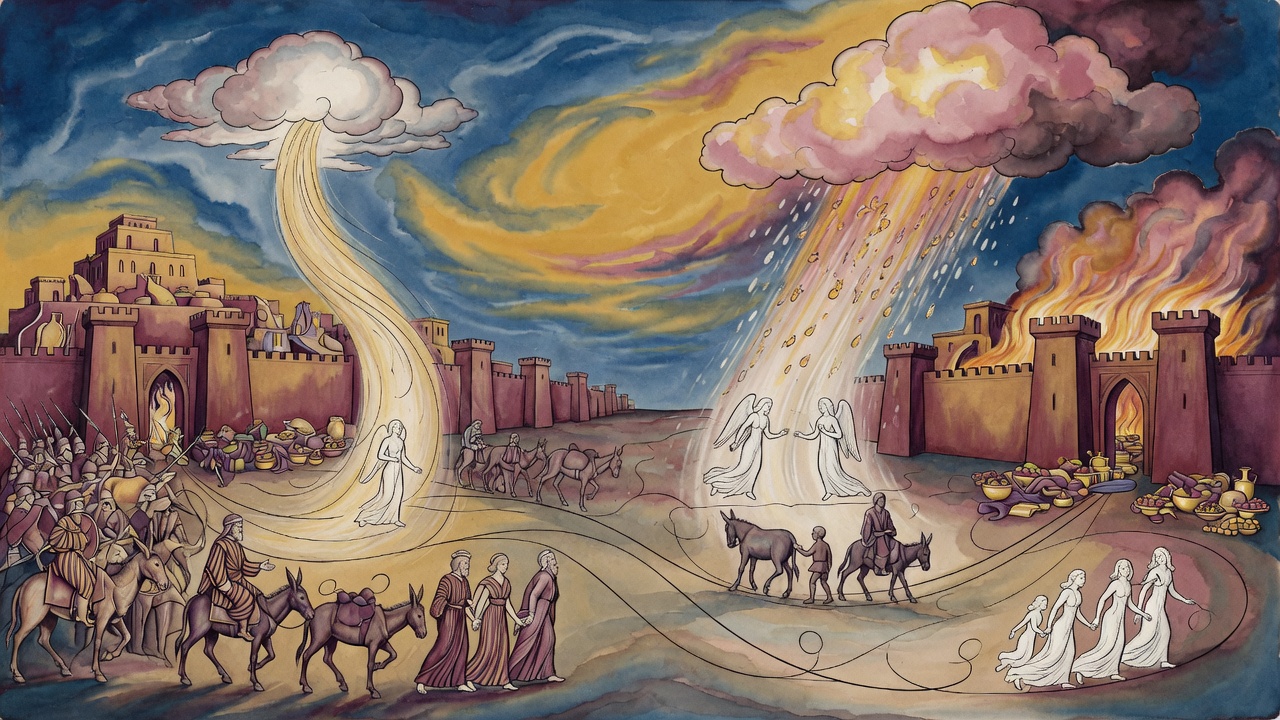
Bereshit Rabbah 50, the midrashic compilation on Genesis assembled in Roman Palestine around the fifth century CE, examines this principle from the opposite direction: it asks why Genesis 19 says "the two angels came to Sodom" rather than one. If one angel came to rescue and one to destroy, why are two in Sodom rather than each going separately? The answer the midrash gives is a careful sequence. Michael arrived at Abraham's tent first, announced the birth, and departed. Gabriel was then dispatched to Sodom with the destruction mandate. Raphael, who had healed Abraham after his circumcision, was released after completing that mission and redirected to save Lot.
The principle was not merely that one angel cannot do two things simultaneously. It was that different missions require different angels, chosen for their fitness for that particular task.
What This Says About Divine Action
The theological weight of the one-mission principle is easy to miss unless you hold both ends of it at once. On one side, it describes a God who acts with precise intention, distinguishing mercy from judgment so completely that the same messenger cannot carry both. The announcement of Isaac's birth and the destruction of Sodom are not two phases of the same divine operation. They are separate acts, each requiring its own commissioned agent.
On the other side, it describes a world in which divine action reaches humans through differentiated channels. Mercy arrives through one form. Judgment arrives through another. Abraham could receive both at his table because they came separately. He heard the announcement of his son's birth, and later he stood and argued for Sodom with the same God whose messengers would shortly destroy it. The separation of missions made that argument possible.
The Baal HaSulam, the 20th-century Kabbalist Rabbi Yehuda Leib Ashlag who authored the Sulam commentary on the Zohar, wrote in his Introduction to the Zohar about how each person is a particular configuration of different desires, a unique combination of pulls toward self, toward others, and toward something beyond both. The one-angel-one-mission principle points at the same kind of differentiation in the divine structure: each attribute, each mode of divine action, operates through its own dedicated channel rather than through a single undifferentiated flow.
Michael's Departure and the Timing of the Rescue
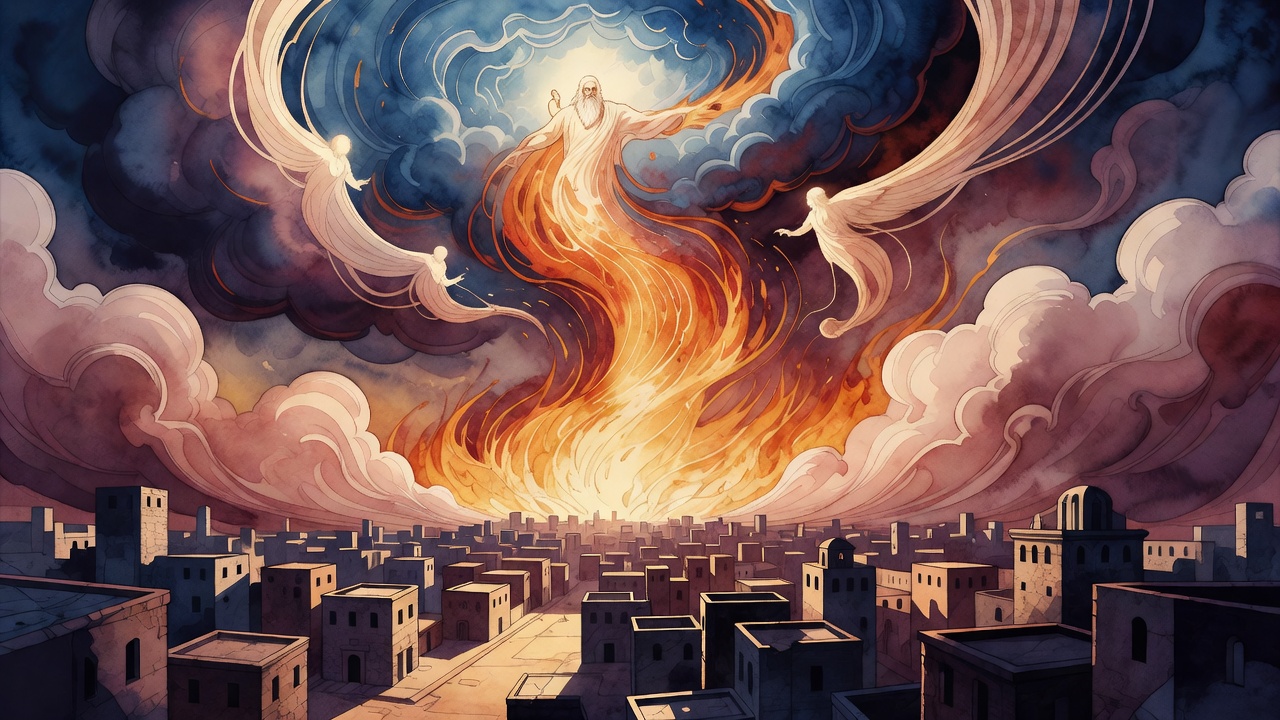
The sequence in Genesis 19:1 specifies that the two angels arrived at Sodom at evening. Bereshit Rabbah explains why only two: Michael had finished his mission at Abraham's tent and left. The two remaining were Gabriel, carrying the destruction order, and Raphael, carrying the rescue mandate for Lot. They arrived together because they had overlapping but not identical targets. Sodom would be destroyed. Lot would be saved. Two missions, two angels, simultaneous arrival.
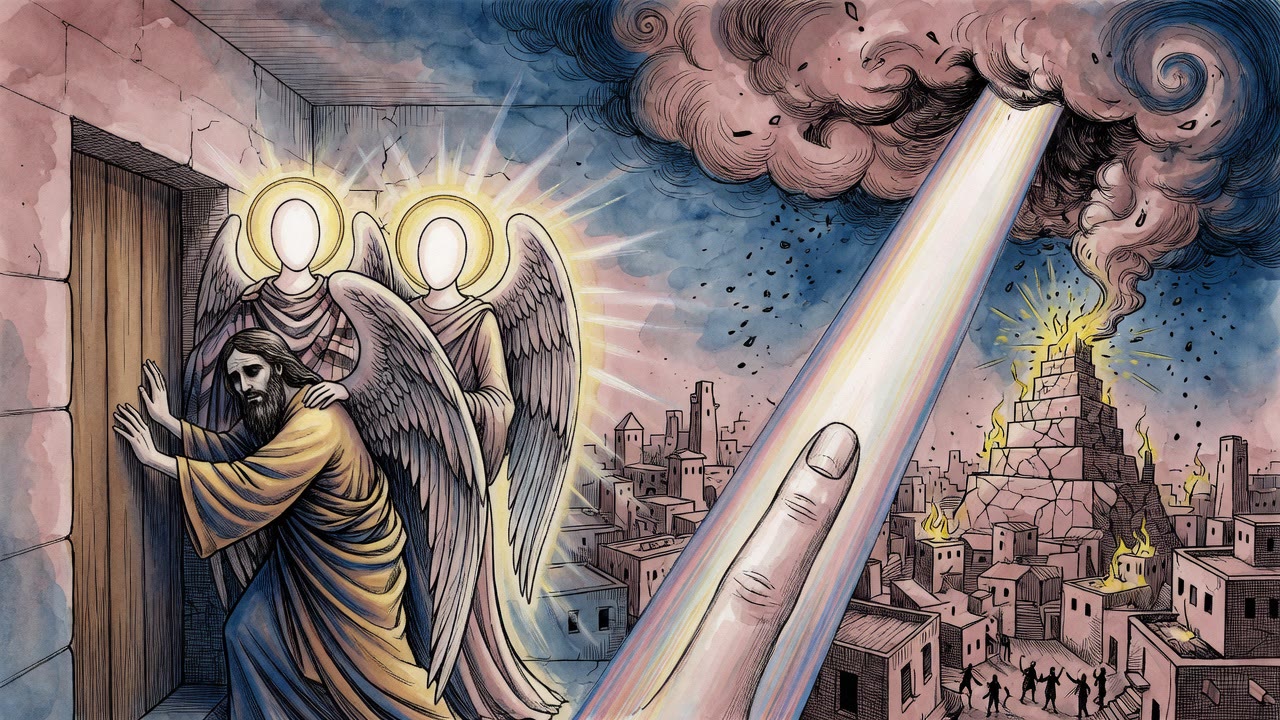
Lot's own hesitation at leaving, his repeated pauses and the angels physically seizing his hand to pull him out, is the Book of Jubilees and Bereshit Rabbah's jointly preserved detail: he was calculating the loss of his wealth even as the city around him was about to cease to exist. The rescue angel had a time limit imposed by the destruction angel's mandate. The two missions were independent but synchronized, and the synchronization required managing a man who kept stopping to think about his silver and gold while his house was about to dissolve.
← All myths