The Angel Demanded Justice for the Donkey
After Balaam's eyes were opened, the angel asked about the donkey first, not the curse. The answer reveals what God will do for an entire people.
Table of Contents
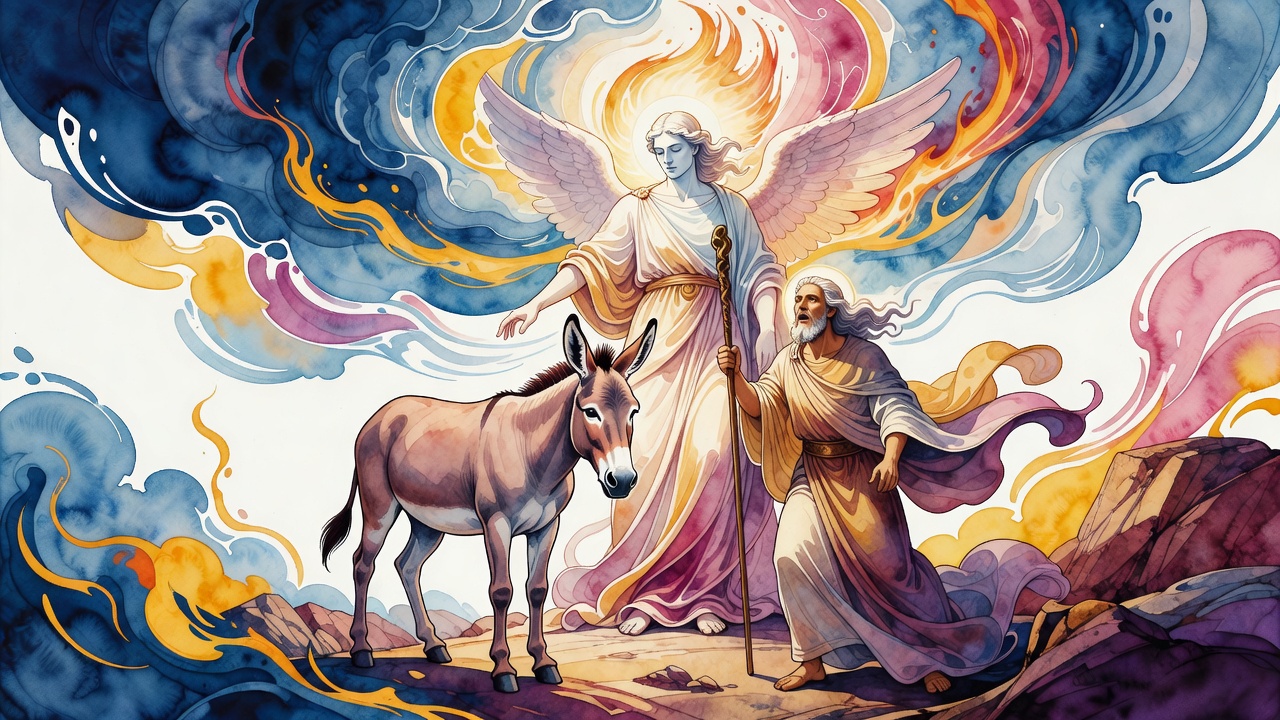
The angel had a sword in his hand and a complaint about the donkey.
 Click for full size
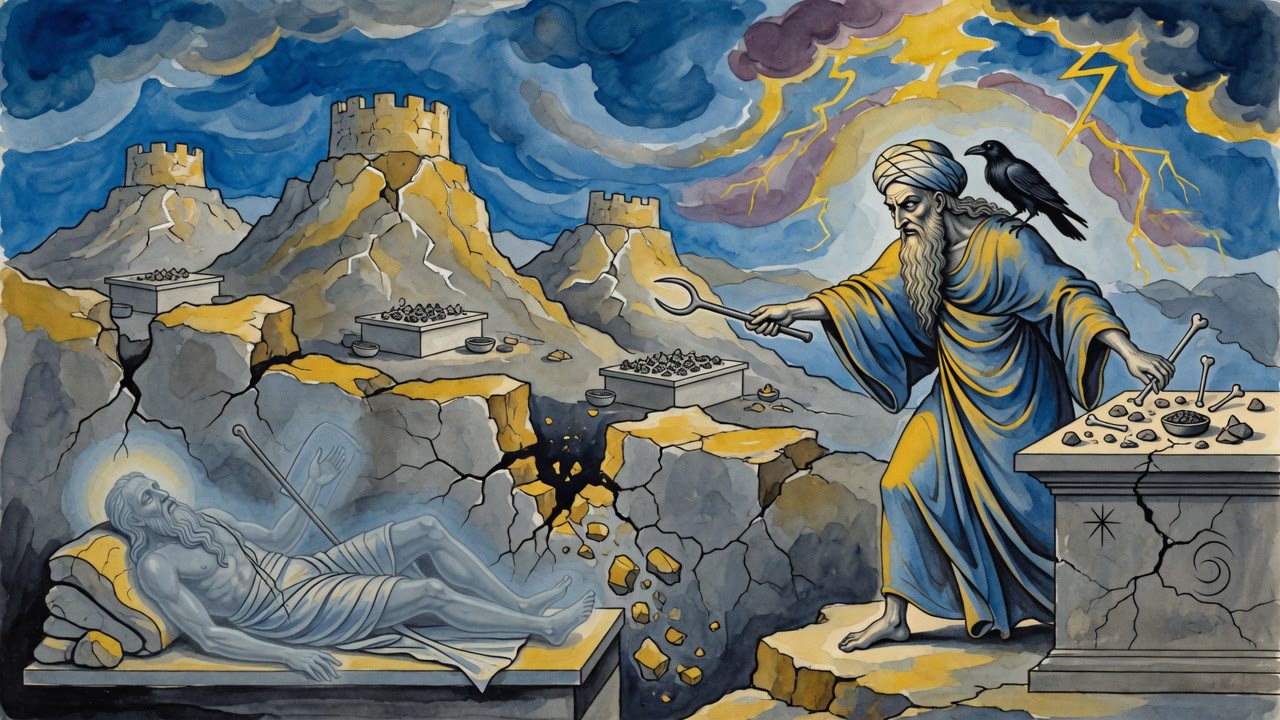
When God finally uncovered Balaam's eyes and the angel came into view, Balaam bowed his face to the ground. The angel did not congratulate him on recognizing what had been invisible to him. Instead, he began an accounting that had nothing to do with kings or curses or the purpose of the journey. He wanted to know about the beatings. "Why did you strike your she-ass these three times?" (Numbers 22:32). The question was on behalf of the donkey. And then the angel made the logic explicit.
The Angel Speaks for the Donkey
Midrash Tanchuma, Balak 10, compiled in its present form by the fifth century CE, places the full argument in the angel's speech: "For the she-ass, which has neither its own merit nor merit from ancestors, I have been commanded to seek satisfaction from your hand. How much the more so for an entire people that you have come to uproot."
The argument moves from smaller to larger by the standard rabbinic principle of kal va-homer, an inference from a lighter case to a weightier one. The donkey had no accumulated merit. She had no ancestors whose righteous deeds could stand in the heavenly court on her behalf. She was an animal, serviceable and voiceless, with nothing to recommend her except that she had been beaten for seeing what Balaam could not. And God sent an angel to seek satisfaction for her. If that is what God does for a donkey, what will He do for Israel, a people with centuries of covenant, patriarchal merit, and an oath sealed in blood at Sinai?
Three Blockades for Three Patriarchs
The Tanchuma had already explained why the angel blocked Balaam's path three times rather than once. Each position corresponded to one of the patriarchs. The first blockade, on a road with open space on both sides, represented the children of Abraham: if Balaam wished to curse them, he would find the children of Ishmael and Keturah flanking them on either side and providing cover. The second blockade, in a narrow place with walls on both sides, represented the children of Isaac: Esau on one side, the nations descended from Isaac on the other. The third blockade, where there was no room to turn left or right, represented the children of Jacob: the twelve tribes surrounding them completely, no flanking move available, no angle of approach.
Three patriarchs. Three positions. Three beatings. The angel had been placed there as a comprehensive barrier, not a single warning, and each position was a statement about what stood behind Israel's protection.
What Balaam Hid From the Messengers
The Legends of the Jews, Louis Ginzberg's synthesis of Jewish folk tradition published between 1909 and 1938, records how Balaam handled the initial divine refusal before the journey even began. He did not tell Balak's messengers what God had actually said. Instead he told them something more palatable: "God said to go not with these men, because that would be beneath your dignity, but wait for nobler ambassadors." The refusal was real. The spin was Balaam's invention.
This is the consistent portrait the tradition paints of Balaam: a man of genuine power and genuine dishonesty, able to receive divine communication accurately and transmit it inaccurately. He could hear God. He could not resist the temptation to reshape what he heard when the message was inconvenient.
The Eye That Was Not Under His Control
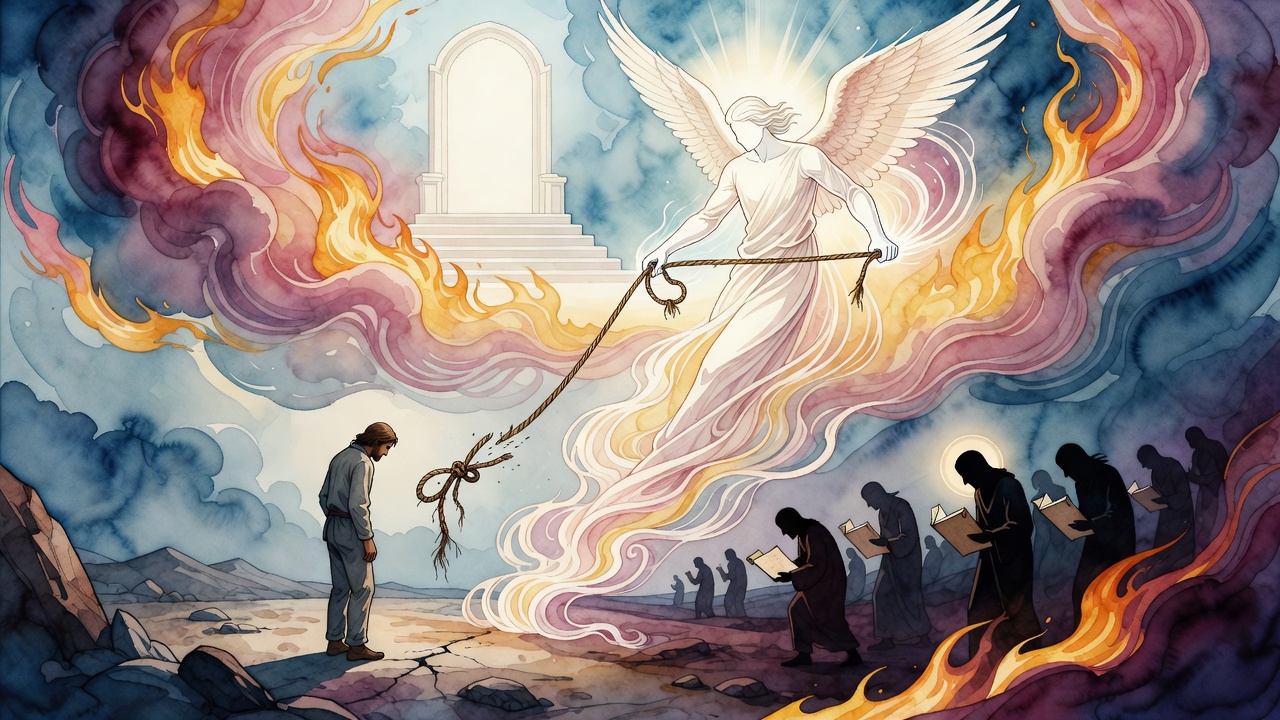
Midrash Tanchuma, Balak 10, makes one more observation before the angel delivers his verdict. The verse says God uncovered Balaam's eyes. The Tanchuma asks: was he blind? The answer: the phrasing is there to teach that even the eye is not under a person's control. Balaam, who could see spiritual realities others could not see, who had prophetic vision so precise that the nations sent for him across great distances, could not see the angel blocking his own path. God had closed what Balaam thought he owned. He controlled neither his eyes nor his mouth. His gifts were not his possessions.
← All myths