The Night Jupiter Blazed for Abraham in Battle
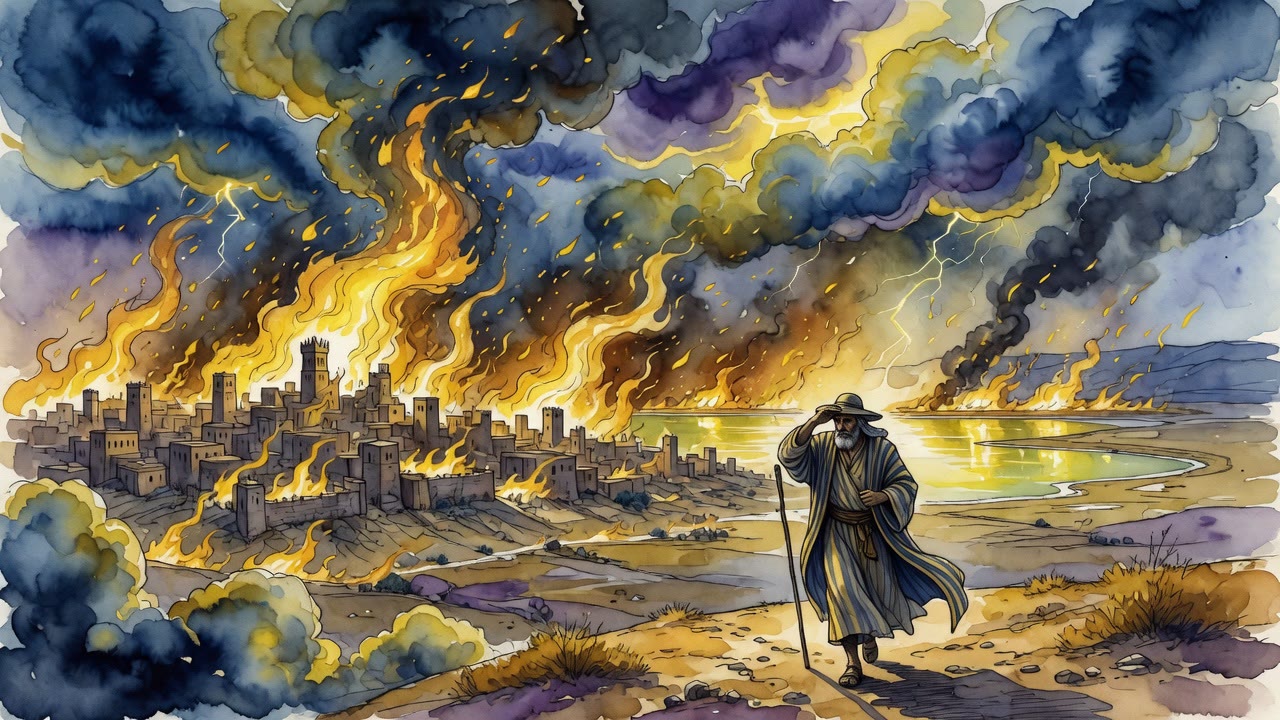
Lot was taken with Sodom's spoils. Abraham rode that night with 318 men. Overhead a planet burned like a torch over the valley.
Table of Contents
The servant Unic ran until he found Abraham. Sodom had fallen. The four kings had taken the city and the goods and Lot with them.
 Click for full size
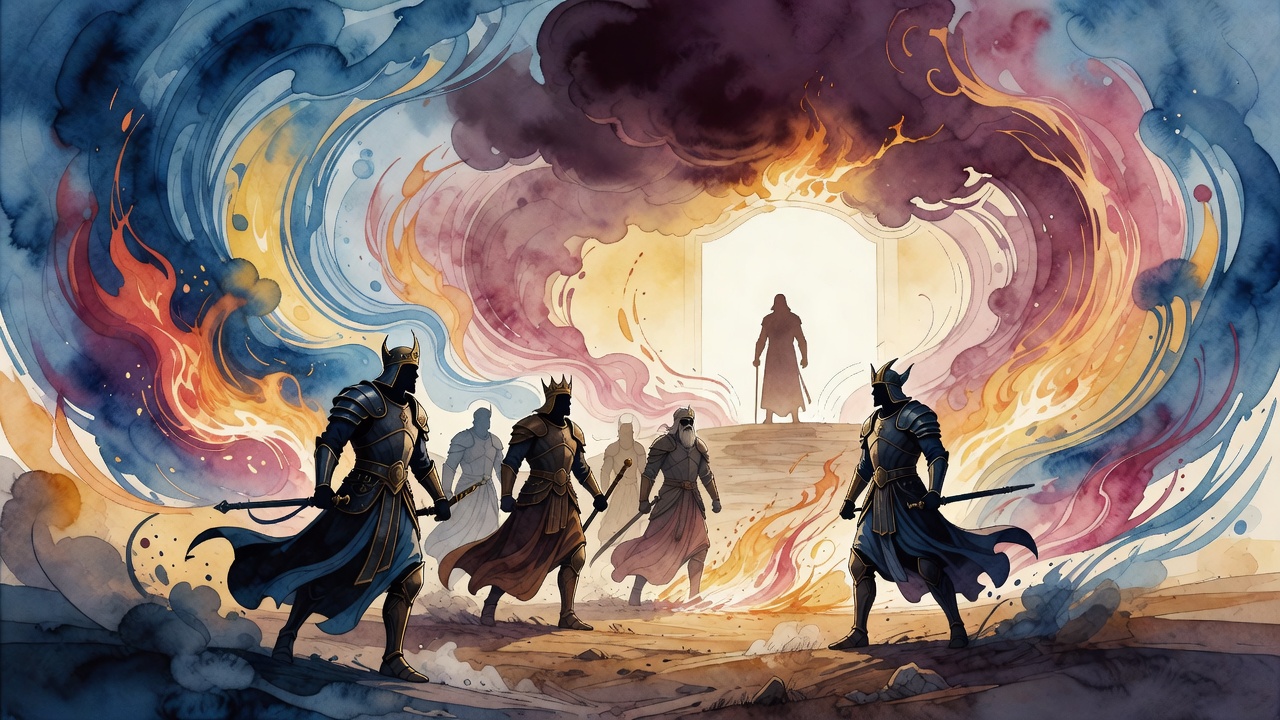
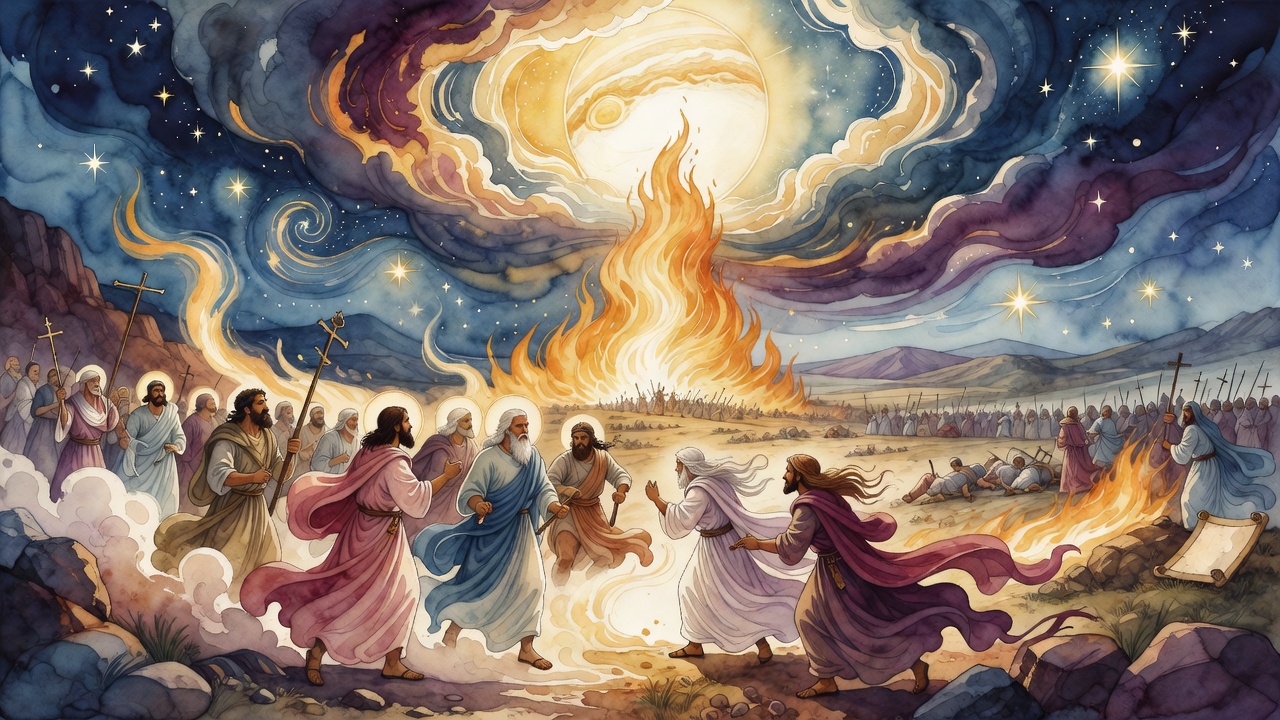
Abraham did not sit with the news. He called three hundred and eighteen trained men and rode out that night toward an army of eight hundred thousand.
Lot Had Already Left Him
Lot had parted from Abraham before any king marched. The split grieved Abraham in his heart. He had no children. Lot was his brother's son, the nearest thing to a household that would outlive him, and Lot had chosen Sodom, where the men were sinners exceedingly.
In the year Lot was taken, God told Abraham to lift his eyes north and south and west and east. All the land he saw would go to his seed. His seed would be as the sand of the sea. Abraham still had no child in the tent. He had a nephew in chains, and a night in front of him.
He rode because he could not do otherwise. The promise sat over empty ground. Lot was the blood he could still reach.
Eight Hundred Thousand in the Valley
Chedorlaomer, king of Elam, had gathered his allies after thirteen years of rebellion: Nimrod of Shinar, Tidal of Goyim, Arioch of Elasar. They marched about eight hundred thousand strong against Sodom, Gomorrah, Admah, Zeboyim, and Zoar. The five kings met them in the valley of Siddim, a floor full of slime pits. The five lost. Lot was swept up with the spoils.
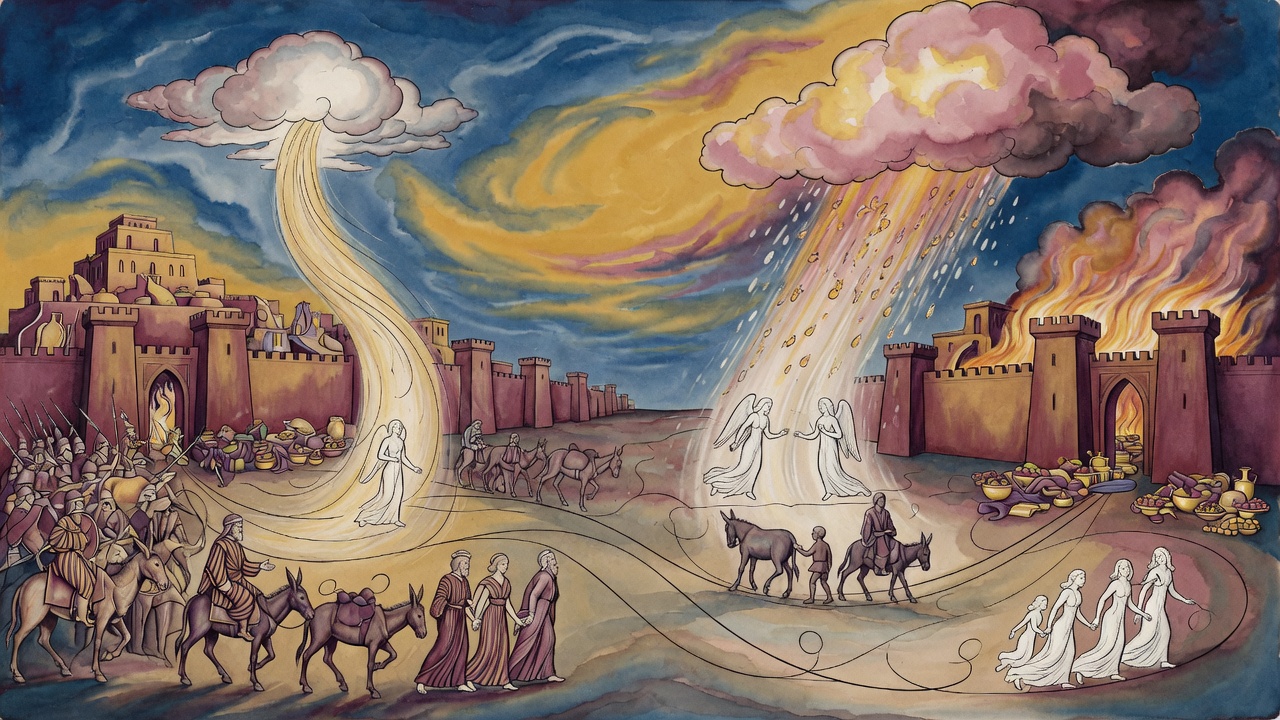
Abraham overtook the four kings that night. His three hundred and eighteen were a household, not a host. The four kings fled. Bera, king of Sodom, crawled out of a slime pit and lived. Abraham turned back through the same valley with Lot and the recovered goods.
The disproportion was not a secret. Anyone watching the field could count.
Jupiter Lit the Valley
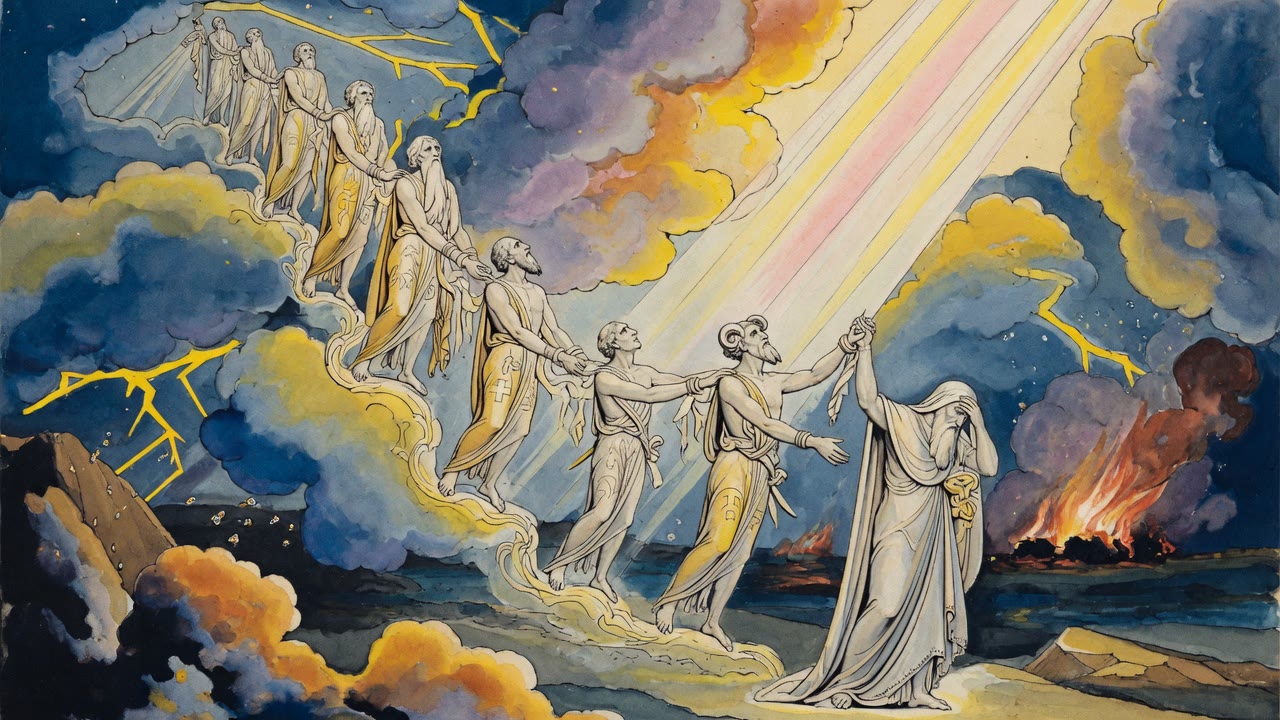
The planet Jupiter blazed through the night sky and turned the dark into a working light. An angel named Lailah, the angel of the night, fought alongside Abraham. The heavens had taken a side. Abraham still had to ride. The star still had to burn. The victory belonged to both, and the surrounding nations drew the only conclusion they had language for.
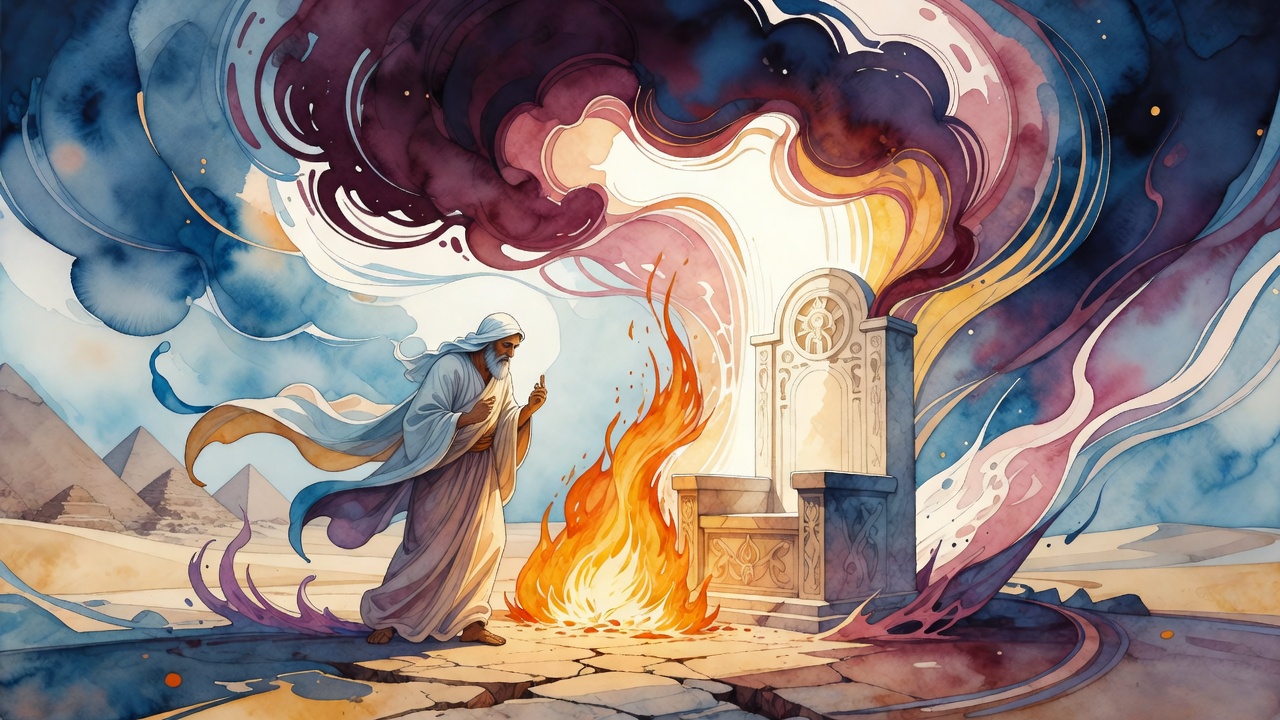
They built a throne on the battlefield. They surrounded him with proclamations. "You are our king. You are our prince. You are our god."
The wood of that seat was still warm from the work of setting it up. Abraham looked at it and refused. "The universe has its King," he said. "The universe has its God."
They Built Him a Throne on the Field
He would not sit. He would not take a crown the night had not asked him to wear. He returned every scrap of property to its owners and walked away from the field with Lot. He kept the children. Not as slaves. He raised them in the knowledge of God, so that a generation taken in a raid would learn the Name the four kings had not feared.
Nimrod had marched in that host. The same Nimrod of Shinar whose name already sat on Abraham's earlier life. He fled with the other three kings. The night that lit the valley did not need to name the old quarrel. A planet burning over Siddim was enough. The man who had once wanted Abraham dead left the field in the dark the star had broken.
Bread and Wine From Shem
On the way back a priest came to meet him. His name was Adonizedek, king of Jerusalem. The old name under that crown was Shem, Noah's son. He brought bread and wine. He blessed Abraham in the name of God Most High, maker of heaven and earth. Abraham gave him a tenth of everything he had taken.
Bera, out of the pits, offered Abraham the recovered goods if he would only return the people. Abraham refused. He would not let the king of Sodom say he had made Abraham rich. He had Lot. He had the children he would teach. He had a blessing spoken over bread and wine in a valley that still smelled of pitch.
The throne stood empty behind him. Jupiter went on in its course. Lailah, whose work is the night, had already done hers. Abraham walked home under a sky that had taken his side and a priesthood older than the war, and he would not be anyone's god.
← All myths