A King Went Blind the Night He Imprisoned Daniel
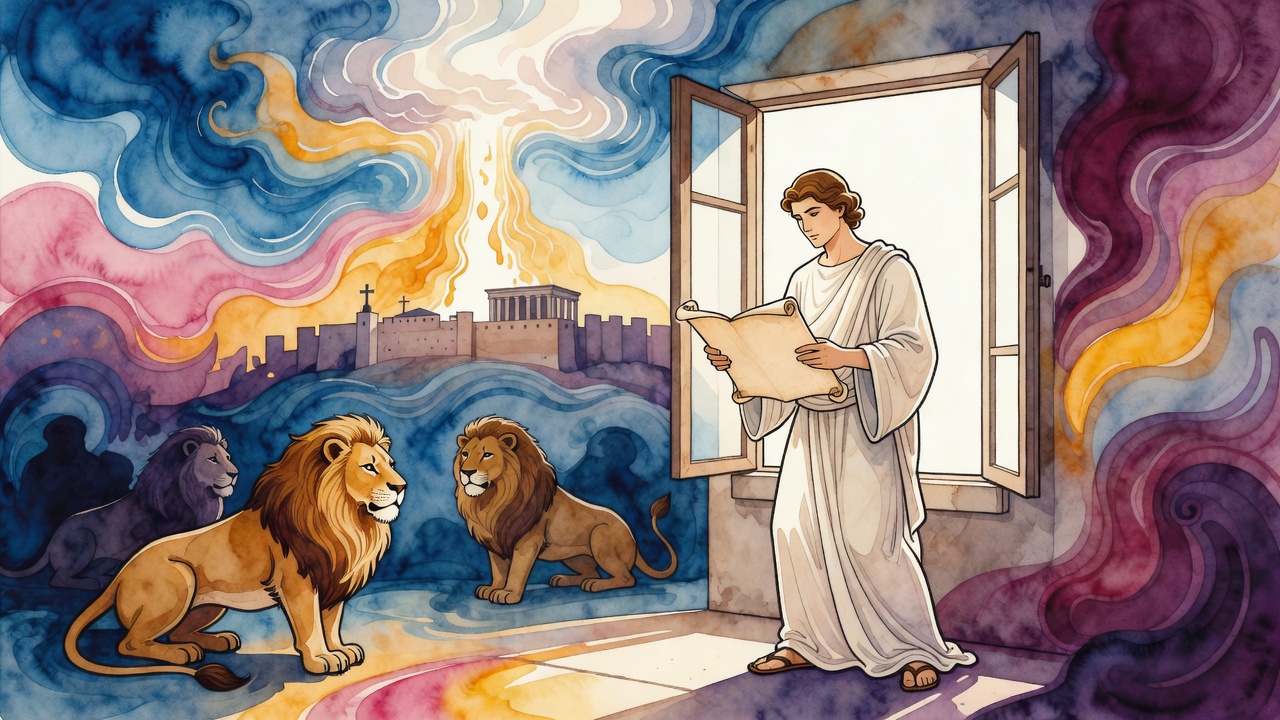
The Temple vessels were gone from the palace stores. Darius locked Daniel for the theft. Night fell, and the king could not see the lamps.
Table of Contents
The Temple vessels were gone. Darius ordered his chamberlains to search the palace stores, the treasury rooms, the locked chests carried out of Babylon years before. Nothing. What had once gleamed in the precincts of Jerusalem, the sacred garments, the consecrated objects looted and hauled across a thousand miles, had vanished without a trail. The king needed someone to blame.
 Click for full size
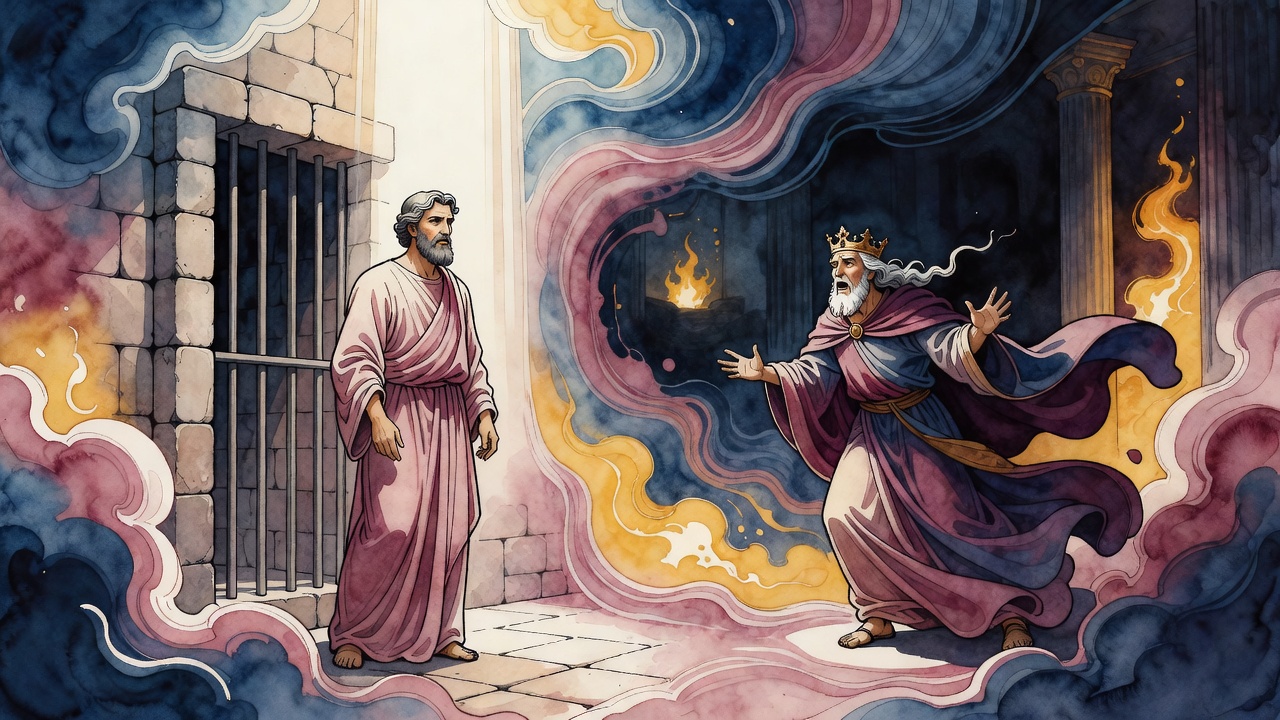
His eye settled on Daniel. The conspicuous foreigner. The man who prayed three times a day facing a ruined city. The one whose reputation for honesty made him the obvious suspect when honesty was nowhere else in the court. Darius gave the order. Daniel was locked away, accused of the theft of what Babylon had already stolen.
Night Took the King's Sight
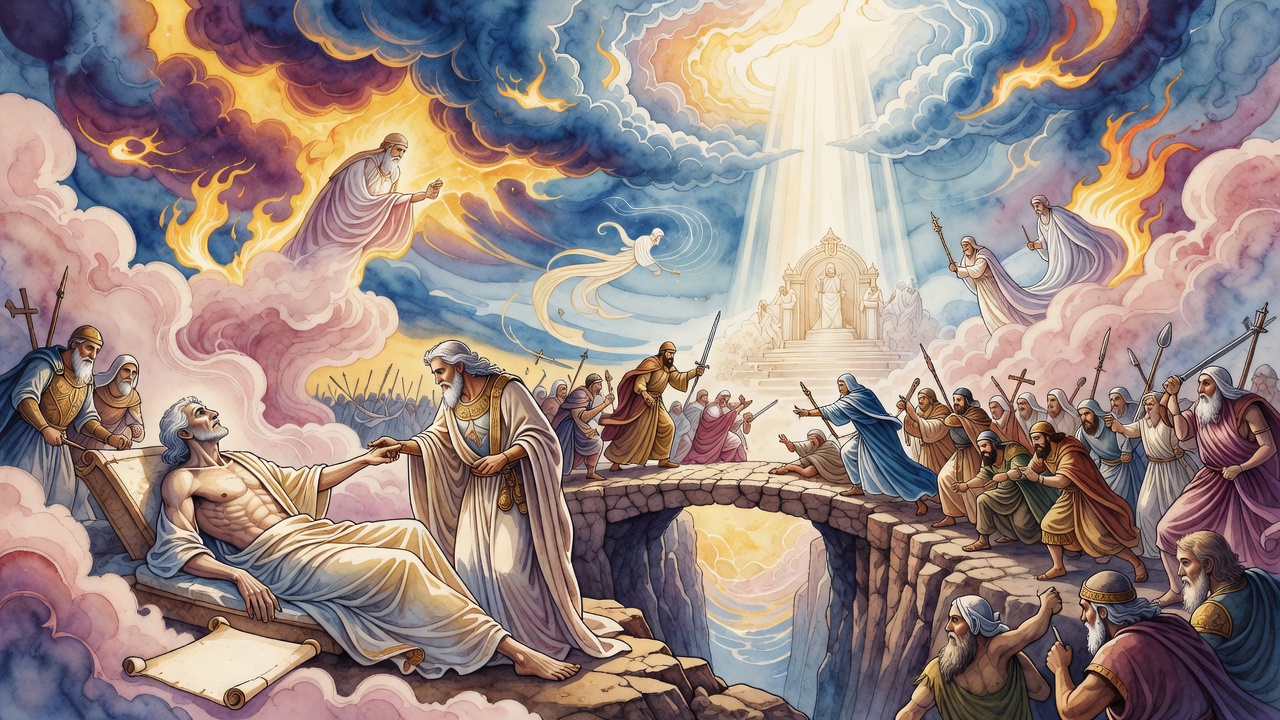
That same night an angel arrived in the king's chamber. Not to argue Daniel's case. Not to recite his virtues or demand a fair hearing. The angel came with a single act. Darius's sight was gone. Between one breath and the next, the lamps in the room became nothing, the walls became nothing, the faces of his attendants became nothing. He sat in total dark and could not explain it.
Then the angel spoke. The king held a righteous man in chains. Until Daniel himself prayed for Darius, the darkness would not lift. No decree the king could issue would restore his eyes. No physician. No ritual. No apology to whatever god the king preferred. Only Daniel. The man in the prison cell below held the king's sight in his prayers the way a creditor holds a debt.
Prayer on the Ruined Mount
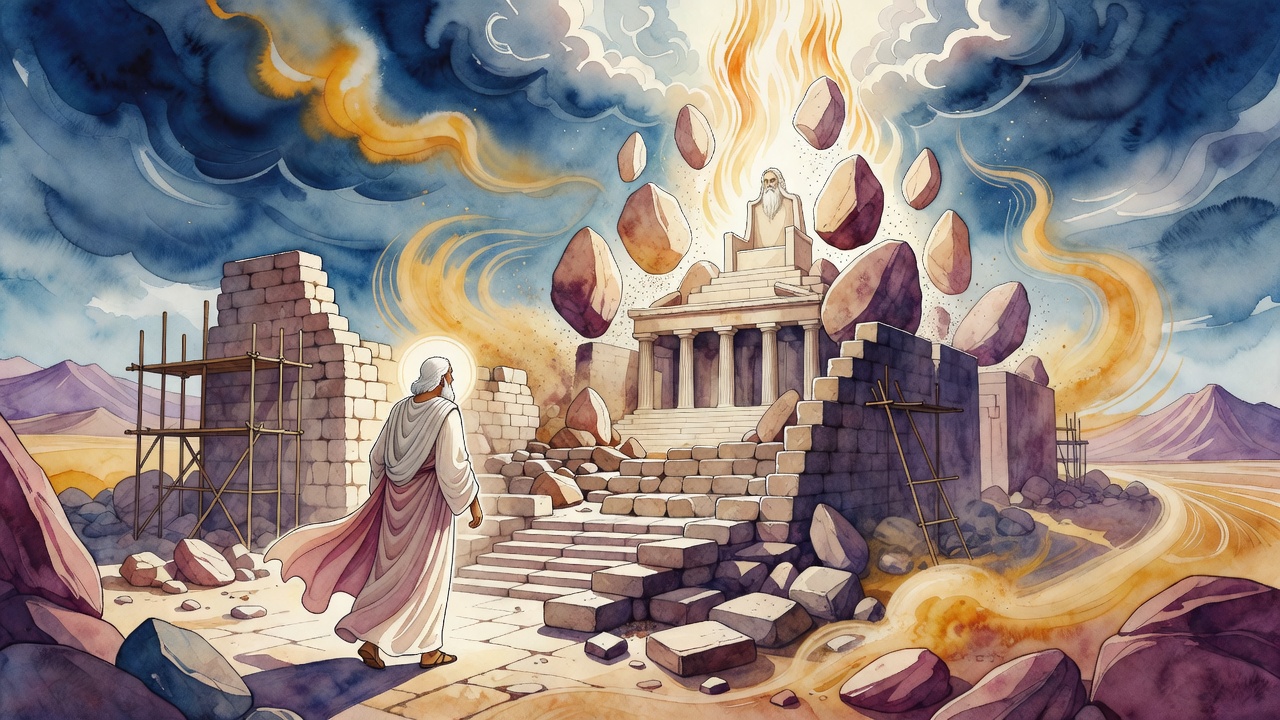
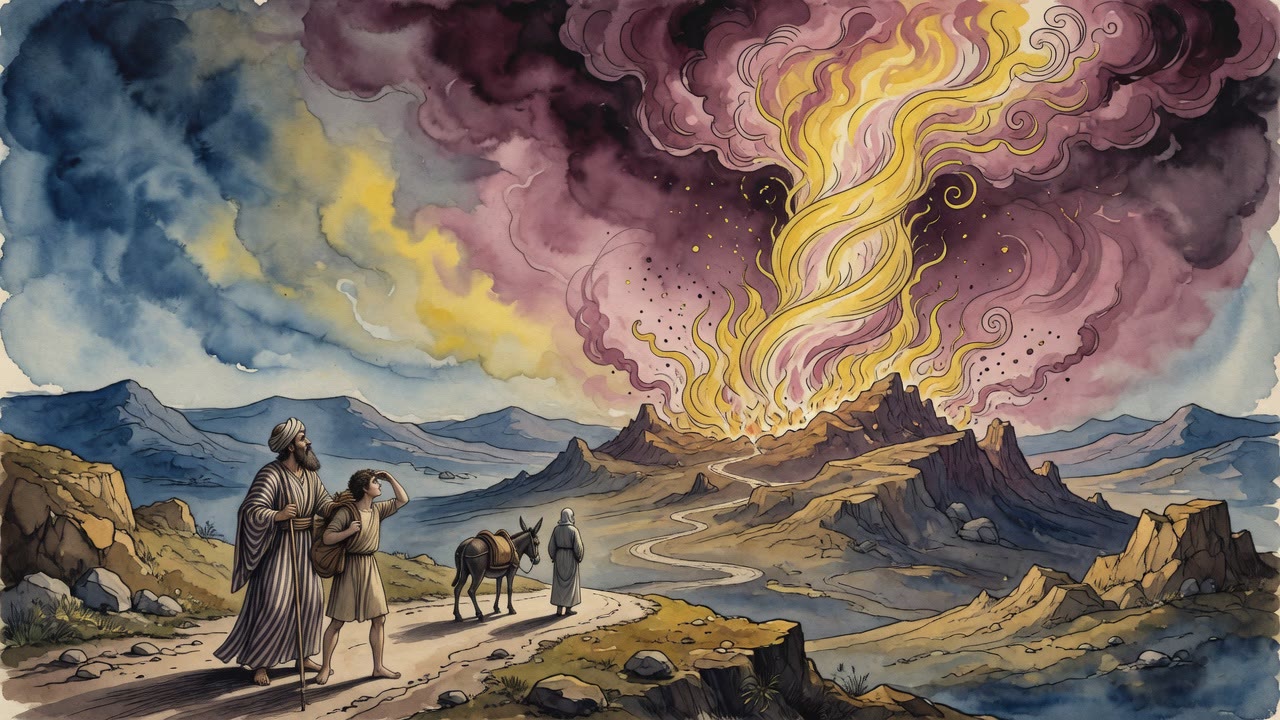
Darius released him. There was nothing else to do. The guards unbolted the cell and Daniel walked out, and the king who had imprisoned him now followed him, because he had to. Together they traveled to Jerusalem, to the place where the Temple had stood and now did not stand, where the mount rose and the courts lay in rubble (Daniel 6:11). Daniel knelt. He prayed for the man who had accused him.
An angel came a second time. Wash your eyes, the angel said. Darius washed. He opened his eyes. He could see the prophet still kneeling. He could see the broken stones of the Temple precinct. He could see, if he looked carefully, that the city was not what his predecessors had left behind. The sight had returned because the man he had wronged had chosen to ask for it.
He gave thanks. He allocated the tithe of his grain to the priests and Levites. The vessels themselves were never recovered in this account. Some losses stay unresolved. The king who had blamed Daniel for their disappearance stood in the rubble of the city they had come from, and opened his eyes in the place where they had once been used.
Under Which Tree
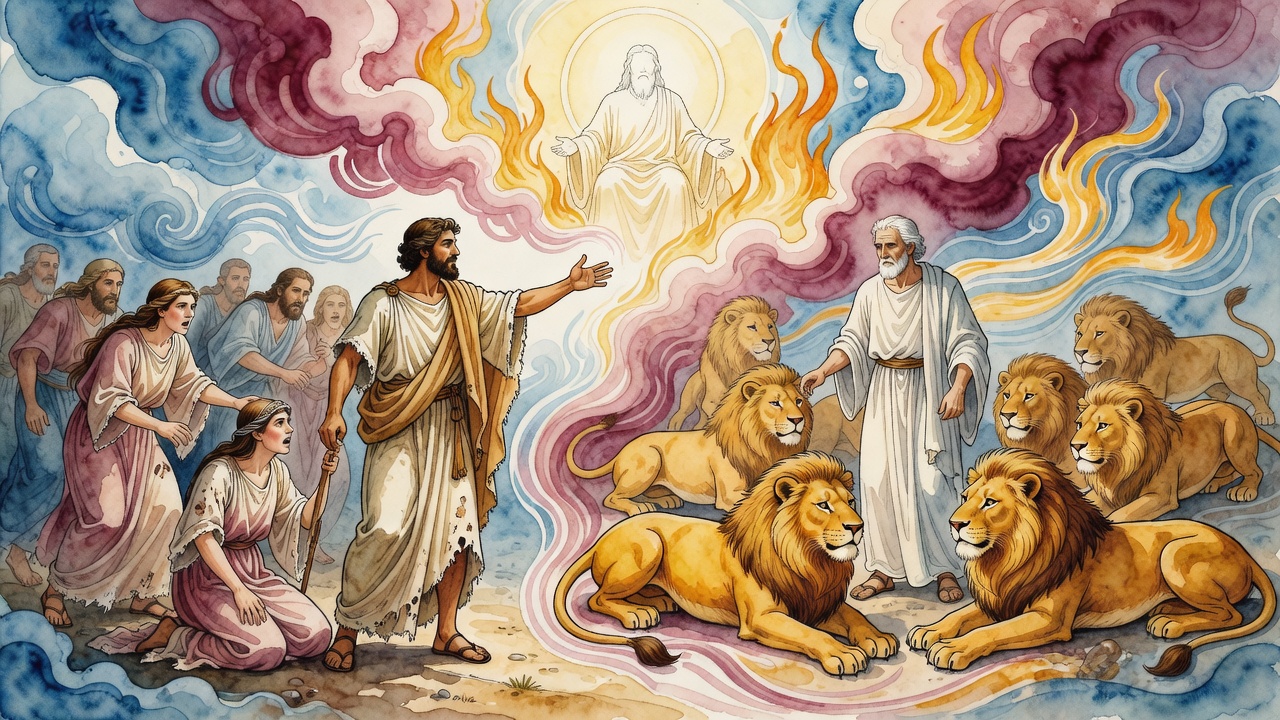
Daniel had done this work before, in a garden, when he was young. Two elders, judges of standing, had watched Susanna for months. When she refused them, they invented a story. They told the assembly she had taken a young man beneath the garden trees. The assembly believed them. Susanna was condemned to death.
She did not cry out to any judge. She cried directly upward, before the stones of the execution ground, and God stirred the spirit of a young man in the crowd. Daniel called for the trial to stop. He separated the two elders and questioned each one alone.
"Under which tree did you see what you claim to have seen?"
The first elder named a mastic tree. The second named an oak. Both were lying, and both were now proven to be lying in a way that could not be unsaid. The assembly turned on them. The sentence meant for Susanna fell on the men who had fabricated it. False accusation had already met Daniel once. It met him again in a palace, and this time the liar was a king, and the penalty was darkness.
God Asked How a King Mourns
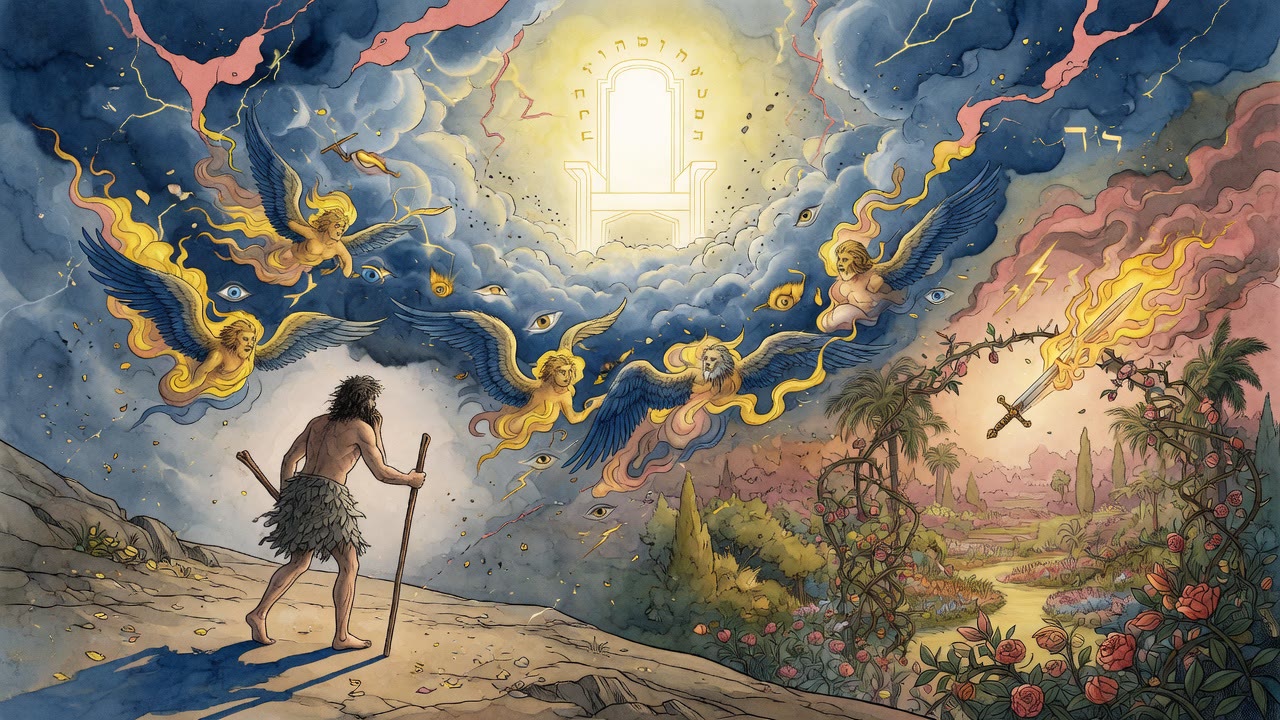
While Darius sat in the dark, heaven was already wearing mourning for the house those vessels had come from. God asked the ministering angels what a human king does when he mourns. They answered with specifics. He hangs sackcloth in his palace. He covers the torches. He walks barefoot. He sits in silence. He tears his garments. After each answer God said, "I will do this too."
Skies clothed in darkness. Sun and moon withdrawn. Clouds as dust on the feet. A watcher sitting alone. Thrones set in place. The darkness that fell on Darius was not unconnected to the darkness God wore over the destroyed Temple. It was measured out in the amount needed to produce one act of justice in one prison cell on one night.
Darius did not go to Jerusalem to pay tribute to a foreign god. He went because he had no choice, because the only man who could give him back his sight prayed toward that city three times a day and now needed to go there to complete the prayer. The king followed the prophet into the ruins of the place his predecessors had destroyed, knelt, waited, and received what the prophet asked for on his behalf.
The sacred objects that started the accusation remained missing. The king who had locked Daniel in a cell stood in the rubble, washed his eyes, and saw the mount. That was the nearest thing the night offered to an accounting.
← All myths