Daniel Saves Susanna Then Survives the Lions Den
Daniel saves a condemned woman by cross-examining her false accusers with one question. Decades later, he faces the same kind of execution himself.
Table of Contents
 Click for full size
The Young Man Who Called the Crowd Fools
The first thing Daniel did in public was call a crowd of Israelites fools.
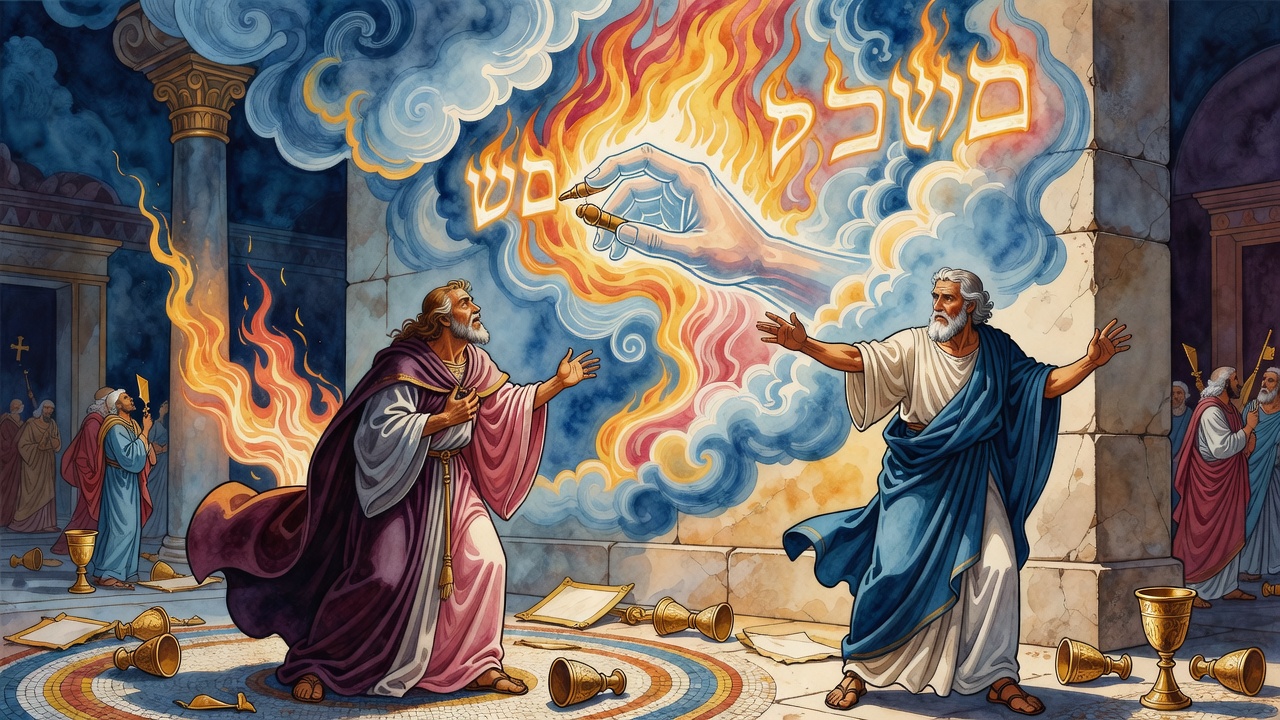
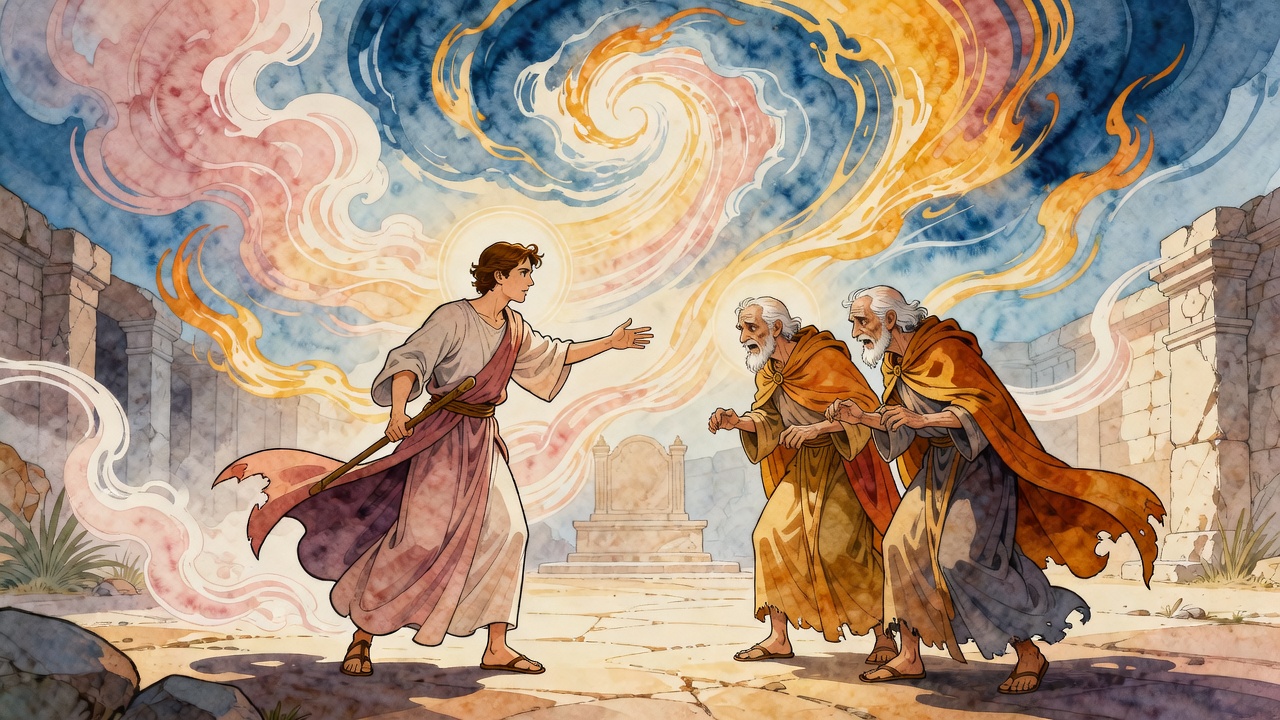
He was young. The Book of Susanna calls him a youth, explicitly young enough that his interruption would have been startling on those grounds alone. A woman named Susanna had just been condemned to death on the testimony of two respected elders who claimed to have witnessed her in adultery. The crowd was moving to carry out the sentence. Daniel stepped into their path and said: you have acted foolishly. You have condemned an Israelite woman without investigating or studying the matter. Return to the court.
The crowd returned.
The Question About the Tree
What Daniel did next was so simple that the elders had no defense against it. He separated them and asked each one the same question: under which tree did you witness the act? The first said a terebinth. The second said a mastic tree. Two different trees. One lie. The text closes the case in four words: they judged her innocent.
The elders were put to death under the same law they had tried to use against Susanna. Daniel had understood something most of the crowd had missed, that testimony requires internal consistency, that the powerful can lie, and that the correct response to unjust execution is not acceptance but procedure. He was a youth who had not yet done anything notable, standing before a crowd that was about to kill an innocent woman, and his entire contribution was a question he asked twice.
The Trap Set for an Old Man
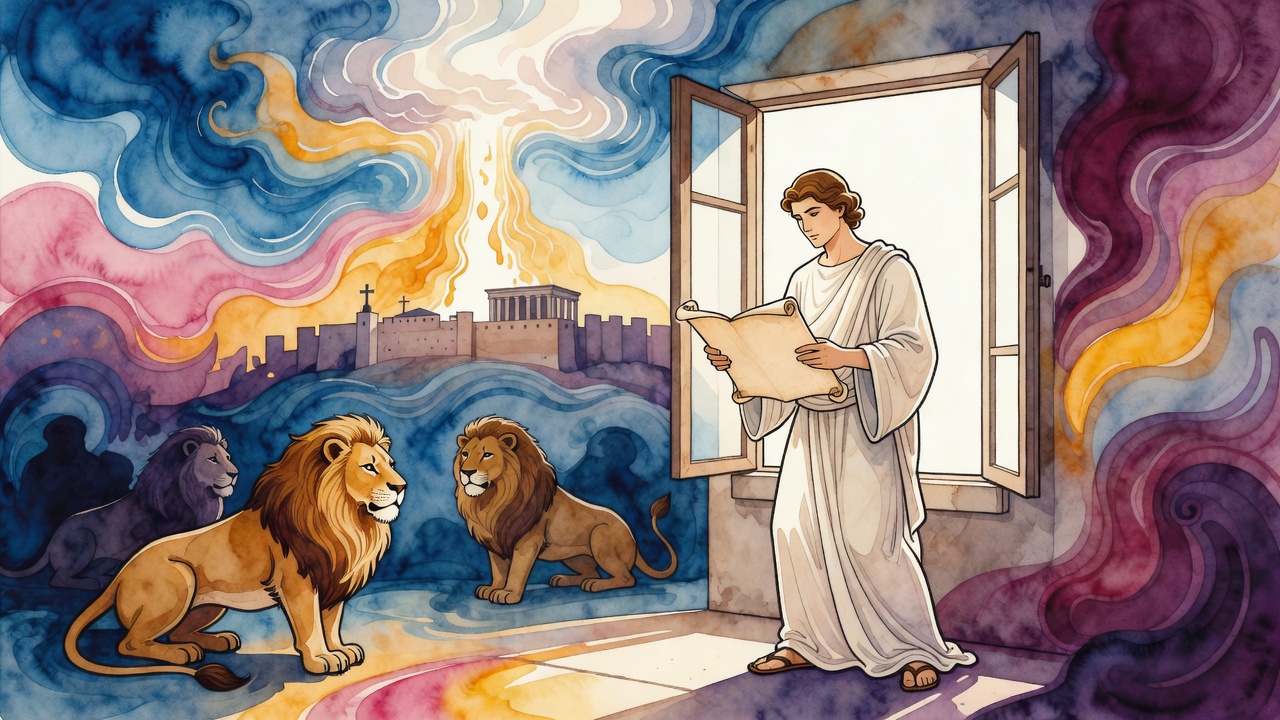
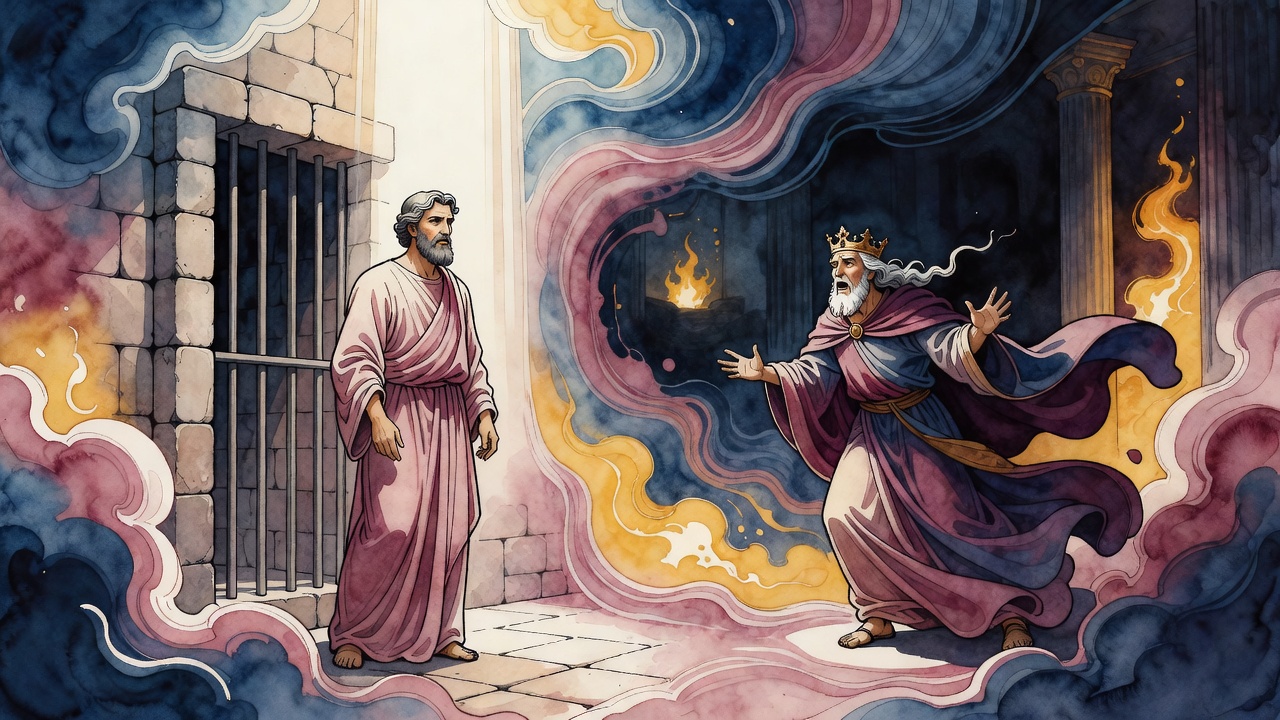
Decades later, in Babylon under Darius, the people who envied Daniel's position set a trap with surgical precision. They drafted a decree forbidding prayer to any god except the king for thirty days, sealed it with their own signet rings, and got Darius to confirm it without realizing it targeted Daniel. They sent a girl to watch Daniel's house. She reported what she saw: an old man in his upper chamber, kneeling at the window that faced Jerusalem, praying three times daily as always. They seized him and brought him before the king. Darius argued for Daniel until sunset. Finally he gave way under the threat of rebellion.
Daniel was thrown to the lions.
The Prophet Who Flew
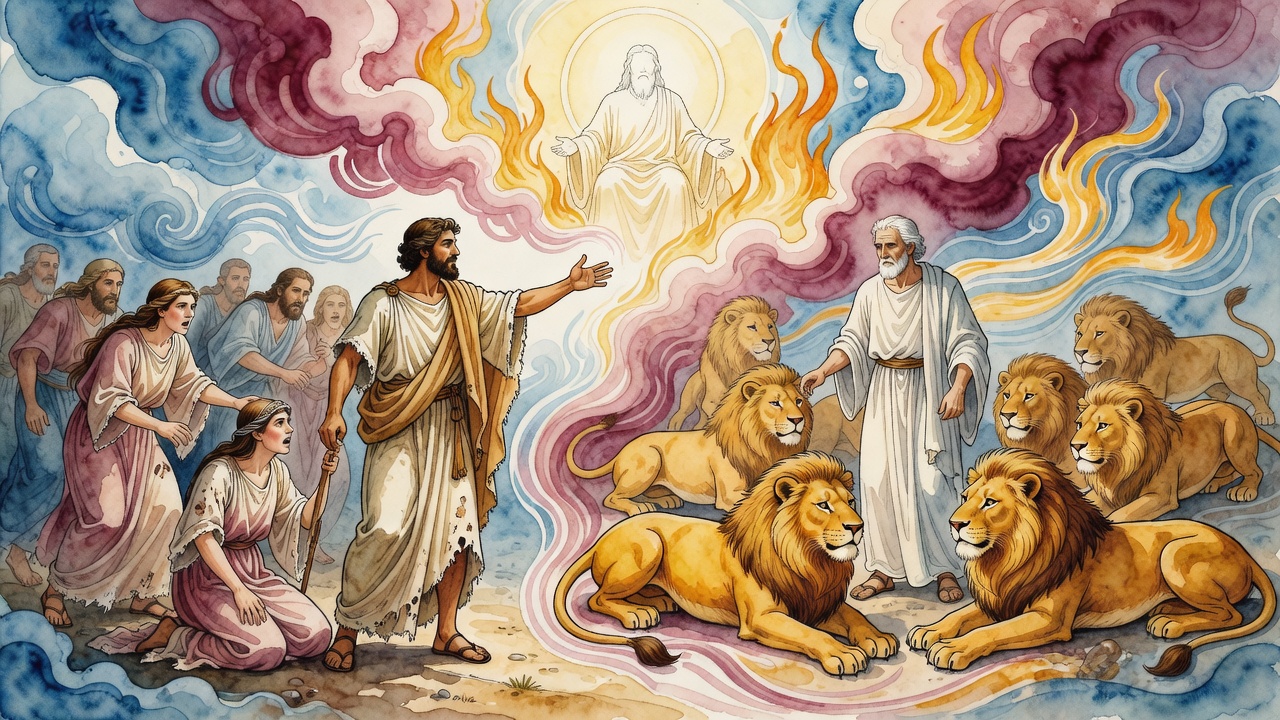
The Chronicles of Jerahmeel adds a detail absent from the canonical book of Daniel. That night, the prophet Habakkuk was in Judea carrying a pot of stew to farmworkers in the field. An angel lifted him by the hair and carried him to Babylon through the air. He lowered Habakkuk into the lions' den. Daniel sat up from prayer and received the meal. Habakkuk was transported back to Judea before morning. The angel moved faster than geography permitted, and the prophet who had no intention of going to Babylon arrived and departed without breaking his journey.
In the morning the king ran to the den and called down into it. Daniel answered from below. Darius had him lifted out. The men who had accused Daniel were thrown in with their wives and children, and the lions consumed them before they reached the bottom.
← All myths