Gabriel Carried a Baby Sealed in Clay and Laid It Before God's Throne
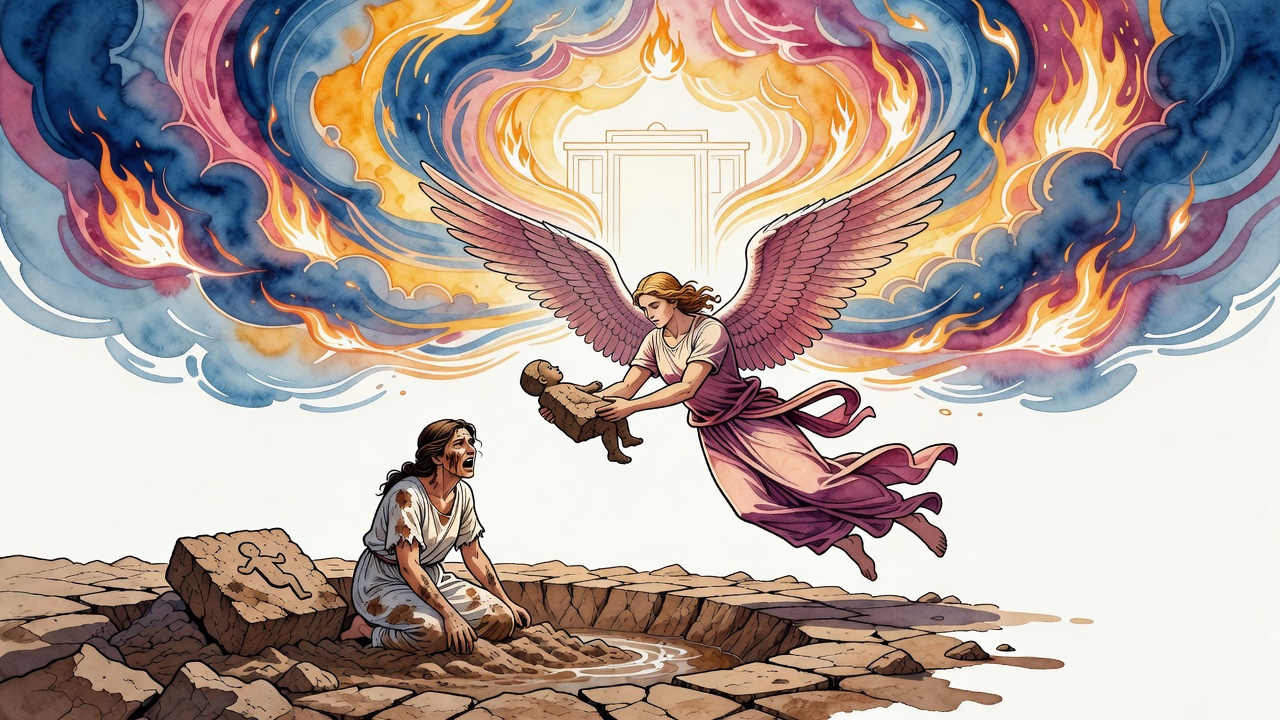
Rachel was treading clay for bricks when her labor came. The child dropped into the mud and sank. An angel went down after it.
Table of Contents
 Click for full size
The Clay Closed Over Him
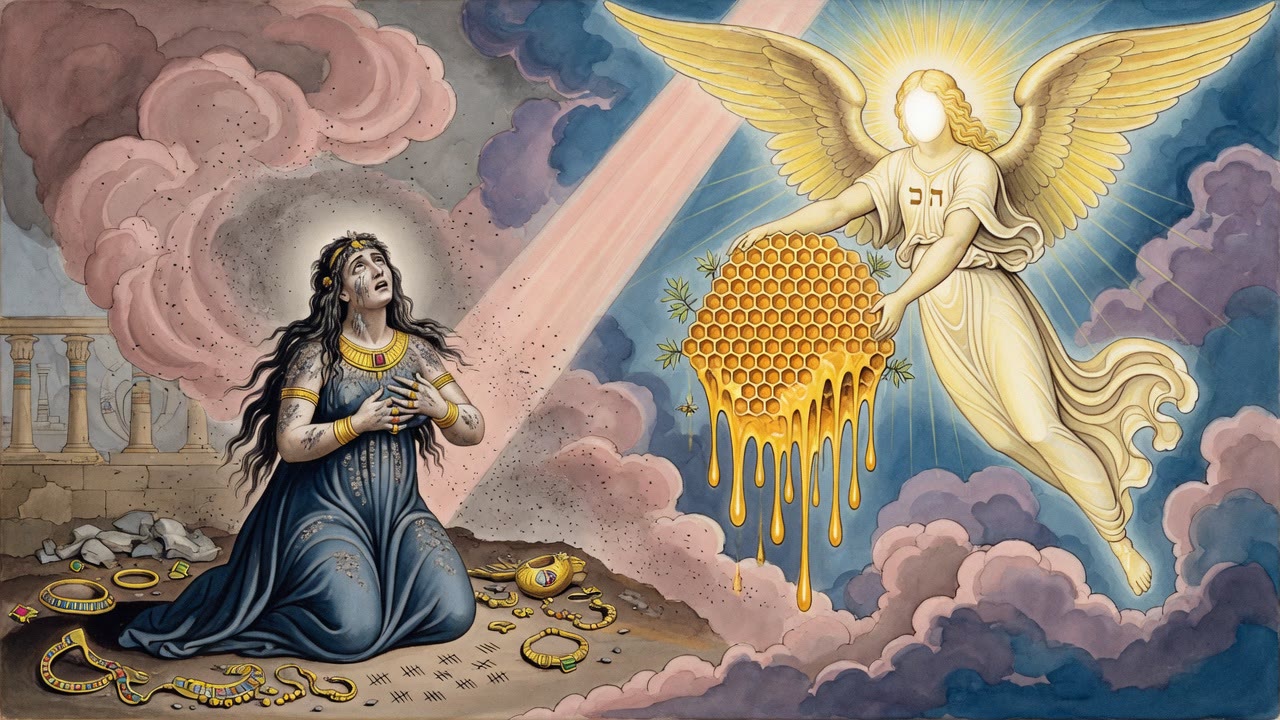
On the morning Israel walked out of Egypt, Rachel the daughter of Shuthelah was still in the pit. Nobody had released her. She and her husband were treading clay together, turning it under their feet the way it had to be turned before it would hold the shape of a brick, and her labor came on her standing in it.
The child dropped from her into the clay and sank out of sight.
She went in after him with both arms. Wet clay closes the way water closes, without a seam, and it gives nothing back. She brought up handfuls of the pit and nothing else.
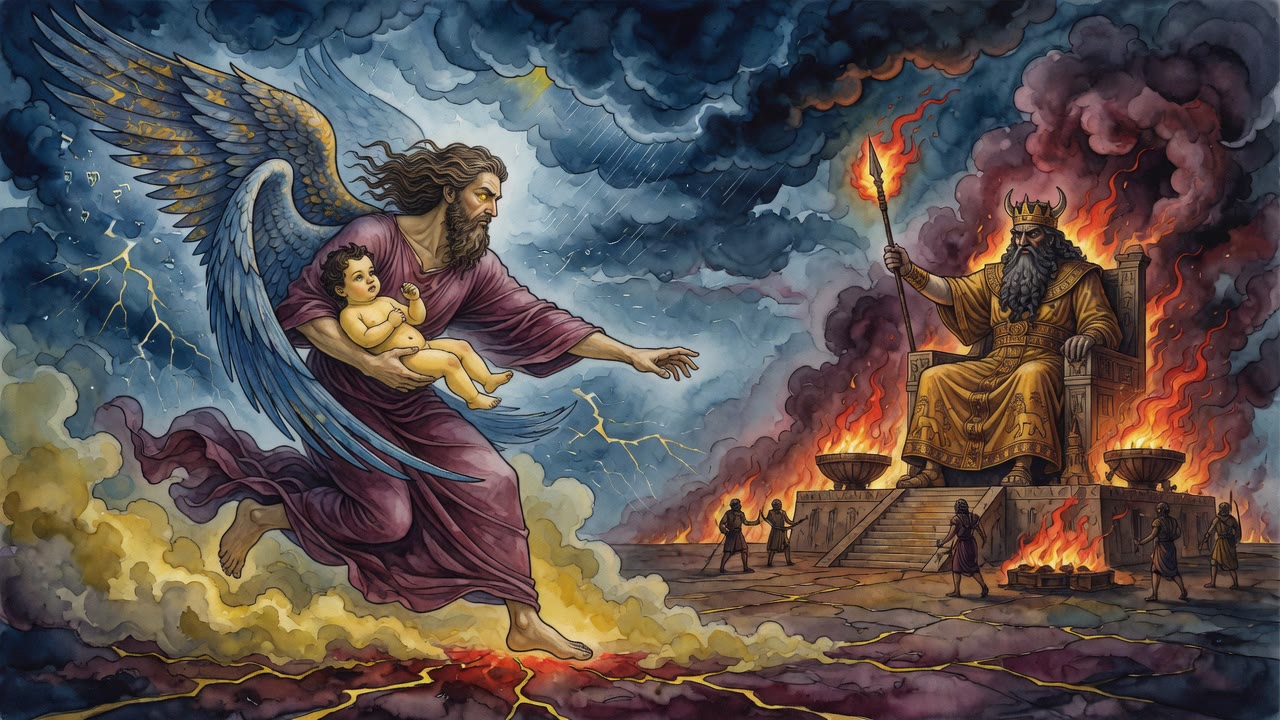
Then Gabriel came down. He gathered the clay that had the child in it, and he worked it into the shape Egypt demanded, an ordinary brick, one of that day's count. Then he carried it up through every heaven and set it at the foot of God's throne, and left it there as a footstool.
The Night God Looked
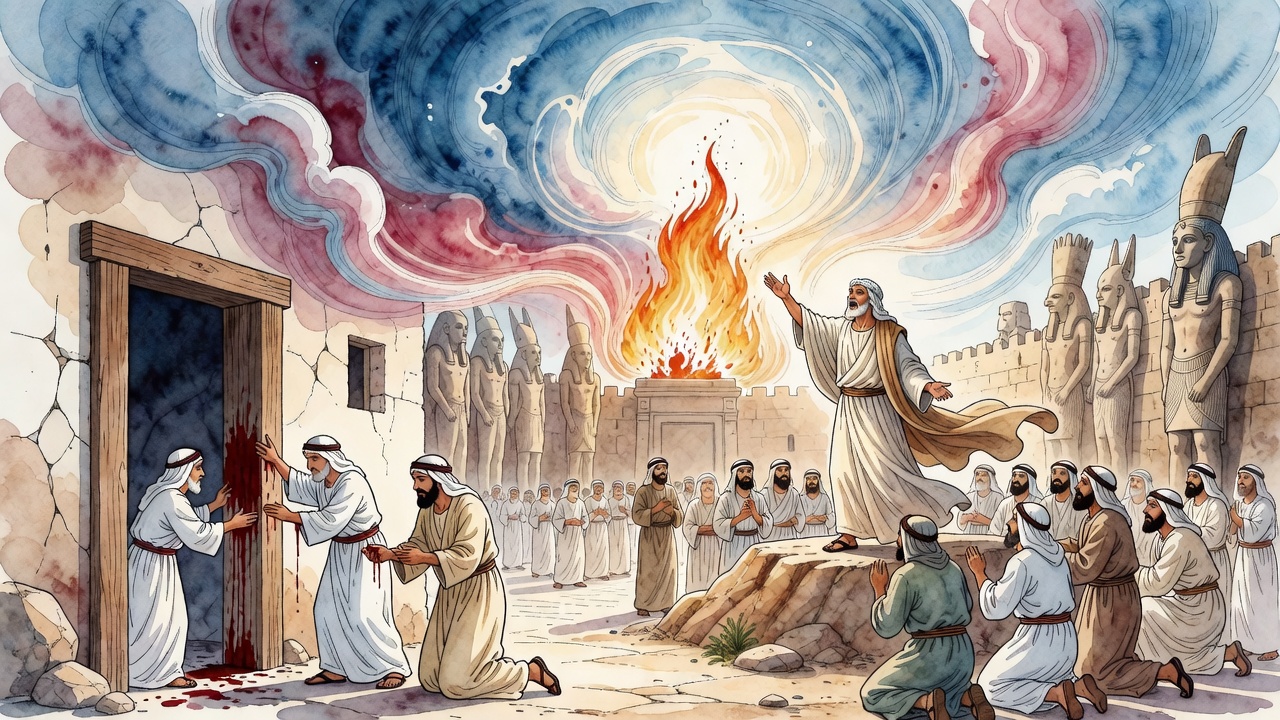
That night God looked at Israel and at what had been done to them, and the firstborn of Egypt died. It became one of four nights written into the Book of Memorial. The first was the night God came out over the waste and the darkness and spread light around with a word. The second was the night He stood between the split carcasses and swore to Abraham. This was the third. The fourth has not happened yet.
By morning the Egyptians were pushing silver into the hands of people they had been beating a day earlier, begging them to go, and the dead lay in the houses unburied because nobody would stop to bury them.
Uzza Came to Argue at the Sea
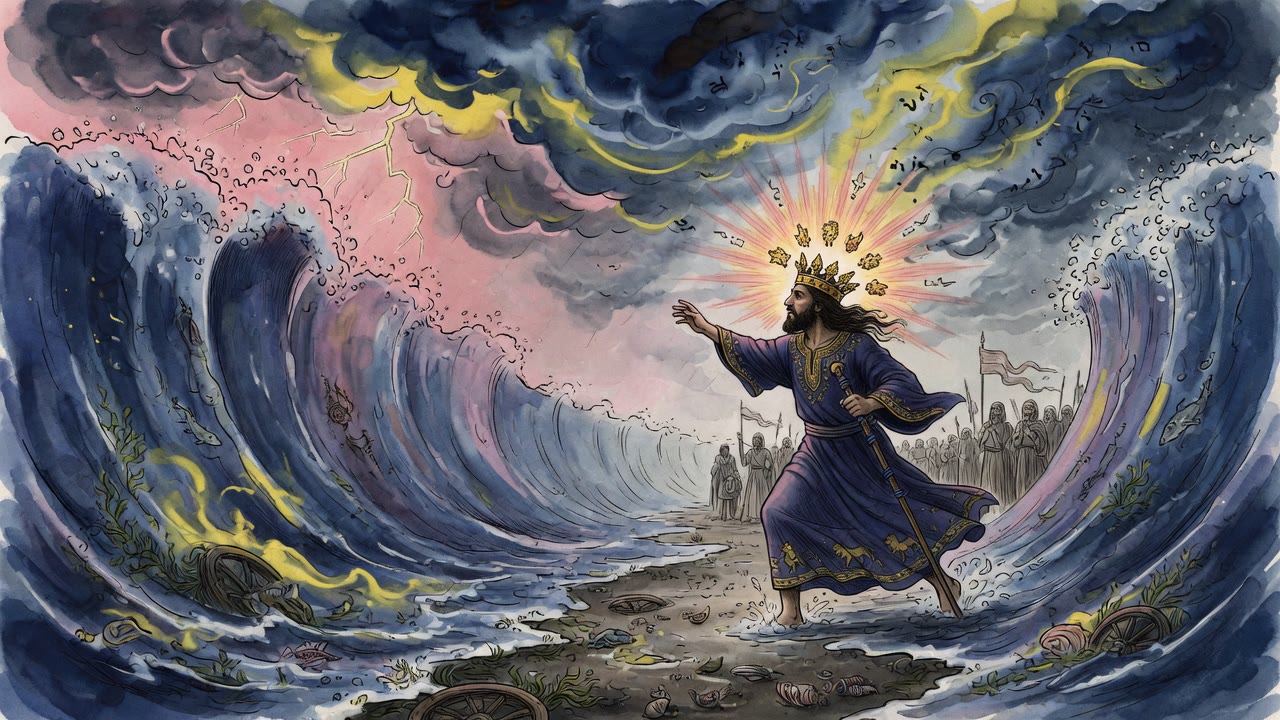
Days later the water stood open and the chariots were inside it, and heaven prepared to close the sea. That was the moment Uzza, the angel of the Egyptians, appeared and refused to let his people drown.
"Lord of the world," he said. "You are called just and upright. Before You there is no wrong, no forgetting, no favor shown to any face. Why do You want my children to die in the sea? Can You say that my children drowned a single one of Yours, or killed one? And if it is for the hard labor they laid on Israel, Your children have already been paid. They walked out carrying the silver and the gold."
The silver was real. Israel stood on the far bank with Egypt's household wealth in their arms, forced on them at the door by the same people who had held the whips.
The Verdict, and the Appeal After It
The whole celestial family answered when God had finished speaking for Israel. "You have every right to drown him in the sea."
Uzza heard the verdict and did not argue with it. He changed his ground instead.
"Lord of all the worlds. I know my people deserve what You have decreed. But let it please You to deal with them by Your mercy. Take pity on the work of Your hands, because Your tender mercies are over all Your works."
It nearly worked. The sea hung open. God came close to yielding.
What Michael Signalled
Michael made a sign to Gabriel, and Gabriel dropped out of the court and flew to Egypt.
He came back holding a brick, and there was a Hebrew child in it where the mortar should have been. He stepped in front of the throne with it in his hands and held it up so the court could see what he was holding.
"Lord of the world. Will You have compassion on the accursed nation that slaughtered Your children like this?"
God turned away from the attribute of mercy. He sat down on the throne of justice, and the sea came together over the chariots, and Uzza said nothing else.
What Nadab and Abihu Saw at the Mountain
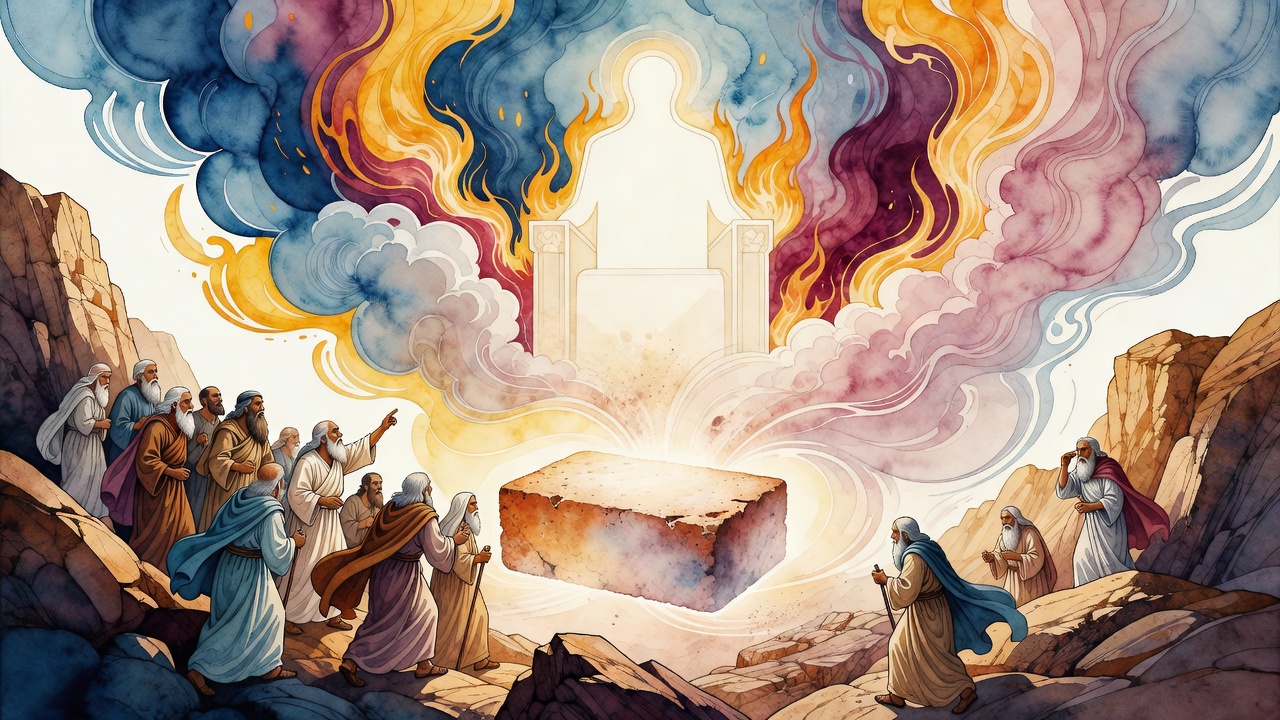
Weeks later, on Sinai, Nadab and Abihu went up with the elders and lifted their eyes and looked straight at the glory of the God of Israel. Under His feet, set beneath the throne, was a work like sapphire stone, and inside the stone was a memorial of the servitude: women treading clay beside their husbands, and among them a young woman heavy with child, beaten down into the clay with it.
That was the brick. Gabriel had gone down and made it and come up and set it there, and it had the clarity of a precious stone, and the strength of the beauty of the sky on a day with no cloud in it, and the young men looked at it and kept looking, and the elders ate and drank.
← All myths