An Angel Steered Esther's Hand Toward Haman
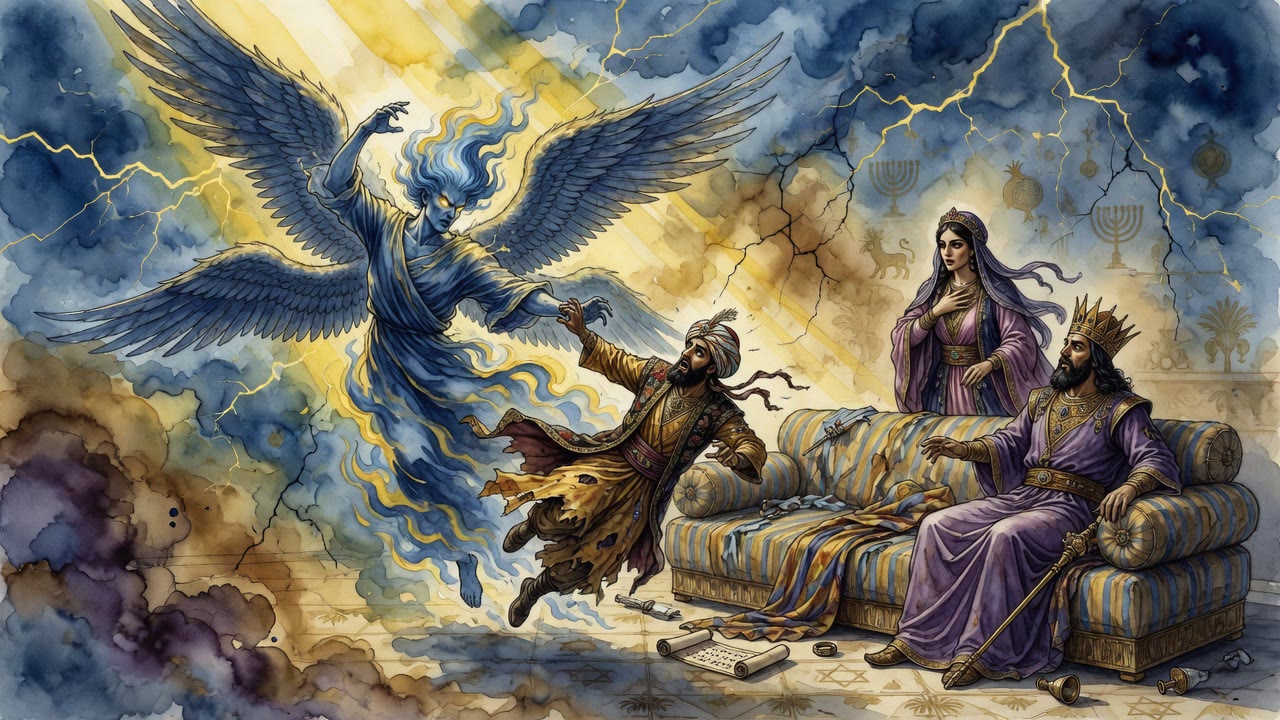
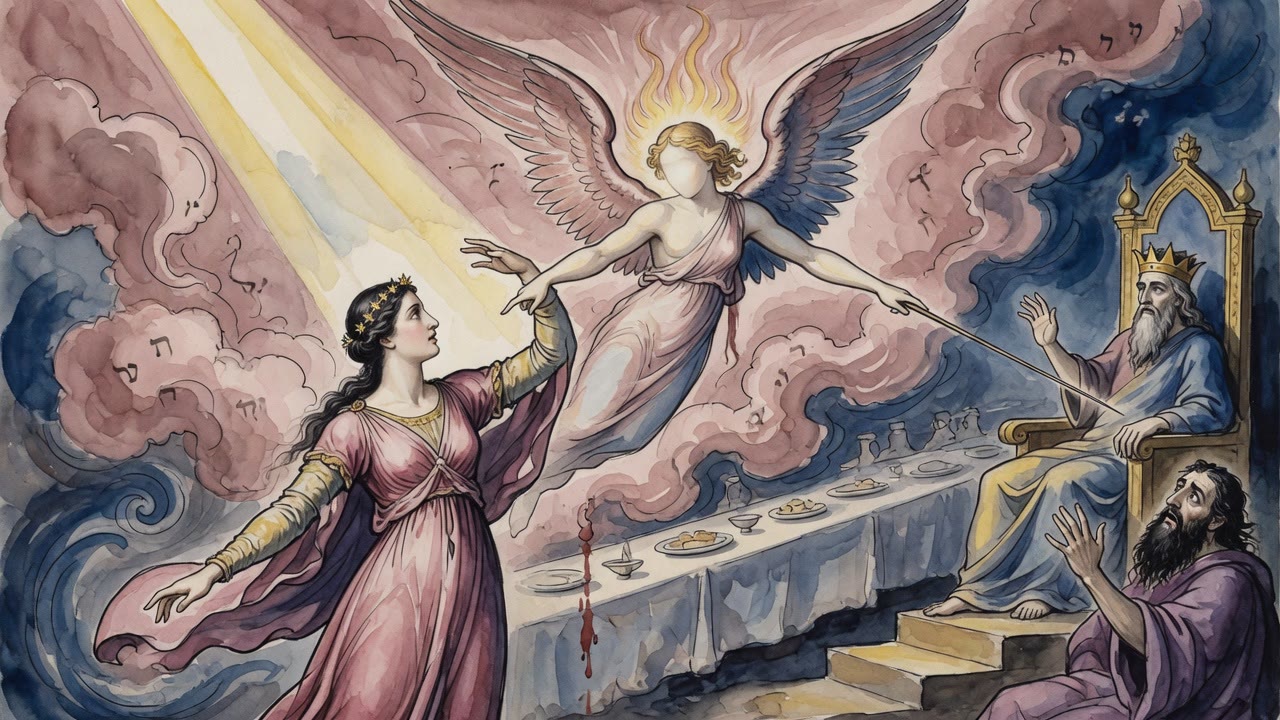
Her arm swung toward the king. An angel turned Esther's finger until it found Haman, the man her mouth was already naming.
Table of Contents
Esther stretched out her hand to show the man who had sought her life, the man who had already taken Vashti's. In the heat of the room her finger swung toward King Ahasuerus himself.
 Click for full size
He did not see the error. An angel guided her hand, at once, onto Haman.
The Sword in the Sleeping Chamber
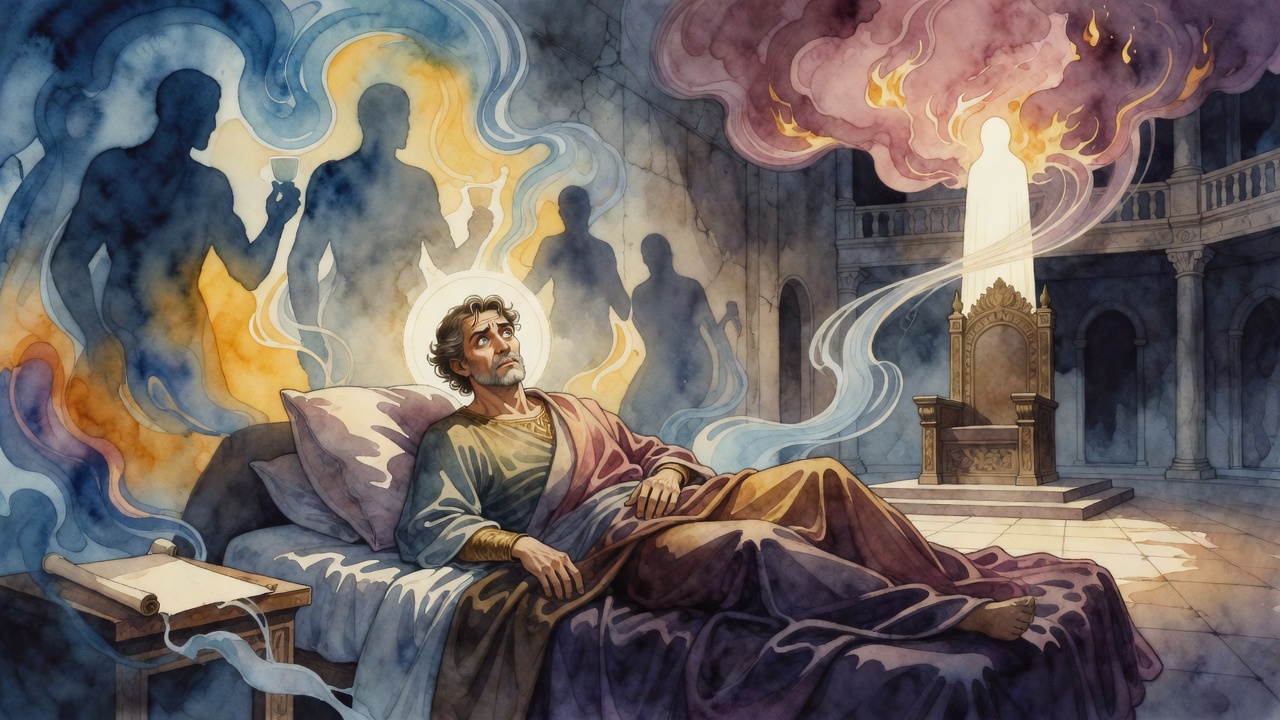
The night before, the king had not slept well. In the dream Haman came at him with a sword, malice in the motion. Morning came, and Haman walked into the chamber unannounced and woke him. The dream stuck. The king looked at the man he had raised over every prince and saw the blade from the night.
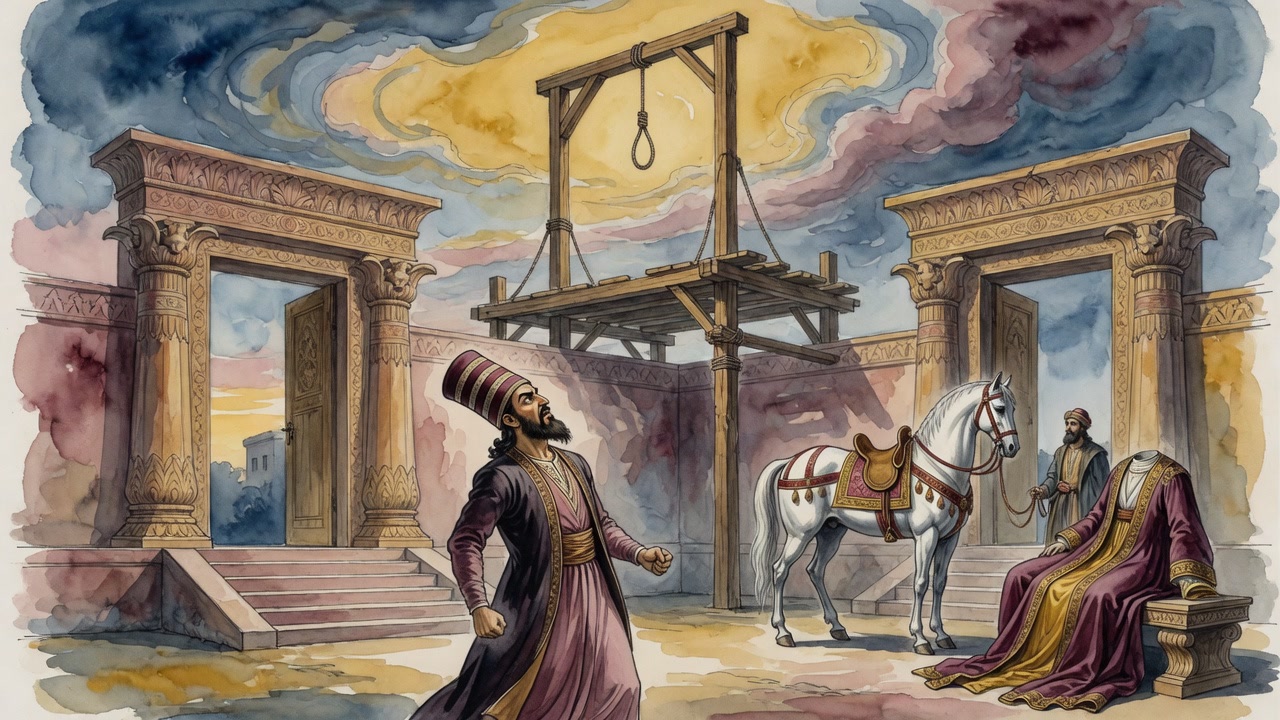
He tested him. How should a king honor a man he wished to magnify? Haman, sure the honor was his, named the king's own coronation robes, the royal horse, the golden crown, a noble leading him through the streets, and death for anyone who would not bow. The honors he named fell that day on Mordecai.
Haman had wanted the horse, the robes, the crown, and the king's life. He received a public walk beside the man he had meant to hang.
The Finger That Landed
Now, at the second banquet, the redirected hand rested on Haman. Esther's mouth followed it. The three days of fasting, the prayer at the threshold, the two dinners, the wine, all of it had come down to a finger that almost accused the wrong man.
"This is the adversary and the enemy. He who desired to murder you in your sleeping-chamber during the night just passed. He who this very day desired to array himself in the royal apparel, ride upon your horse, and wear your golden crown upon his head, to rise up against you and take your sovereignty. But God set his undertaking at naught, and the honors he sought fell to the share of my uncle Mordecai, whom this oppressor thought to hang."
The king had already seen the sword in his sleep. The pointing only finished the work. Ahasuerus rose in anger. Haman's face changed. The room that had been a banquet was now a court.
The Man Who Wanted the Crown
Haman had not only written the decree against the Jews. He had worked the court against Vashti before Esther ever entered it. He had climbed until only the king sat higher. In one night a dream cut the climb. In one morning a robe he had named for himself went onto Mordecai. In one evening an angel turned a queen's hand so the accusation could not land on the throne.
Esther did not soften the charge. She tied the sleeping-chamber to the street, the sword in the dream to the crown Haman had asked to wear. She made the king hear that the enemy in the house was the same man who had bowed in it yesterday.
Write This in a Book
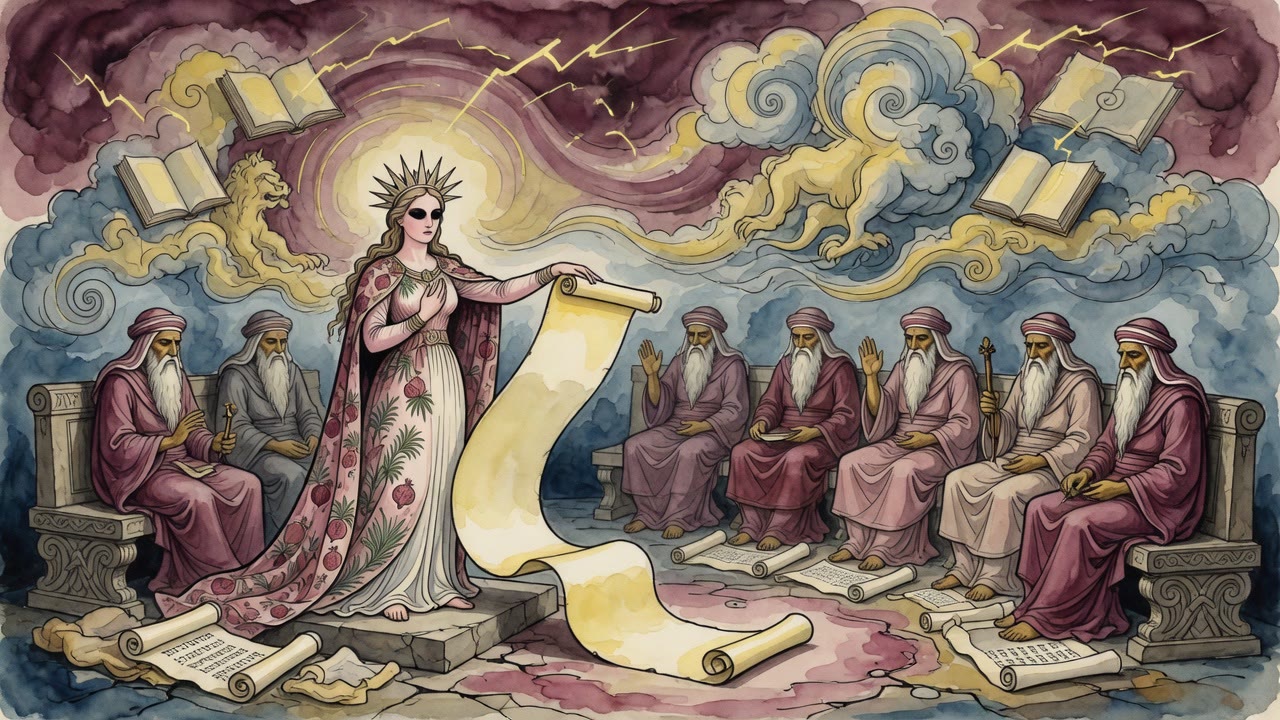
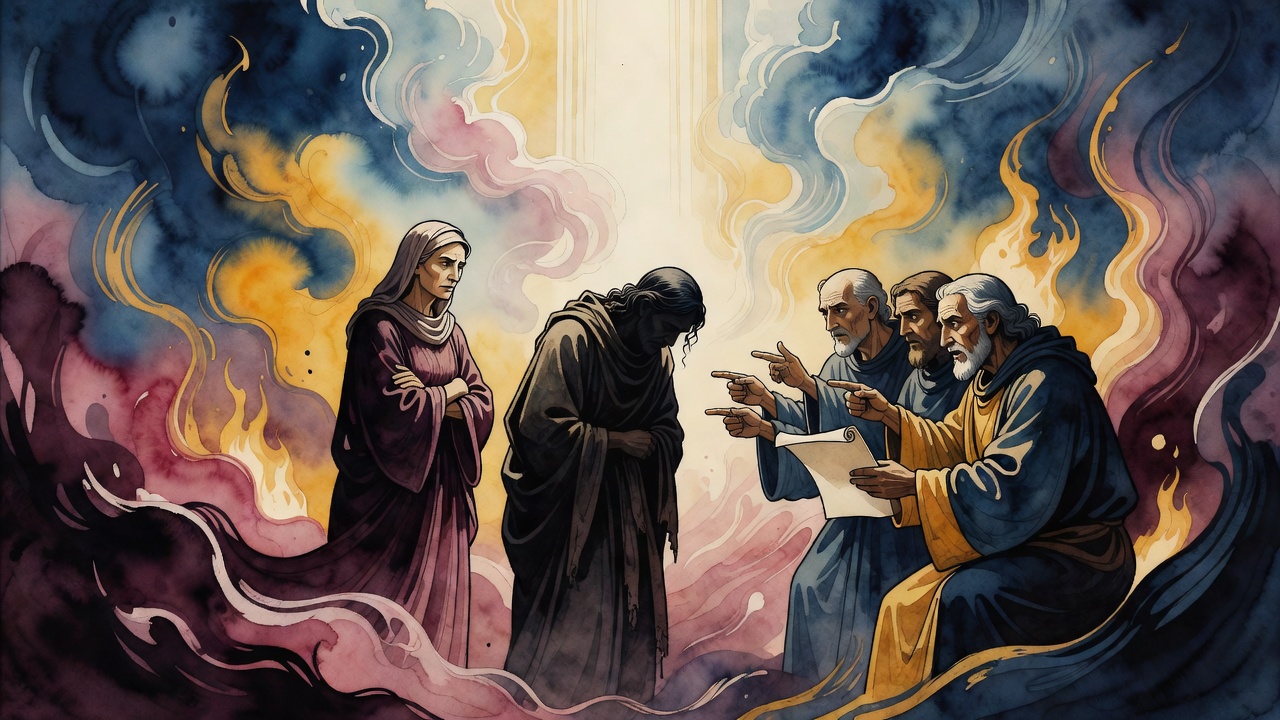
After the hanging, Esther was not done. She wanted the night written into the Holy Scriptures. The sages hesitated. The Tanakh already stood in three parts. Adding a book was not a small thing. They refused her. She came back.
She quoted Moses after Rephidim (Exodus 17:14): "Write this for a memorial in a book." Haman was of Amalek. If Moses had to record the first war with Amalek, this war had to be recorded too.
They began to hear her. The book could not have been composed without the ruach hakodesh (רוח הקודש), the holy spirit. The decision was resolved below, among the sages, and endorsed above. Purim would be kept, not only now, but in the world to come. Her name would stand in both worlds. The finger had landed. The book would stay.
← All myths