God Gave Ezekiel a Tour of His House While Israel Sat in Exile
Ezekiel was a priest of a temple that no longer stood, sitting by a canal in the wrong country. The sky came open over Babylon anyway.
Table of Contents
 Click for full size
The Priest on the Canal Bank
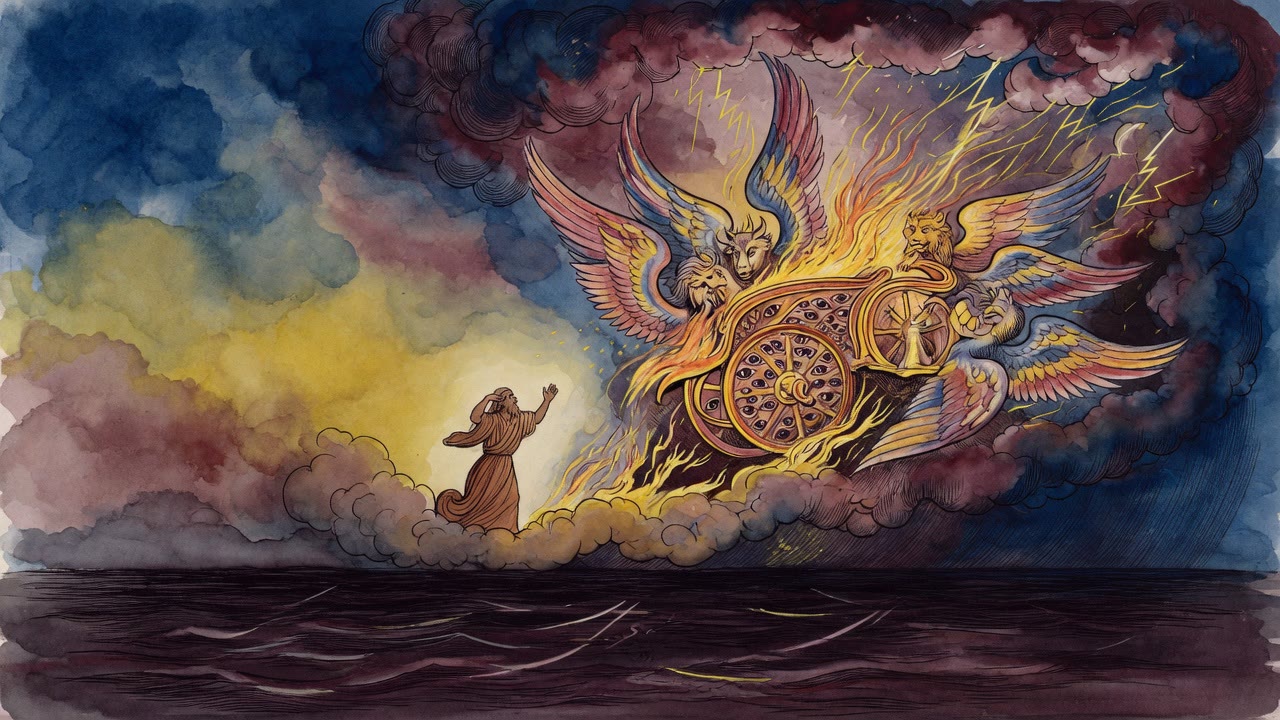
Ezekiel sat on the bank of the Chebar canal in the thirtieth year, in the fourth month, on the fifth day of the month. He was a priest with nowhere to serve. The house he had been trained for was in another country and most of it was ash.
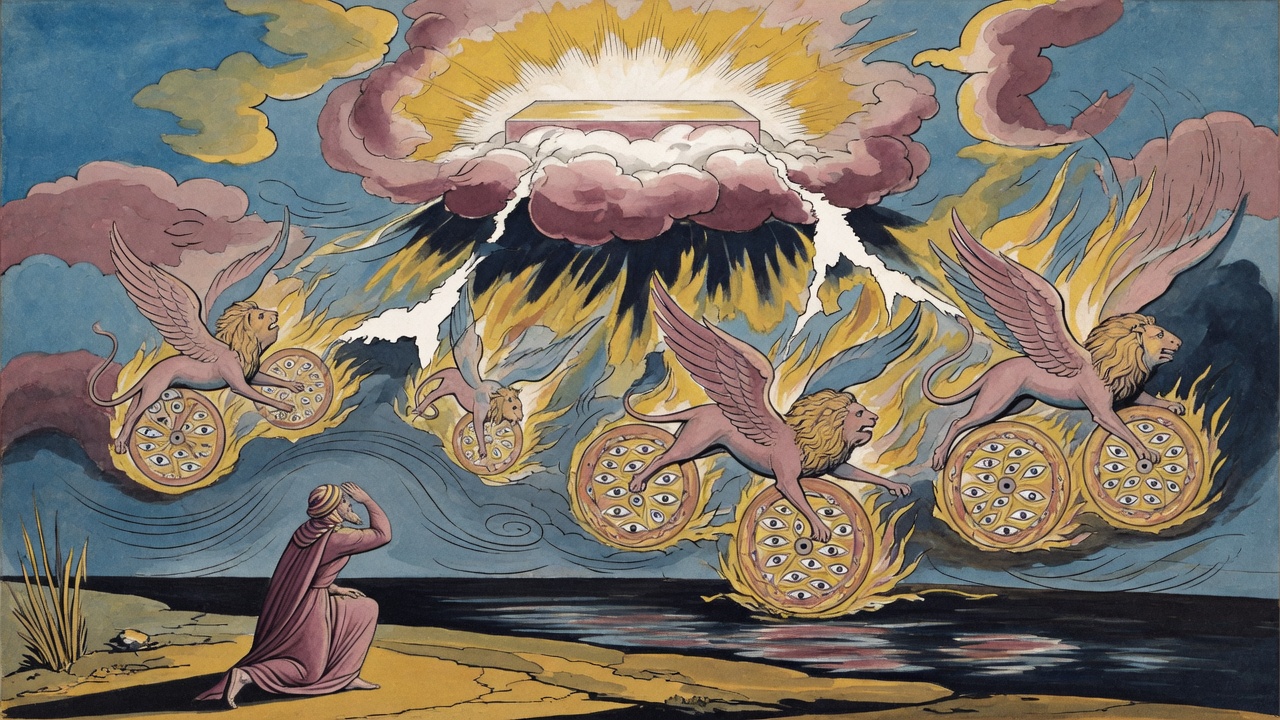
A wind came up out of the north with a cloud in it and fire turning over on itself inside the cloud. Then the sky came apart above a work canal in Babylon and the whole of it came down toward him, the four faces, the wheels inside wheels, the rims full of eyes, the platform like ice stretched over their heads, and the sapphire and the shape of a man on it burning from the waist both ways.
It should not have been there. That was the point of exile. The house was in Jerusalem, and Jerusalem was gone.
Son of a Man Willing to Be Despised
The voice called him son of man, and kept calling him that, hundreds of times, all the way through everything that followed.
The word carries affection in it, and brotherhood, and the tone one friend uses to another. Son of upright people. Son of the righteous. Son of men and women who did acts of kindness. Son of a man who put himself low for the honor of the Omnipresent and for the honor of Israel every day he lived.
His father's name says it out loud. Ezekiel son of Buzi, and buzi is built out of the word for a man willing to be held in contempt.
God had not reached down into Babylon and grabbed the nearest available prophet.
The King Who Showed One Son the House
There was a king whose wife and children rose against him. He put them out of the house, all of them, and shut the door.
Some time later he sent word to one of the sons, the one who had been living with the mother, and brought him back alone.
"Come here, son of so-and-so. Let me show you my house. Let me show you where I live, the part of it I have without your mother in it." He walked the boy through the rooms. He showed him how the whole thing was laid out, the residence, the arrangement, the chambers. Then he asked him a question with the mother still standing outside in the road.
"Has my honor gone down? Has my house become any less, because she is out there?"
That was the tour Ezekiel got. God took him through the entire chariot, showed him the mechanism of it from the wheels up, and then turned on him.
"Is this My glory, that I raised you over the nations of the world? Has My glory shrunk because of you? Has My dwelling gotten smaller because you were sent away?"
Four Hundred and Ninety-Six Thousand Voices
God went on, and He answered a thought the exiles had been having on those canal banks for years, that with the altar cold there was nobody left to say anything to Him.
"Perhaps you will tell yourself there is no one to worship Me. Know that four hundred and ninety-six thousand ministering angels stand in front of Me and sanctify My great name every day, always. From the hour the sun comes up until it goes down they say holy, holy, holy. From the hour it goes down until it comes up they say blessed is the glory of the Lord from His place." And below all of that, the seventy nations of the earth, who go on holding that He made the world whether they serve Him or not.
Then the voice dropped into something a great deal harder to hear.
"Why are you doing these dreadful things? Why these acts that make Me bring on you what has come on you?" And then: "But what can I do? I do it for the sake of My great name, which is called upon you."
The Man Who Looked at the Same Chariot and Broke
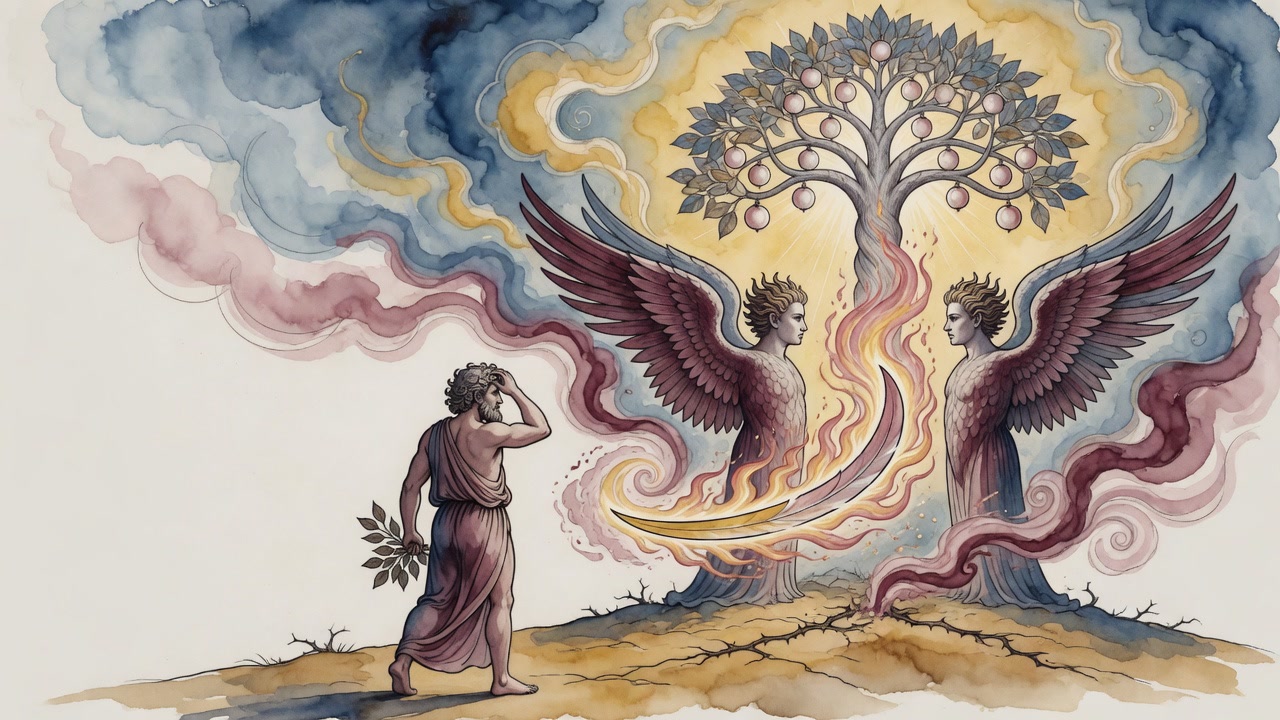
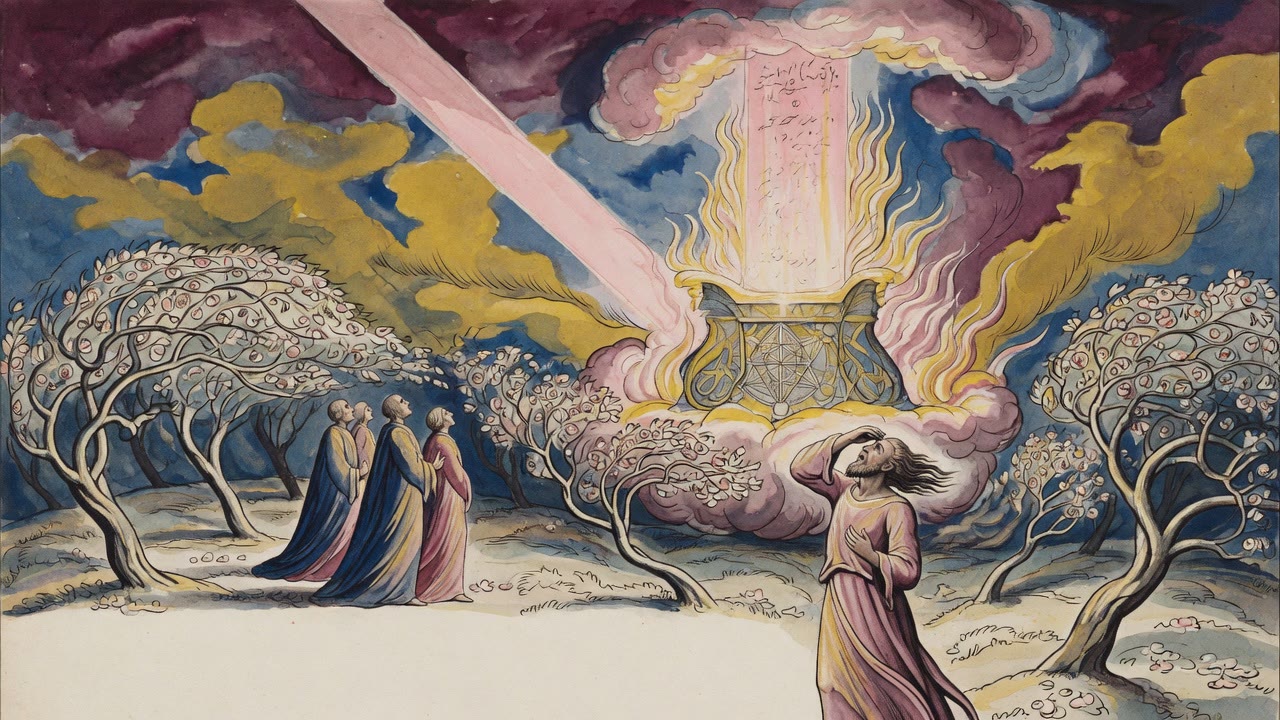
Centuries after the canal, four sages went into the orchard, which is what they called the ascent, and only Rabbi Akiva came out of it whole.
Elisha ben Abuyah was one of the others. He was a scholar of the first rank, and he climbed until he stood at the door of the seventh palace, and there he saw what Ezekiel had seen the underside of.
He saw Metatron on a throne. Crowned. The princes of the kingdom standing along both sides of him, to the right and to the left, and every one of them taking orders from that seat.
Elisha did the arithmetic in the doorway and got the wrong answer. "There are two powers in heaven." He walked back out of the orchard as Aher, the Other One, and was never called by his own name again.
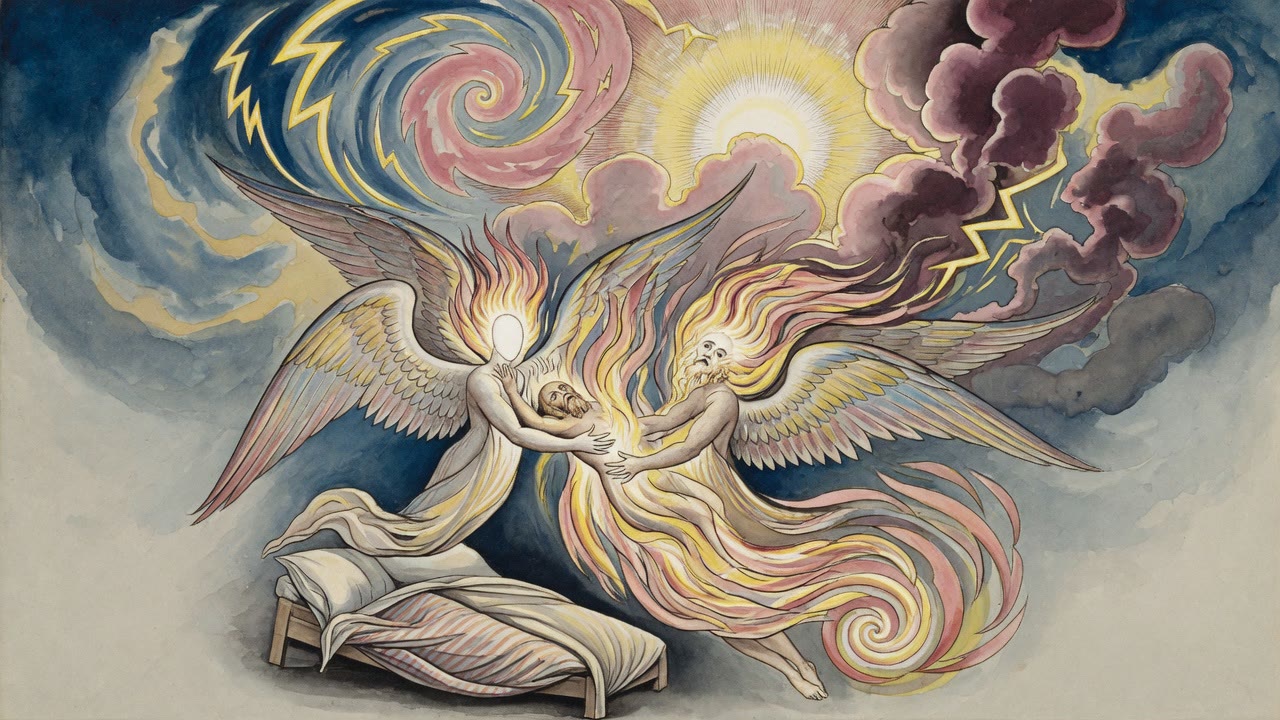
What happened on the far side of that door was worse for the angel than for the man. Anafiel came at the command of the Holy One and took Metatron off the throne, and struck him with sixty lashes of fire, and stood him on his feet for the rest of time, so that nobody arriving at that door would ever again find anyone sitting down.
Ezekiel was shown more of the house than Elisha glimpsed of it, and walked back along the canal on his own legs. He had been given the floor plan and an instruction to hand it over. Tell them the form of the house and its design, its exits and its entrances. A priest with no sanctuary anywhere in the world, going home along a Babylonian ditch to give a homeless congregation the measurements.
← All myths