Five Miracles Happened to Jacob at Bethel Before the Dream
Genesis gives Jacob's ladder vision in one night. The ancient Aramaic translators recorded five miracles that bent the world toward Jacob before he slept.
Table of Contents
 Click for full size
Before He Lay Down
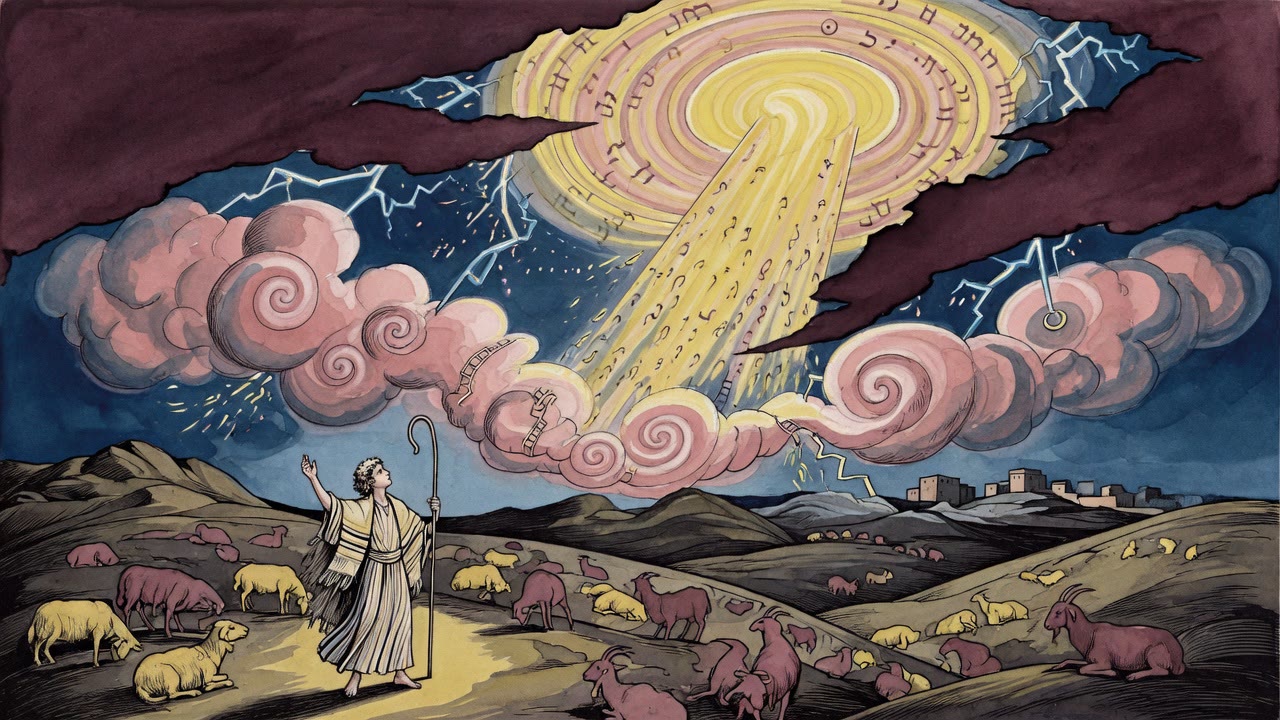
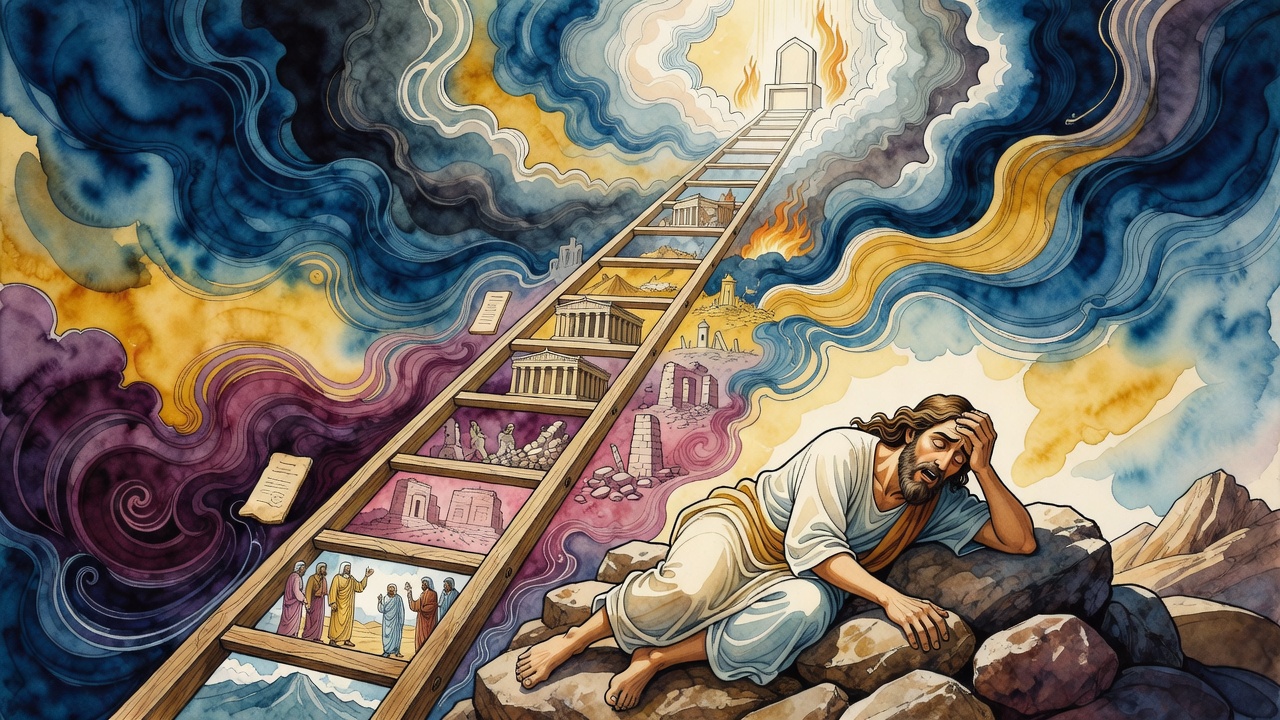
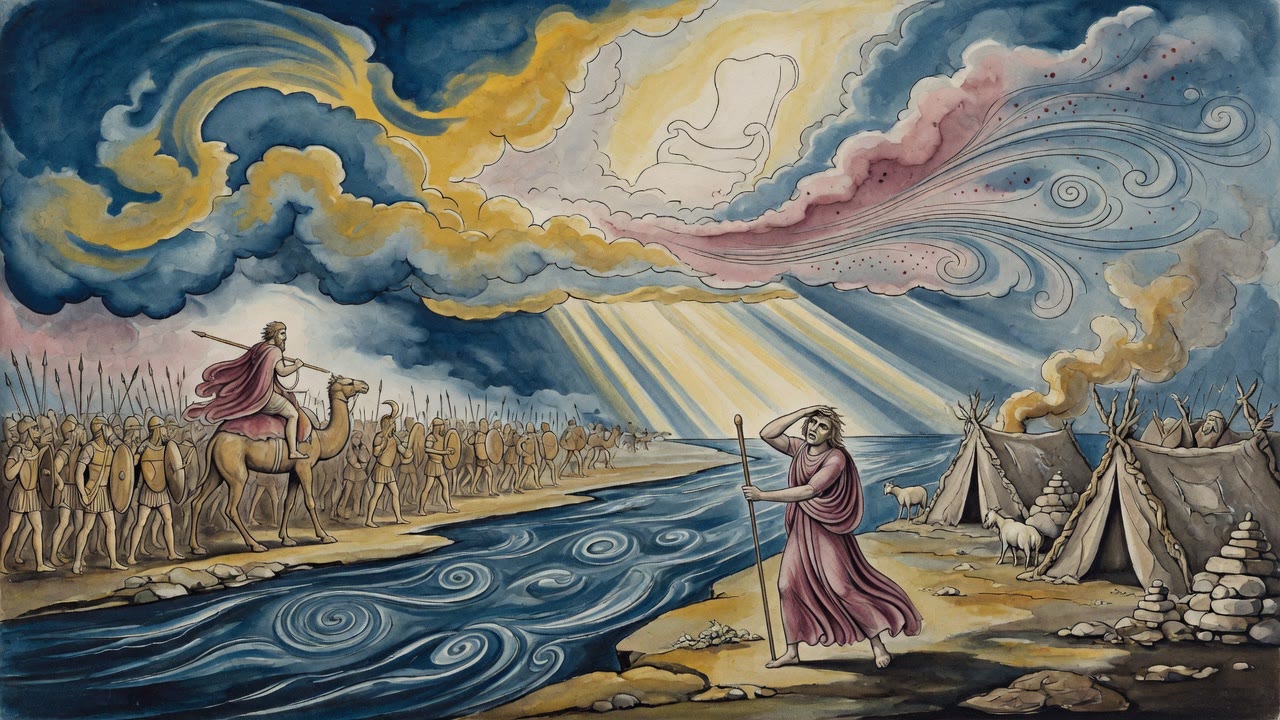
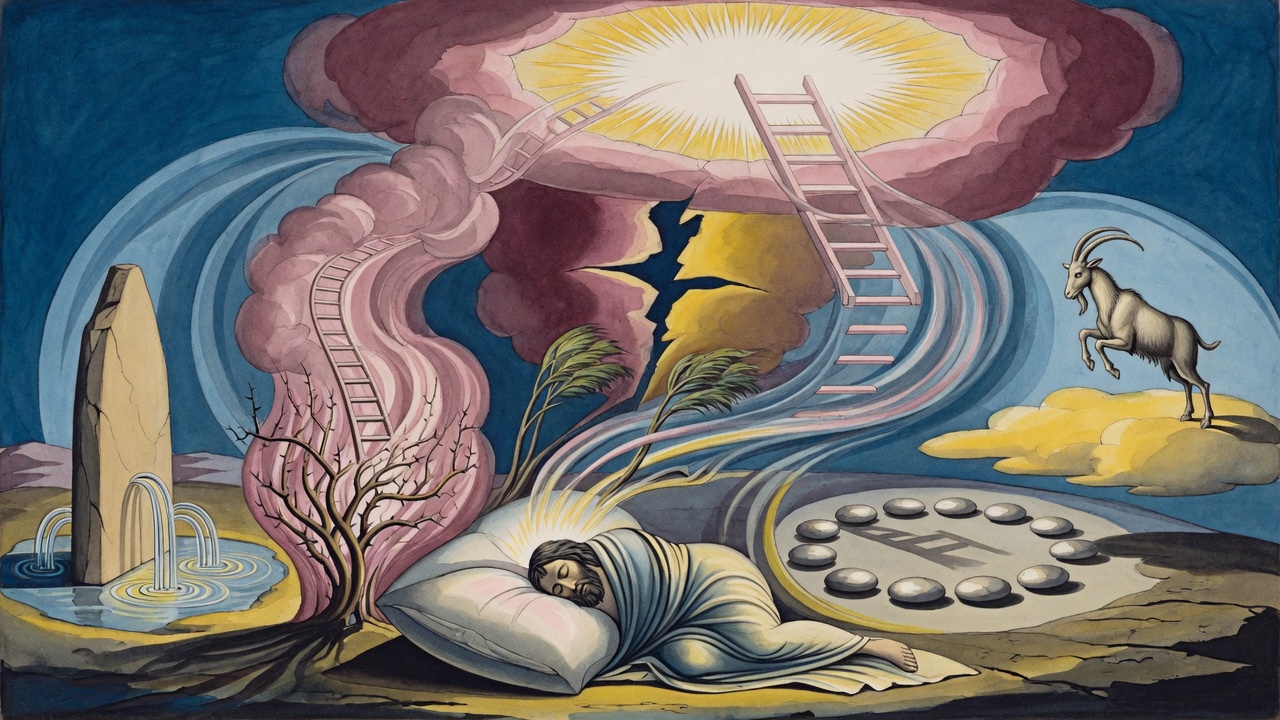
Jacob left Beersheba and set out toward Haran. He stopped at a certain place when the sun had set, took stones from the ground and arranged them under his head, lay down, and dreamed of a ladder. This is what Genesis 28 gives you: a road, a stop, a makeshift pillow, a dream. The Hebrew text is economical. It wants to get to the ladder.
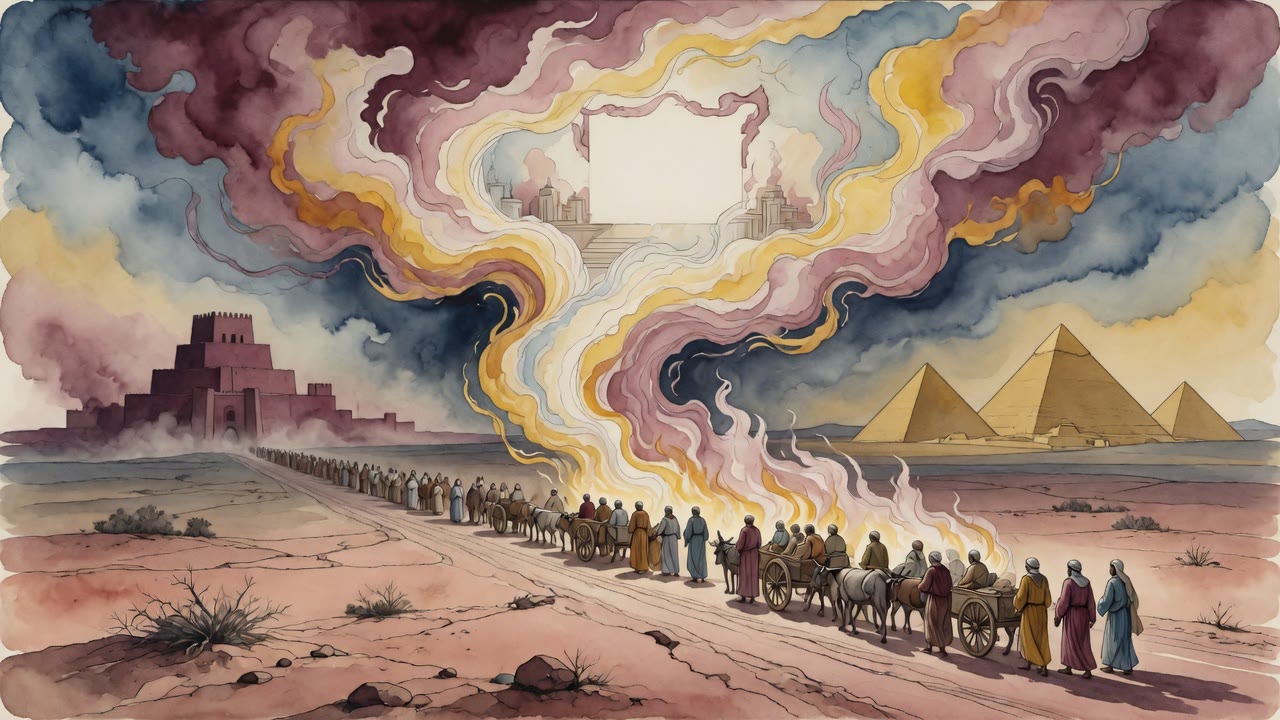
Targum Jonathan on Genesis 28, the ancient Aramaic translation of the Torah developed in the land of Israel with roots in first-century Palestinian traditions, surrounds that night with five miracles that the Hebrew text never mentions. Before Jacob fell asleep, the world had already been rearranged around him. The dream was not a random visitation. It was the culmination of a sequence the text compresses into a single chapter heading.
The Sun That Set Too Early
The first miracle was the sun. The Targum states that the hours of the day were compressed and the sun set before its time, because God's Word desired to speak with Jacob privately. This is not wonder-working for display. It is a divine summons delivered through the calendar. The world's rotation was adjusted so that one man would stop walking, lie down in a specific place, and receive something that required the cover of night.
This sets the principle governing all five miracles: the landscape was bending toward Jacob because the divine intention required it. Nothing that happened that night was accidental. The early sunset was the first instruction, delivered not in words but in the position of the light.
The Stones That Merged
Jacob arranged multiple stones under his head before sleeping. When he woke, there was one stone. The Targum says the four stones he had placed beneath him fused overnight into a single stone. This is the second miracle, and the one with the longest future: that stone became the foundation stone of the altar Jacob anointed in the morning, which became, in the tradition, the foundation of the Temple itself.
The stone that pillowed Jacob's head is the same stone at the center of the world. When he lay down on it, he was sleeping on the future site of the Beit HaMikdash before the Temple existed, before Jerusalem existed, before there was a nation to build either of them. The dream that showed him the ladder showed him the axis of creation while his head rested on the axis of creation.
The Well and the Boulder
The third and fourth miracles involved water. Jacob arrived at a well, and the stone covering it, which normally required all the gathered shepherds of the district to move, Jacob lifted with one arm. This is the strength the Targum attributes to him before he arrives at Laban's house, before his years of labor. His strength that evening was not his ordinary strength.
Then, having lifted the stone, Jacob did nothing to cause the fourth miracle. The well overflowed. The water rose to its brim and continued overflowing for the rest of his time there. In the Book of Jubilees, a Second Temple Jewish text composed around the second century BCE, Jacob's arrival at Bethel is described with the same overwhelming sense of a place recognizing the man who has arrived: the landscape responds, the water rises, the stone yields. The fifth miracle, the Targum says, was that the stone Jacob set up as a pillar after the dream was the same one he had slept on, proof that what seemed like ordinary ground had been, all along, extraordinary ground.
What the Ladder Was For
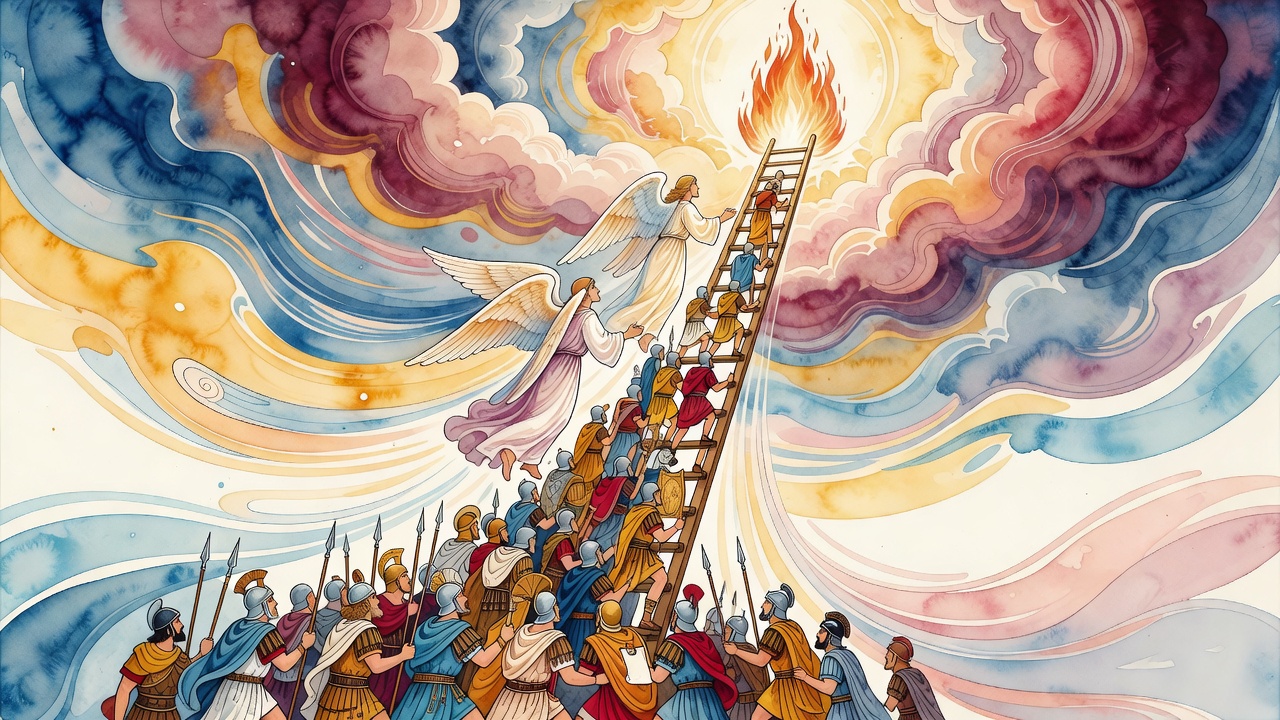
When Jacob finally slept, he saw a ladder whose foot stood on earth and whose top reached into heaven, with angels ascending and descending on it. In the Targum's framework, the angels ascending are Israel's guardian angels, rising to report to the divine court on the state of his road, and the angels descending are messengers coming to accompany him. The ladder is not a one-time vision. It is a permanent structure, the axis along which divine attention and human fate communicate.
The Book of Jubilees records Jacob's reaction when he woke: he was overwhelmed and afraid. He said "dreadful is this place, which is none other than the house of God, and this is the gate of heaven." Then he rose early, took the stone he had slept on, set it up as a pillar, and anointed it with oil. The gesture is appropriate for a man who has just understood what he was sleeping on: not a convenient rock, but the center of the world, prepared for him by five miracles he was not awake to see.
← All myths