Habakkuk Was Carried by His Hair to Daniel in the Lions' Den
A prophet came in from the harvest with a dish of food for the reapers. An angel took him by a lock of hair and put him down in Babylon, in the pit.
Table of Contents
 Click for full size
The Cups Came Out of Storage
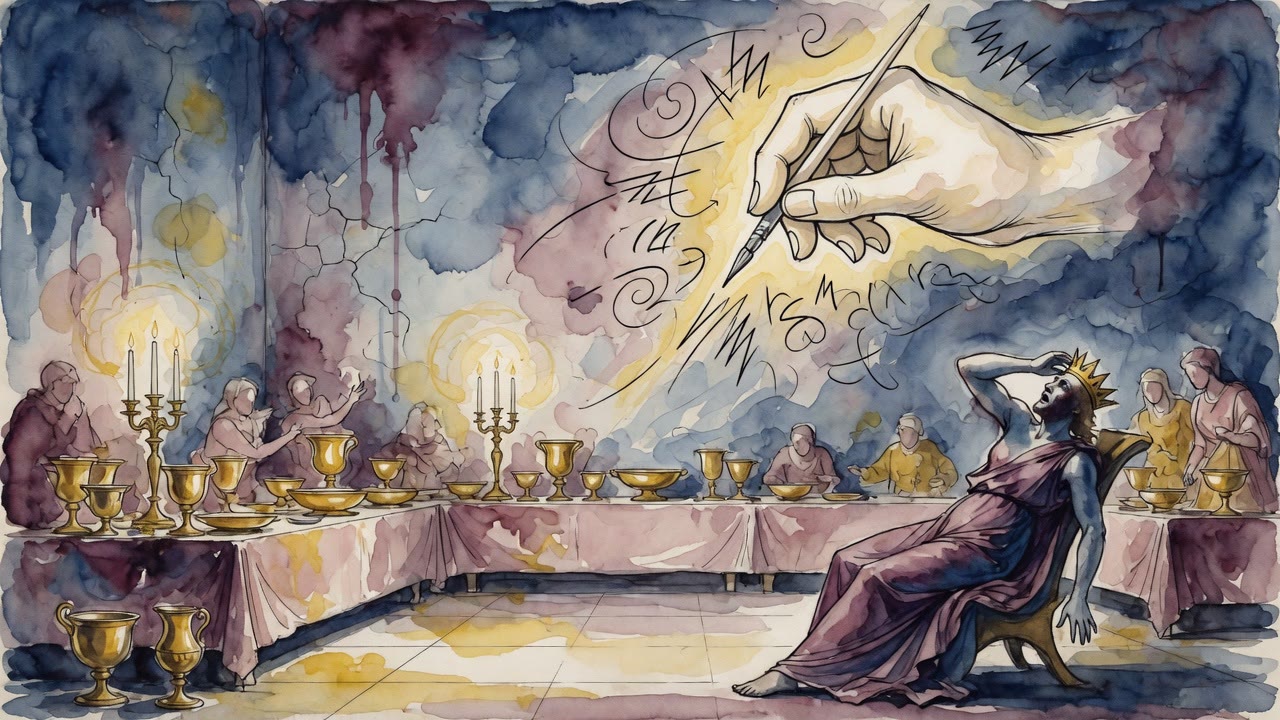
Belshazzar had beaten off a rebellion and he wanted a party worth the victory.
A thousand of his warriors and princes ate under the lamps. His two vassals, Darius and Cyrus, had come at him with an army, and his men had driven them off and come home swaggering, and the king had thanked his gods for it. Gods of silver and gold and iron and brass and fired clay, which had never got anybody out of anything.
Then he sent to the treasury for the vessels out of the temple in Jerusalem. They were carried up and filled, and he drank from them, and his princes and his wives and his concubines drank from them, and sang to the idols while they did it.
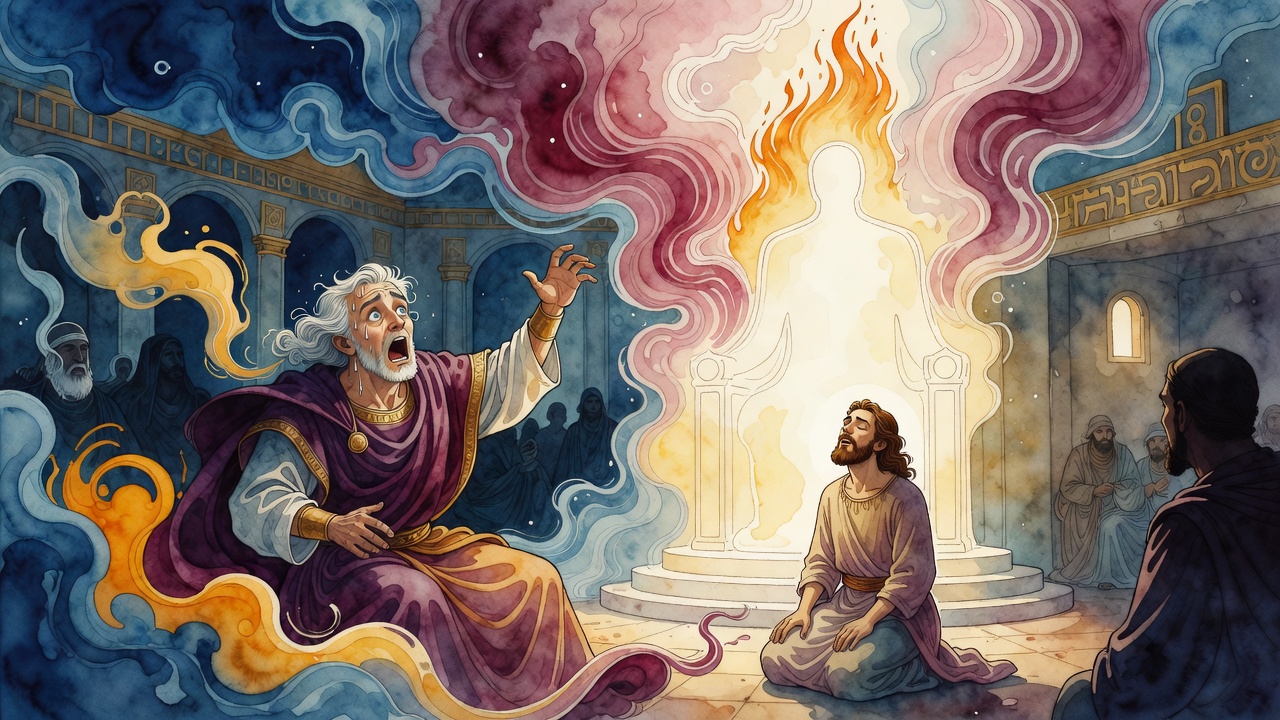
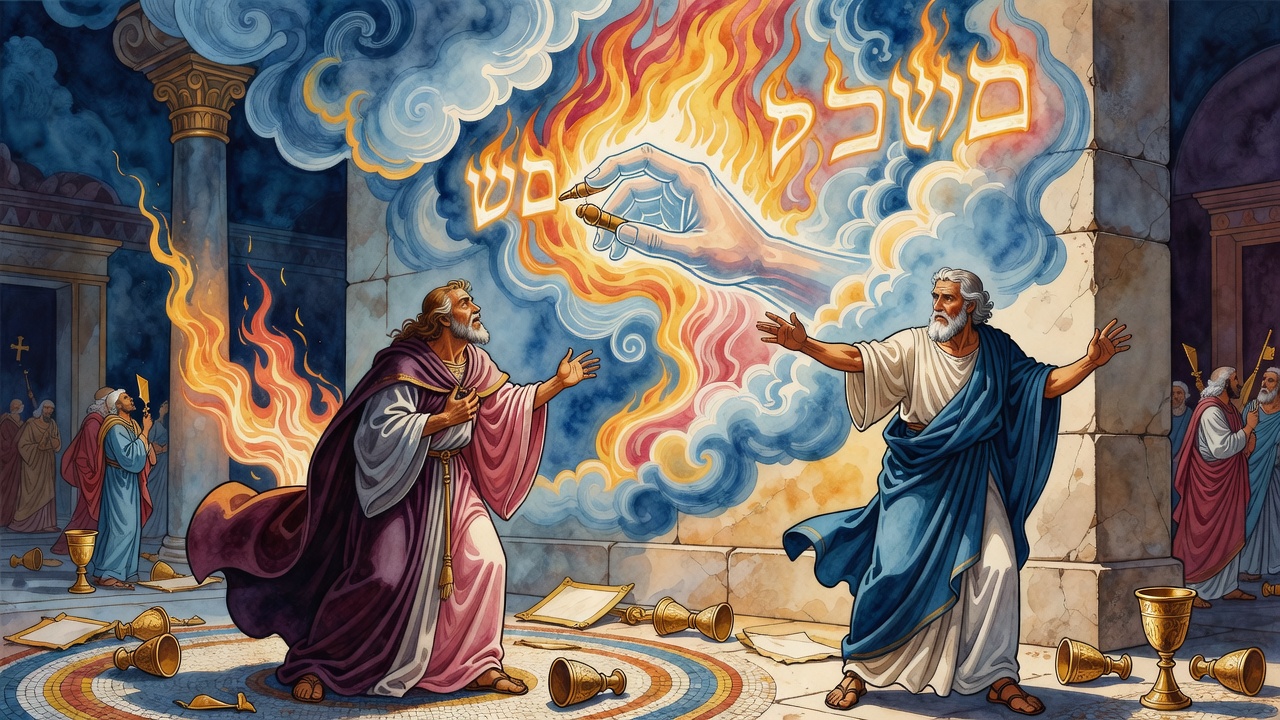
The writing appeared on the plaster across from the candlestick, in red, in Hebrew letters.
What Daniel Said Before He Read It
They brought Daniel in, and he did not start with the wall.
"You have acted like a fool. You have defiled the vessels of the house of our God, and God is jealous for his children and for his sanctuary, and he sent an angel to write that."
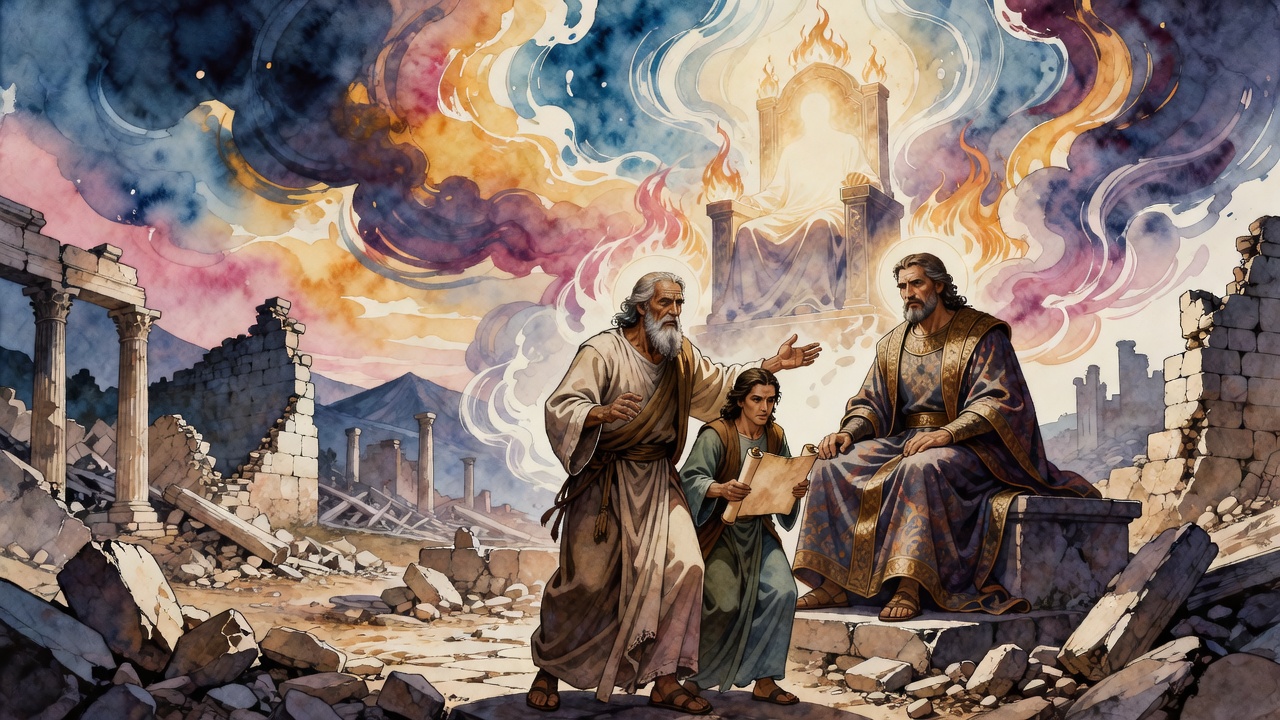
Then he made the king stand and listen to his own family history. God made your father great and set him over every kingdom on earth, the holy land and the kingdom of priests along with the rest, and your father used it to spill their blood like water, burn the house down and carry the whole inheritance off to Babylon. Then his heart got big in his chest and he said, my hand is high and my own strength has held me up. He did not remember whose hands those things had come out of, and he did not remember it until God turned him out to live among the wild beasts of the field and the birds of the air.
"You knew all that. You inherited his kingdom by the will of the God of heaven, and when your warriors came home victorious you thanked metal. So he sent his scribe to write your end on the wall of your own house."
The letters were Hebrew and the language was Aramaic. Mene, Mene, Tekel, Upharsin. The years of your kingdom are counted and the count is finished, and the seventy years of the captivity are finished with them. You have been weighed and you came up short. What you are holding is going to the Medes and the Persians.
The Doorkeeper in the Twilight
Nobody in that hall said a word.
The princes went for the door and jammed in it and trampled each other getting out. The king lay down on his bed shaking, with pains going through him, and dropped into a sleep like a dead man's.
An old doorkeeper stayed in the room. He had served Nebuchadnezzar and been honoured in that house for a lifetime, and he stood in the dark doing arithmetic. Daniel read every dream the old king ever had, and not one of those readings failed. So why not take that head to Cyrus and Darius and be welcome there for the rest of my life?
He waited for the twilight. Then he drew the sword out from under the king's own pillow and cut Belshazzar's head off with it, and walked all night carrying it, and at daybreak he set it down in front of the two kings.
The whole army went quiet. When they asked him what this was, he told them about the cups and the writing and the man who read it. The two kings got down on the ground and swore that if the country were handed to them they would free the captives, rebuild the house in Jerusalem, and give back the vessels. Then they feasted three days, and marched, and left Babylon a burnt field.
A Law Written to Catch One Man
Darius kept Daniel, and the princes of the court could not stand it.
"If we do not trap him in a religious matter," they said among themselves, "we will never bring him down."
So they drew up a decree. For thirty days no man might ask anything of any god or any being except the king, and whoever did would go to the lions, and no wealth and no royal favour could buy him out. They each signed it and pressed a seal into it and carried it to the king, who read it without suspecting anything, sealed it, and handed it to his scribes.
Then they went to watch Daniel's house. A little girl was playing in the road outside the door.
"Where is Daniel? What is he doing?"
"Upstairs," she said. "At the window that faces the temple in Jerusalem, saying thank you to his God."
They climbed to the upper room and found him on his knees with his hands spread open. He did not jump at the noise of them and he did not shake. He finished the prayer. Then they took hold of him.
The king fought them over it until the sun went down. "If his God takes him out of the mouth of the lions, where will you put your faces? You will go in after him." So be it, they said. When he saw the whole court had turned on him he let go, and said to Daniel, "I am clean in front of your God. I tried and I could not."
Ten Lions and a Man Singing
There were ten lions in the pit and their food was ten sheep and ten human bodies a day. For this occasion they had been given nothing at all, so that they would be quick about it.
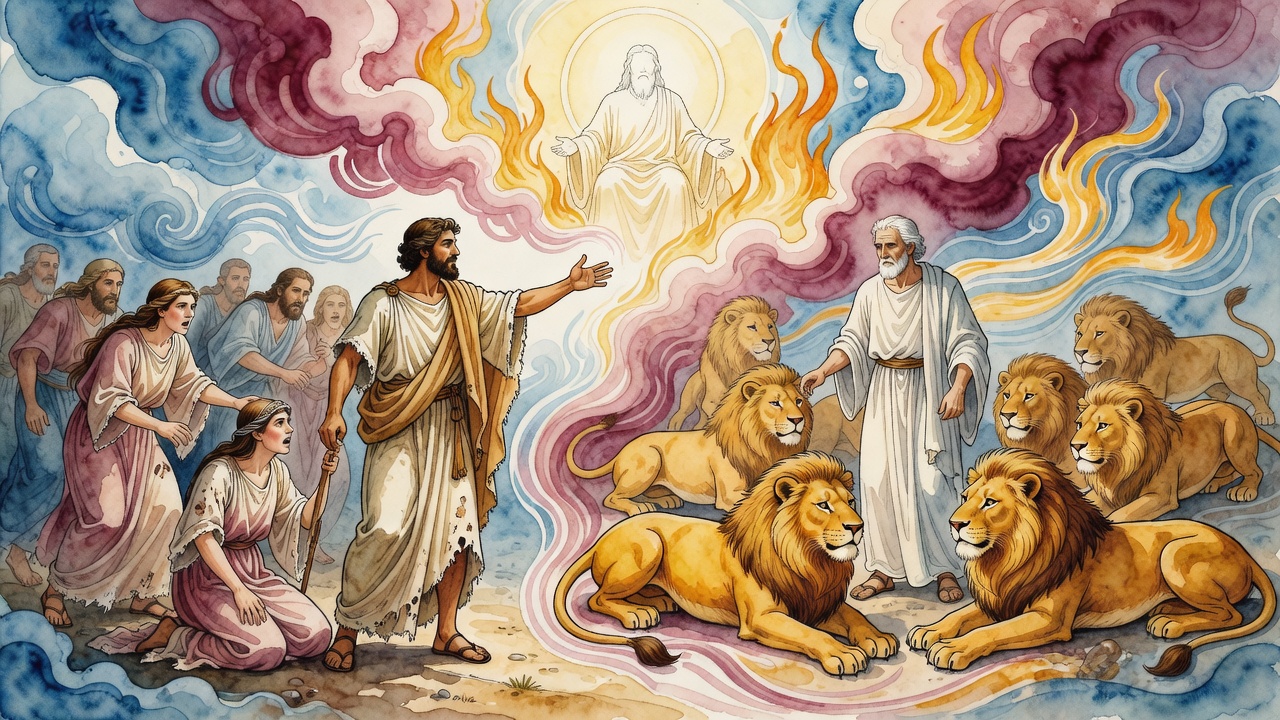
Daniel climbed down. The lions came over and looked at him kindly, and licked him, and wagged their tails, and were as glad of him as dogs are when the man of the house comes in from the field.
The princes rolled a great stone across the mouth of the pit and the king sealed it with his ring and each of them sealed it with his own, and they all went home.
Daniel sang down there the whole night, and the lions lay in a ring around him with their heads up, listening.
The king ate nothing and drank neither wine nor water. He would not let the musicians play. He did not take off his clothes. He lay turning over on his side and sighing at the ceiling. Would that it were morning. Would that it were morning.
The Angel Took Him by the Hair
That same evening, in the land of Judah, Habakkuk came in from the harvest and made up a big dish of food to carry out to the reapers.
He had it in his hands when the word came. Take that to my servant Daniel, in the land of the Chaldeans, in the den of lions.
"Who is going to take me there? The distance is more than I can walk."
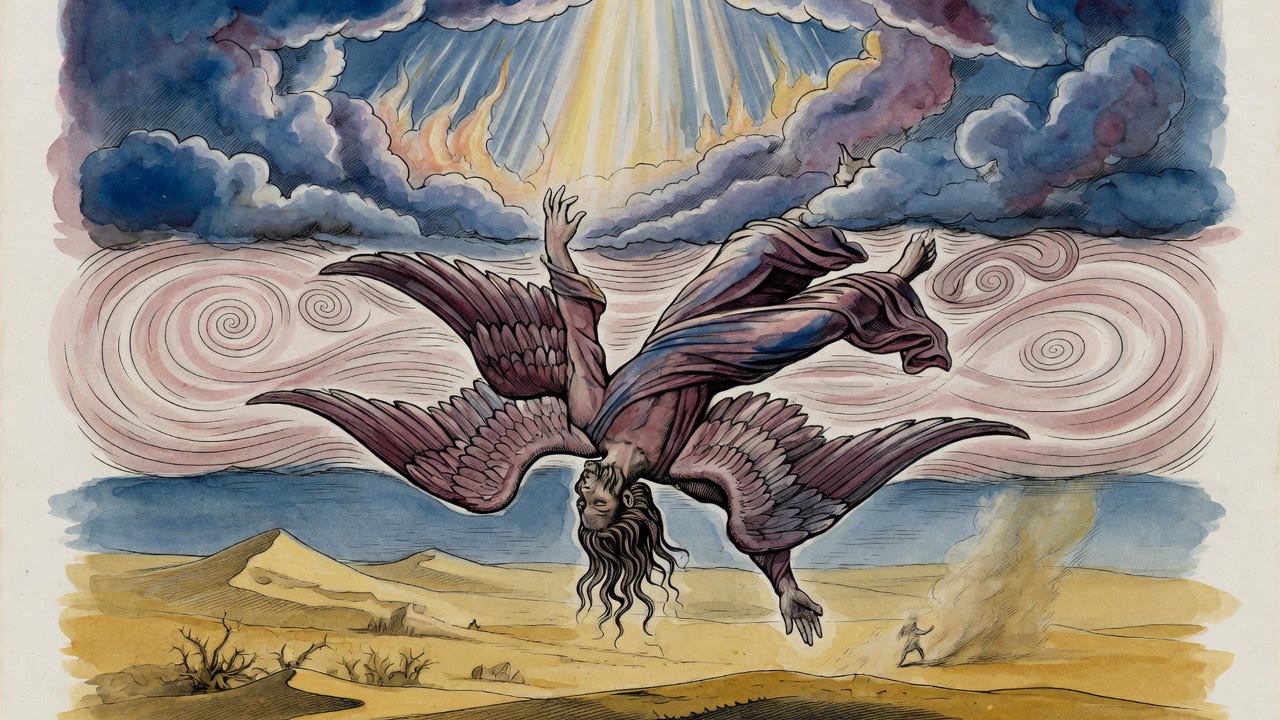
An angel picked him up by a lock of his hair, food and all, and set him down in the middle of the pit. He put the dish on the floor. The angel lifted him again and put him back in his own field, and the reapers had not eaten yet.
At first light the king ran to the pit and heard singing come up out of the ground, and could not get a word out for crying. He forced it. "Daniel. Daniel. Has God kept you from the mouth of the lions?"
"He shut their mouths," Daniel called back. "They were as glad to see me as my own household would be. And yesterday food came down to me, by Habakkuk."
The princes were sent for and made to look at the seals. Untouched, they said, every one of them as we left it. The stone came off and Daniel came up without a scratch, and the people standing there shouted that the God of Daniel was greater than all the gods.
Then the king had those princes taken, and their wives and their children with them, and put into the pit. The lions had still not been fed. They tore them apart before the bodies reached the floor and ground the bones to dust, and went on roaring out of that hole so loudly that people a long way off ran into the streets shouting that the lions had got out.
← All myths