Isaiah Said Send Me Before He Heard What the Message Was
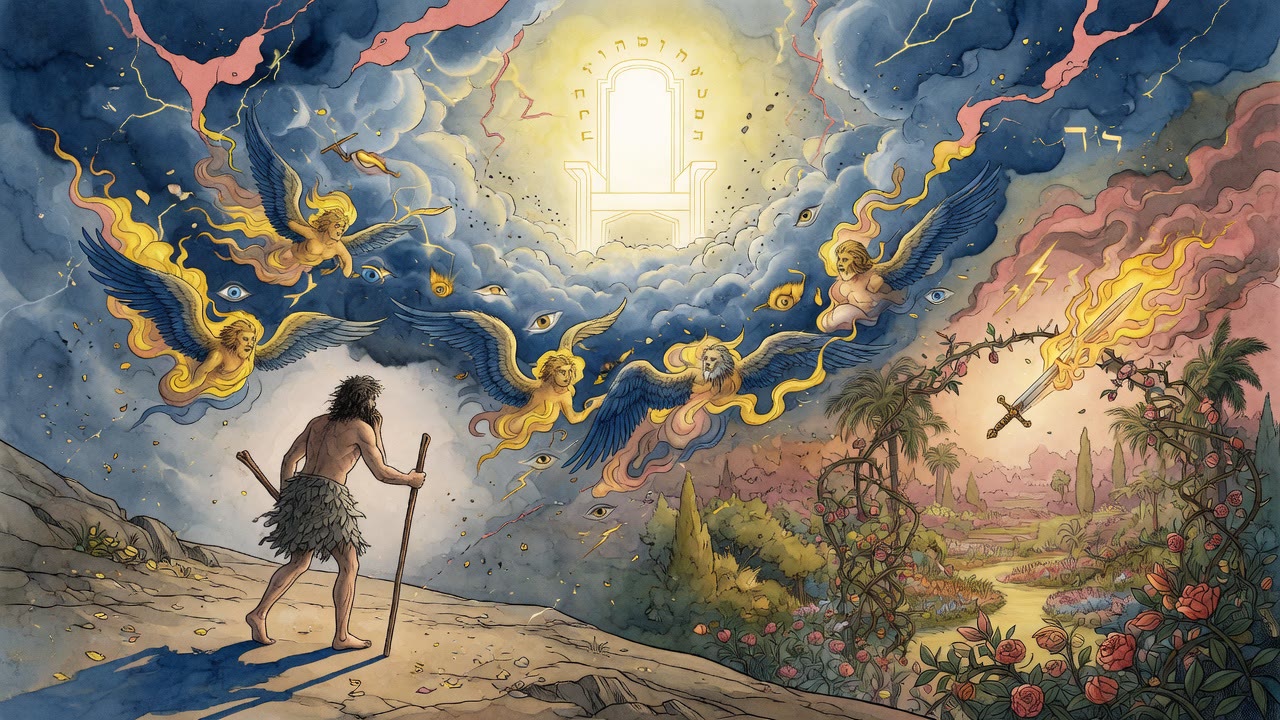
The doorposts were still shaking when he decided he was a dead man. Then one of the burning ones came down at him carrying a pair of tongs.
Table of Contents
 Click for full size
Holy, Holy, Holy
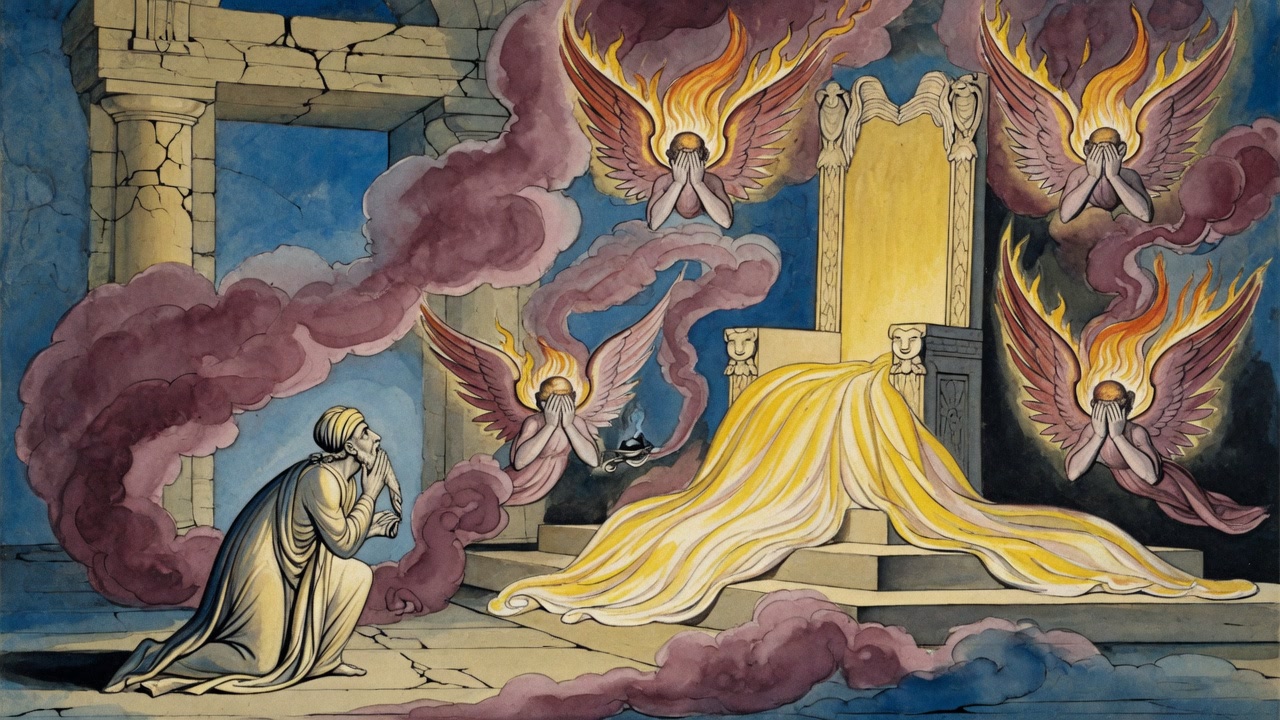
The hem of the robe came in first.
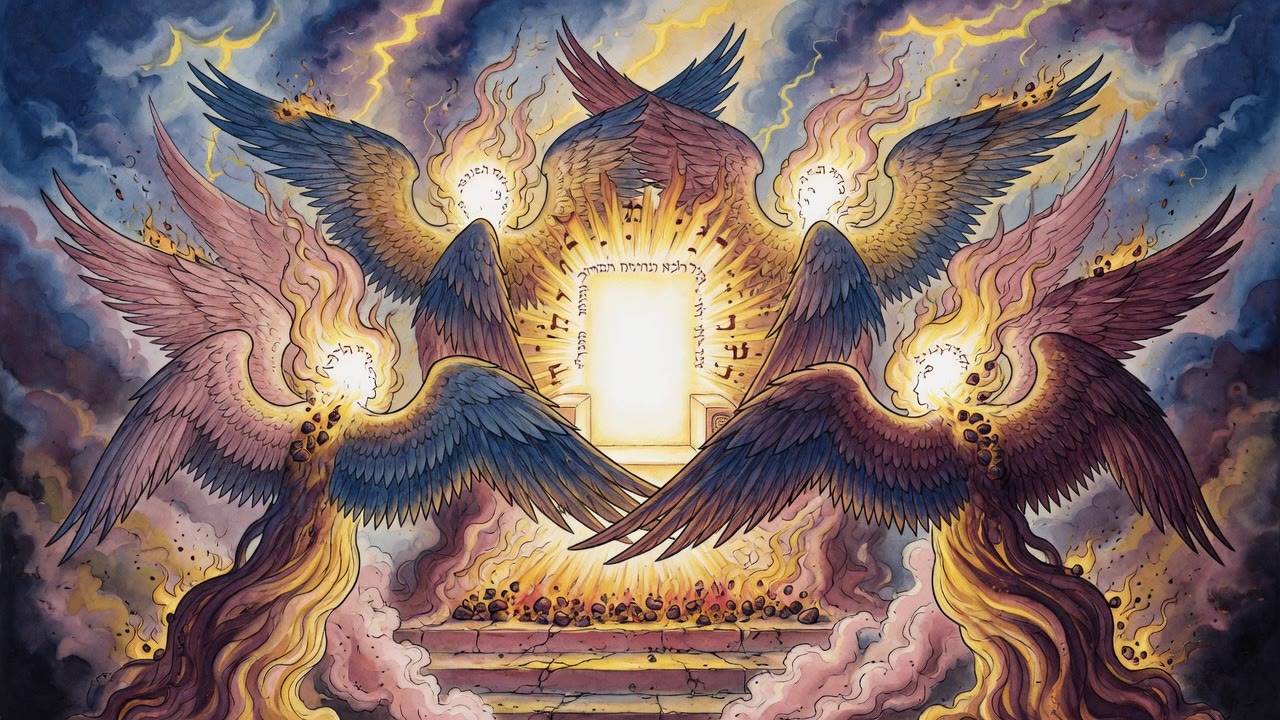
It filled the hall, all of it, the whole floor of the house under cloth, and above the cloth a throne, and on the throne someone sitting. Isaiah did not move. Over the throne stood the seraphim, the burning ones, six wings on each of them, and they were using the wings to hide. Two across the face. Two across the feet. Only the last pair was for flying.
Then they called to each other, and what they called was, "Holy, holy, holy, the Lord of hosts, the whole earth is full of His glory."
The doorposts jumped in their sockets. Smoke came up off the floor and kept coming until the house was full of it and Isaiah could not see the throne he had just seen.
"I am finished," he said out loud, to nobody. "I am a man of unclean lips and I live in the middle of a people of unclean lips, and my eyes have looked at the King, the Lord of hosts."
The Coal in the Tongs
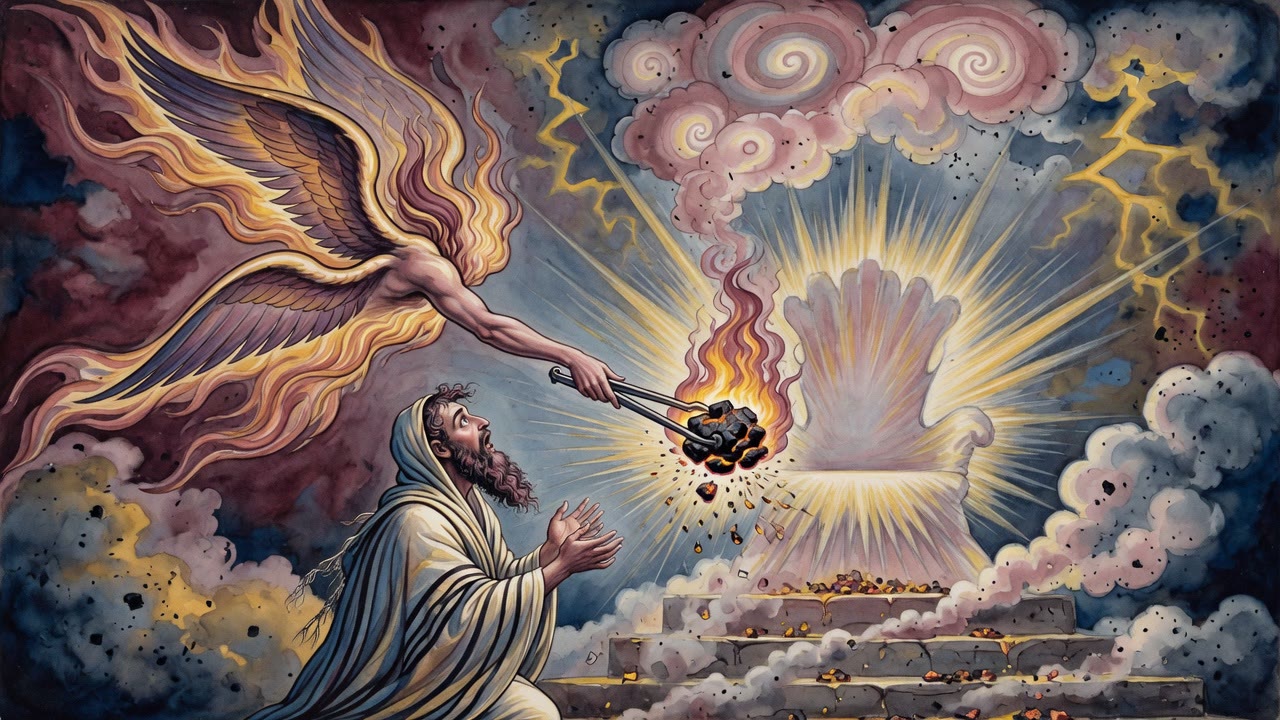
One of them came down at him through the smoke.
It had gone to the altar and taken a live coal off it, and because even a seraph does not put a bare hand into that fire, it had lifted the coal with a pair of tongs and it was still holding the tongs when it reached him.
It touched the coal to his mouth.
"This has touched your lips," it said. "Your guilt is gone and your sin is covered."
Then it stopped. It did not burn away his tongue or his face. It burned the one thing it had been sent to burn and no more, and the whole arrangement in that house was built on the same measure. There is an altar up there with tongs beside it, and there is an altar down here that God ordered built out of packed earth. There is a linen tunic on a priest in Jerusalem, and there is a man dressed in linen standing in the higher courts. Everything above has a smaller twin below, put there on purpose, sized for people.
Here I Am, Send Me
A voice came out over the smoke. "Whom shall I send? Who will go for us?"
Isaiah answered before he had been told anything. His mouth had been open for three seconds in his entire life without something wrong coming out of it and he spent one of them on this.
"Here I am. Send me."
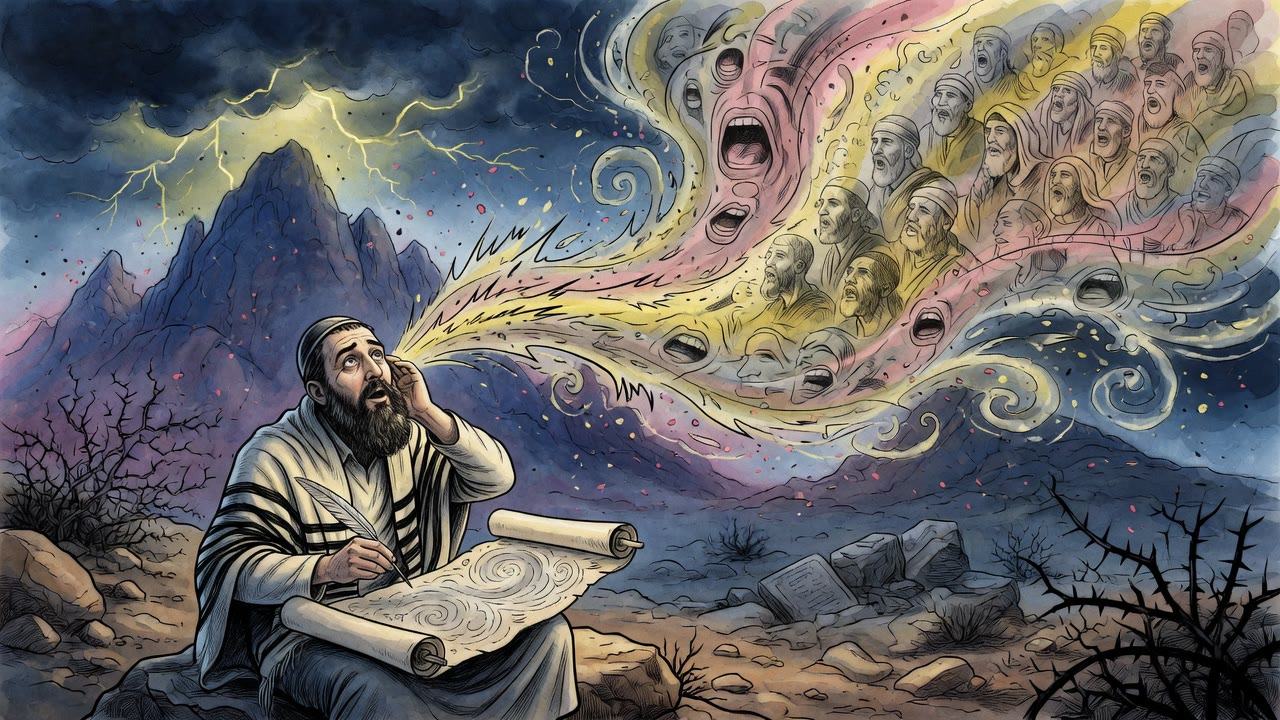
Then he was told what he had volunteered for. Go to that people and keep them listening and never let them understand. Keep them looking and never let them see. Make the heart of this people heavy and shut their eyes, so that they do not turn and get healed.
"How long, Lord?" he said.
The answer came back as an inventory. Until the cities have no one in them. Until the houses have nobody left inside. Until the ground itself is scraped bare and empty.
He had a clean mouth now and this was the first thing he was going to say with it.
The Troops the King Sent Away
There is a king with soldiers he cannot look at.
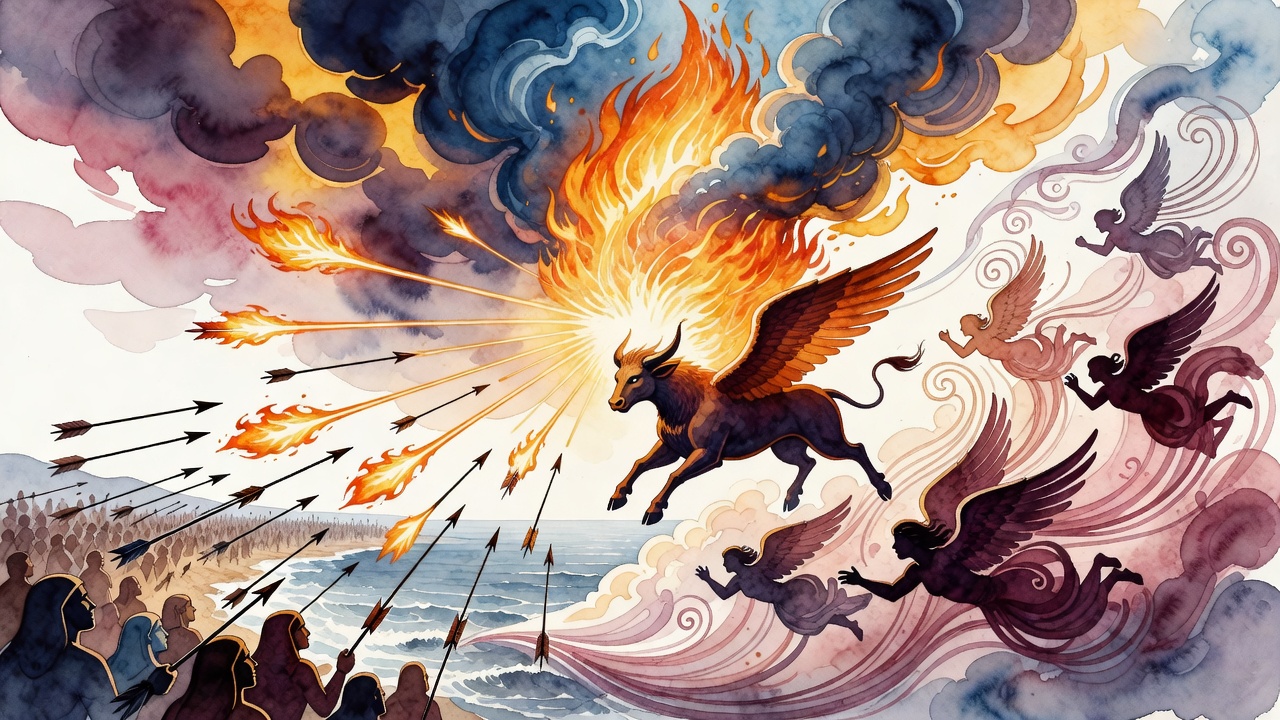
They are vicious and they are efficient and whenever a province rises against him he unleashes them on it and the province stops existing. And then, the moment the work is finished, he moves them out. He will not garrison them anywhere near his own capital. He billets them at the far end of the world, because he has seen what they do when they are close and bored.
The angel put in charge of anger lives at that distance. When wrath finally comes it comes from a country at the edge of the sky, the Lord and the weapons of His fury travelling in from far off, and the distance is not an accident of geography. God waits a long time with the wicked before He collects. He waits a long time with the righteous too, and then pays them in peace. And once He does begin, He shoves His own anger out to arm's length and holds it there, because if He let it run until it was satisfied there would be nobody left standing to be angry at.
The Man in Linen Came Back
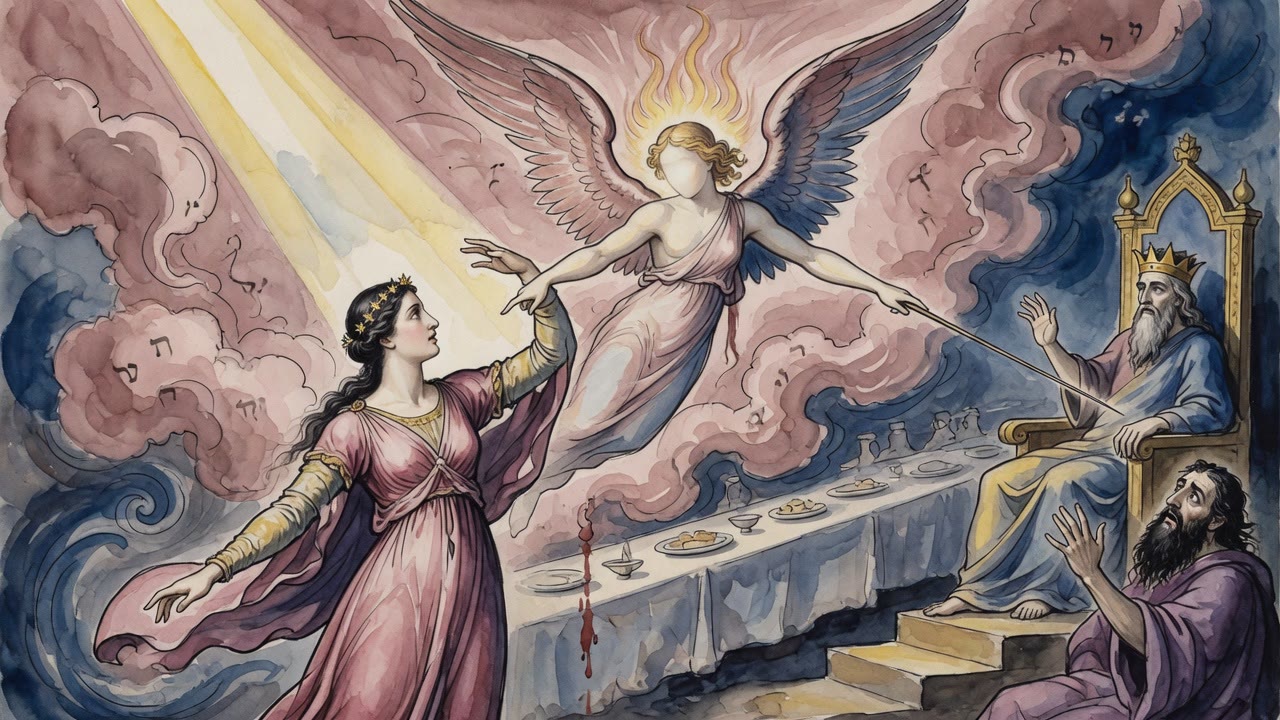
Six men walked into Jerusalem with weapons in their hands, and a seventh walked in with them, dressed in linen, carrying a scribe's inkhorn on his hip.
The one in linen went first. He was told to go through the city and put a mark on the forehead of everyone who groaned and wept over what was being done in it. The other six followed behind him and were told to start at the sanctuary and strike everything without the mark, and not to let their eye spare anyone.
When it was over, one of the seven came back and reported. "I have done as You commanded me," said the man in linen, and it is written down that he said it.
The other six are not recorded as coming back. Nothing in the account has them returning to the throne to say the work is finished. Heaven keeps a receipt for mercy and keeps no receipt for the other thing.
And the King who arranged all of it, the altars in two places and the linen in two places and the coal measured to a man's mouth, did not stay in the upper house. He left it. "Make Me a sanctuary," He said, "and I will live among them," and He came down and moved into a tent in the sand.
← All myths