Vashti Humiliated Jewish Women on the Sabbath. Gabriel Repaid Her.
The rabbis asked why Vashti's downfall came on the Sabbath. The answer was that the day she desecrated became the day of her punishment.
Table of Contents
The Book of Esther records that King Ahasuerus summoned Vashti to appear before his guests on the seventh day of his feast, that she refused, and that her refusal ended her reign. What the Book of Esther does not record is why it happened specifically on the seventh day, and why the queen who had every reason to want to appear before an admiring court suddenly found refusal to be the only option available to her.
The rabbinic tradition answers both questions with a single story. Legends of the Jews, Ginzberg's synthesis compiled between 1909 and 1938, preserves the tradition that the seventh day was not an accident. It was a reckoning. And the reckoning was precise.
What Vashti Did on Shabbat
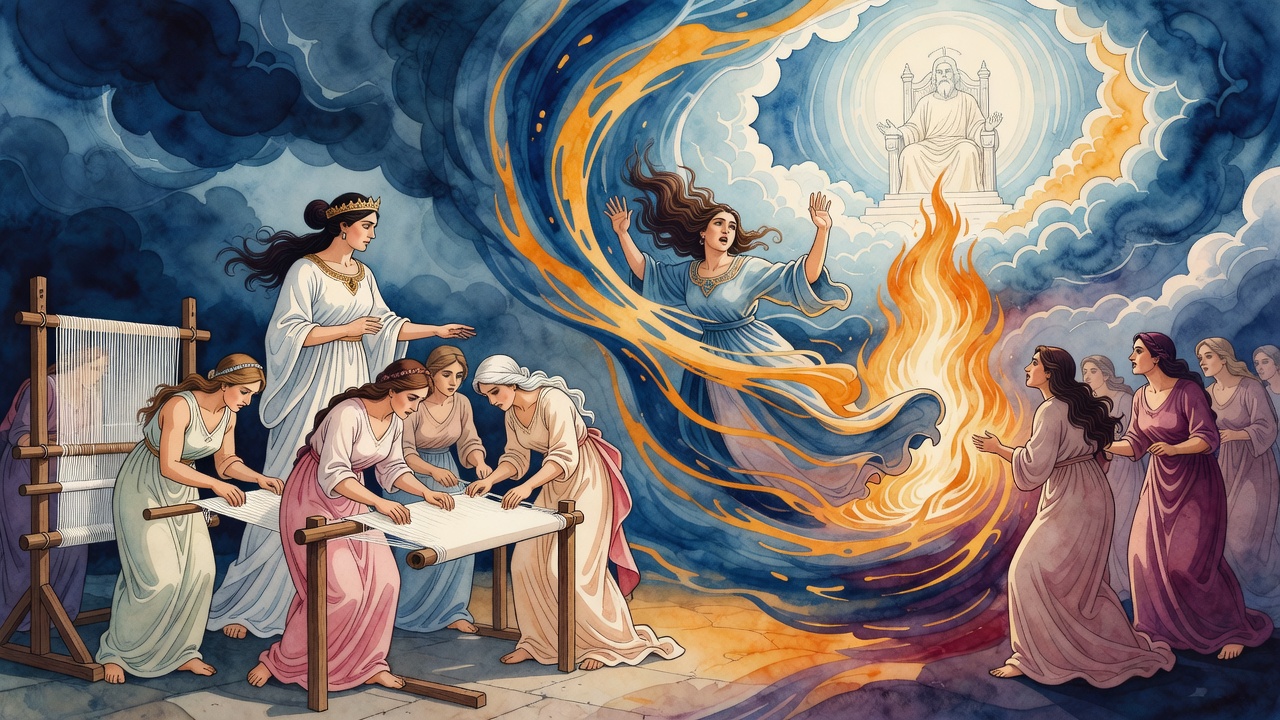
Vashti had a habit. She took Jewish women, the daughters of the exiles who had been brought to Shushan with the Babylonian conquest and remained there under Persian rule, and she put them to work on the Sabbath. The work was spinning and weaving, domestic labor performed in the queen's household. And she made them do it without clothing.
The layers of this transgression, as Midrash Rabbah, the great rabbinic collection compiled in fifth-century Palestine, reads it, are carefully stacked. The Shabbat (שבת), the seventh day of rest, is in Jewish tradition not merely a day off from labor. It is the day that most fully expresses human dignity, the day on which every person, slave and free, has the same relationship to the week. Making Jewish women work on that day was an attack on their dignity at its most protected point. Stripping them while they worked was an intensification of the attack, humiliation laid on top of desecration.
The tradition records all of this as background to the story the Megillah (מגילה) tells. Vashti's cruelty to Jewish women on the Sabbath is the context that makes her downfall, when it comes, carry the weight of divine justice rather than royal caprice.
Why the Seventh Day Was the Day
When Ahasuerus's feast reached its seventh day and he sent for Vashti, the Babylonian Talmud, compiled by the sixth century CE, notes the date with precision. The day on which Vashti was summoned to appear was the Sabbath. The day on which she had repeatedly violated the dignity of Jewish women. The symmetry is the point: the tradition understands this not as a coincidence but as divine accounting rendered in the same currency the transgression had used.
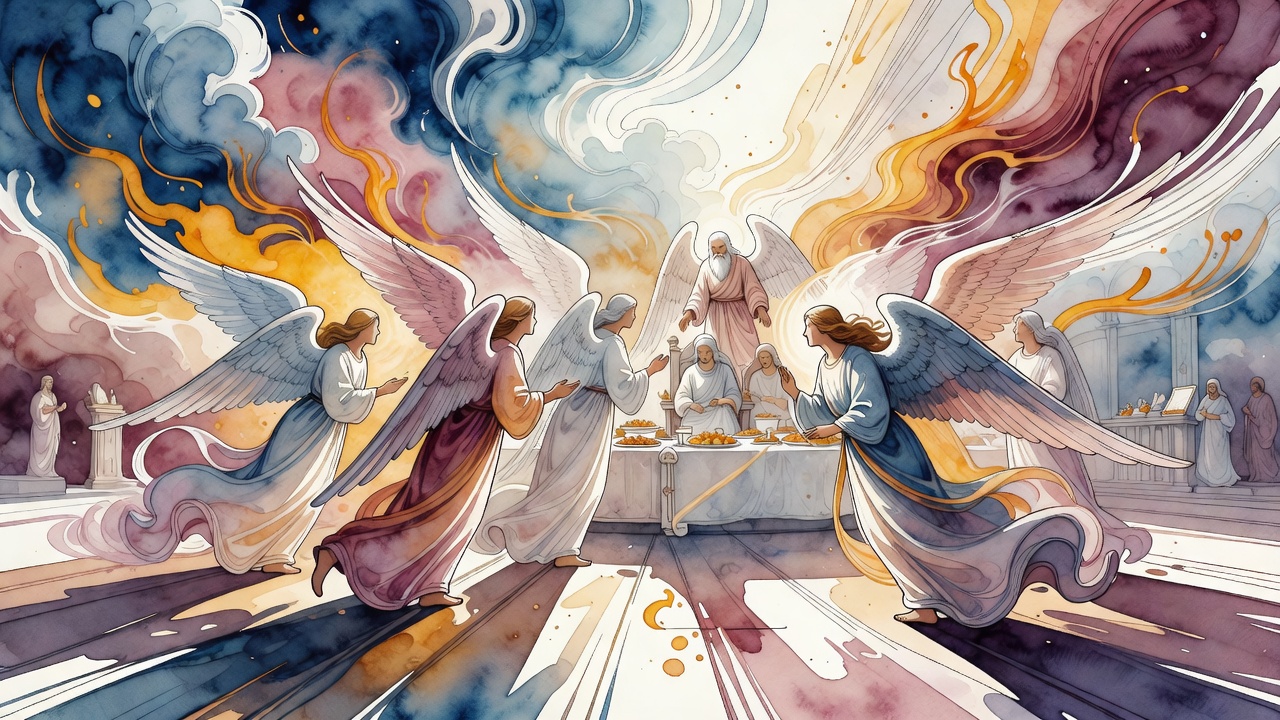
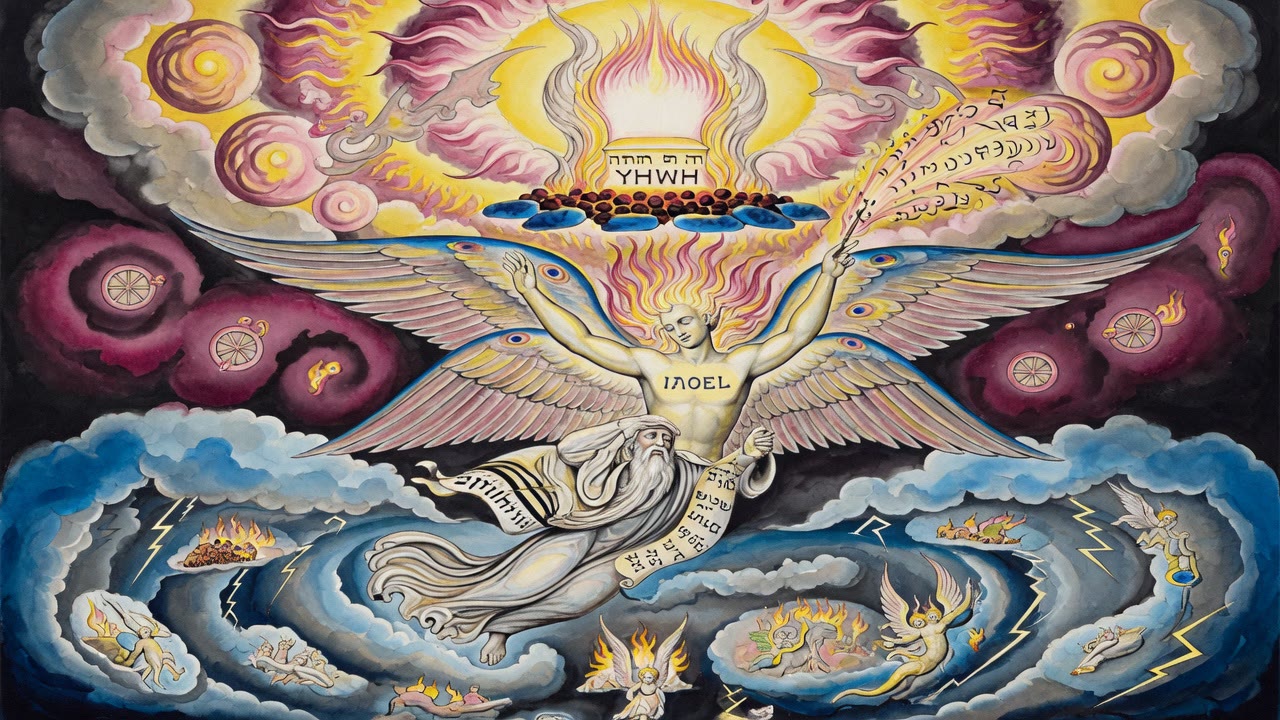
The account preserved by Ginzberg specifies the agent of this accounting: the archangel Gabriel, the divine messenger who appears throughout the prophetic literature as the bearer of news that changes everything. Gabriel was sent not to Vashti's mind but to her body. Signs of leprosy and other diseases appeared on her face and skin. The woman who had been, by all accounts, genuinely beautiful, who had every reason to enjoy the king's boastful invitation, found herself unable to appear not because she refused the summons on principle but because she had suddenly become, physically, what she could not show.
The intervention is precise in a way that the tradition finds significant. God did not strike down Vashti directly. God sent an angel to make her refusal the only available choice, and then let the human mechanics of Persian court politics take over. The king would be insulted. His advisors would recommend severe consequences. The decree of banishment would be issued. And the search for a new queen would begin.
Vashti's Response to the King
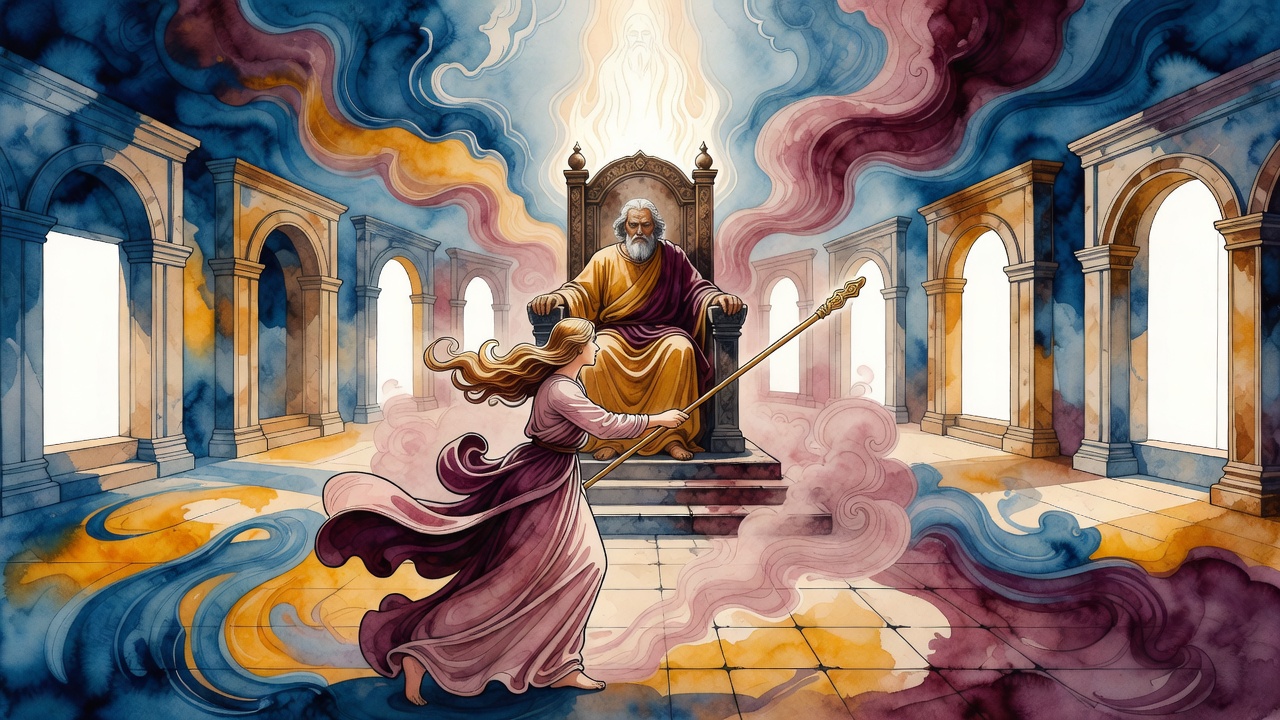
Cornered and unable to explain her true situation, Vashti chose arrogance as her defense. She told the king, through messengers, that he was a fool and a madman whose drinking had destroyed whatever reason he had once possessed. She reminded him of her lineage. She suggested that her grandfather, Nebuchadnezzar, would never have considered Ahasuerus worthy of her. She argued that showing herself to his guests would either embarrass him, if they found her less beautiful than claimed, or endanger him, if they found her beautiful enough to want her for themselves.
Pirkei DeRabbi Eliezer, the eighth-century homiletical midrash, reads this speech as the last expression of the same pride that had made Vashti what she was. Even in the moment of her downfall, she could not stop performing her dominance. The woman who had stripped Jewish women of their clothing while forcing them to work was now being stripped of her position by a process she could not control, and her response was to make herself as large as possible while she still had standing to do it.
The Complexity the Midrash Refuses to Simplify
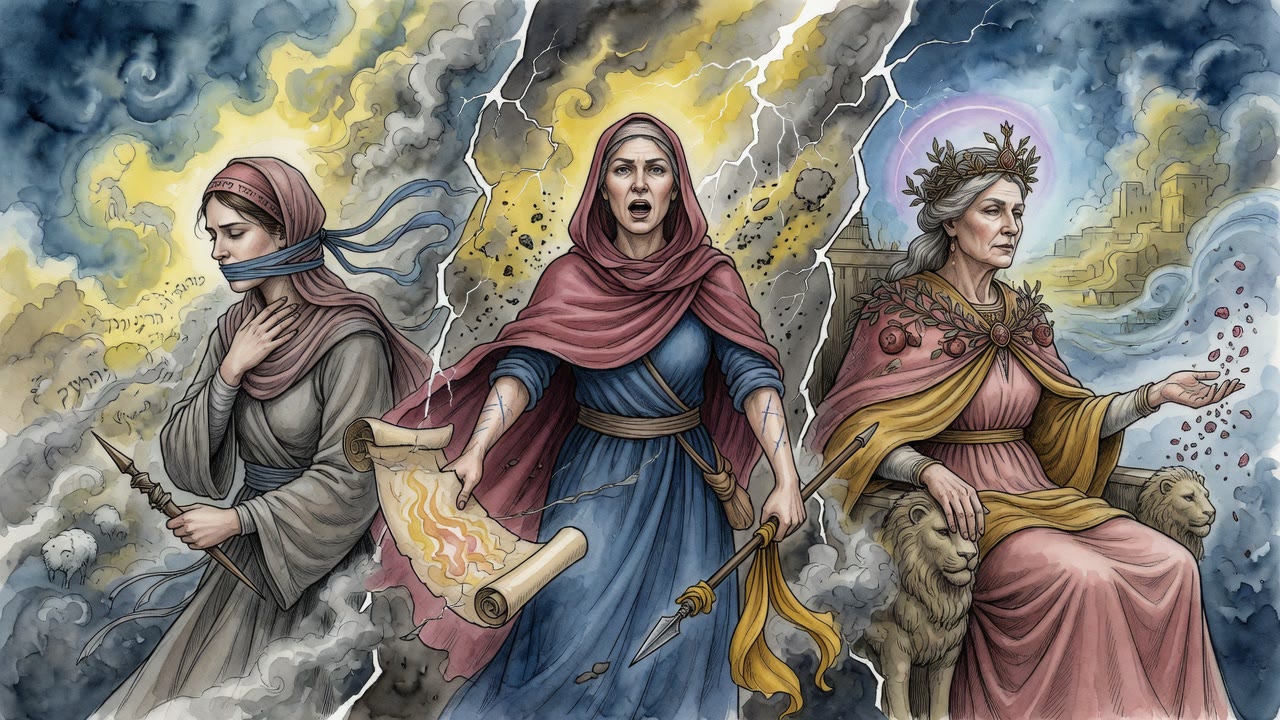
The rabbinic tradition's portrait of Vashti is not simple. It does not present her as purely villainous. Midrash Rabbah asks why the Megillah gives her so much narrative space, why her story is told with such detail, and answers that her story is necessary for understanding what kind of world Esther was entering. A world in which queens could be removed on a king's whim, in which divine justice operates through leprosy and courtroom politics, in which the women who suffered under Vashti's cruelty would live to see her fall without that fall immediately improving their situation.
The Zohar, the foundational text of Kabbalah first published around 1280 CE in Castile, Spain, frames Vashti's character in terms of the particular danger of power held without accountability. She was a queen in a court that had no mechanism for questioning a queen's behavior toward those below her. The Jewish women she exploited had no recourse within the Persian system. Their recourse came through the same divine channel that sent Gabriel on the seventh day, and it came precisely on the day that marked what she had violated.
The Door That Vashti's Fall Opened
Every Purim, the tradition reads the story of Esther and hears Vashti's name with a kind of complicated response. She is not mourned. She had earned her consequences. But the tradition does not celebrate her fall simply either. It notes that the fall of one unjust queen opened the space for a just one, that the removal of Vashti from the palace was the necessary precondition for Esther's arrival in it, and that the Jewish women who had suffered under Vashti would eventually, through Esther's intervention, see a different kind of royal power exercised on their behalf.
The full Ginzberg account of the Vashti episode runs from the feast through Gabriel's intervention to the decree, and treats the whole sequence as a single unit of divine action. The symmetry is tight: the Sabbath she violated became the Sabbath of her judgment. The humiliation she imposed was repaid in kind. And the palace she occupied was ready for someone whose relationship to power was entirely different from hers.