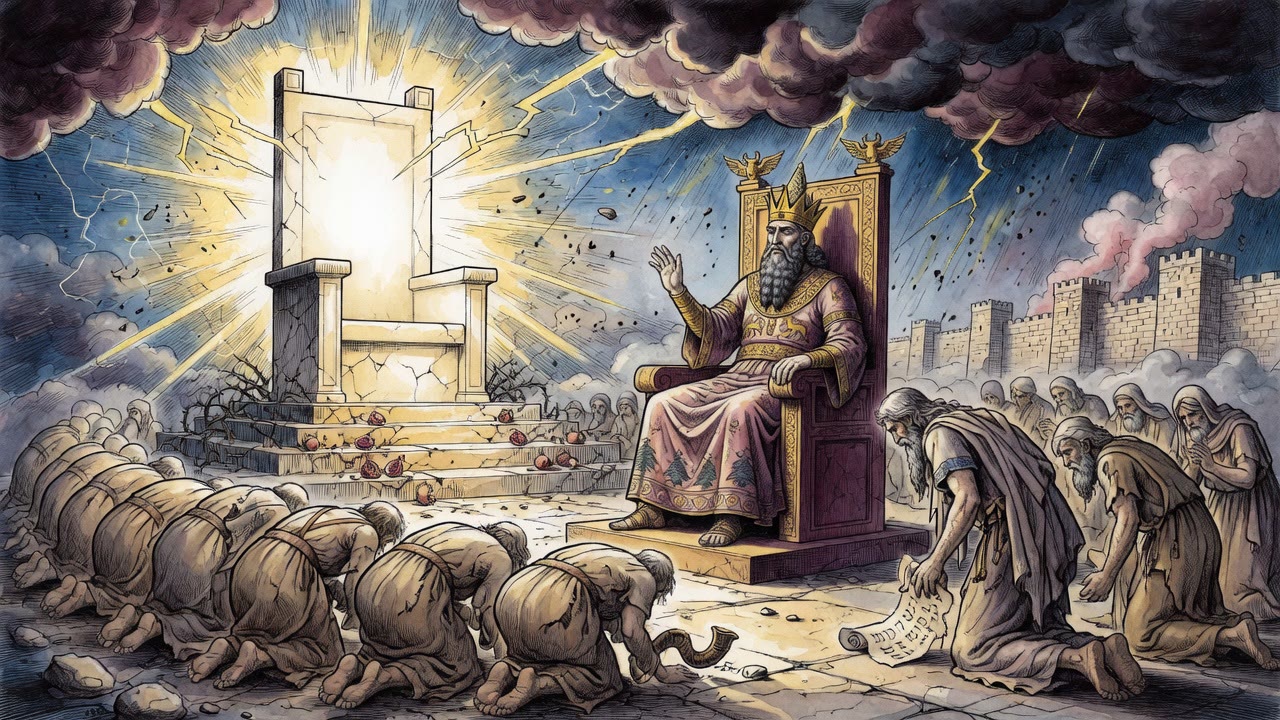
Raphael Unmasks Himself at the Edge of Heaven
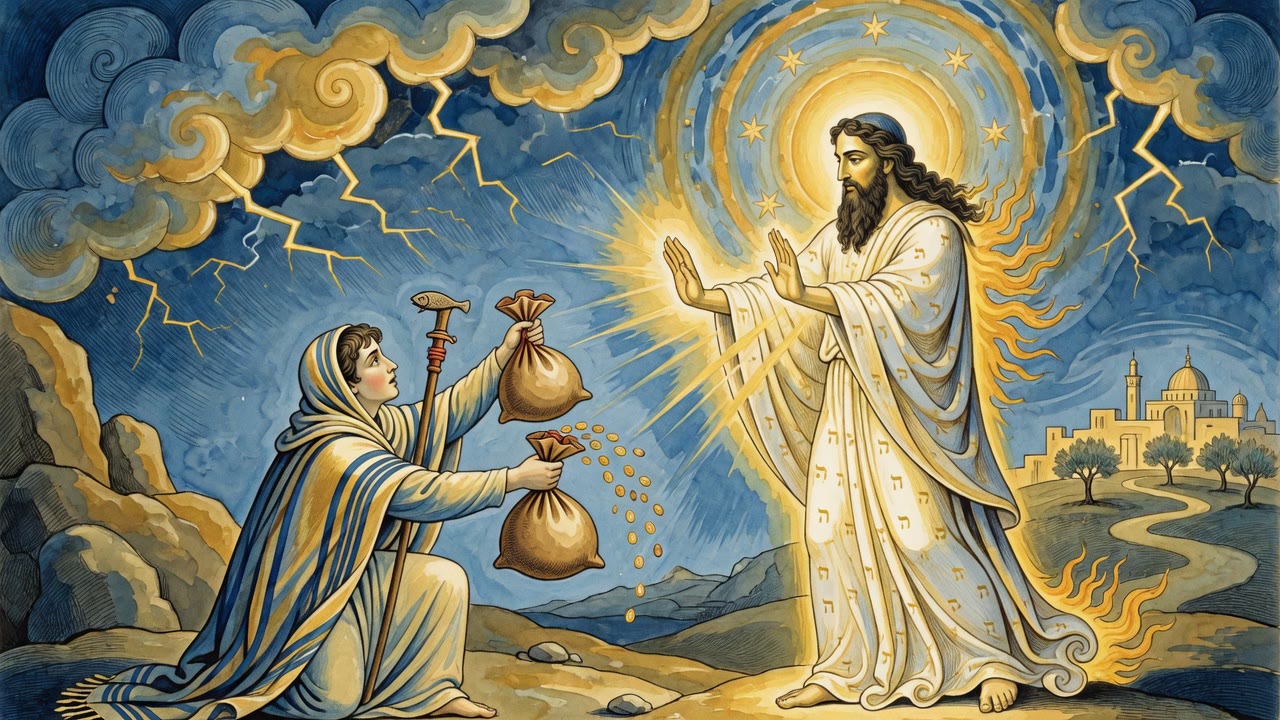
They set half the silver in front of the guide who had walked every mile. He told them to bless God, then said he had never swallowed.
Table of Contents
They stacked the silver in two piles and pushed one toward the man who had walked them home.
 Click for full size
Half of everything Tobias had brought back from the road: the recovered silver, the gifts of the wedding house, the pay a trusted guide is owed. Tobit was ready to give it. His eyes worked again. His son was married. The household in Nineveh had stopped its weeping. The companion they knew as Azariah sat in the room as if he were one more man waiting to be thanked.
Half the Silver on the Table
Tobias had crossed from Nineveh to the Tigris, then east to Ecbatana, then to Rages for the bags of silver, then home again. The man beside him had named roads, chosen lodging, told him how to take the fish, and stood in the wedding house while the guests ate for fourteen days. When the work was done, the family did what honest people do. They tried to pay.
Azariah told them to stop. He told them to praise God and give thanks, and to put their hands back from the silver. Payment was the wrong language for what had walked with them.
Then he called father and son aside, away from the noise of the house, and the room changed temperature.
The Companion Who Never Swallowed
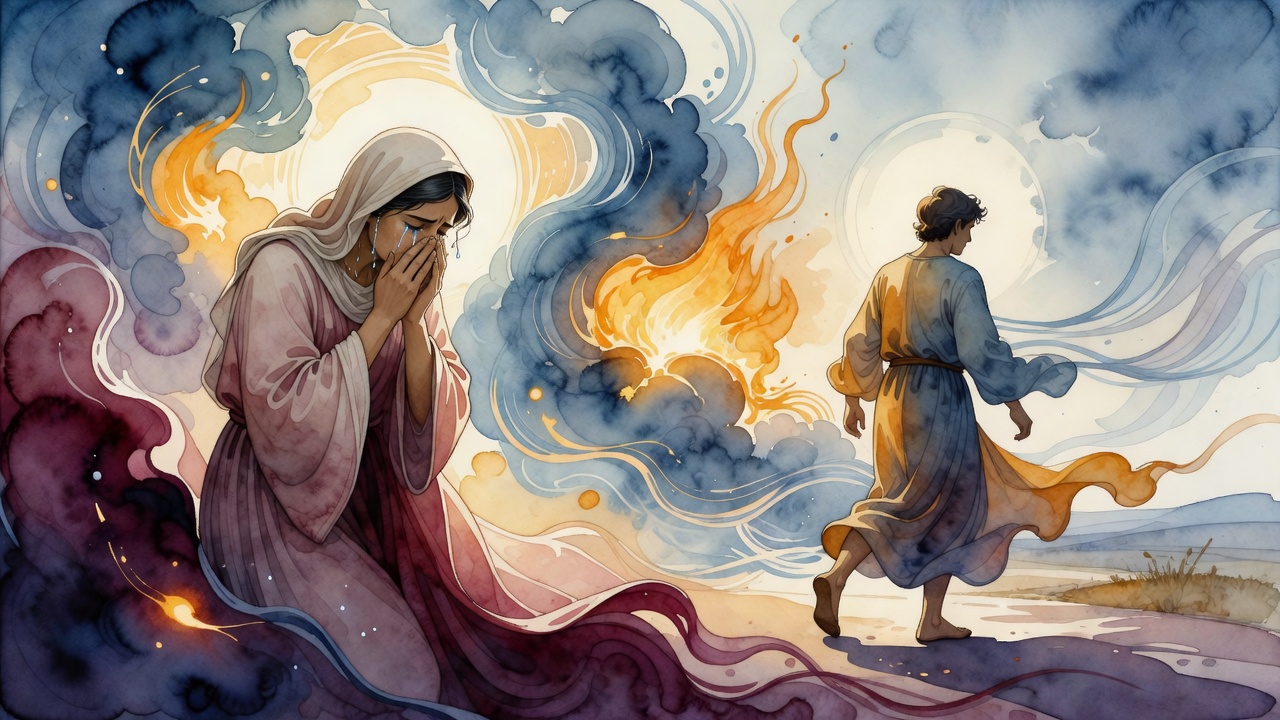
He had been at table after table. The meal by the Tigris when they caught the fish. The wedding feast at Reuel's house, where the guests blessed the new couple and no eighth grave was dug. The meal at Gabael's when the silver was counted. The celebration in Tobit's house when sight returned to the old man and Hannah stopped crying into her hands.
He had lifted cups. Bread had been in his fingers. Crumbs had sat in their eyes as if a mouth had worked. They had thanked him for eating their salt.
He had not swallowed a bite.
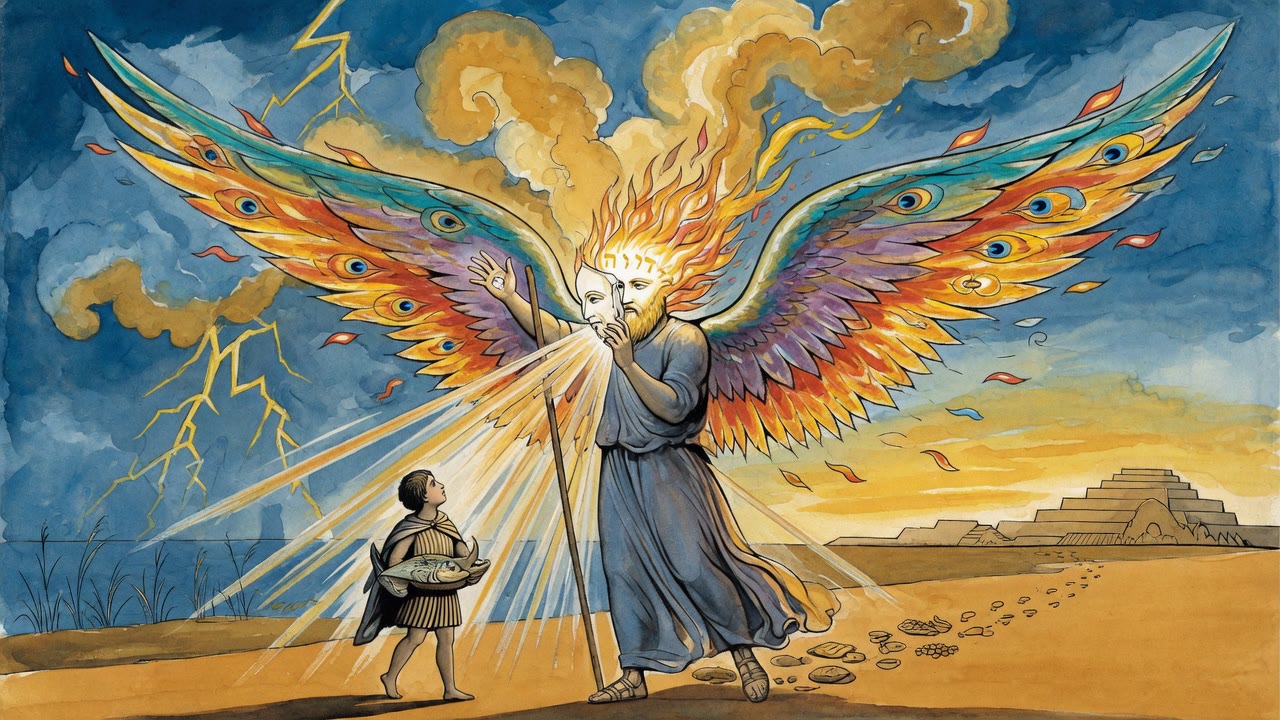
"Peace be unto you," he said. "Fear not. Bless the Lord for these great and wonderful things which He hath done unto you. Now as to myself, all the time I was with you, ye saw me eat and drink, for so it appeared to your eyes. I did neither eat nor drink."
What they had seen was a vision. The shape that walked, spoke, chose a road, and sat at a table had been a man named Azariah only in their sight. The body they had trusted for months had never taken food into itself.
He Named Himself Among the Seven
"I am Raphael," he said, "one of the seven angels who stand before the glory of the Lord and go in and out before Him."
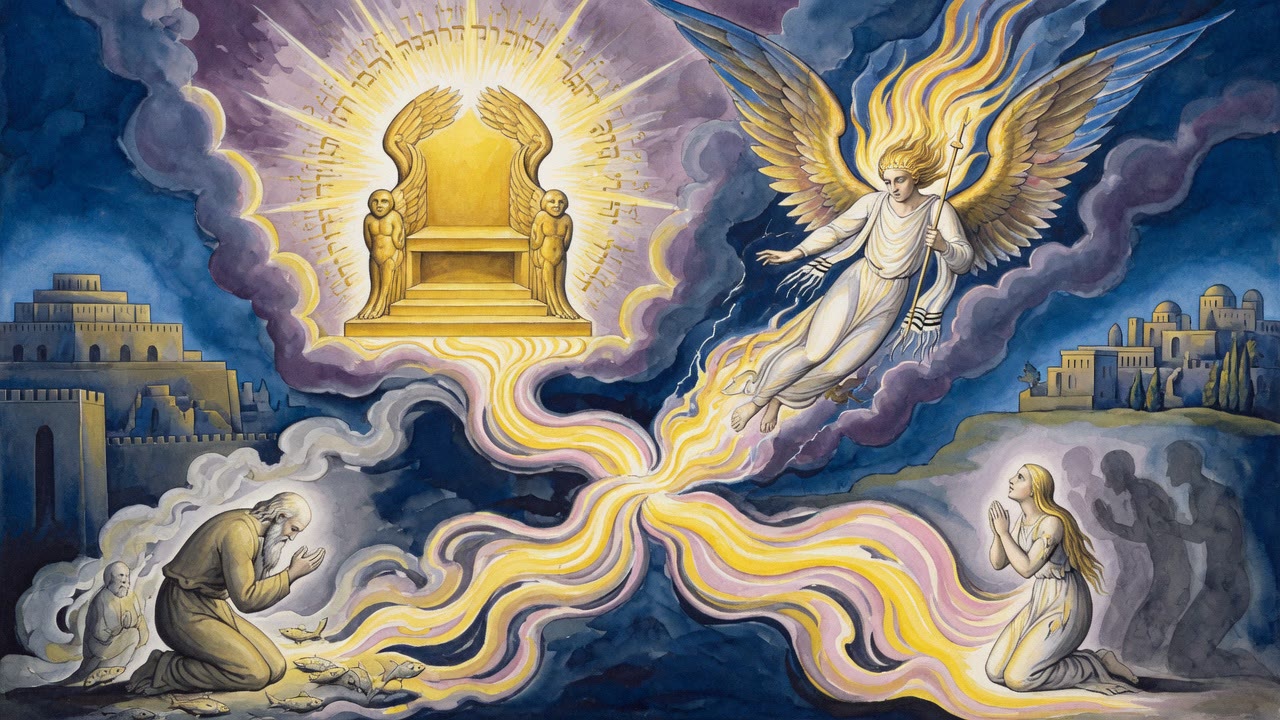
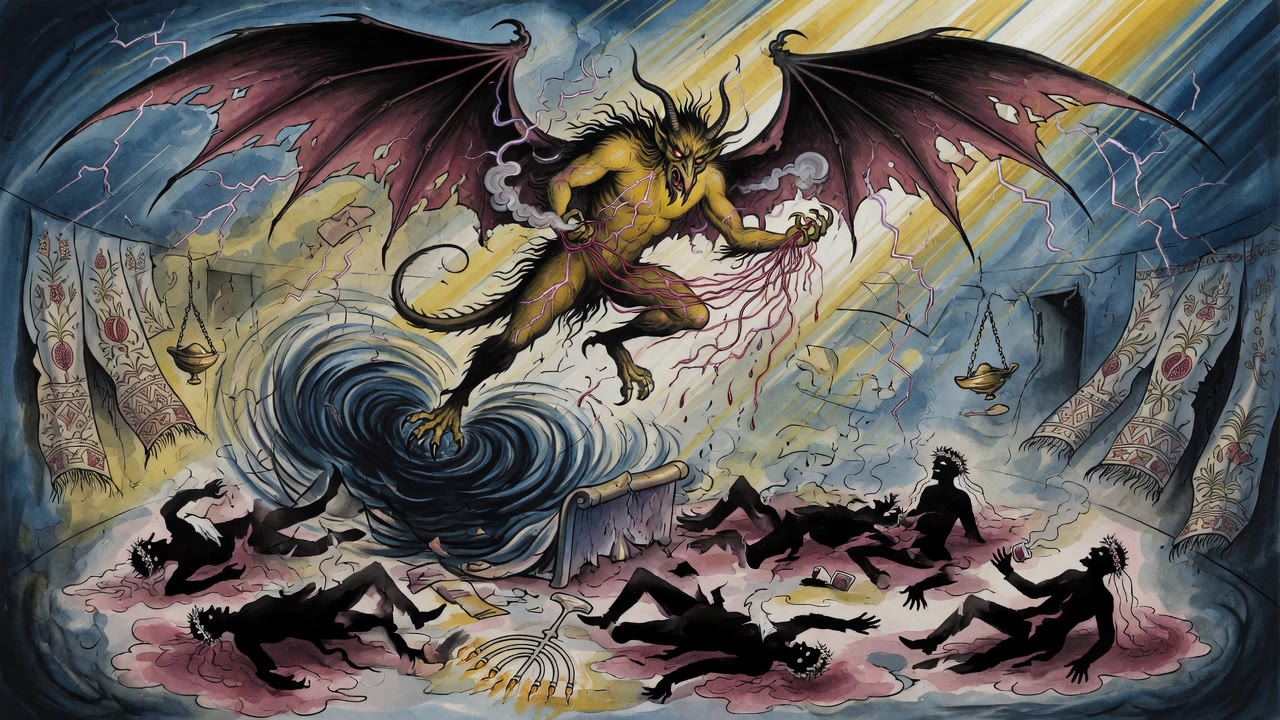
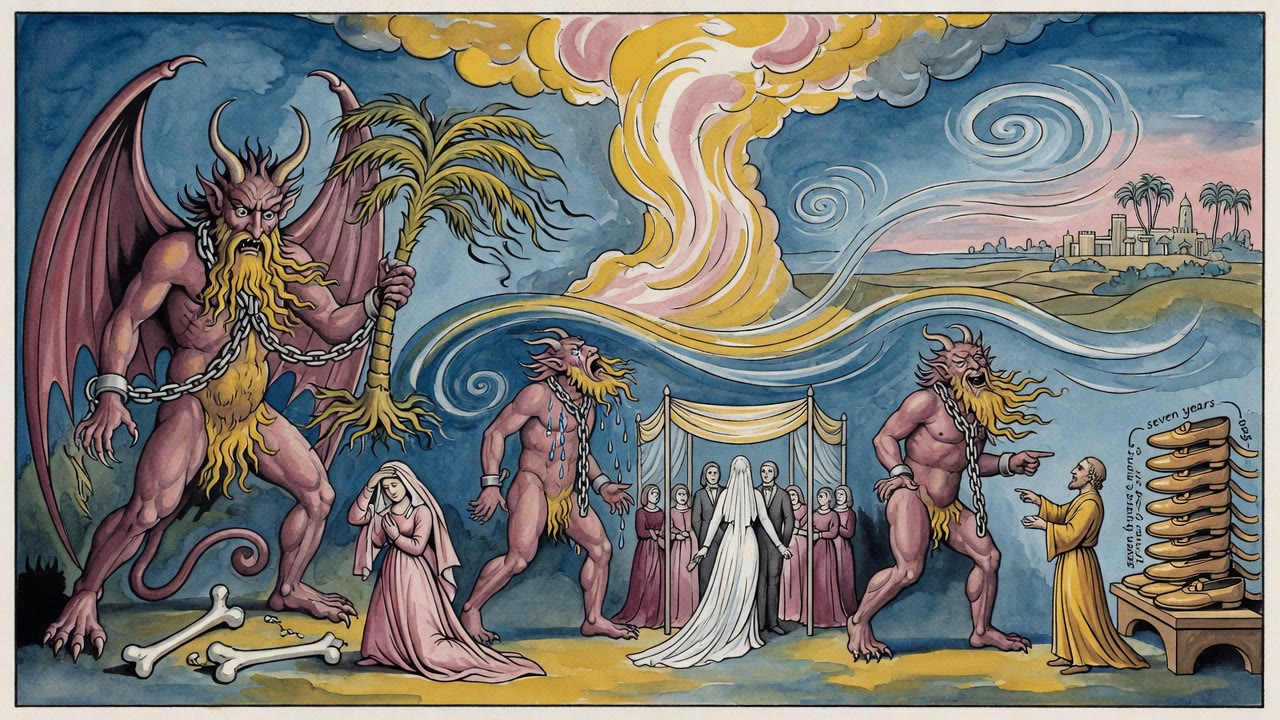
The name means God heals. Healing had been the whole road, though they had not known the name of the work. He had been sent to heal Tobit's blindness and to help Sarah, whose seven husbands the demon Asmodeus had killed. He had led Tobias to the fish whose gall opened the old man's eyes. He had bound Asmodeus in the desert of Upper Egypt. He had carried the prayers of Tobit and Sarah before the throne on the day they both asked to die.
None of it had been chance. Every mile had been attended. The silver on the table looked small in that light, like a wage offered to weather.
Write It in a Book
He told them to write all these things in a book, a witness between them and their God all the days of their lives, a sign among the generations. Bless the Lord, he said. Praise the remembrance of His holiness. Then he asked to go, back to the God who had sent him.
Tobit and Tobias fell on their faces. Fear came late, after the meals, after the jokes on the road, after the wedding wine. Raphael told them not to be afraid. The fear did not leave at once. A man who has walked beside you and never eaten is harder to hold than a stranger.
They sent him away with blessing because that was what he asked. They could not keep an angel with silver.
He Rose Out of Their Sight
The angel of the Lord went up to heaven and appeared no more to Tobi and his son Tobiyyah. They stayed on the ground a long time. When they stood, they praised God, because what had walked with them south from Nineveh and north from Ecbatana would not have been bearable if it had told the truth on the first morning.
Tobias wrote the things down with joy. Tobit opened his mouth and blessed the God who smites and heals, who kills and makes alive, who brings down and lifts up. He told his children to continue in alms, prayer, and supplication, because alms and prayer drive back a decree, and alms deliver from death.
The two piles of silver sat where they had been pushed. The guide was gone. The book was the payment he would take.
← All myths