The Watcher Angels Who Become Your Enemies When You Fall
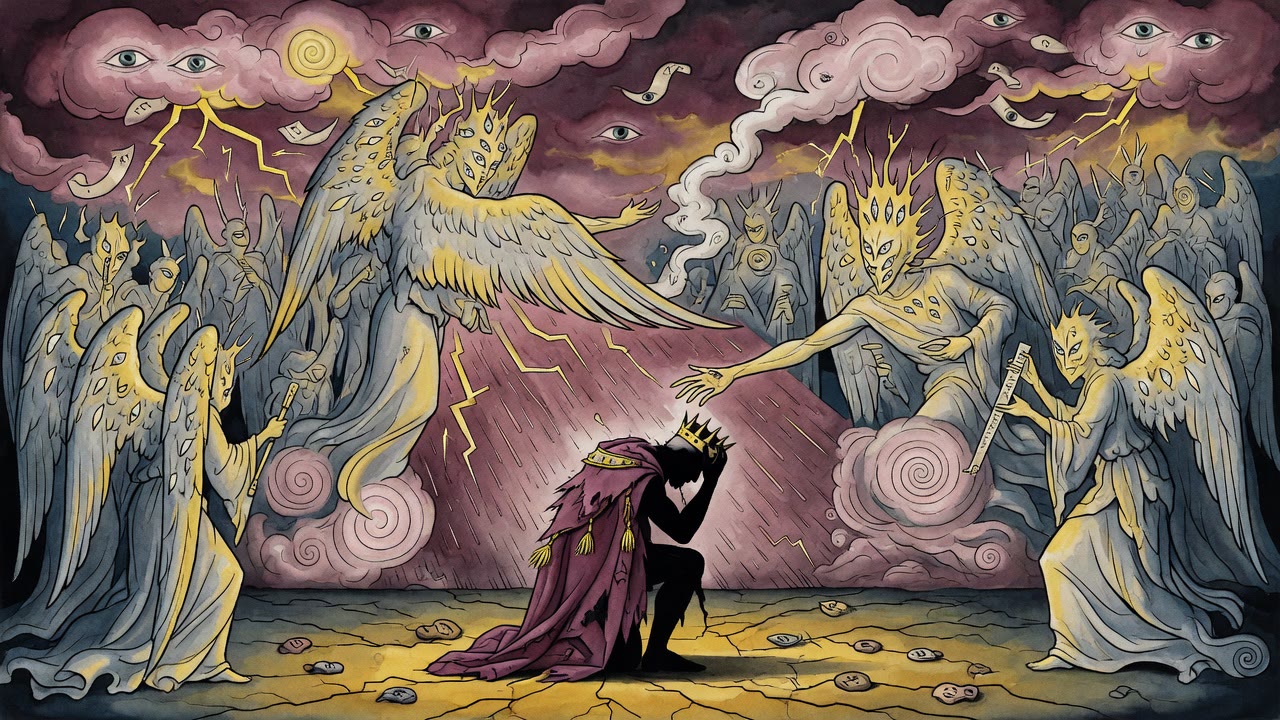
When Saul lost divine favor, the watcher angels shifted roles. Their change from observers to enforcers was the first sign that his protection was gone.
Table of Contents
 Click for full size
The Angels Did Not Come to Comfort Saul
They came because he was no longer protected.
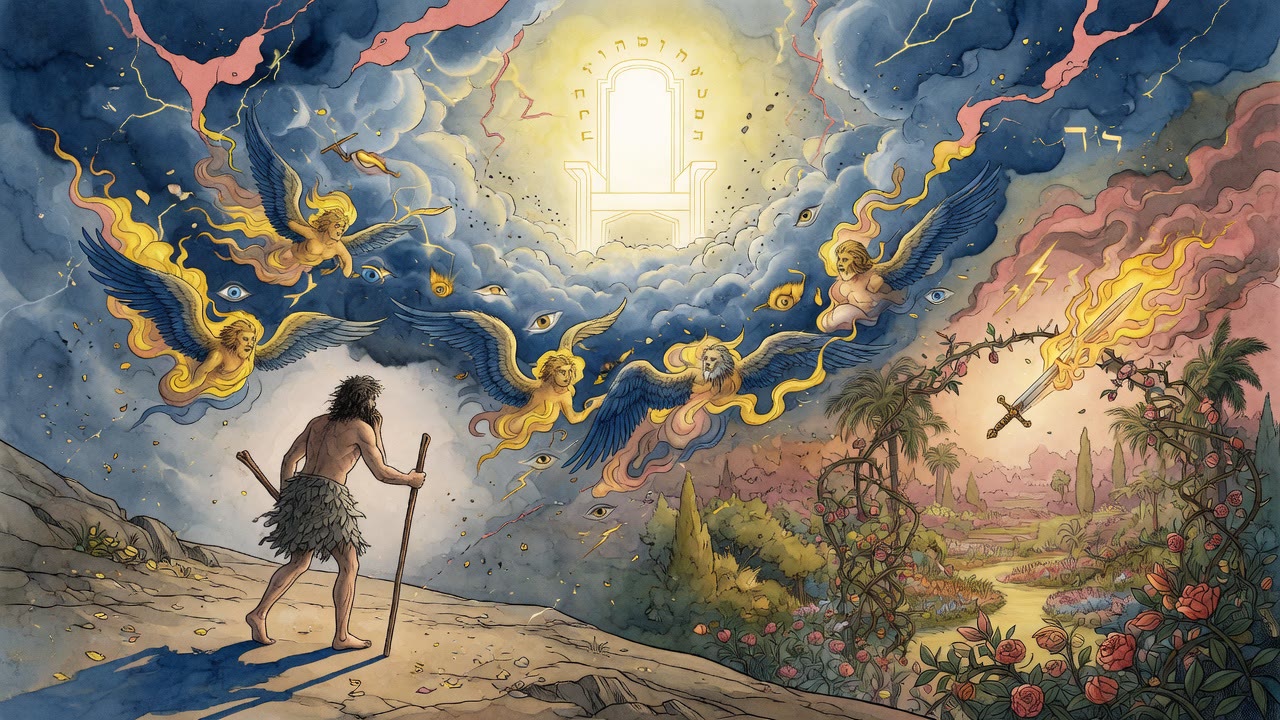
When the Book of Samuel describes Saul consulting the medium at Ein Dor on the eve of his last battle (1 Samuel 28), the surface drama is plain: a desperate king, a reluctant ghost, a war about to be lost. The Zohar, compiled c. 1280 CE in Castile, Spain, saw something operating beneath that surface, a mechanism of divine judgment that explained not only Saul's fate but the entire architecture of how heaven oversees human affairs.
The mechanism centers on a single Hebrew word: ir, watcher.
Who Are the Watchers
The term appears in the Book of Daniel (4:10, 4:14, 4:20), where mysterious heavenly beings called watchers descend to issue decrees about human kingdoms. In Aramaic they are irin. The Zohar's Idra Zuta, reading the Book of Samuel through this lens, connects the Aramaic irin to the Hebrew ar, enemy, a word that appears in 1 Samuel 28:16 when Samuel's ghost tells Saul: God has become your enemy, your ar.
The wordplay is deliberate. The watchers are divine emissaries whose relationship to a person or a people is not fixed. While the person has divine favor, they observe. When divine favor is withdrawn, they shift roles. They are not independently malevolent. They carry out what has been decreed in the court above. But their arrival as adversaries is the clearest possible signal that the protection has been revoked.
When the Protection Goes
Saul's story in the Book of Samuel is precisely the story of a man watching his protection disappear. He disobeyed Samuel's command after the battle with Amalek (1 Samuel 15). He drove David out despite the covenant between them. He slaughtered the priests of Nob who had sheltered David (1 Samuel 22). Each step was a step further from the divine favor that had originally made him king.
The Idra Zuta's teaching makes this process explicit. Judgments rise against those who are not favored above. The watchers execute those judgments. They do not originate the judgment. They receive the decree from the court and carry it downward into the world. What makes the Zohar's account of Saul so cold is that it removes the drama. Saul is not the victim of an arbitrary reversal. He is a figure whose divine account ran out, and the watchers, who were never on his side in any personal sense, simply updated their role accordingly.
Adam and the Watchers at the Beginning
The tradition does not begin with Saul. It begins in the Garden. When Adam died, according to the ancient account preserved in the Life of Adam and Eve, a second-century BCE text that circulated within Jewish apocalyptic tradition, the seven heavens opened, the sun and moon went dark, and every angel in creation wept for the first man who had ever died. Seth stood over his father's body and looked up. The procession of angelic mourners included beings who had observed Adam's life from the beginning and who now accompanied his soul upward through heaven.
The angels who were present at Adam's death were not the same as the angels who stood over Saul at Ein Dor. But they operate on the same structural principle. Heaven watches. What it does with what it sees depends on the state of the person being watched. Adam died with the angels weeping. Saul died with the watchers indifferent.
What the Angels of Sodom Were Doing
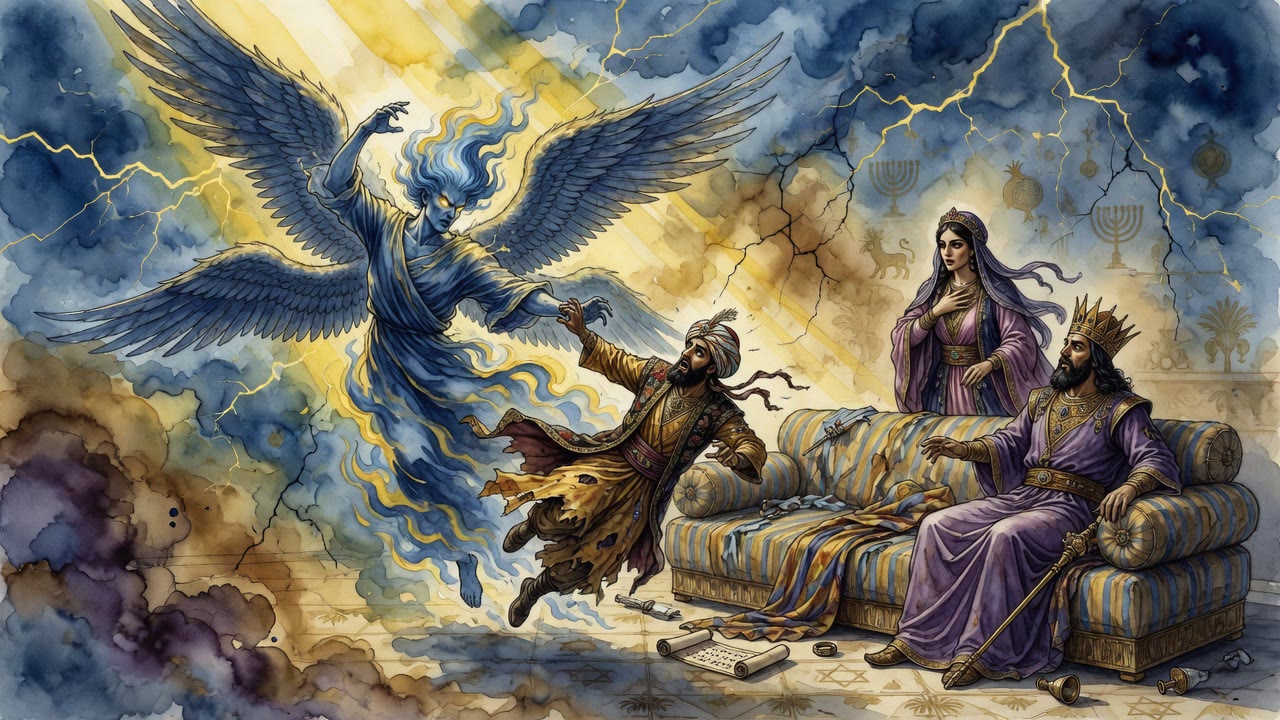
The tradition of watchful angels who shift roles according to divine judgment also appears in the account of the angels who visited Abraham at Mamre and then proceeded to Sodom (Genesis 18-19). The Targum, the Aramaic translation of the Torah with its interpretive additions, tracks these angels carefully. The one who had come to announce a son to Sarah had completed his assignment and ascended. The other two turned their faces toward Sodom. They were not going to help. They were going to evaluate and execute.
The Sodom account and the Saul account share the same structure: angels sent with a purpose, arriving at the moment when divine patience with a particular situation has run its course, doing what they were sent to do without regret or hesitation. The watchers do not grieve what they are required to execute. That is what makes them different from the angels who wept over Adam.
← All myths