Eliezer Reached Rebekah's Well in Three Hours and Left With a Bride
He put the nose-ring on her face before he asked her name. The two bracelets weighed out the exact price of a marriage contract nobody had negotiated.
Table of Contents
 Click for full size
Loaded for a Long Journey That Became a Short One
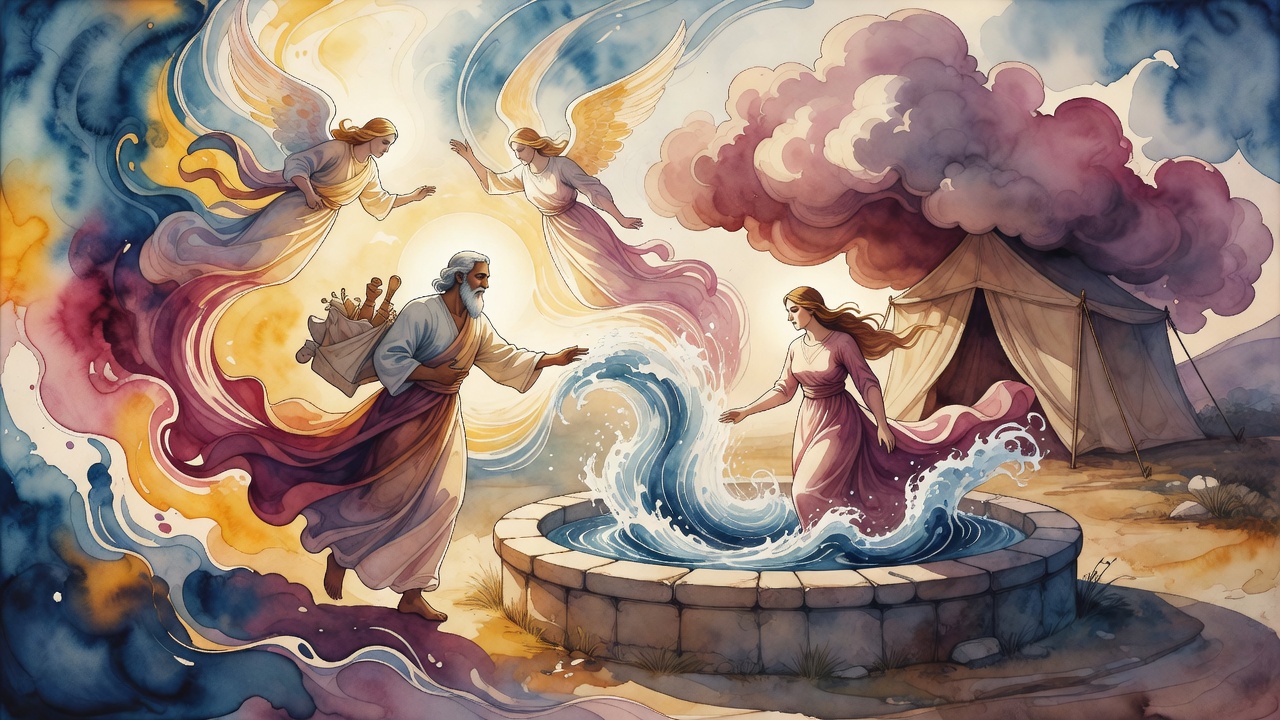
Eliezer left Abraham's camp carrying ten camels' worth of gifts: gold and silver and clothing, bracelets and nose-rings, everything a bride's family would expect from a household of Abraham's standing. He carried the deed to Isaac's inheritance. He carried the oath he had sworn on Abraham's thigh. He carried two angels, one assigned to guard him and one assigned to guard the girl he had not yet met.
The journey to Haran should have taken weeks. He arrived in three hours. The earth had contracted under his feet, a miracle the tradition assigned to this moment without embarrassment: Abraham's servant on this mission was more valuable to the continuation of the covenant than the normal operation of distance.
At the Well of Nahor
He stopped at the well at the edge of the city in the evening, the time when the women came to draw water. Before he let his camels drink or announced who he was or asked a single question, he reached into the load and pulled out a gold nose-ring weighing a beka, and two gold bracelets weighing ten shekels. He held them and prayed: "God of Abraham, let the right girl show herself by offering me water without being asked. Then let her also offer to water my camels. That will be the sign."
He finished his prayer and Rebekah was already walking toward the well. She drew water and he ran to her and said: "please let me drink a little from your jar." She lowered it immediately: "drink, my lord." And when he had drunk she said: "I will draw for your camels also, until they are done drinking." Ten camels that had been traveling all day. She did not make it a small offer.
The Gold Before the Question
Before Eliezer asked her name, before he knew whose daughter she was, before he confirmed the sign had been answered correctly, he placed the nose-ring and the bracelets on her. The Sages read this as evidence of the depth of his trust in Abraham's promise: a man who walks forward on the word of a tzaddik (a righteous person) does not hedge his bets. The gifts were not a reward for the right answer. They were an act of faith placed on a stranger's face and wrists before the question was even asked.
The nose-ring was the betrothal itself. The two bracelets totaled a weight the Sages read as 250: two hundred for the marriage contract owed to a virgin, and fifty for the gift a husband adds beyond what the law requires. He had brought, without knowing it, the exact weight of the future marriage.
Bethuel Tried to Stop It and Died
Inside the house, something darker happened. The family saw the gold and wanted the arrangement, but Bethuel, Rebekah's father, had not lived as a man who gave his daughters freely. As king of the region he had claimed the first night with every bride in the land, and the local nobles had sworn to kill him if he withheld his own daughter from the same practice he forced on theirs. His motives for welcoming Eliezer were not clean.
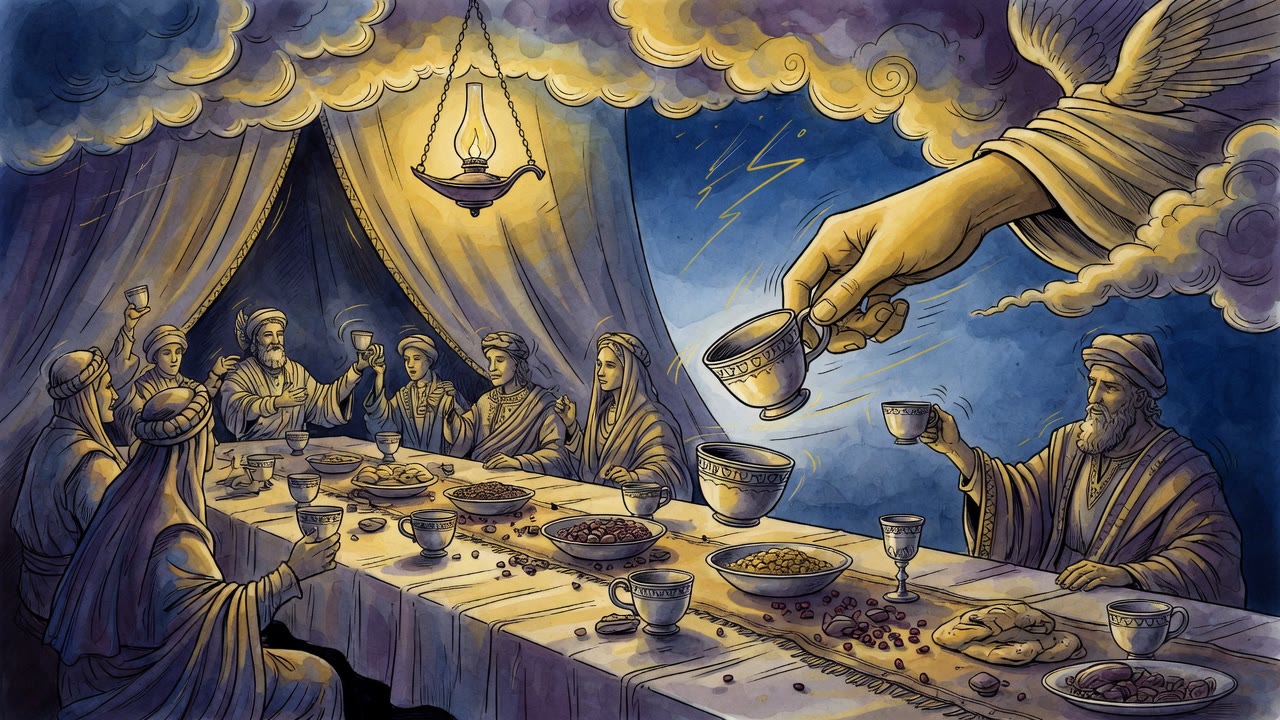
He moved against Eliezer quietly: a cup set before the servant at the meal, poisoned. The midrash hears the word for how the cup was placed as carrying the resonance of the word for poison. Through Abraham's merit the cups were switched. Bethuel drank the poison meant for the servant and died in the night. When morning came, the family negotiated Rebekah's departure without him. His death cleared her way out.
The Cloud Over the Tent
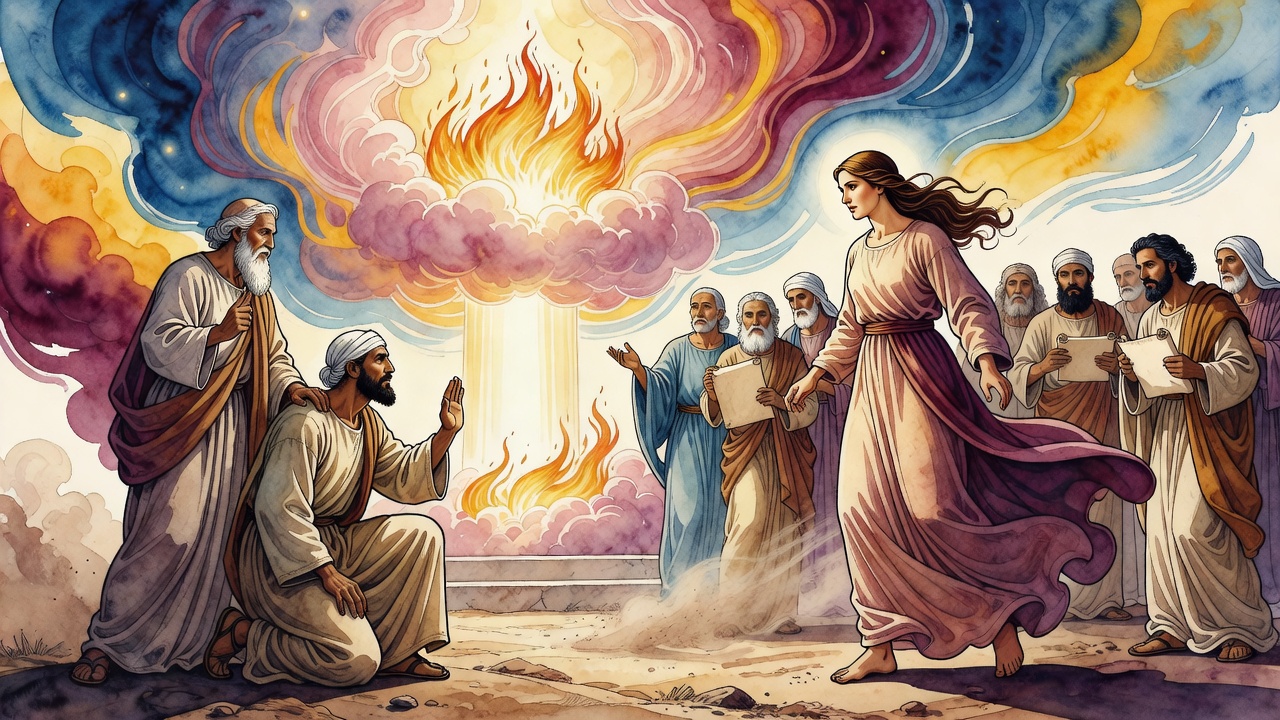
Isaac had been in the fields at evening when Eliezer returned. He brought Rebekah into his mother Sarah's tent. In Sarah's lifetime, a cloud had stood bound over her tent. Her Sabbath lamps had burned from one Sabbath to the next without going out. When Sarah died the cloud had lifted and the lamps had gone dark. When Rebekah walked through the tent door, the cloud returned and settled over the tent again, and the lamps lit themselves, and they burned through to the following Sabbath.
Eliezer, the servant who had gone into Haran and come back in three hours with the future of the covenant, was one of the people the tradition said entered the Garden of Eden alive, without passing through death. The deed he had carried, the oath he had sworn, the gold he had placed on a stranger's face before knowing her name: these were the credentials that earned him that passage.
← All myths