The Eye That Outweighed Alexander's Entire Treasury
Alexander followed a fragrant stream to the end of the earth, reached the gate of Eden, and was turned away with a bone and a riddle.
Table of Contents
 Click for full size
Salt Fish in a Strange Stream
He had stopped at the stream to eat. Alexander's men set out the salted fish they had carried up from the coast, and one of them rinsed a fish in the running water, and the smell that came off it was not fish. It was sweet, and it went on getting sweeter. He knelt and drank and stood up feeling better than a man has any right to feel at the end of a march.
"This water comes from the Garden of Eden," he said. "Find where it starts."
So they went up along the bank against the current, which is the slow way to travel and the only way that arrives at a source.
The Gate With the Flaming Sword
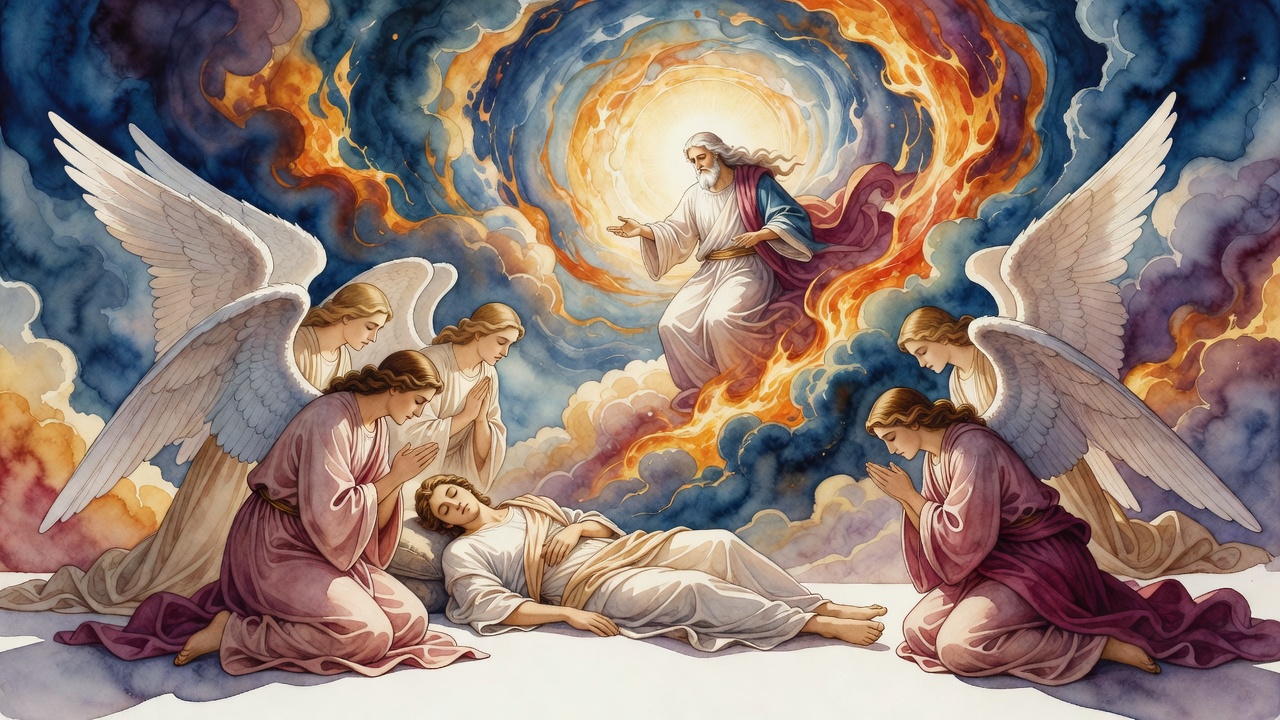
The water came out from under a gate, and an angel stood at it with a sword of fire. The men who had followed Alexander across Persia went and hid themselves.
He stayed where he was, in front of a sword that was on fire, and gave the gate the order he had given every other gate. "Open the gates for me."
"This is the gateway of the Lord," the angel said. "The righteous shall enter through it" (Psalms 118:20).
Alexander had opened every gate he ever came to, most of them with men and engines and some of them with nothing but his name sent ahead to the wall, so he tried the name here as well. "I am a king, and a highly regarded one at that. Give me something."
The angel gave him an eye. A human one, out of a skull, and that was the whole of what he got for the march upriver.
What the Scale Would Not Do
Back in camp he called for a balance, because a thing with no obvious use can still be weighed, and weight was something he understood. He put the eye in one pan and gold in the other.
The beam did not move, so he had them bring more gold, and after the gold the silver, and after the silver the stones, until the sacks were coming in from the tents where the treasury of an empire travelled, and the pan with the eye in it stayed down on the table.
He stood over the balance while they poured in the last of it. Gold went over the lip of the pan and onto the ground, and nobody bent to pick any of it up, since there was no point now in adding a handful to a hill. The beam did not move.
A Handful of Dust
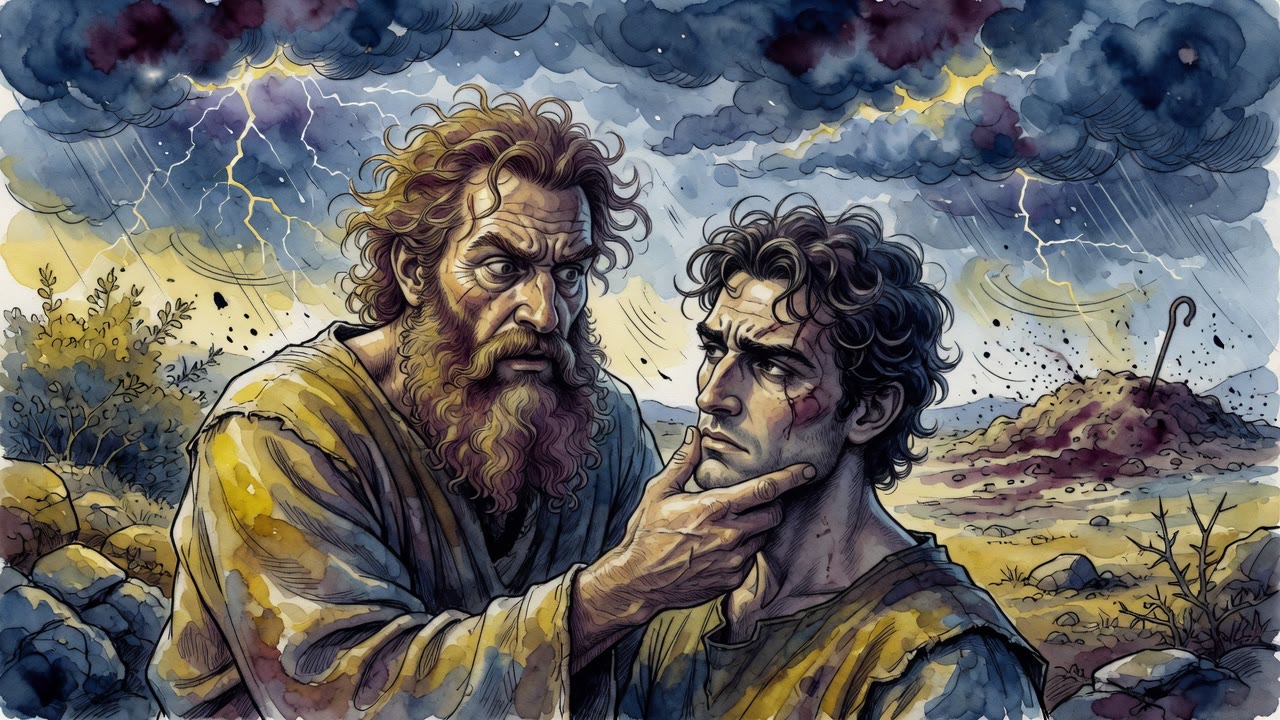
Nobody in the camp could tell him what he was looking at, so he carried the eye back up the bank to the gate and asked the angel what he had been given.
"The eye of a human being is never satisfied," the angel said.
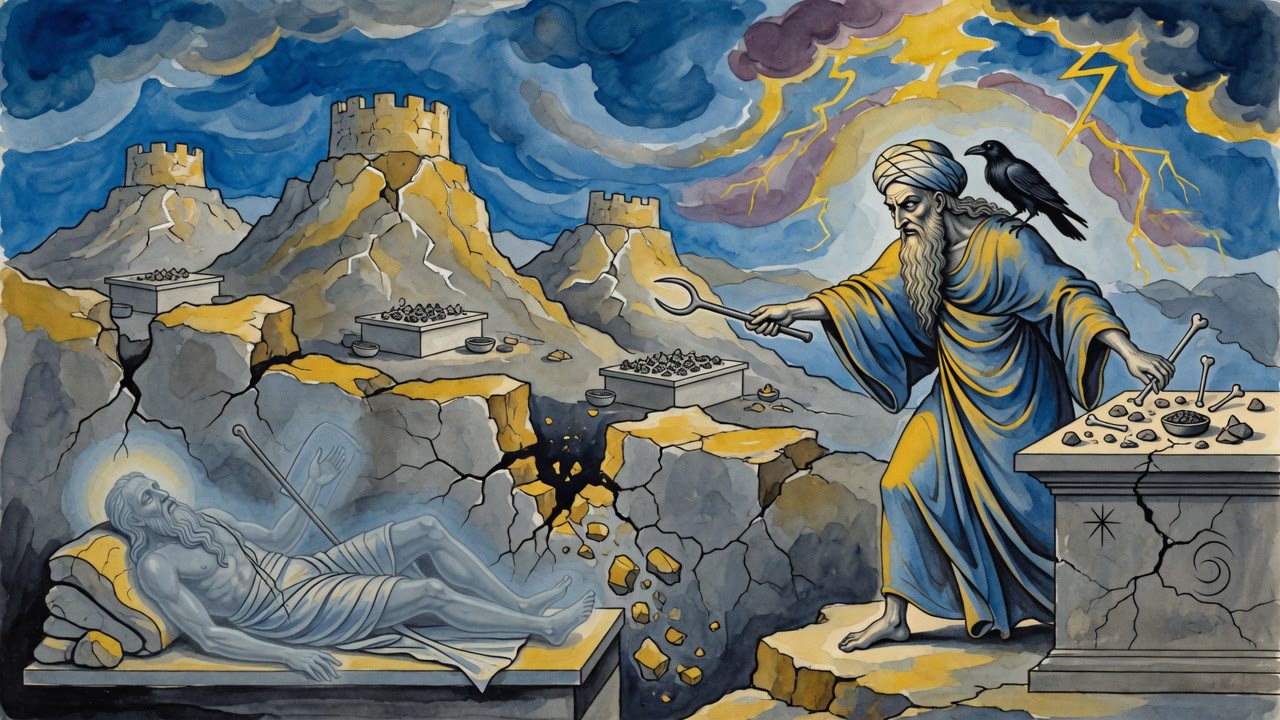
Alexander wanted it proved, so the angel told him to take dust and cover the eye and watch what happened, and he did it with his own hand, a scoop of ordinary dirt off the ground where he was standing, spread over the thing in the pan.
The gold dropped. It dropped hard enough to knock the table, and the other pan came up light and swung there, and the eye that had outweighed everything a man could conquer now weighed what a scrap of bone weighs. Nothing had been taken off the scale. A handful of earth had been added, the same handful that gets thrown in at the end of every life, and the arithmetic of the whole business changed.
The Gate He Could Open
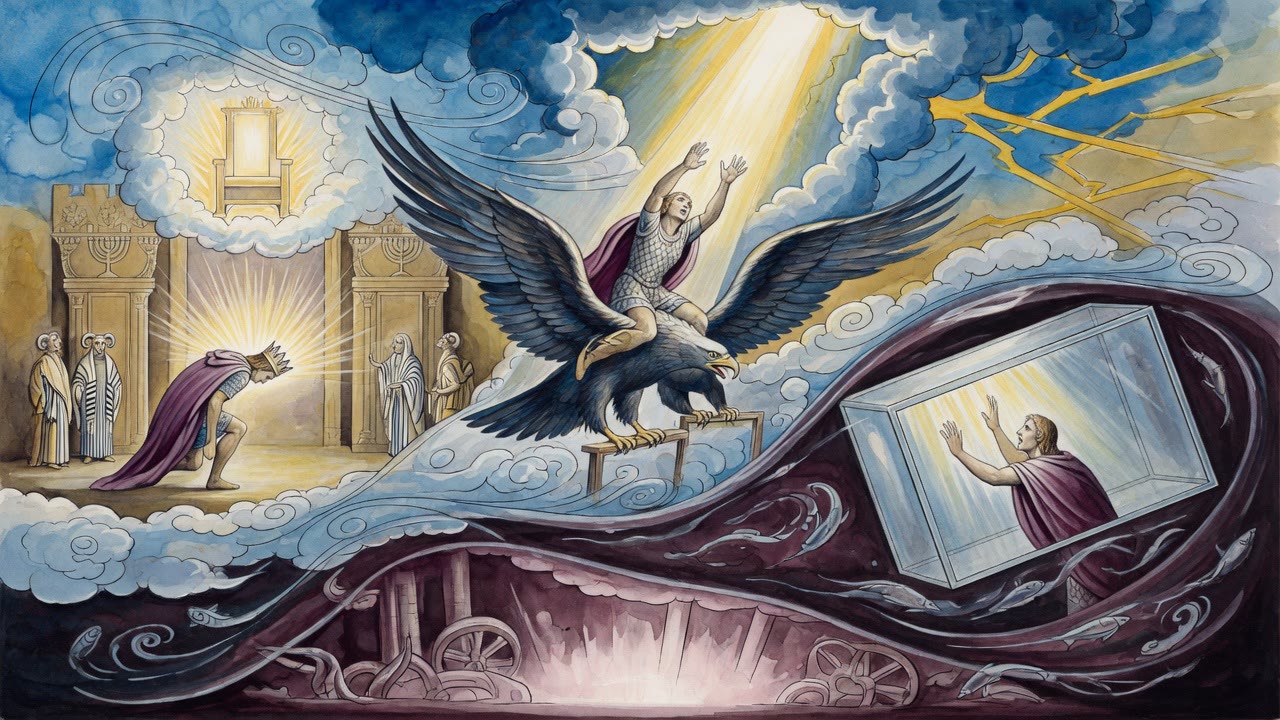
He did not stop wanting. He had himself carried above the clouds in a box pulled by eagles to see what was up there, and from that height the world was a ball with the sea coiled round it. He went down into the sea in another box to see what was under that, and learned that even the monsters keep to borders.
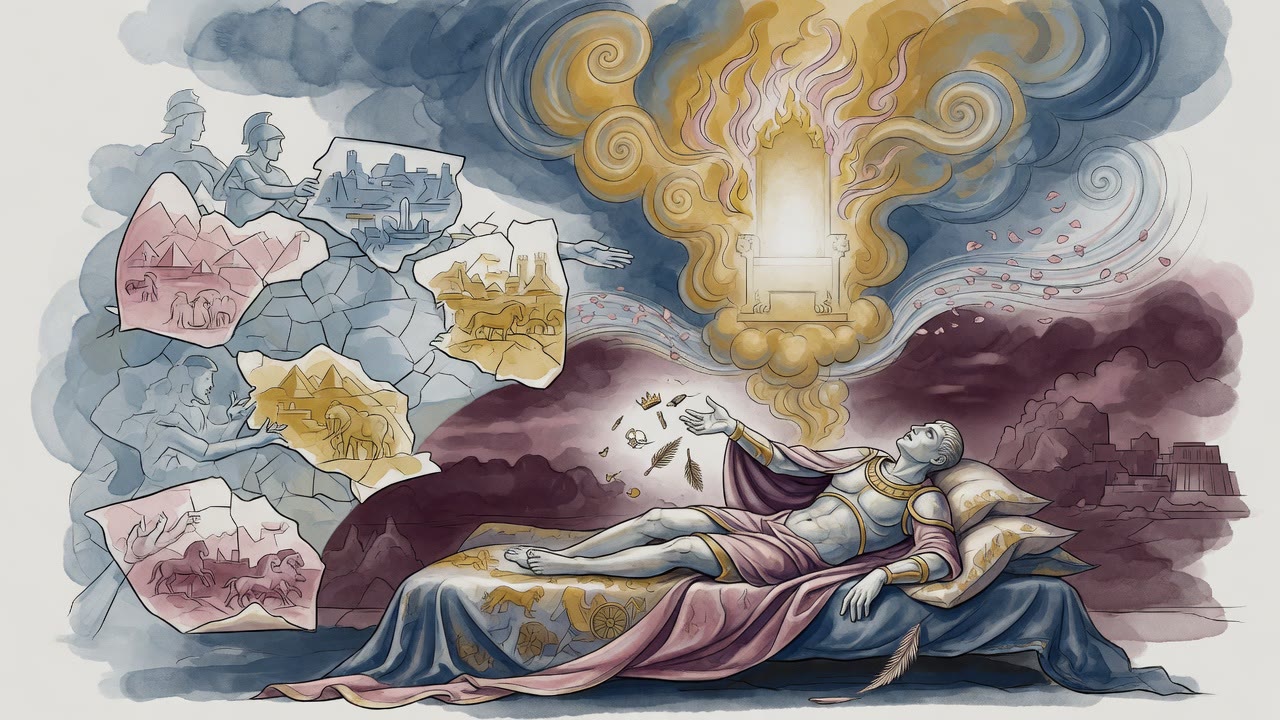
Then the rabbis warned him not to go into Babylon. He was sick by then, and he went in anyway, through the one gate in the whole story that opened when he came to it. After him his kingdom was broken and divided toward the four winds of heaven (Daniel 11:4).
The stream kept coming out sweet from under the gate that stayed shut.
← All myths