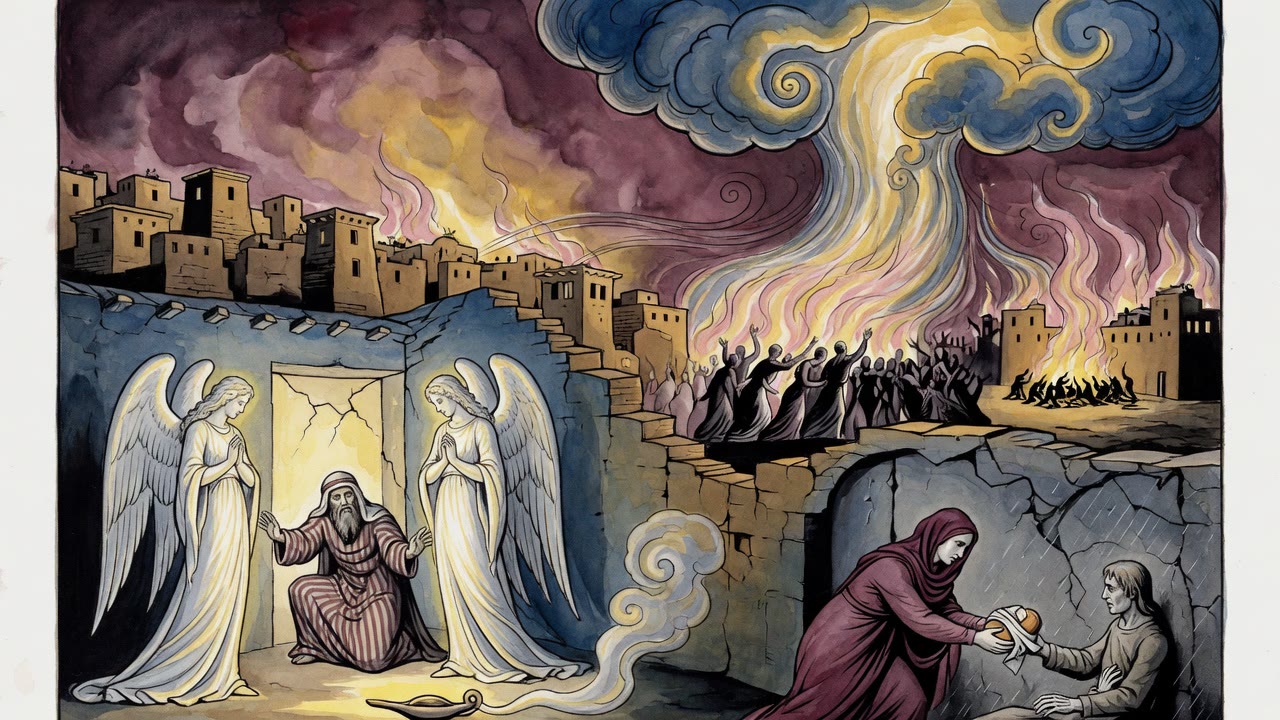
Lot Stood at Sodom's Gate When the Angels Came
Two strangers said they would sleep in the square. Lot knew what the square was for after dark. He took them by the arm and pulled them under his roof.
Table of Contents
Lot was sitting in the gate of Sodom when two men came up the road at dusk, and he was the only person in the city who stood up.
 Click for full size
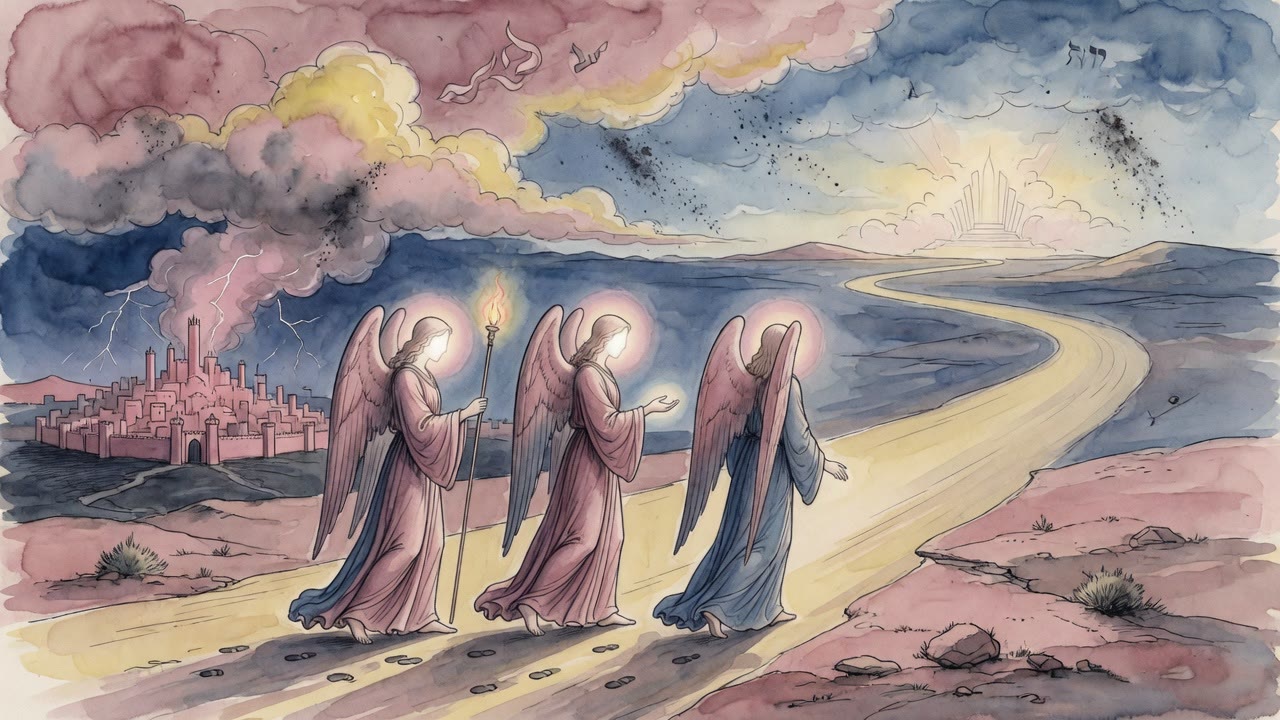
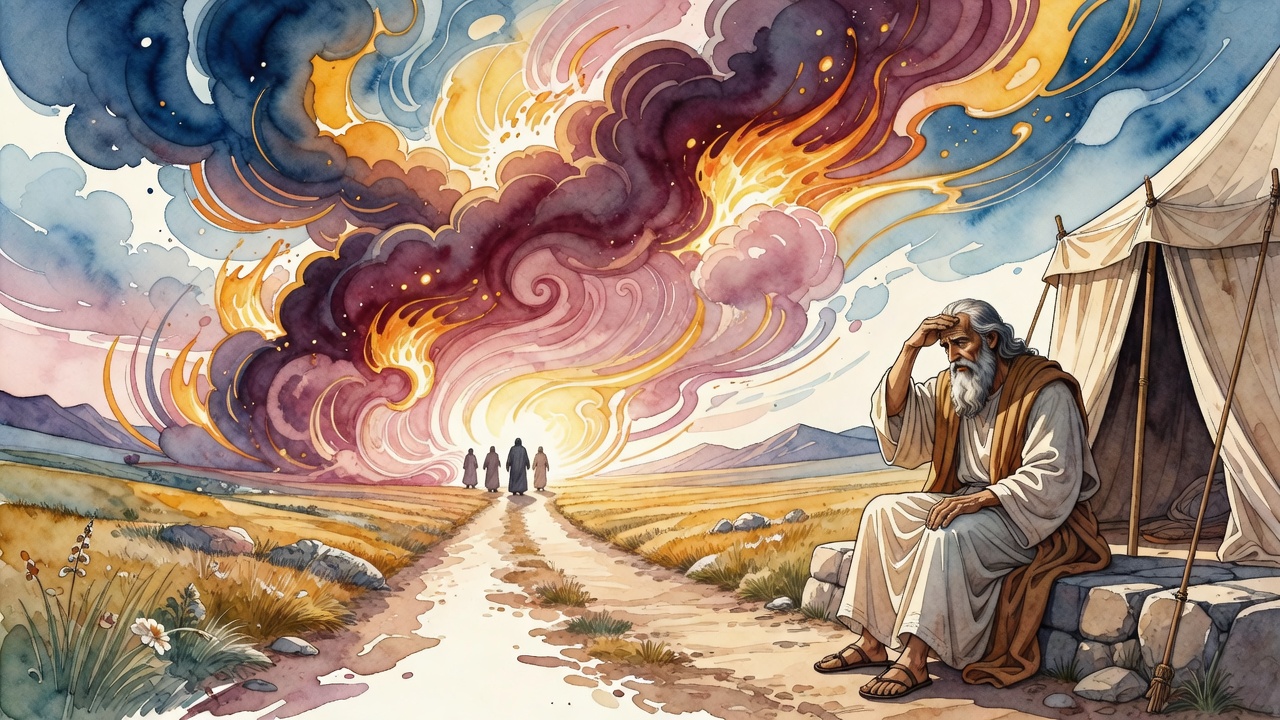
There had been three of them that morning, under the terebinths at Abraham's tent. Abraham had walked out with them when they left, past the last of the flocks, because putting a guest safely back on the road matters more than the meal set in front of him. One of the three turned for heaven then, his errand finished. The other two went down toward the plain. One was sent to destroy the city. One was sent for Lot.
A City That Robbed by the Handful
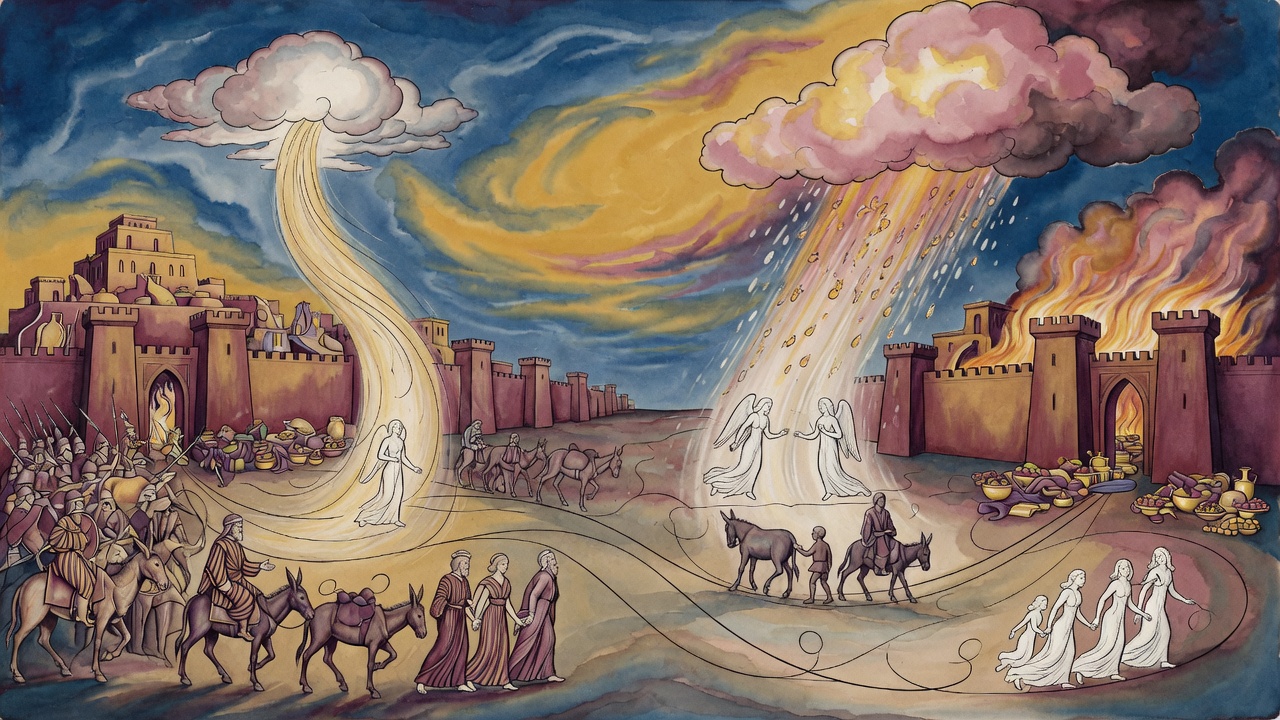
Sodom had a method, and it was clean. When a merchant crossed their country nobody drew a knife on him. The whole town came out instead, grown men, women, children, and each one took a single small thing. A cup. A strap. A fistful of grain. If he turned on any one of them, that one opened a palm and showed him the trifle lying in it, hardly worth the noise he was making. By the time the arithmetic finished he owned nothing, and then they drove him out through the gate he had walked in by.
Once a year the five cities of the plain emptied into a wide valley, wives and children and everything they owned, and stayed there for days. What they did there, the valley kept to itself.
That was the country Lot had chosen. Two of his four daughters were married into it.
He Would Not Let Them Sleep in the Square
Before anyone lay down for the night, the two guests asked him about the place. What sort of people live in this city?
He could have smoothed it. "In every place there are good people and wicked people," he said. "Here they are mostly wicked."
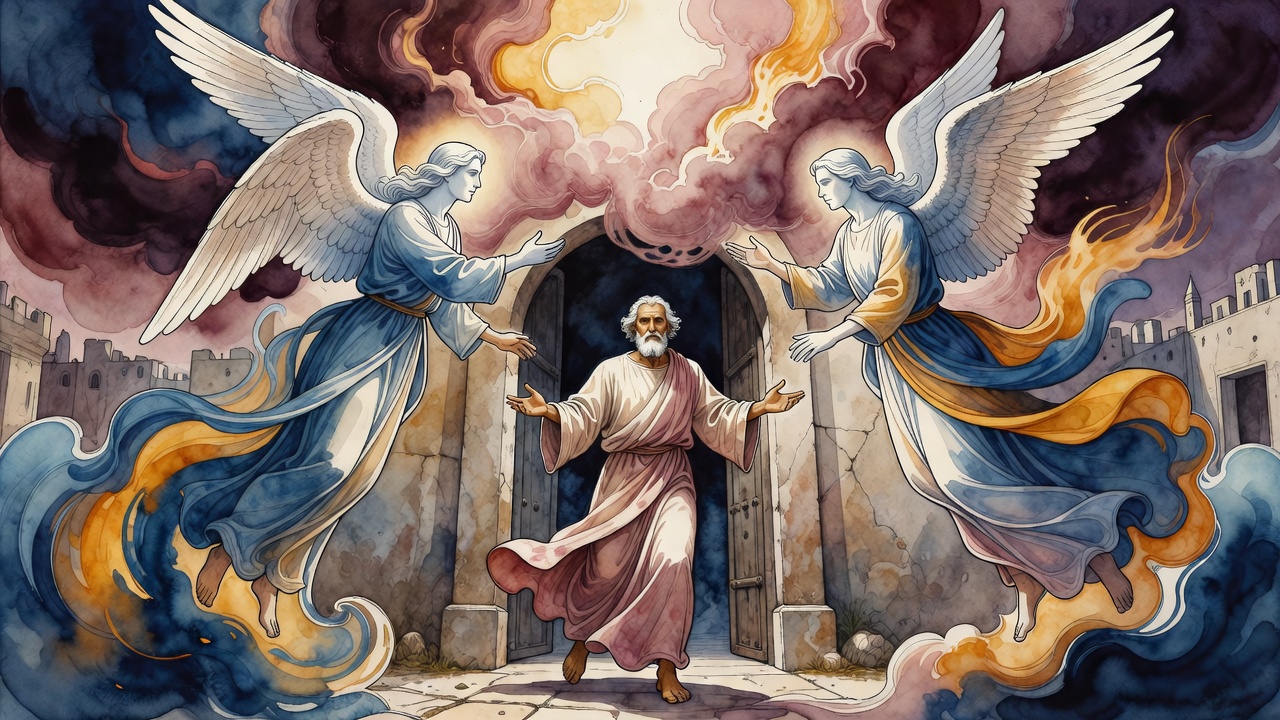
He had learned hospitality in Abraham's tent, watching an old man run out into the noon heat after strangers, and he had carried the habit into a town that made a business of stripping strangers bare. When the two said they would sleep in the square, he would not have it. He knew what the square was for after dark. He took them by the arm and pulled them under his roof.
The Whole City Came to the Door
They came before the household was asleep, from the youngest to the oldest, out of every quarter, and not one man among them tried to stop it. Lot went out and pulled the door shut behind him and stood between them and his roof, and he argued. He argued all night. And they listened. For hours the men of Sodom stood in the street and let a foreigner plead with them, and something in them was still open.
Then they said what they wanted with the guests, and it shut.
He offered them his daughters instead. A man is supposed to spend his own life for the honor of his wife and his daughters. Lot offered his daughters for the honor of two strangers, and in a cave above Zoar, later, he paid for the arithmetic he did that night.
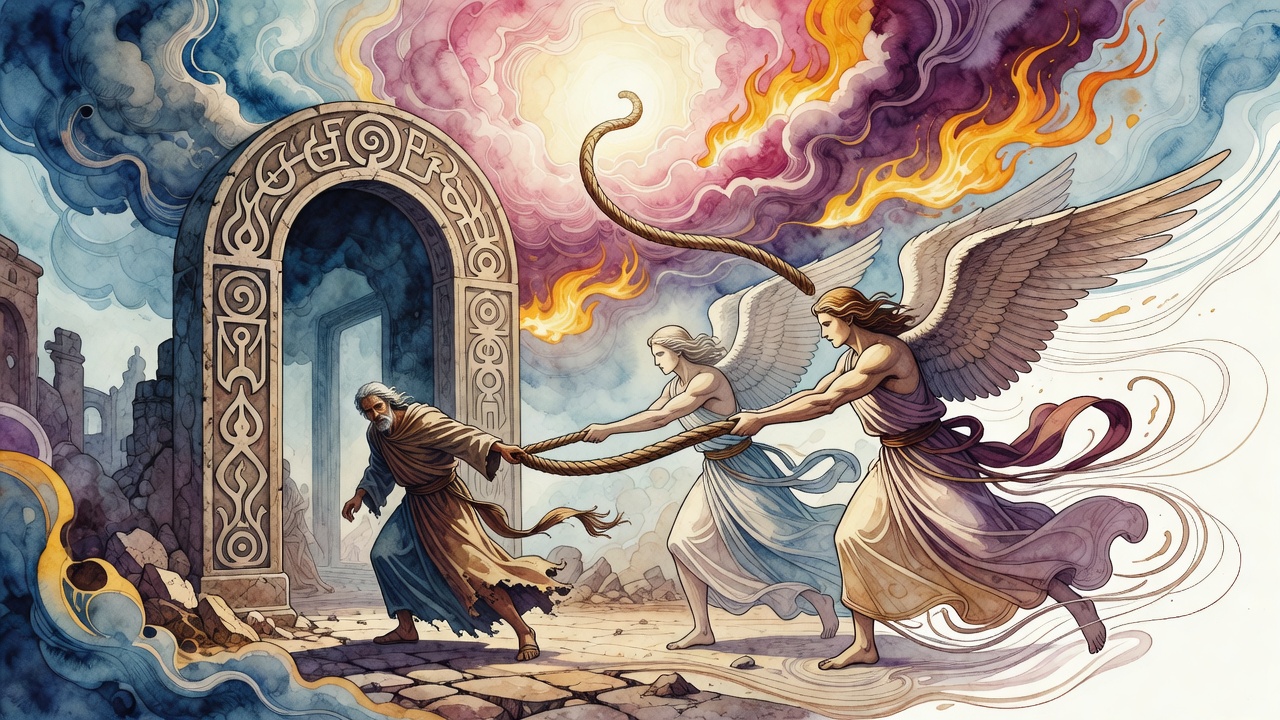
"Who else do you have here?" one of them called, and that was the last sentence Lot was allowed to answer. Up to that line he had been permitted to speak for Sodom. Past it he was not. Hands came out of the doorway behind him, took him by the arms, and pulled him back inside. The men in the street went blind where they stood and spent the rest of the night running their palms along the wall, hunting for a door that had stopped being where they left it.
His Sons in Law Laughed at the Warning
Inside, the two told him who they were and what they had come to do. Take your wife. Take your four daughters, the two who are married and the two who are promised. Get out.
He went to the husbands of the married ones. Music was still coming up out of the streets, the city playing itself through the small hours.
"You fool," they said. "Violins and cymbals and flutes are sounding in this city, and you stand there telling us Sodom is going to be destroyed."
The laugh moved the hour up. Michael took Lot by the hand, and his wife, and his daughters, and walked them out. Gabriel set his little finger against the rock the five cities were built on and turned it over. The rain that had been falling all night changed on the way down and reached the ground as burning sulfur.
He Asked for the Small Town
Go to Abraham, the angel told him. Lot would not.
He said why out loud. "As long as I lived apart from Abraham, God weighed my deeds against my neighbors' deeds, and next to them I came out a righteous man. If I go back to Abraham, God will see how far his deeds outweigh mine."
He would rather be measured against Sodom.
So he asked for the small town instead. Zoar had been founded a year after the other four. It was fifty one years old, the measure of its sins had not filled up yet, and the angel let it stand.
He ran. His wife looked back and stopped there, salt in the shape of a woman turning. Lot came through Zoar's gate as the sun cleared the hills, and behind him the plain caught fire.
← All myths