Ezra Asked Why Zion Burned and Uriel Told Him to Weigh Fire
The angel gave him three jobs instead of an answer. Weigh the weight of fire. Measure out a measure of wind. Call back the day that is past.
Table of Contents
 Click for full size
Thirty Years of Not Sleeping
Thirty years after the city burned, a man lying on his bed in Babylon could not stop his own mind. He had two things in front of him every day. Zion in ruins, and Babylon rich.
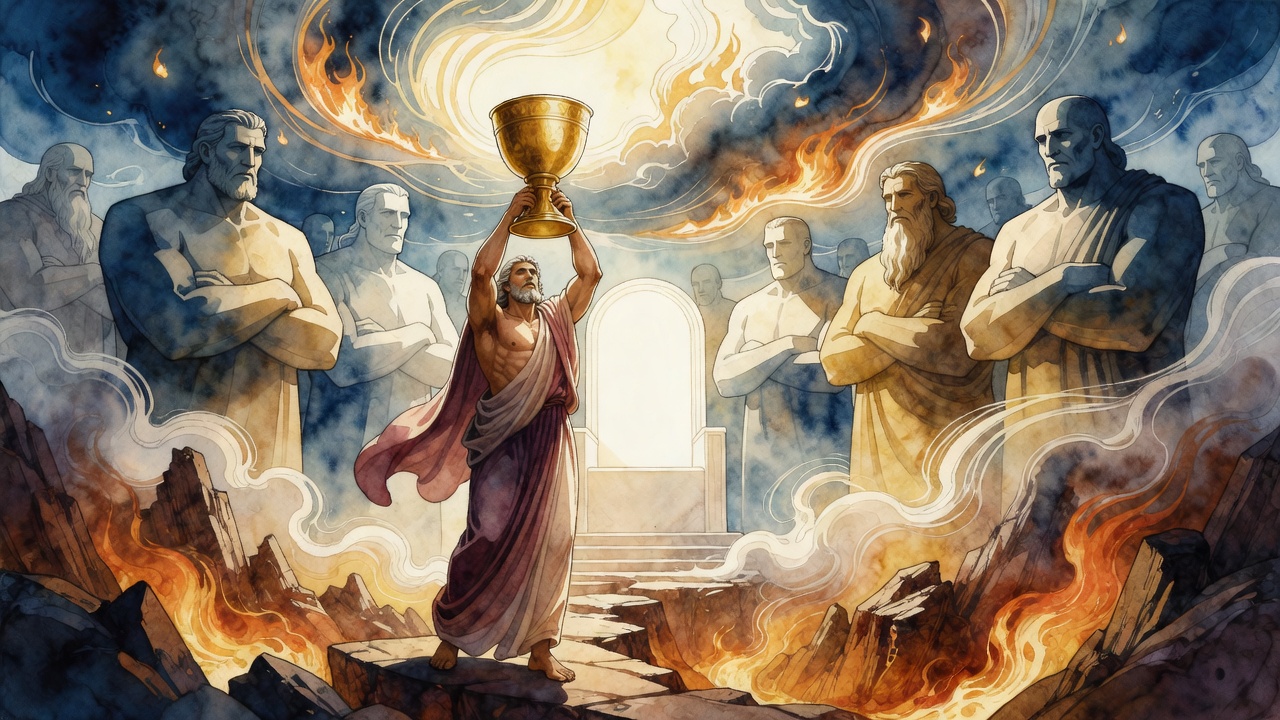
So he started arguing out loud in the dark. You commanded the dust and it handed You Adam, a body with nothing in it, and You breathed into him. You laid one command on him and he broke it and You put death on him and on everyone after him. Nations came out of him and every one of them did whatever it wanted in front of You and You did not stop them. Then You picked one man out of the crowd, and loved him, and told him the end of the times secretly at night. You bent the sky down, shook the earth, and dragged Your glory through four gates of fire and earthquake and wind and ice to hand his grandchildren a law.
And You left the evil heart where it was.
"Out of every forest You chose one vine," Ezra said. "Out of all the lands, one country. Out of all the flowers, one lily. Out of all the depths of the sea You filled one river. Out of every bird, one dove. Out of every flock, one sheep. Out of all the peoples, one people. And then You gave the one over to the many. Put our sins in a balance against theirs and see which way the scale goes."
Weigh Me a Measure of Fire
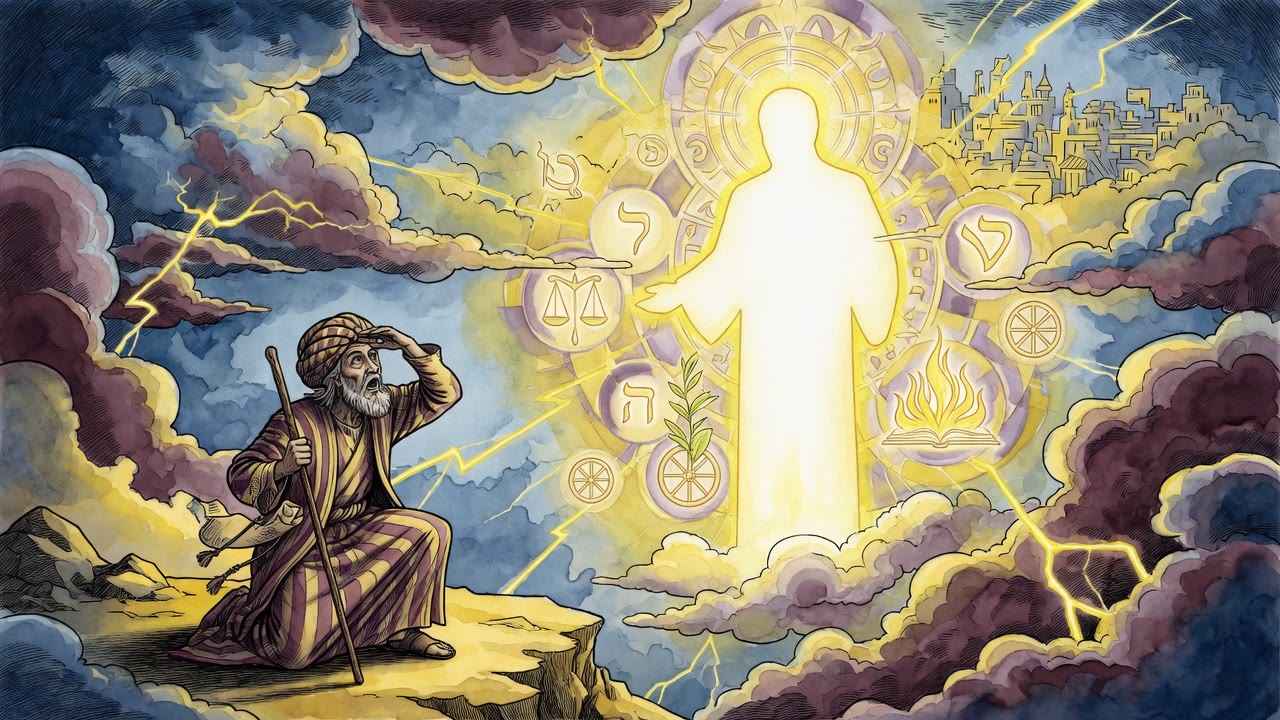
The angel Uriel came, and he did not come to comfort anybody.
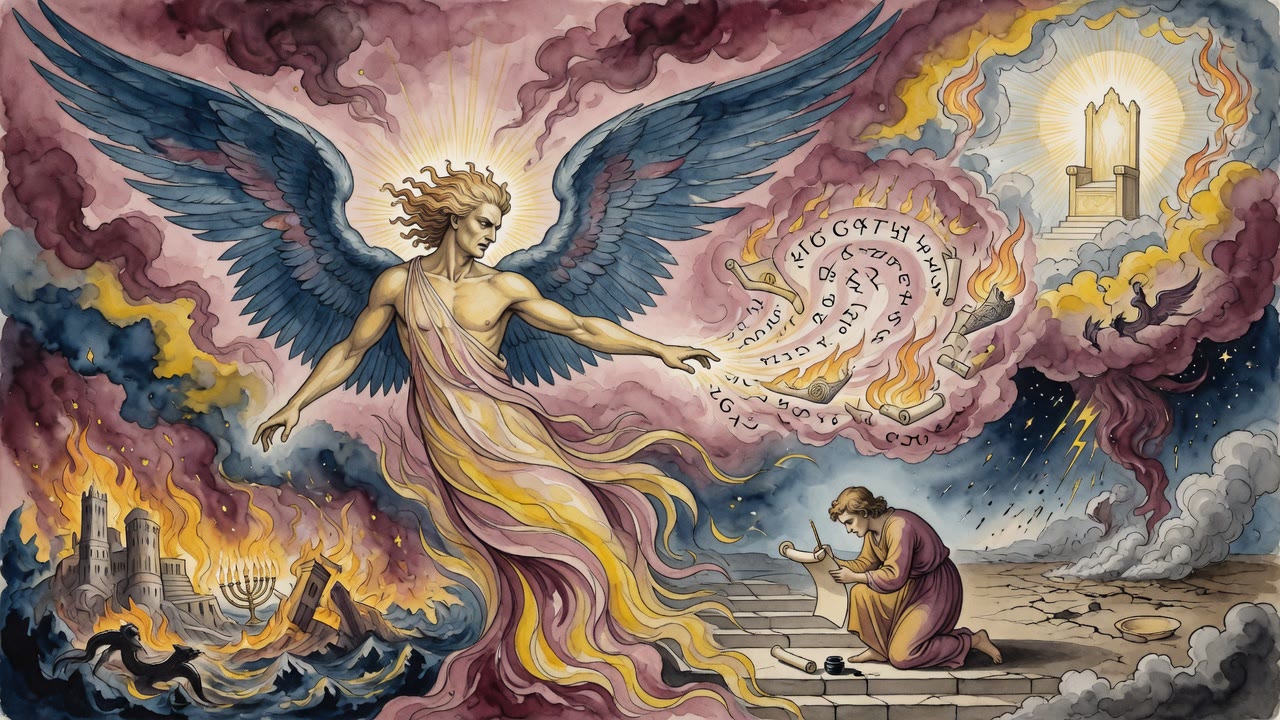
"Your understanding has failed completely on the subject of this world," he said, "and you think you can take hold of the way of the Most High? I have three problems for you. Solve one and I will show you what you want to see, and I will tell you why the heart is evil."
Ezra said to speak.
"Go and weigh me the weight of fire. Or measure me out a measure of wind. Or call back for me the day that is past."
Ezra said that nobody born of a woman could do any of that.
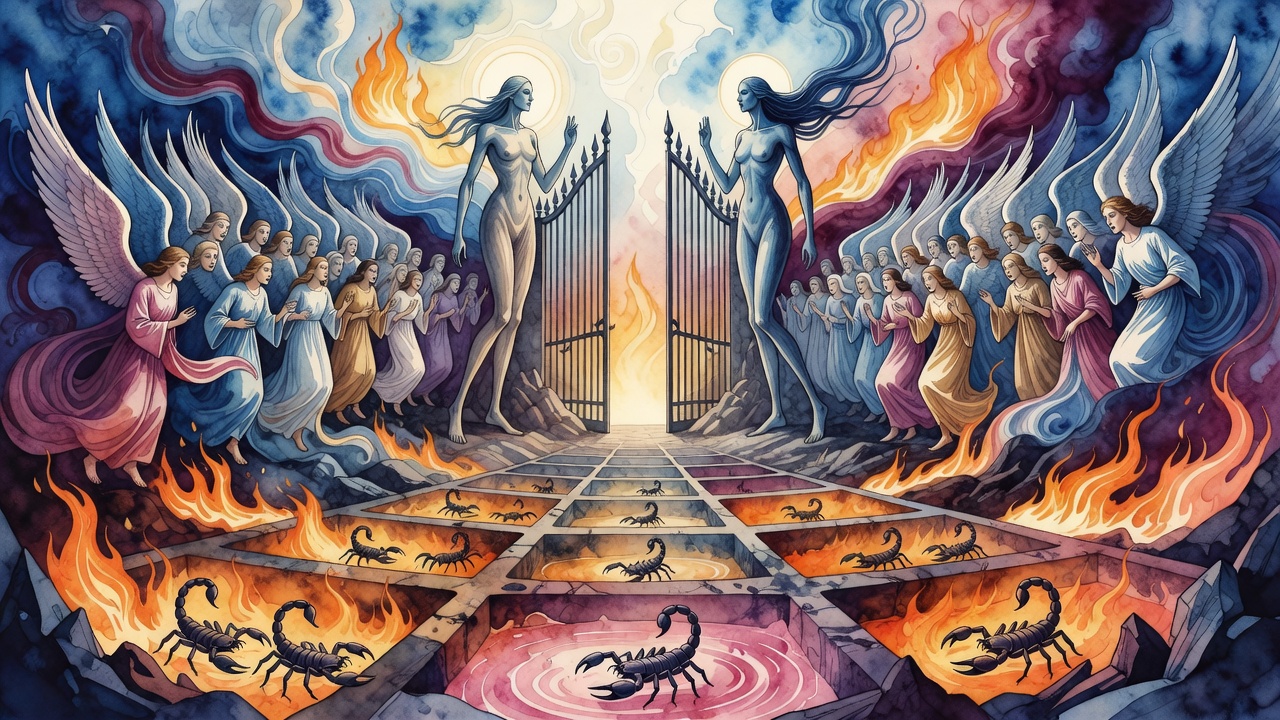
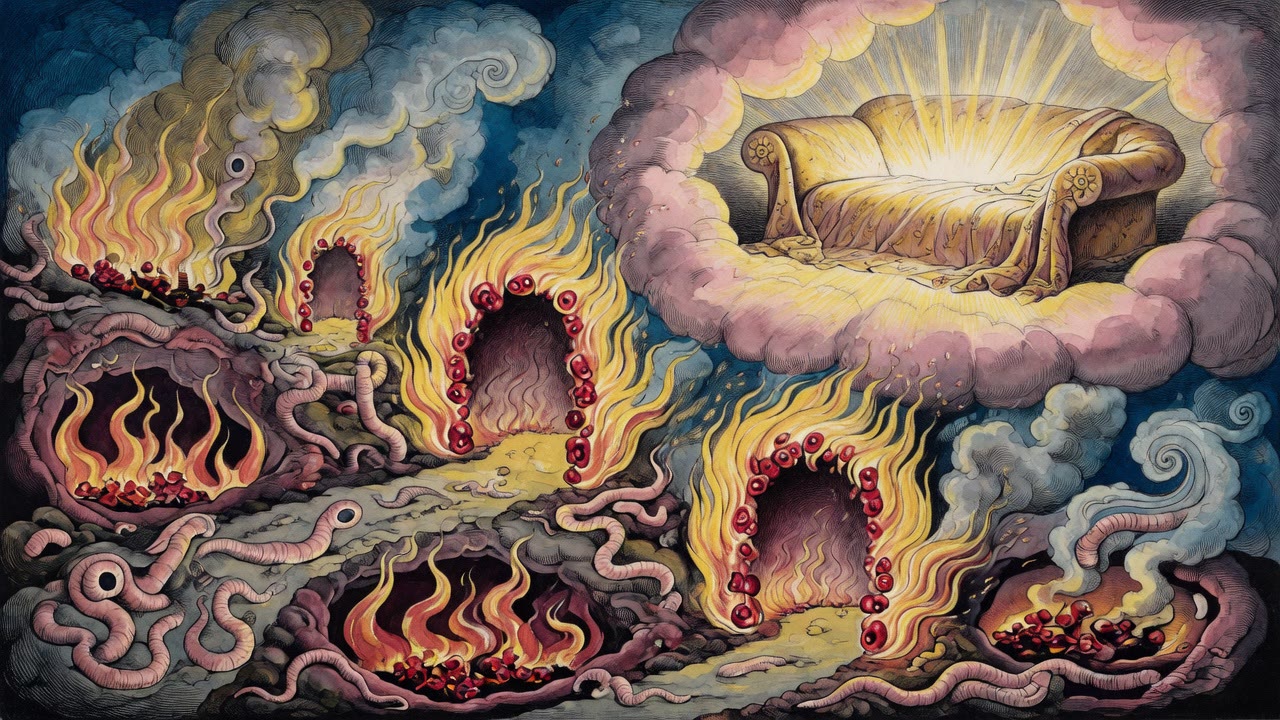
"If I had asked you how many rooms there are in the heart of the sea, or how many streams feed the deep, or where the exits of hell are, or where the entrances of paradise are, you would have told me you never went down into the deep and never went up into heaven. But I asked you about fire and wind and yesterday. Things you walk through. Things you cannot live one hour without. And you have no answer about those either."
Ezra put his face on the ground. Better not to have come here at all, he said, than to arrive and live badly and suffer and never be told why.
The Forest and the Sea Went to War
The angel told him about a forest.
The trees on the plain held a council and decided to march on the sea and push it back so there would be more room for forest. The waves held their own council at the same hour and decided to go up and take the plain so there would be more room for sea. The trees never got there. Fire came and ate them. The waves never got there either. The sand stood where it always stands and stopped them.
"If you were the judge between those two," Uriel said, "which one would you clear and which one would you condemn?"
Ezra said they were both fools. The land belongs to the forest and the sea has a place assigned for its waves.
"You judged well. Why have you not judged your own case the same way?"
Then he made Ezra stand at his right hand and watch. A furnace went past, blazing, and when the flame had gone by, the smoke stayed behind. A cloud went past and dropped a violent rain, and when the storm had gone, a few drops were still hanging in it. As the rain outweighs the drops and the fire outweighs the smoke, so the part that has already gone by outweighs the part that is left.
Somewhere out of sight, Ezra was told, the souls of the righteous had asked the same question he was asking, in their own chambers. How long do we stay here, and when does the harvest of our reward come in? The archangel Jeremiel answered them: when the number of people like you is complete. He has weighed the age in a balance and measured the times by measure and counted them by number, and He will not wake anyone until the measure is full.
"Go and ask a woman carrying a child," Uriel said, "whether at nine months her womb can hold on to it any longer."
Phaltiel Came Looking for Him
Ezra woke up shaking. His whole body was going and his soul went out of him in a faint, and the angel had to hold him up and put him back on his feet.
On the second night a man walked in. Phaltiel, one of the chiefs of the people, an ordinary official with responsibilities.
"Where have you been? Why is your face like that? Do you not know that Israel has been put in your care, here, in the country where they are exiles? Get up and eat some bread. Do not walk out on us like a shepherd who leaves his flock to cruel wolves."
"Go away from me," Ezra said. "Do not come near me for seven days."
The man heard him and left. Ezra fasted the seven days, mourning and weeping, and at the end of them the thoughts in his chest were worse than before.
The Ground Started Moving Under Him
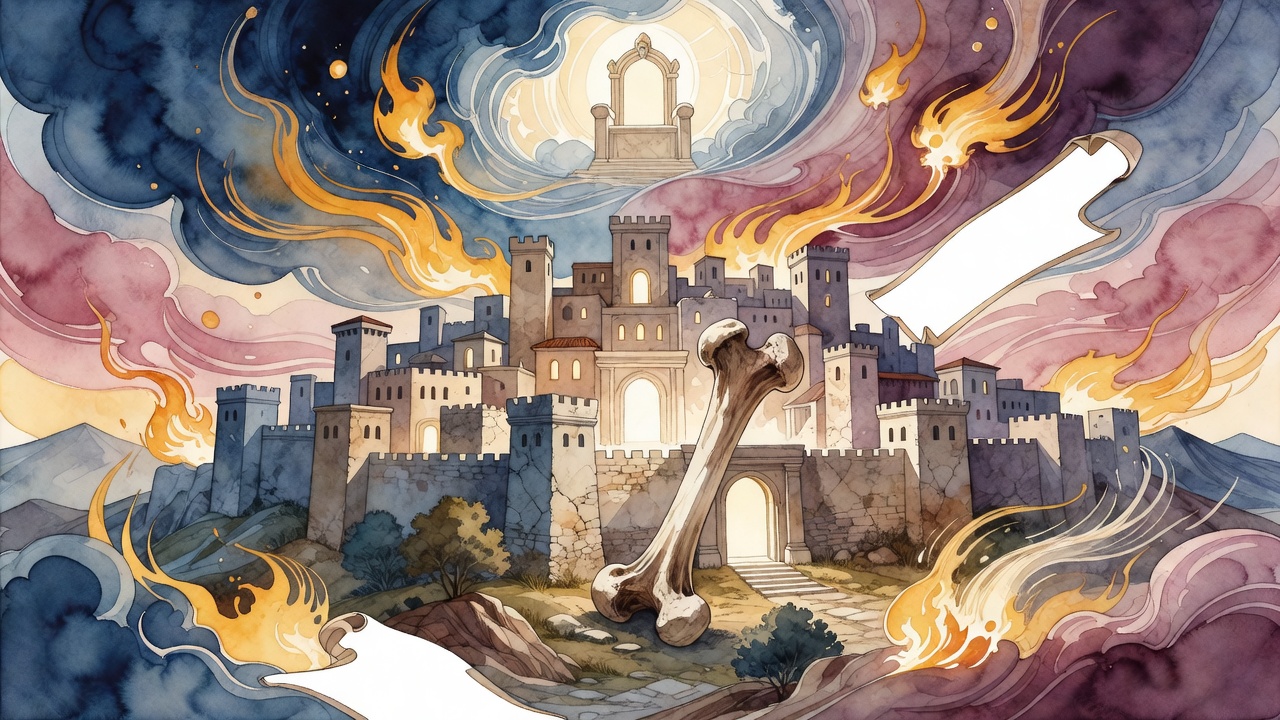
The angel took him back past the ruins, past the flood, to a point with nothing left to stand on. Before the portals of the world were in place, he said. Before the winds were gathered and blew. Before thunder sounded or lightning showed. Before the foundations of paradise were laid and one flower in it had been seen. Before anyone counted the hosts of angels, before the footstool of Zion was set down anywhere. "Then I planned these things, and they were made through Me and not through another, and the end will come through Me and not through another."
He showed him the beginning first. Then he showed him the end.
"Get on your feet," the angel said, "and you will hear a voice, a full one, and it will be loud. If the place where you are standing shakes hard while the voice is speaking, do not panic. The word is about the end. The foundations of the earth will work out that the speech concerns them. They will shake, because they know their own end has to be changed."
Ezra stood up and listened, and the sound was like a great deal of water moving.
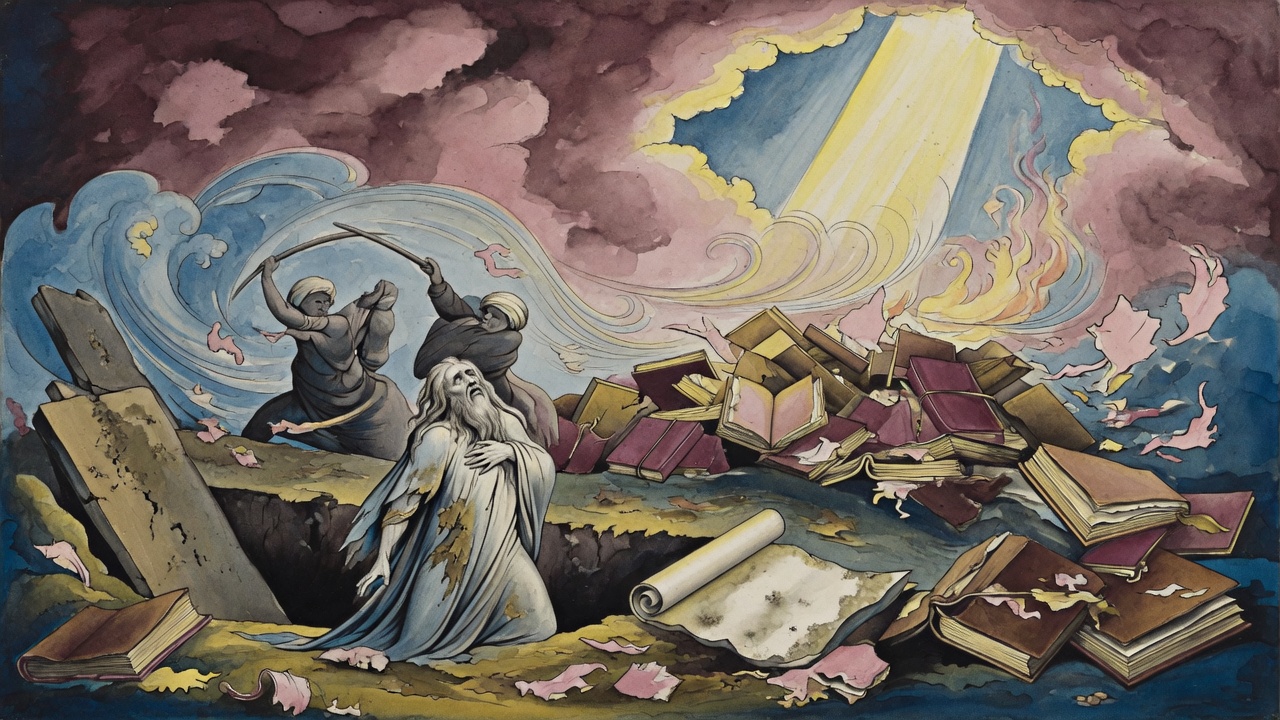
The days are coming, it said, and when the humiliation of Zion is finished and the seal is set on the age that is passing, here are the signs. The books will be opened in front of the sky and everyone will see them at once. Babies a year old will speak with their own voices. Women will give birth at three and four months and the children will live and dance. Fields that were sown will be found unsown and full storehouses will be found empty. The trumpet will sound and everyone who hears it will be terrified in the same instant. Friends will go to war on friends. And the springs at the head of the rivers will stand still for three hours and not run.
While the voice was still going, the ground where Ezra was standing began to rock, a little at a time, back and forth.
"I came to show you these things tonight," the angel said. "If you pray again and fast another seven days, I will tell you greater things than these. Your voice has been heard. Believe, and do not be afraid."
He was left standing on ground that would not hold still, in Babylon, in the thirtieth year, being told not to be afraid.
← All myths