The Law Sodom Used to Bury Its Strangers
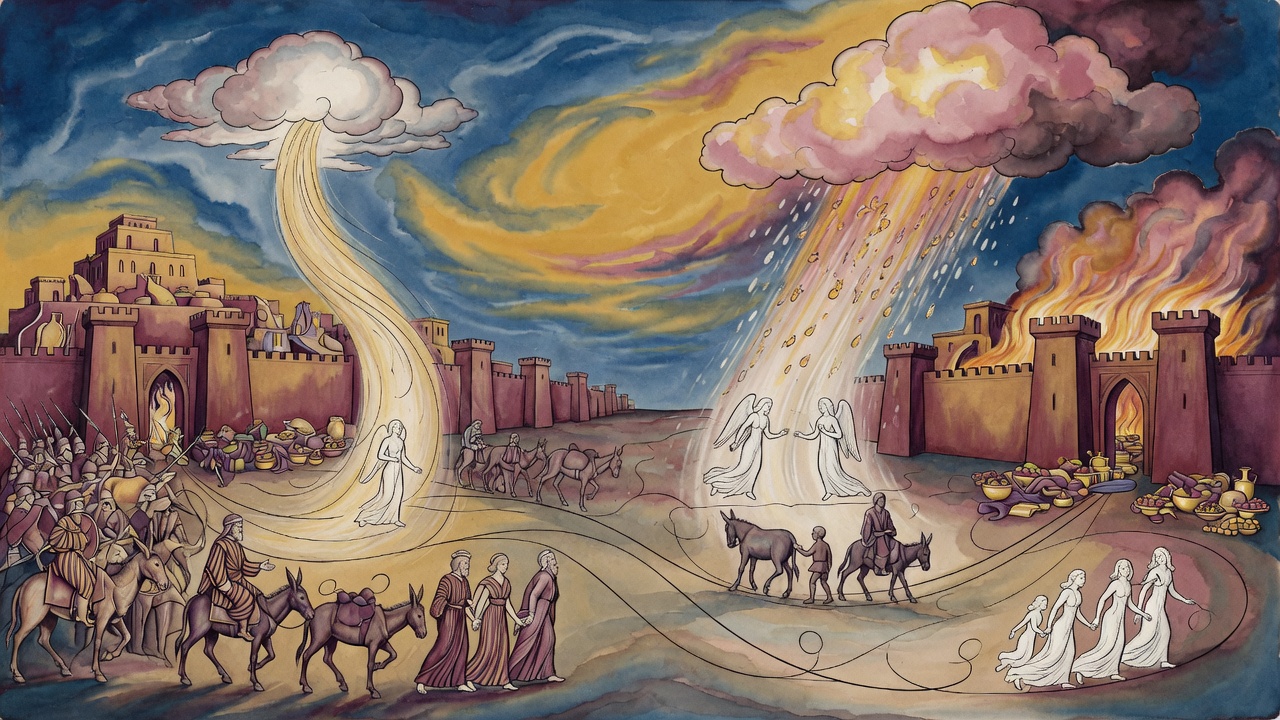
Lot took the judge's seat the same day two strangers walked through the gate. He barred his door before the city could apply its law.
Table of Contents
 Click for full size
The Judge Who Went Looking for Guests
The day Lot was appointed chief judge of Sodom, two strangers walked through the gate.
He recognized them the moment they stepped into the square: travelers, tired, with the plain vulnerability of men who had been walking all day. He moved quickly. His house before dark, he told them. There was a law in this city and they did not know it yet, and he intended to place his walls between them and it before anyone noticed their arrival.
Sodom had courts. Sodom had judges with official names. Sodom had an ordinance recorded and inherited from the administrations before. All strangers entering the city were to be treated in a specific way. Not taxed. Not expelled. Treated. The word was a technical term in the city's statutes, and every resident knew what it meant. Cruelty was a civic duty. The laws of Sodom had made it so, and the duty was older than Lot's seat.
Four Names for Four Courts
Eliezer of Abraham's household later rendered the judges' names as he understood them. Shakkara, Liar. Shakrura, Arch-deceiver. Kazban, Falsifier. Mazle-Din, Perverter of Judgment. Four cities, four magistrates, each one a precise instrument of the law they served.
The city had not always been this way, but it had been this way long enough that no one remembered it otherwise. The outcry of Sodom was raba, becoming greater, a cruelty that got more precise with each generation that refined it, documented it, and passed it to the next administration as an inheritance. By the time Lot sat down in the judgment seat, the law was older than anyone in the city. His predecessors had administered it. His honor was to continue the line.
He did not intend to continue the line. He had gone looking for travelers at dusk, which was itself a small private rebellion against everything Sodom expected of its chief judge. He found two men. He brought them home. He barred the door.
Every Man, Young and Old
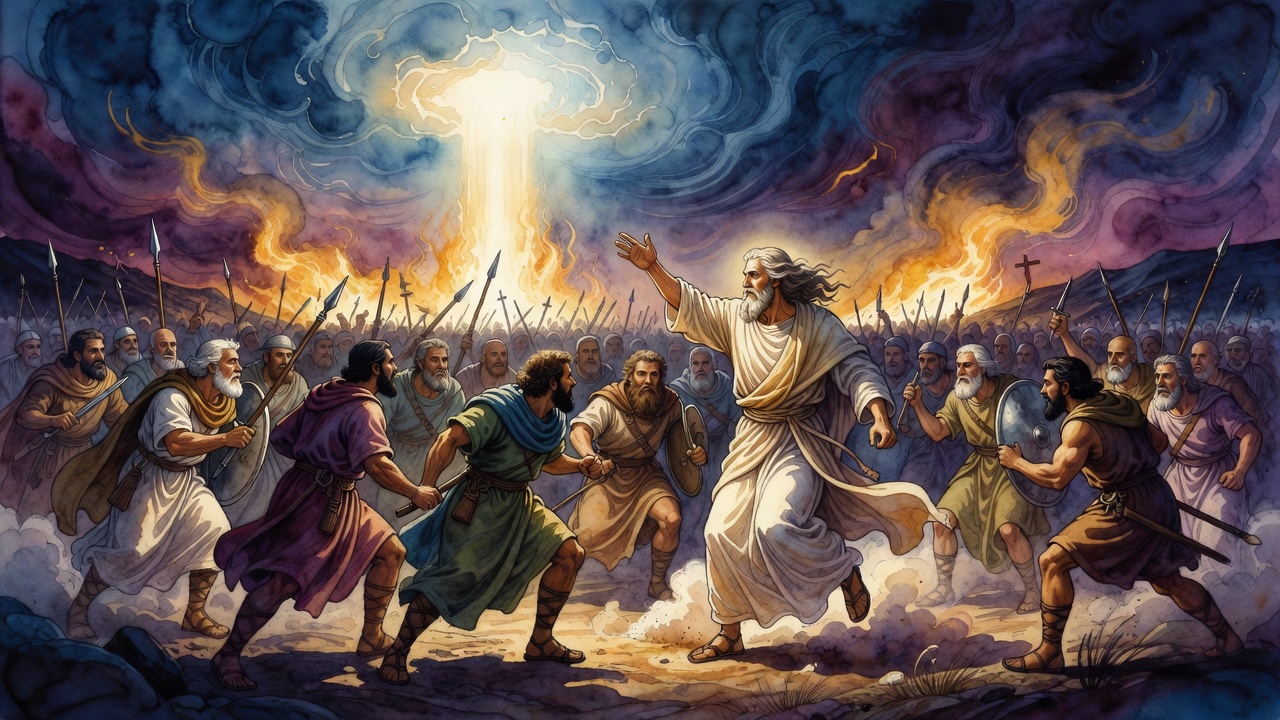
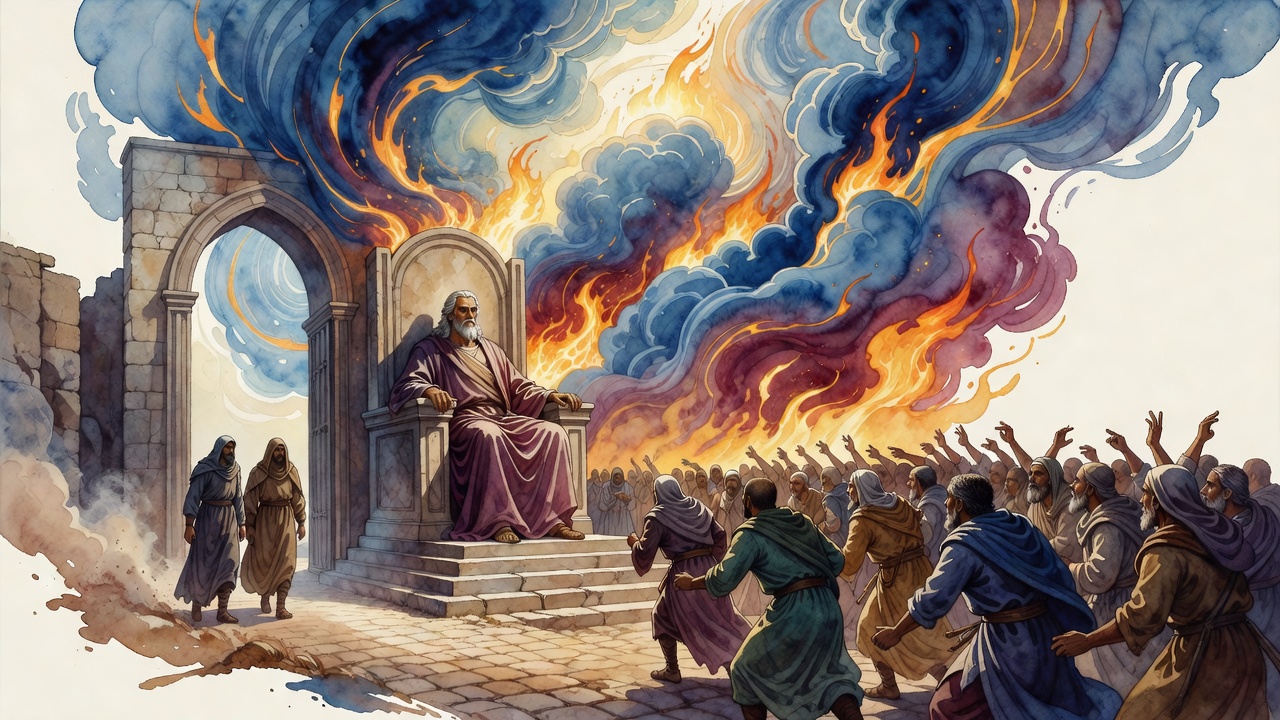
They came before he could feed his guests a full meal. Every man in the city, young and old, crowded around the house from all sides. (Genesis 19:4) Not a mob in the disorganized sense. A civil assembly. They came because there were strangers inside Lot's house and the ordinance required a response. They came because that was what the law of Sodom meant in practice.
Lot stepped outside and pulled the door shut behind him. He appealed to them as neighbors first, then as men capable of reason. He reminded them of the generation of the Flood, drowned for these same sins. He asked them to consider what they were doing.
The crowd listened. Then they answered him with the question that had the weight of the entire city's history behind it. Was it possible, they asked, that he would set aside a law which his predecessors had administered? And though Abraham himself came hither, we should make an exception?
He had been appointed to uphold this law. He had not yet administered a single case. He was already asking for an exception. The crowd was not angry. They were baffled. The chief judge did not make exceptions to laws his predecessors had written. That was not how Sodom worked. They pressed forward.
Hitherto Thou Couldst Intercede
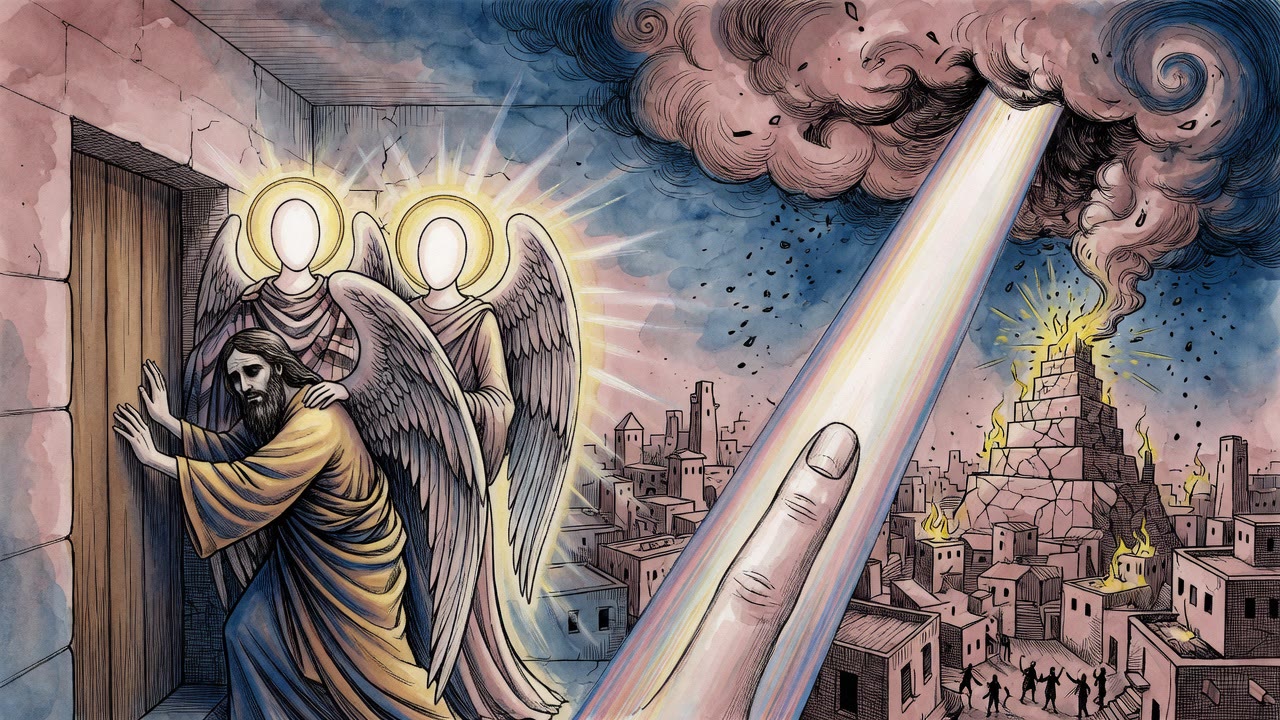
Inside the house, the two strangers heard the crowd at the door and understood what they were. They pulled Lot back through the threshold and struck the men outside with blindness. The pressing bodies groped at walls they could no longer see. The crowd stumbled. The door held.
The angels had been willing, until that moment, to hear Lot's pleas. There had been a thin space of possibility. When every man in the city crowded around that house and invoked the ordinance, the space closed. "Hitherto thou couldst intercede for them," they said, "but now no longer." Not because Lot had failed to argue well. Because the city had just demonstrated, in full assembly, that it would defend its law to the end. A city that organizes itself around cruelty and calls the organization justice has made its case. The angels accepted the city's argument about itself.
Dust and Ashes Kept
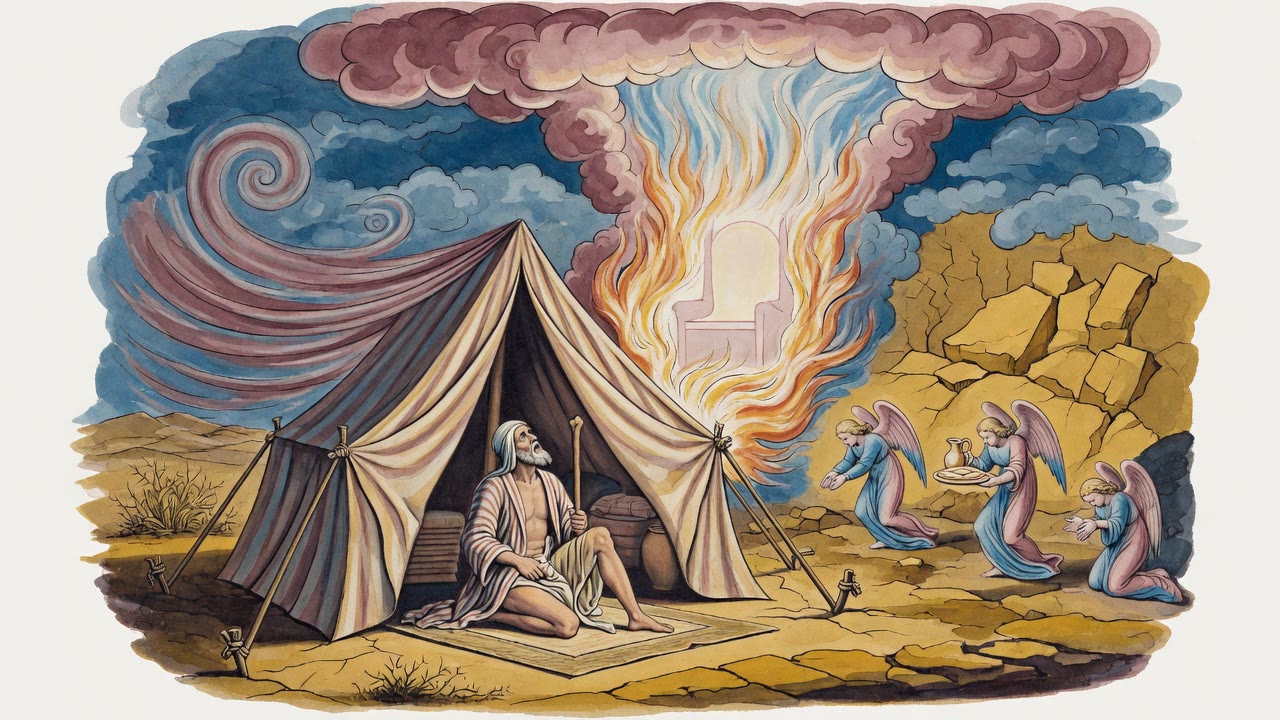
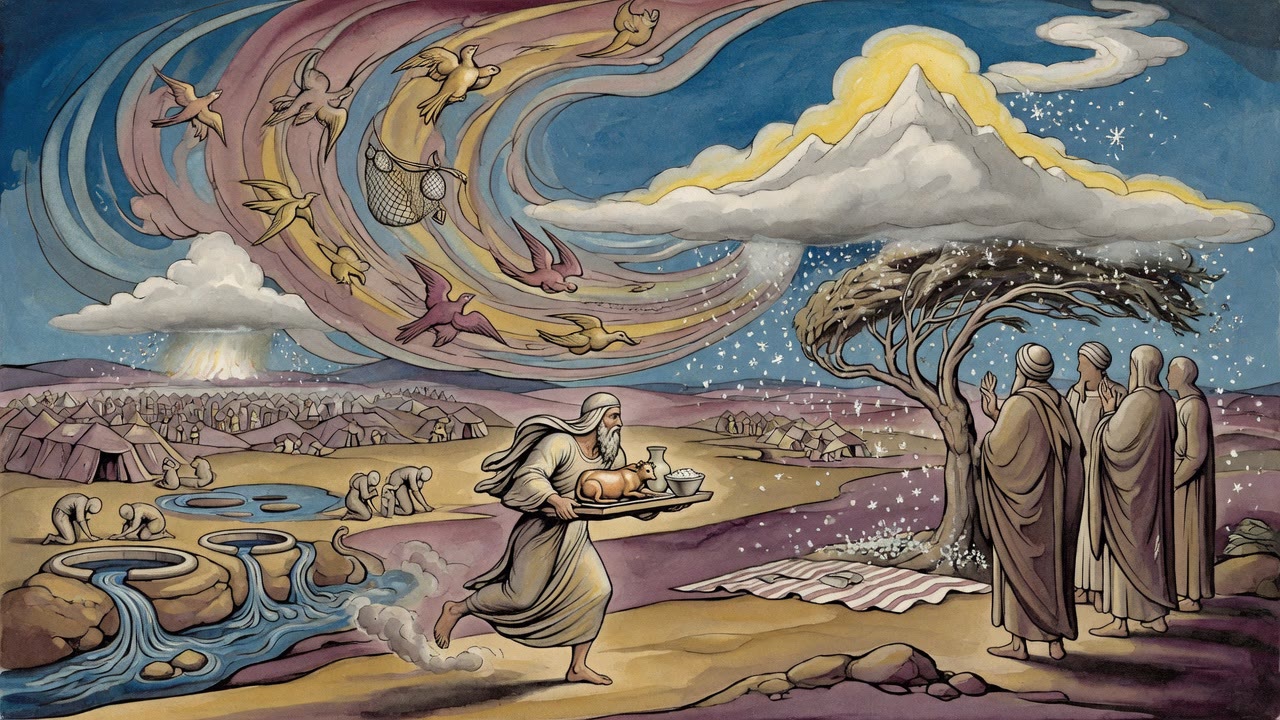
Outside the city, Abraham had been standing before God bargaining since morning. He began at fifty righteous people and worked downward: fifty, forty-five, forty, thirty, twenty, ten. (Genesis 18:23-32) He assumed righteousness was there to be found. He had not encountered the ordinance. He was operating on faith that a city could contain at least ten people who had not signed their names to deliberate cruelty. He stopped at ten because ten was the minimum required for an assembly. If ten righteous people existed anywhere in those five cities together, their gathered presence would constitute a community, and that community would justify mercy.
There were not ten. Abraham did not know this yet. He stood at the edge of the plain and believed the number was reachable.
When he said to God, "I am but dust and ashes" (Genesis 18:27), he was not speaking in a general way about human smallness. He was remembering specifically. King Amraphel had come close to killing him in battle. Without rescue he would have been dust. Nimrod had burned him in a furnace. Without protection he would have been ashes. The two words together were a survivor's precise accounting of how narrowly he existed. He stood interceding for people who had written laws against strangers, and he called himself the most vulnerable of things: not yet dead, but close enough to name both outcomes.
God answered the humility. "By your life," God said, "because you spoke those words, I will give your descendants atonement through them." The dust of the red heifer. The ashes of purification. The phrase Abraham used on behalf of Sodom became embedded in the structure of Israel's repair. He bargained for a city that had a law against him. He named himself the most fragile of things before a God who found that naming worth keeping.
Ten righteous people were not found in Sodom. The angels who had arrived as guests departed as executioners. The city burned at dawn, as the generation of the Flood had drowned: by the weight of what it had spent years accumulating against itself.
← All myths