Joshua Crossed the Jordan Carrying Joseph's Bones
When Israel entered the promised land under Joshua, they carried two arks. Everyone remembers the Covenant. Almost no one remembers what traveled beside it.
Table of Contents
 Click for full size
The Second Ark No One Remembers
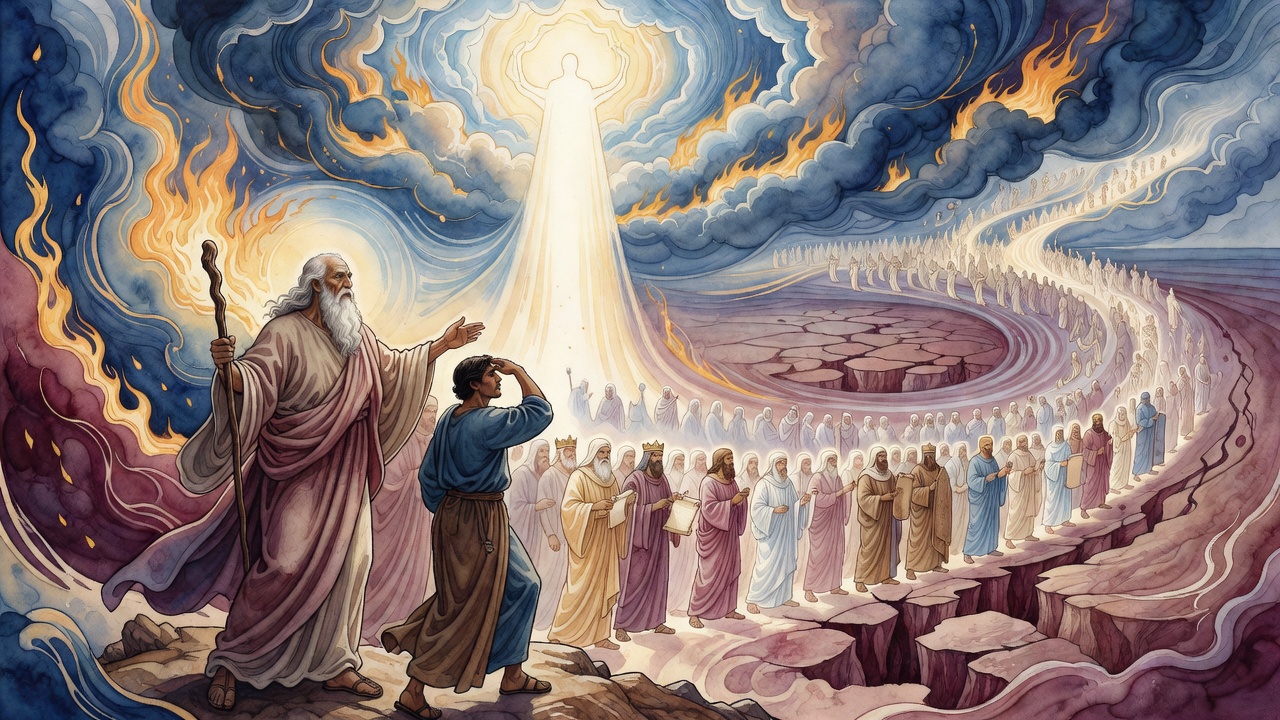
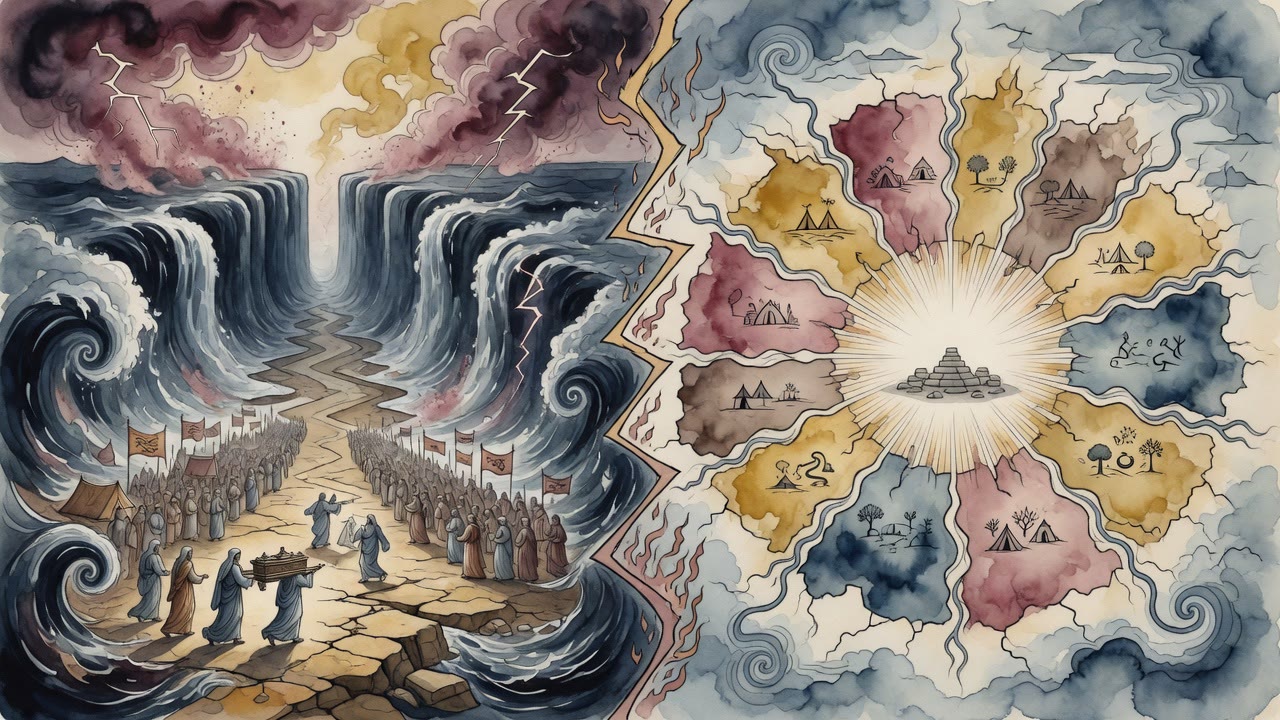
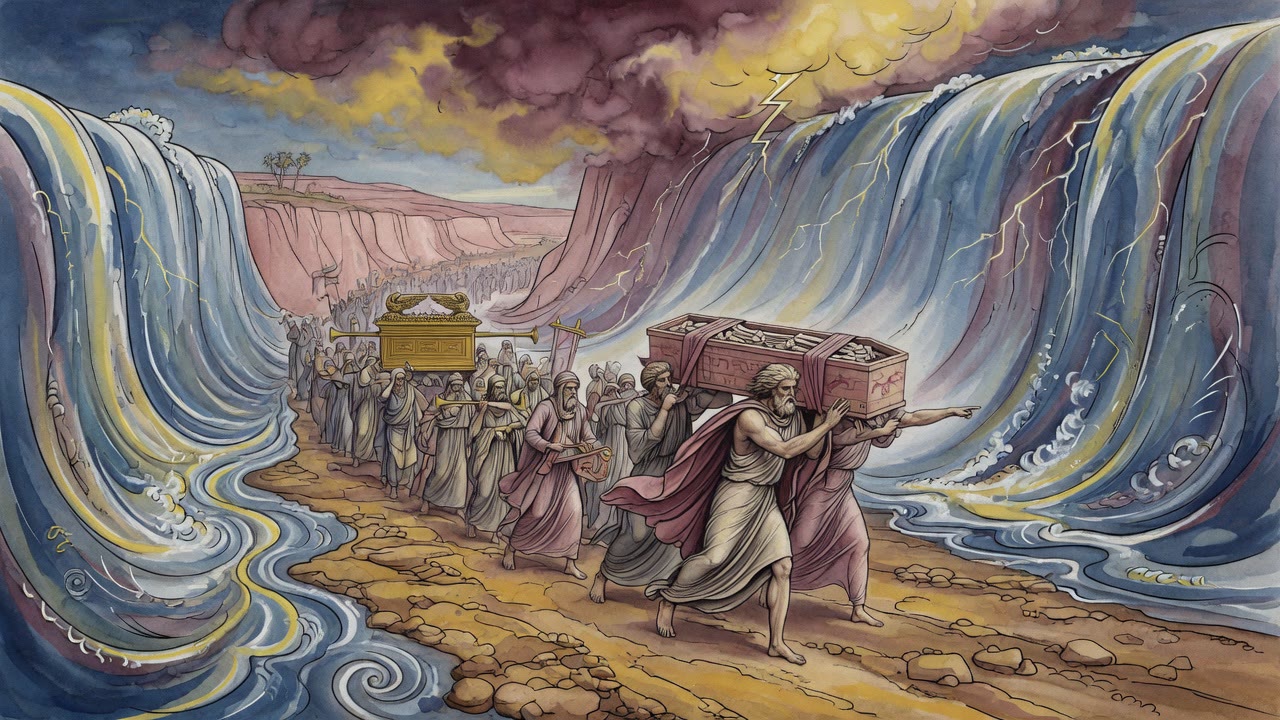
When the Israelites crossed the Jordan River under Joshua, two arks went through the water. The first was the Ark of the Covenant, carried by the Levitical priests, its feet touching the riverbed while the water piled up upstream and the nation crossed on dry ground. The second was the coffin of Joseph.
Joseph had made his brothers swear an oath before he died. He had seen clearly enough into the future to know that the descendants of the men he was speaking to would eventually leave Egypt, and when they left, they would take his bones with them (Genesis 50:25). Moses had fulfilled the first part of that oath four decades earlier, carrying the coffin out of Egypt when Israel left. Now Joshua was fulfilling the second part, carrying it across the Jordan into the land that Joseph had been promised in a dream but had never lived to enter.
Why the River Stopped
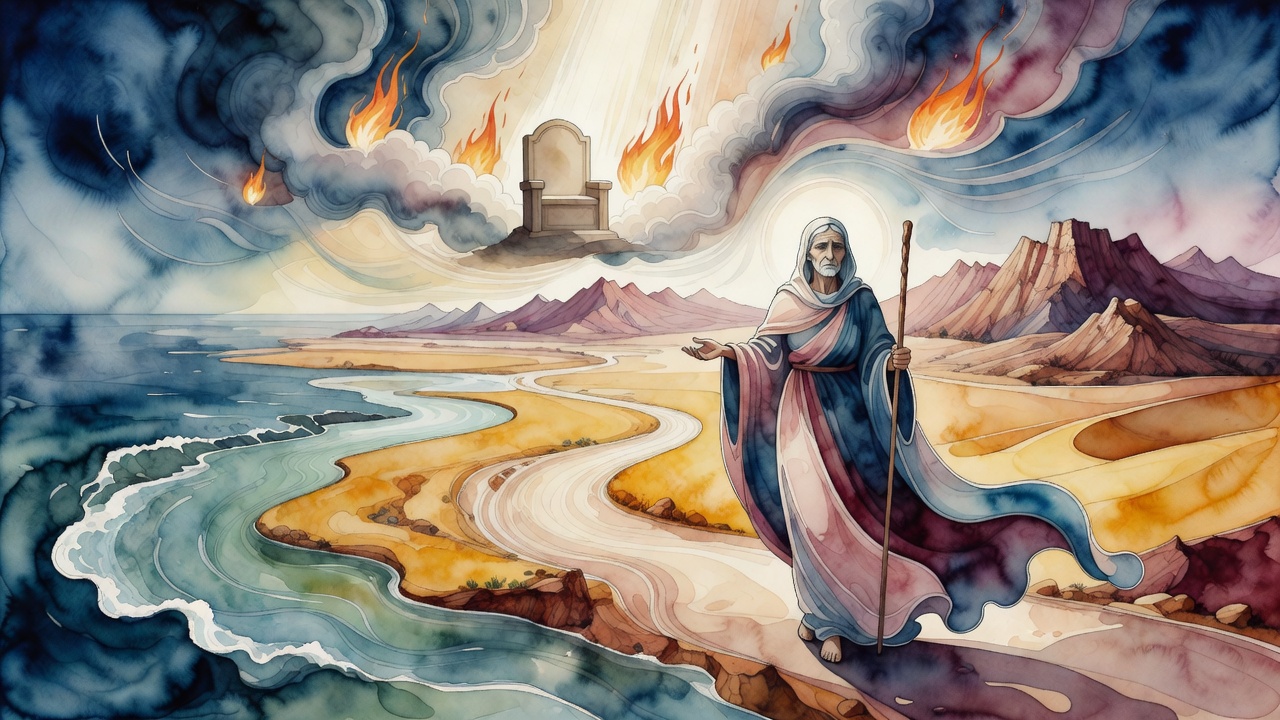
Bamidbar Rabbah, the midrashic collection on Numbers compiled in its present form around the eleventh century CE, asks what caused the Jordan to part. The answer it gives is not the Ark of the Covenant. The answer is Joseph. The tradition connects the Jordan crossing to the earlier splitting of the Red Sea under Moses and argues that both miracles turned on the same merit. At the Red Sea, God remembered Joseph's refusal of Potiphar's wife, the moment when Joseph ran and left his garment in her hand. That flight, the rabbis said, was worth a miracle. When the Jordan stood still for Joshua, it was still honoring the same act performed decades before Joseph's death by a young man who did not yet know what it would cost him.
The coffin in the water was not incidental to the miracle. It was the cause of it. The Jordan recognized what it was carrying.
Joseph Made Them Swear Before He Died
Joseph had seen enough of divine providence to understand that geography is temporary and belonging is permanent. Egypt had been his home for more than eighty years. He had been Pharaoh's viceroy. He had saved the ancient world from famine. But his bones did not belong in Egypt, and he knew it, and he made sure that everyone who outlived him knew it too.
The tradition preserved in Legends of the Jews, Ginzberg's synthesis published from 1909 to 1938, records what happened when Israel left Egypt. Moses alone went looking for the coffin. The other Israelites were occupied with acquiring Egyptian gold and silver, taking the plunder that the slavery years had earned them. Moses went to the Nile, where Joseph's coffin had been sunk in a lead box to mark the banks of the river and prevent the water from rising above its normal level. Moses stood at the edge of the water and called out: Joseph, the time has come. The coffin rose to the surface.
What Traveled Beside the Covenant
The image that Bamidbar Rabbah lingers over is the two arks moving together through the wilderness and then across the Jordan. Passersby would sometimes see the Israelites traveling and ask: what is in those two arks? They were told: the living God and the dead son of Jacob. The combination struck the rabbis as the summary of the entire biblical project. The divine presence and the bones of the patriarch, carried side by side, God's ark and Joseph's coffin, the commandments and the oath, the law and the promise, traveling together through every year of the forty until the moment they both crossed the water.
The Midrash records that when people pointed out the seeming incongruity, the rabbis explained that the dead man's coffin was being carried alongside the Ark because the dead man had fulfilled every commandment that the Ark contained. Joseph's bones had earned the right to travel with the law.
The Spies and the Sanhedrins
Bamidbar Rabbah also connects the Jordan crossing to the spy incident that had delayed it by forty years. When Moses sent twelve spies into Canaan and ten returned with a discouraging report, the entire congregation complained: if only we had died in the land of Egypt, or in this wilderness (Numbers 14:2). The Midrash identifies this entire congregation as the Sanhedrins, the governing bodies, not a random crowd of discouraged people but the established leadership, the official judicial and deliberative bodies of Israel. The delay was not the result of popular panic. It was the result of institutional failure at the highest level. Joshua's entry into the land forty years later was the fulfillment of what the Sanhedrins' failure had deferred.
← All myths