Why Zoar Survived When Four Other Cities Burned
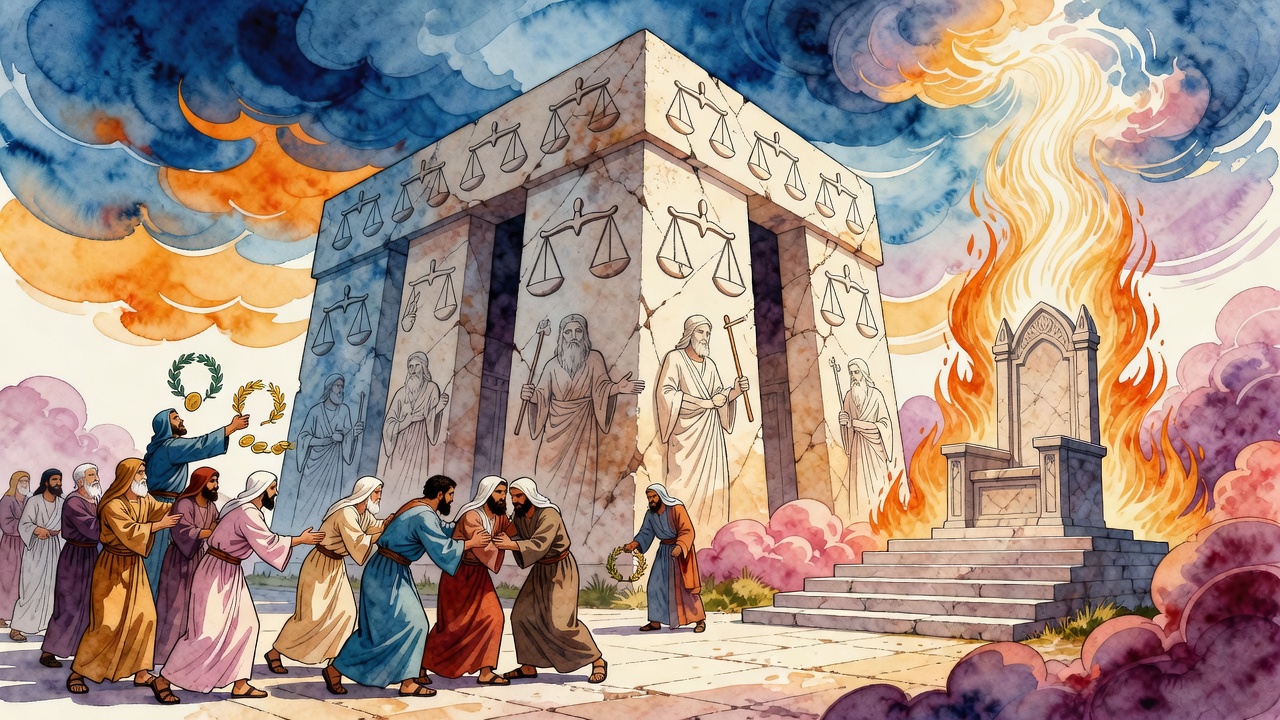
The angels pointed Lot toward Abraham's tent. He would not go. Next to his uncle, God would weigh them side by side.
Table of Contents
 Click for full size
Lot Would Not Go Back
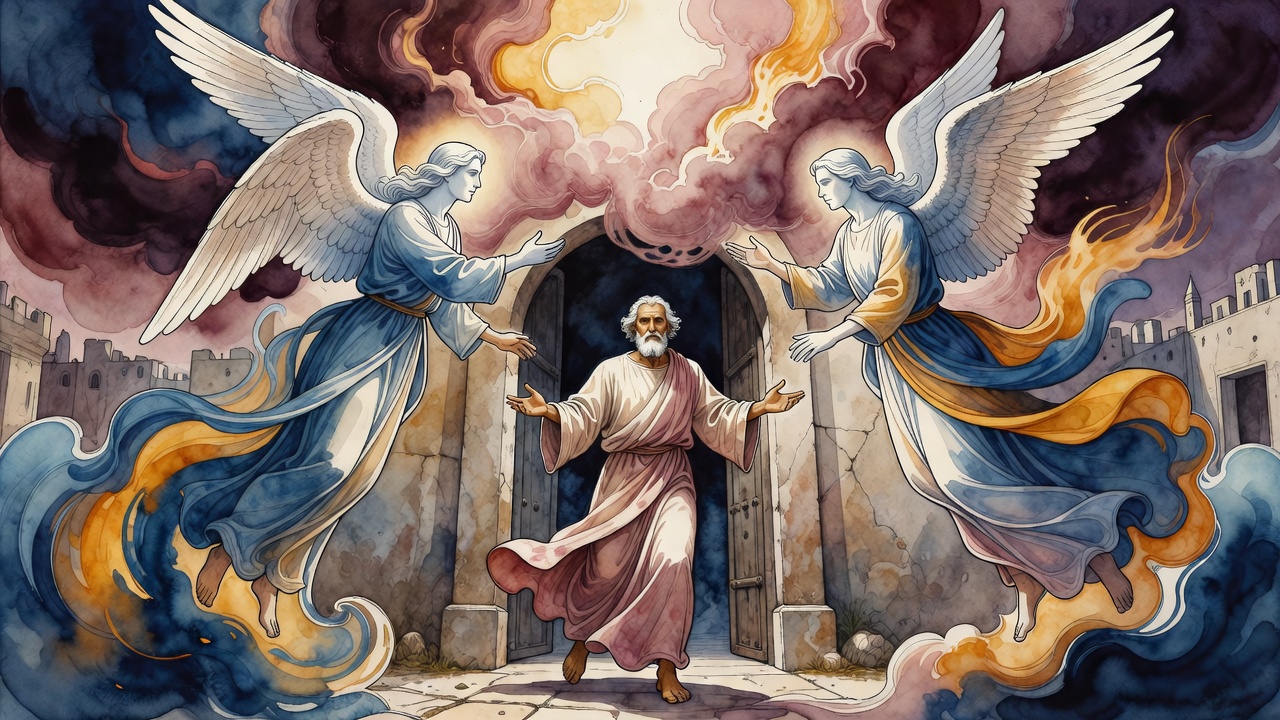
The angels seized Lot's hands and pulled him toward the gate. Behind him the street of Sodom was already finishing its last night. Smoke had not started. The judges had gone home. They told him to flee to the hills. They told him to take refuge with Abraham.
He would not go.
"As long as I dwelt apart from Abraham," he said, "God compared my deeds with the deeds of my fellow-citizens, and among them I appeared as a righteous man. If I should return to Abraham, God will see that his good deeds outweigh mine."
He had sat at Sodom's gate for years. He had watched its courts and stayed. Abraham had argued with God over the city's fate and ridden out after an army to rescue this same nephew. Lot knew the weighing. Next to that tent he would not look like a righteous man. He would look like a relative.
He Asked for the Youngest City
So he asked for Zoar. A small city. A near city. A city he could reach before the fire did.
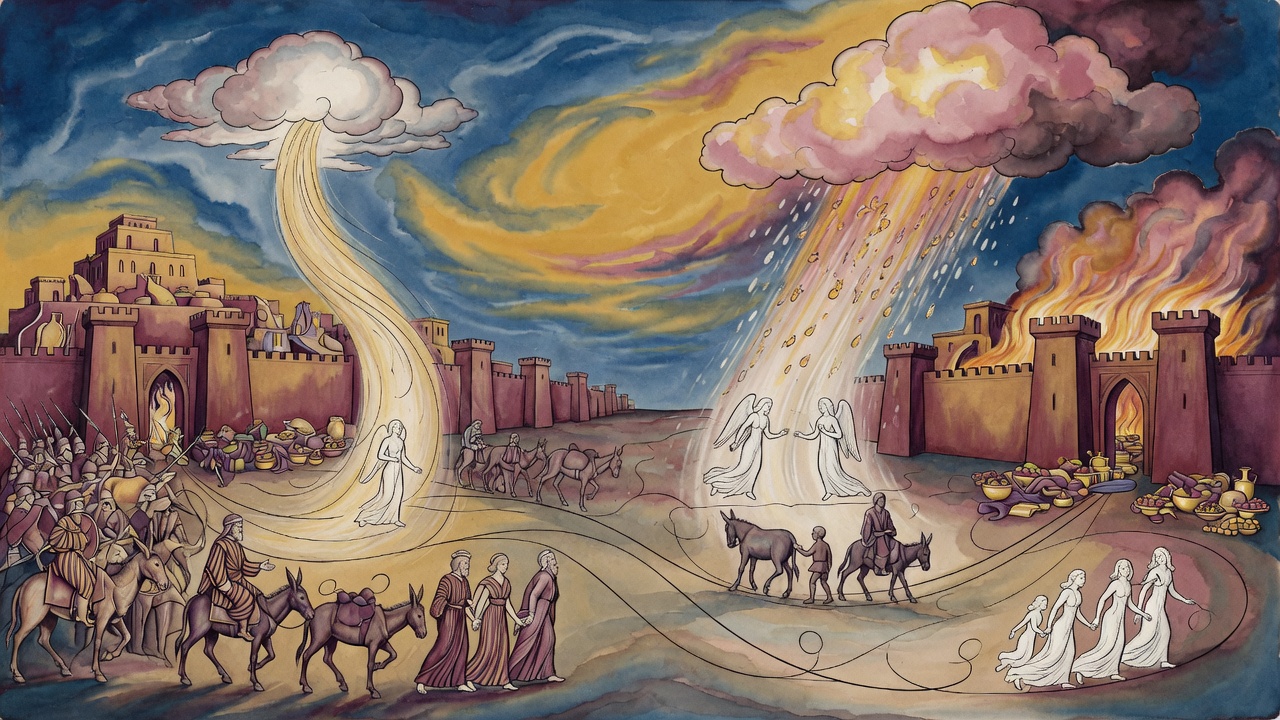
The angel granted the plea. Zoar had been founded a year later than Sodom, Gomorrah, Admah, and Zeboiim. It was fifty-one years old. Its sins were real. They were also recent. The measure of its wickedness had not yet filled to the brim the way the other four had filled.
Lot ran for it. He did not look back. He had chosen a city young enough to still be standing when he arrived. Small enough that he would not have to stand beside Abraham in it.
The Beds in the Street
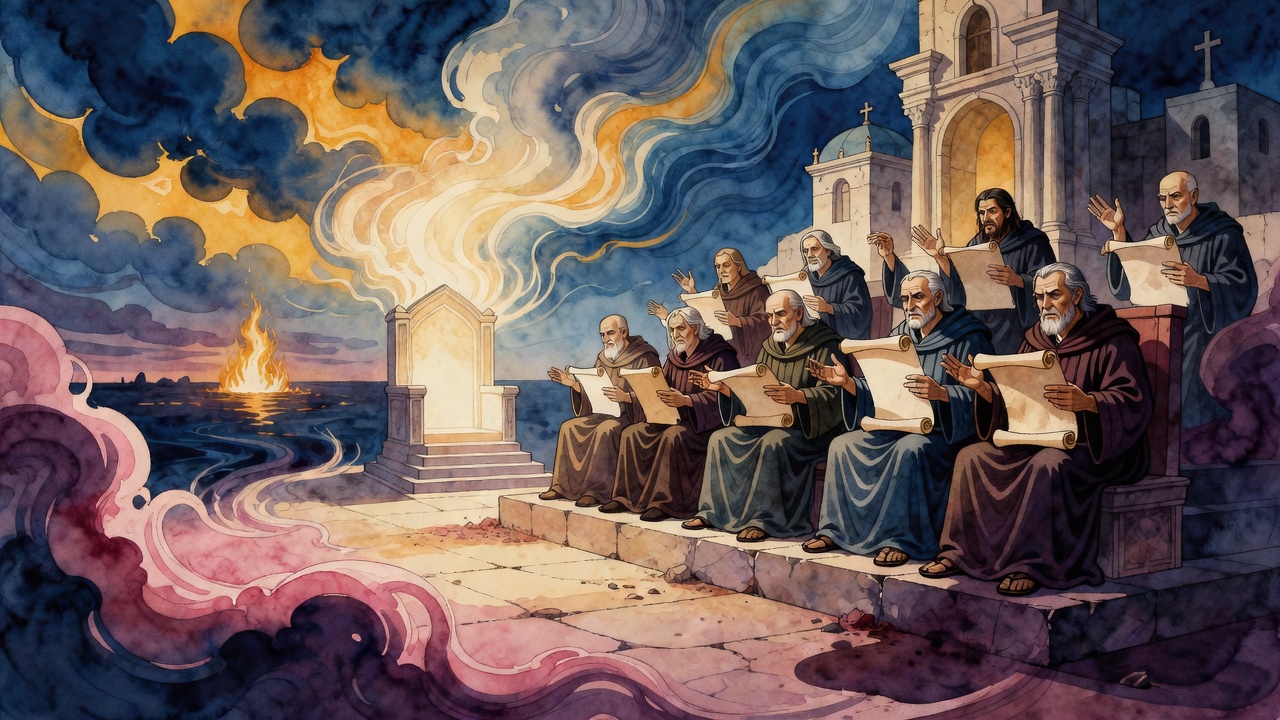
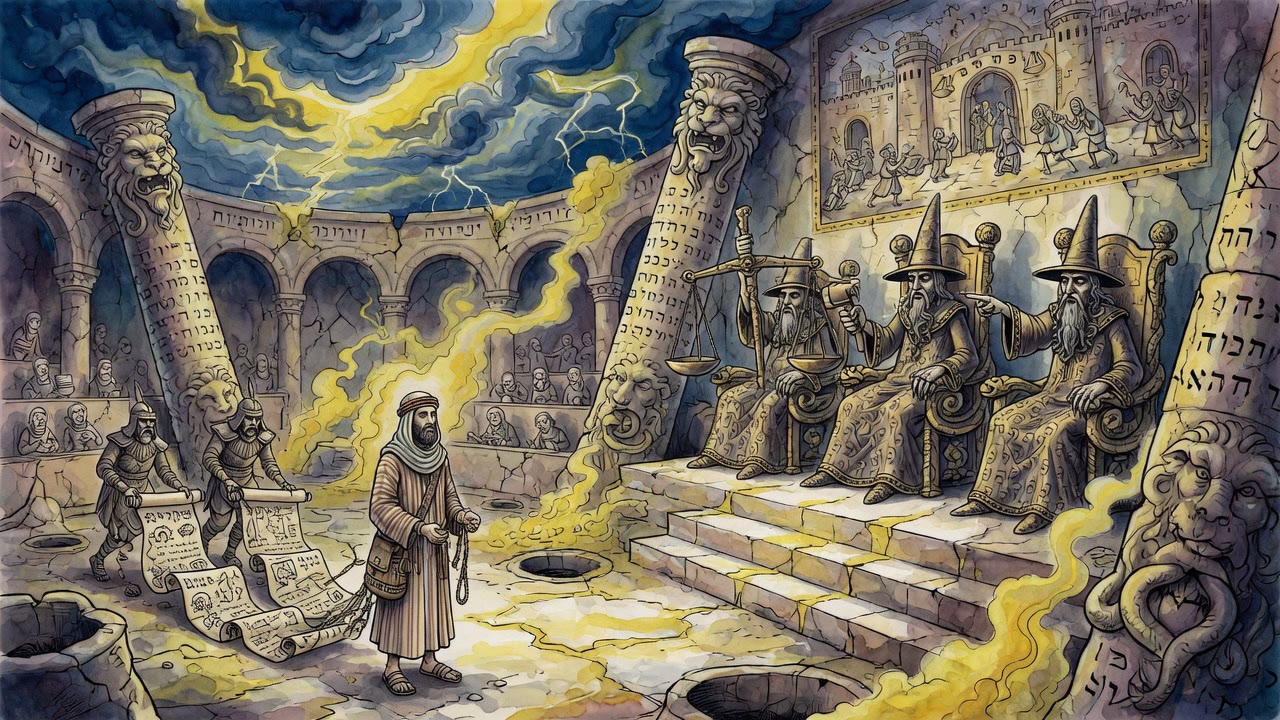
The four cities that were about to burn had not become themselves in a year. They had judges. Serak in Sodom, Sharkad in Gomorrah, Zabnac in Admah, Menon in Zeboiim. By their desire the people set beds in the streets. If a stranger came, they laid hold of him and made him lie down. Three men stood at his head and three at his feet and measured him by the bed. If he was shorter, they stretched him. If he was longer, they crushed the frame inward until he reached the gates of death. When he cried, they answered, "Thus shall it be done to a man that cometh into our land."
A poor man they gave silver and gold. Then they proclaimed that no one should give him a morsel of bread. When he died they came back for the coins. They stripped him, fought over his garments, and buried him under desert shrubs.
Eliezer, Abraham's servant, came once to ask after Lot. He found a man of Sodom stripping a stranger. He stepped in. The man of Sodom hit him in the forehead with a stone. Blood ran. Then the man caught Eliezer and demanded hire for having let the bad blood out, because such was the law in that land. Cruelty had become civic work. It took generations to build a court that could do that with a straight face. Zoar had not had the generations.
Dawn on the Sixteenth of Nisan
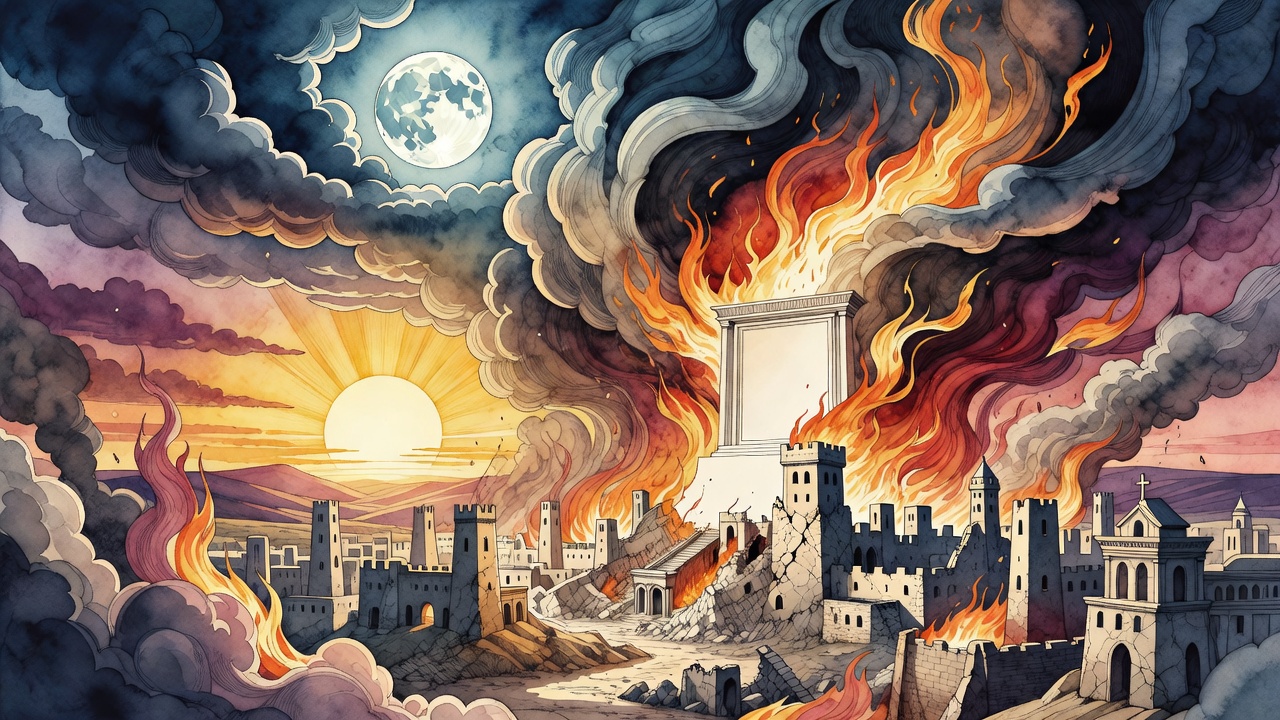
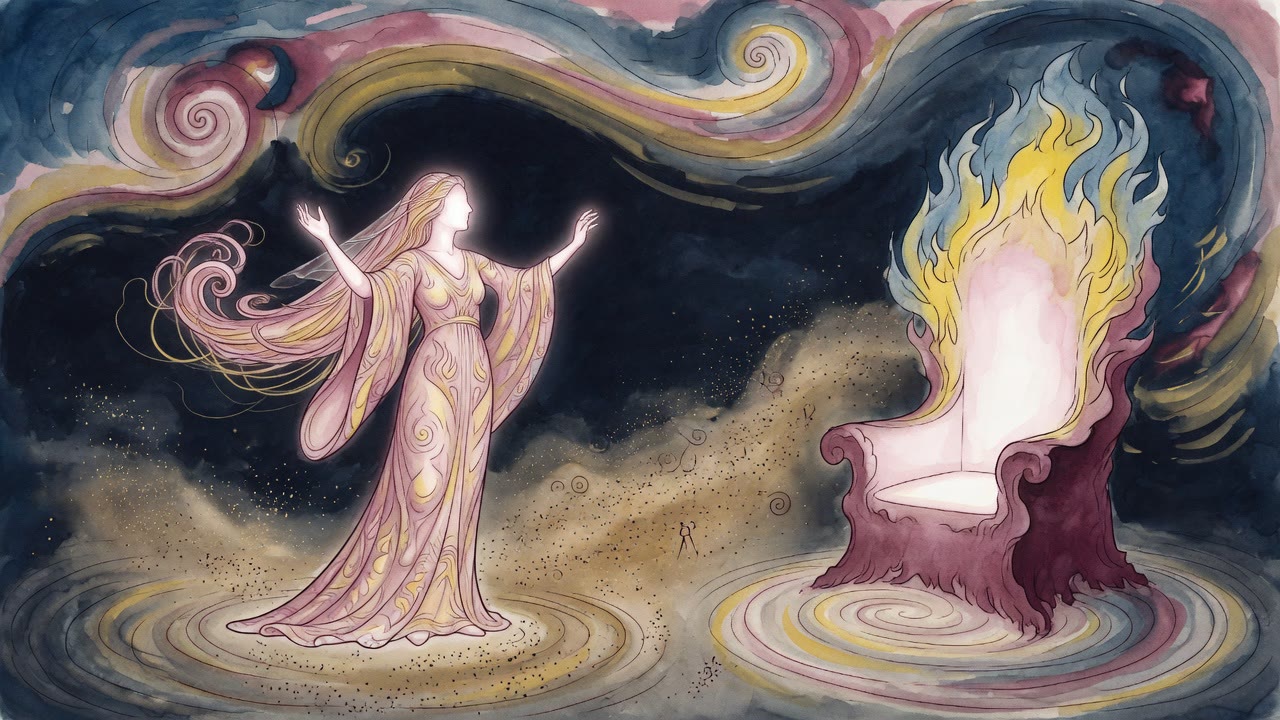
The fire came at dawn on the sixteenth of Nisan. The hour was chosen. Among the inhabitants of the plain were worshippers of the sun and worshippers of the moon. If the cities fell by day, the moon worshippers would say their protector had been absent. If they fell by night, the sun worshippers would say the same of theirs.
God set the blow for the hour when both lights were in the sky. The sun was there. The moon was there. Neither saved anyone.
The sun had risen over the earth when Lot reached Zoar (Genesis 19:23). He came in under both lamps, into a city fifty-one years old, while the plain behind him began to go white.
Four Cities Went Dark
Sodom burned. Gomorrah burned. Admah burned. Zeboiim burned. The beds in the streets went under. The judges' names went under. The girl in Admah who had given water to a stranger and been killed for it went under. All of that in one morning.
Zoar stood. Lot reached it on his feet. The little city was still there because it had not yet had time to become what the others had become. A man running from a fire had refused the tent that would have made him look small.
Behind him the plain smoked. Ahead of him a gate was still a gate. He went through it and did not go to Abraham.
← All myths