Abram Walked Into Canaan and Saw What His Father Missed
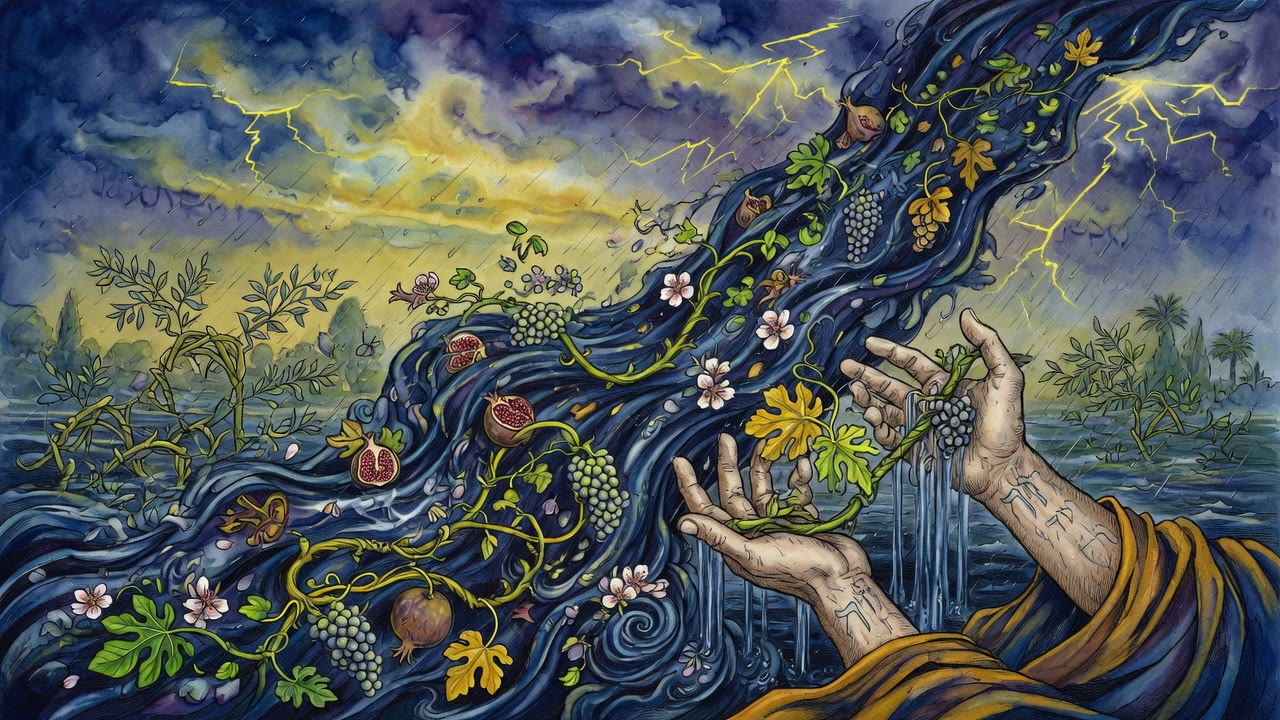
When Abram crossed into Canaan, he found vines, figs, oaks, cedars, and water in the mountains. His father had turned back before seeing any of it.
Table of Contents
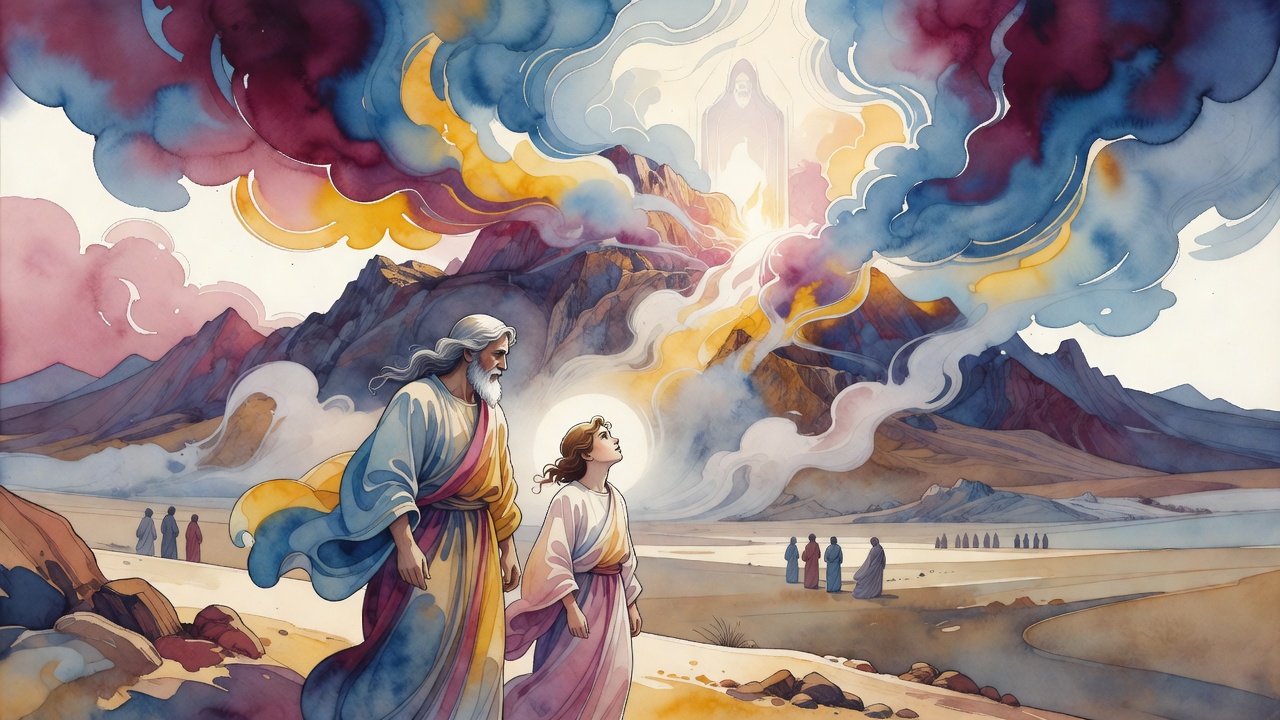
Terah had started this road. That is the thing to hold when reading what comes next: Abram is finishing a walk his father began in grief and never completed. Terah left Ur of the Chaldees with Canaan as his named destination, traveled as far as Haran, built a life there, and stopped. His dead son's name was on the city. Something held him. He lived out his days without ever arriving where he said he was going.
 Click for full size
Abram left Haran when he was seventy-five years old. He took Sarai his wife, and Lot his nephew, and all the possessions they had gathered, and all the souls they had made in Haran, and he came out to go into the land of Canaan. He walked the rest of his father's road.
Terah's Blessing at the Gate
Before he left, his father blessed him. The Book of Jubilees, a second-century BCE retelling of Genesis that traces every law and feast and sacred custom back to its patriarchal origin, preserves the words Terah spoke at the parting. May the Lord grant you grace, mercy, and favor before those who see you. May none of the children of men have power over you to harm you. Take Sarai. Take Lot as your own son. Leave Nahor with me until you return, and we will go together. Go in peace, my child.
These are not the words of a man who had forgotten where he had planned to go. They are the words of a man who knows he will not finish the walk himself, who is handing the destination to his son the way a father hands a task he can no longer carry. Terah had named Canaan out loud when he left Ur. He blessed his son toward it now. The road between those two moments was everything.
What Abram Found in the Land
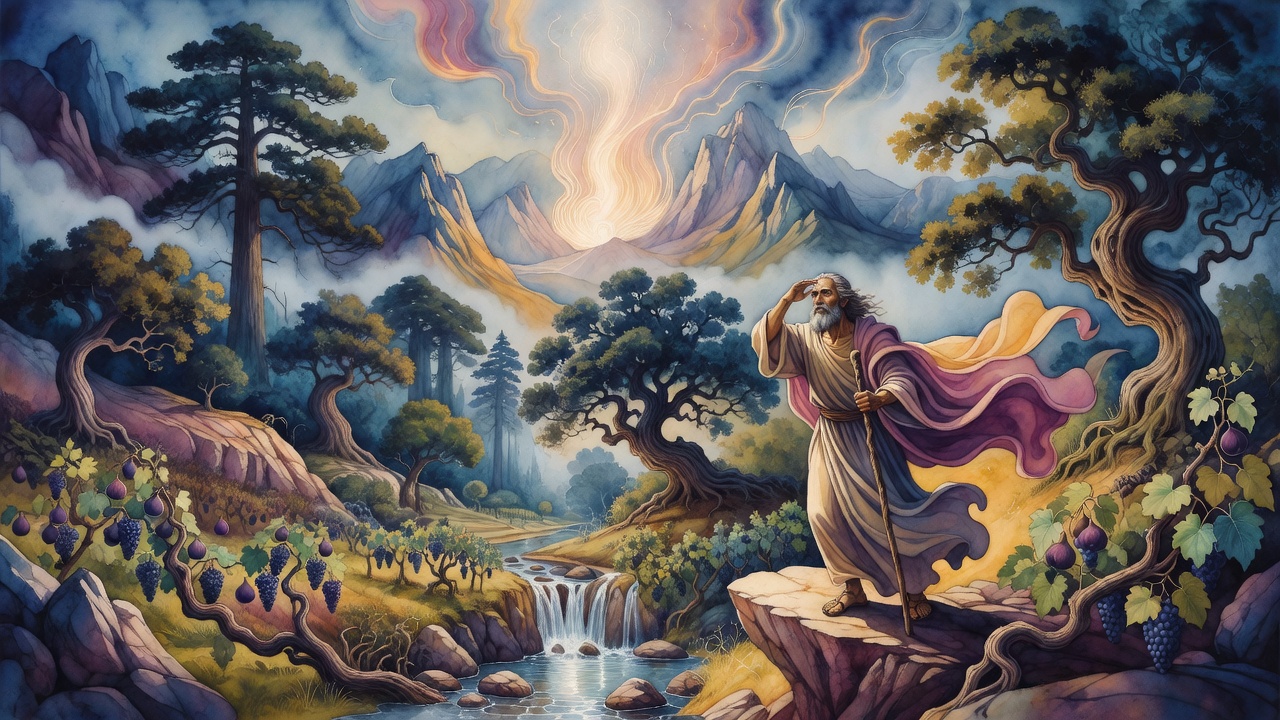
Jubilees records the arrival with the attention of someone who wants you to understand what Abram saw. The land was not empty. It was not a wilderness waiting to be made productive. It was already full of what a man walking from Mesopotamia would recognize as the signs of a place worth arriving at. He saw vines and trees, figs and pomegranates, oaks and terebinths and olive trees and cedars and cypresses and date palms. He saw mountains full of water. He saw a beautiful land and said: Blessed is the Lord who has created all things.
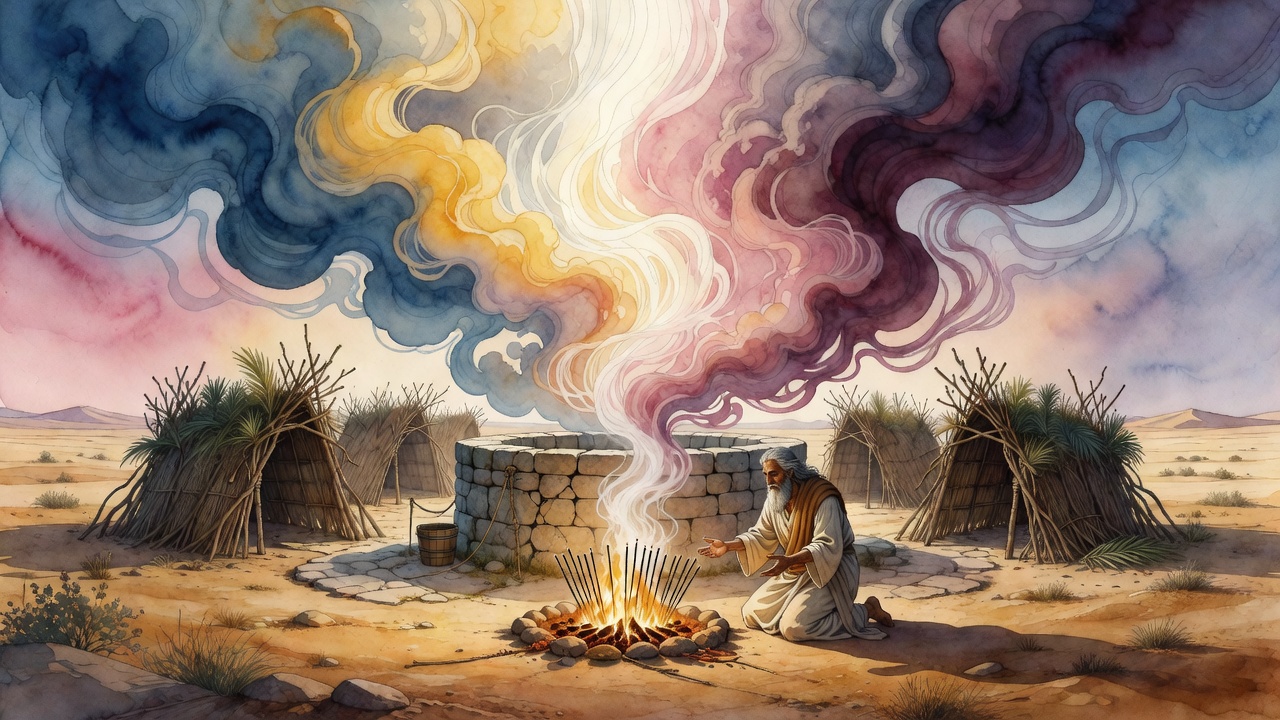
He traveled through the length of the land from north to south. He reached the oak of Shechem and built an altar there, the first altar in Canaan. God appeared to him and said: To your seed I will give this land. Not to you. To your seed. The land was promised for a generation not yet born, in a future that was still invisible from where Abram stood.
The Altar at Shechem
He built the altar anyway. Then he moved on to the mountain between Bethel and Ai. He built another altar there. He called on the name of the Lord. He looked around at the land that had been promised and was not yet his, and he called on the name of the one who had promised it. That was the whole of his response to an inheritance he could not yet possess.
Jubilees adds a detail that makes the moment stranger and more full. Abraham built the altar and dwelt there near a lofty oak. He sat under a tree that had been there before him and would be there after him, in a land his father had been walking toward when he stopped. The oak did not know or care about any of this. But Abram, under it, knew exactly where he was. He was at the end of his father's unfinished road. He was at the beginning of everything God had spoken to him.
The Weight of a Father's Unfinished Walk
The Book of Jubilees does not moralize about Terah's failure to reach Canaan. It does not explain why he stopped in Haran. What it does is preserve the blessing Terah gave his son at the gate, which contains within it the full weight of a man sending his child to a place he could not bring himself to go. The blessing is love and inheritance and something close to apology, all at once.
Abram crossed into Canaan. He found the land lush and real, exactly as one would hope after such a long approach. He built his altars. He called on the name of his God. He did not stop in any city whose name bore the mark of a grief he was afraid to move past. He kept walking until there was no more land to cross, and then he turned around and walked back, because the promise was not about having arrived. It was about the seed that would come after, the generation that would inherit what he had only been shown.
← All myths