Anaphiel Opens the Seventh Palace With Crowns
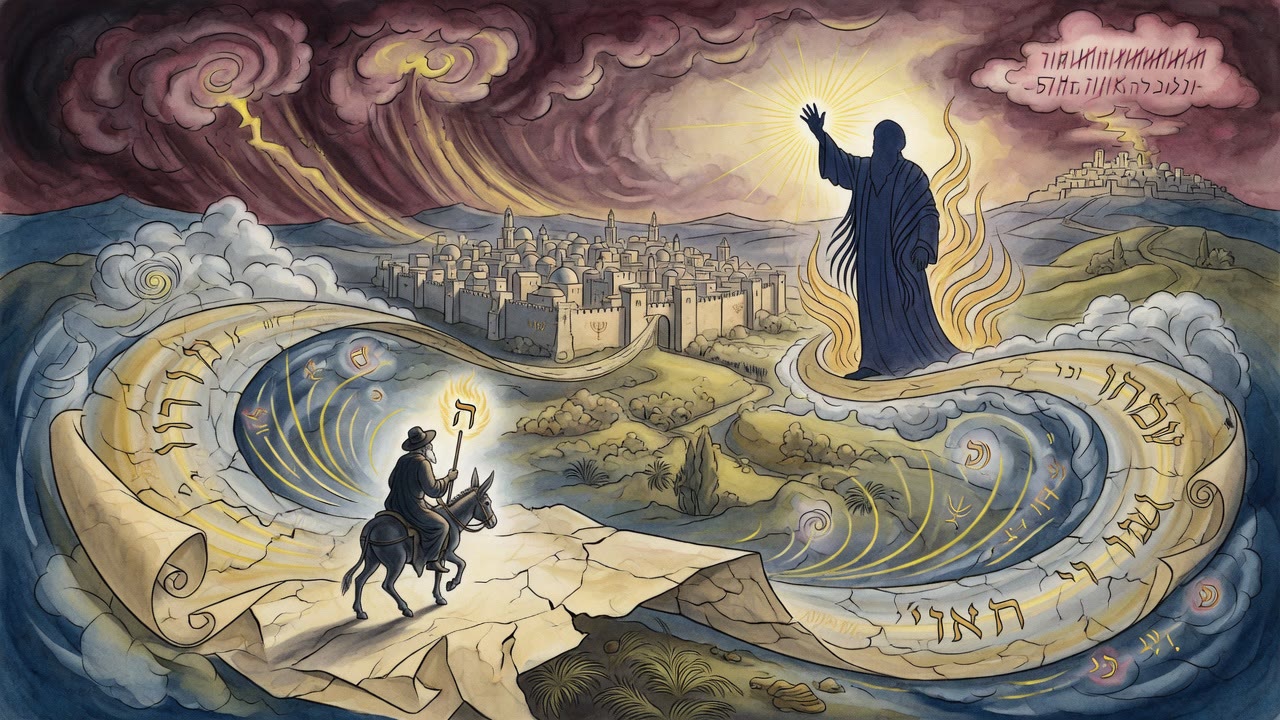
At the gate of the seventh palace, Anaphiel stands crowned with a radiance that fills the seventh heaven, holding the seal that opens the way to the Throne.
Table of Contents
 Click for full size
The Last Gate Is Not Empty
The mystic who has passed through six palaces arrives at the seventh knowing that what is ahead is different from everything that came before. The first six were guarded. They required passwords, seals, correct posture of soul, the names of the princes who had authority at each gate. All of that was demanding. None of it prepared the seeker for Anaphiel.
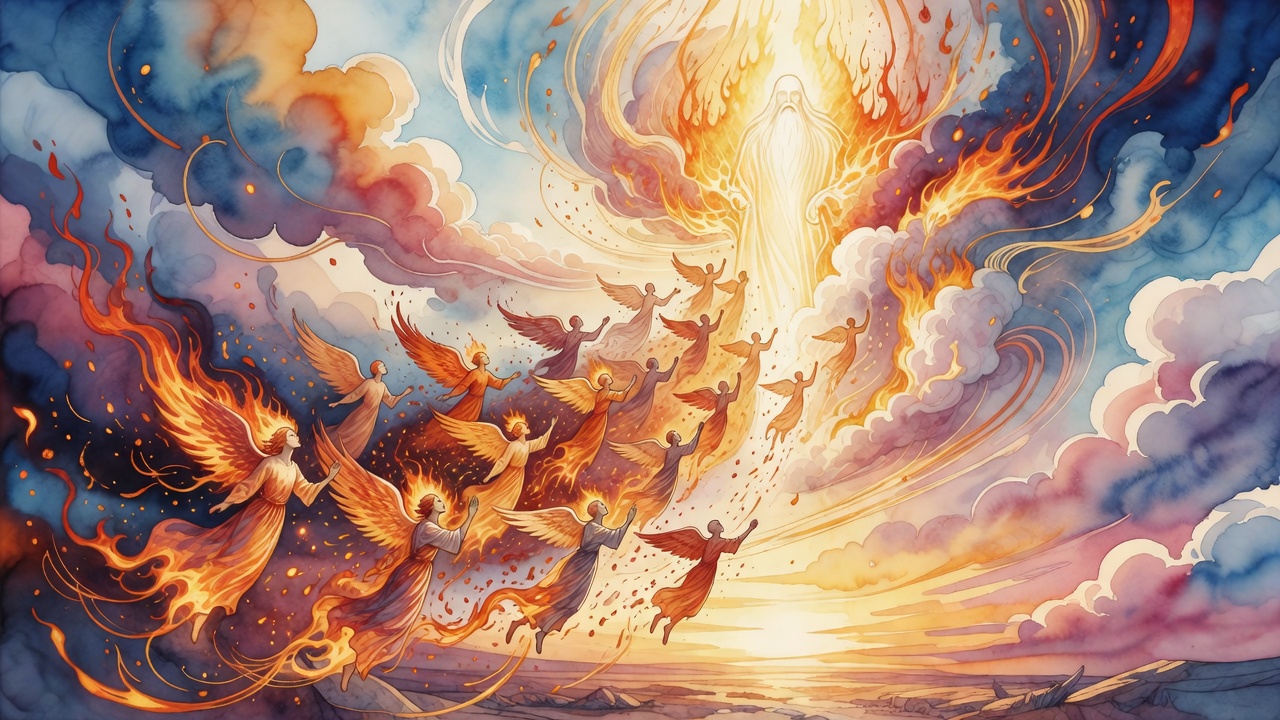
Anaphiel stands at the threshold of the seventh palace. He does not merely guard a door. He is a presence whose scale redefines the space around him. His branching crowns fill the seventh heaven. The image is not decorative: branches suggest living growth, spreading outward from a center, growing wider and higher as they extend. The crowns of Anaphiel do not sit on his head like a king's single crown. They branch from him and cover the highest heaven like a canopy that is also a forest.
Why He Holds the Seal
Anaphiel carries the seal of the Throne. This is the object that opens the way forward. Without it, the seventh palace remains a terminus. With it, and with the prince's recognition of the one holding the correct seal, the passage opens and the chariot vision becomes possible.
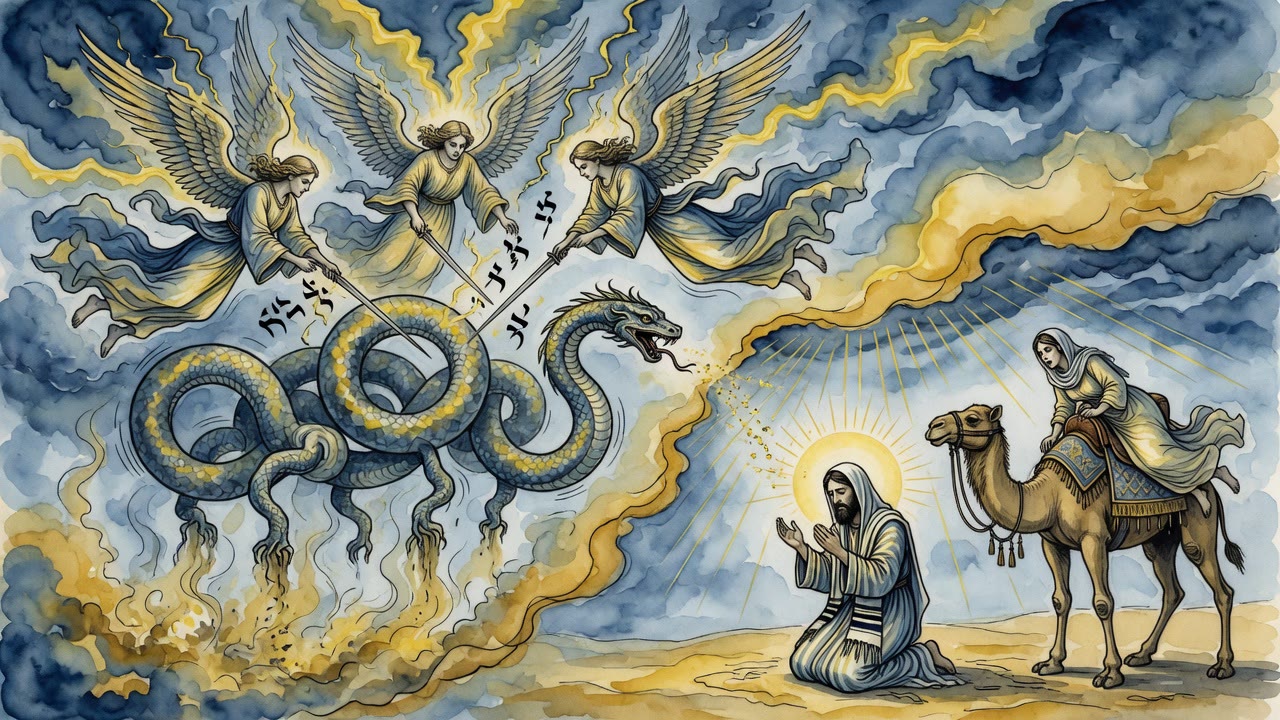
The seal is not handed over casually. Anaphiel examines what stands before him. Heikhalot Rabbati is explicit that the heavenly journey has cosmic bouncers, beings at the gates who destroy those who approach without proper preparation. The danger is not theoretical. Those who arrived at the palace gates in an impure state, or with incorrect seals, or without the names of the princes memorized and ready, were repelled with a force that shattered them. The seventh palace is the most dangerous gate because it is the one directly before the Throne, the one where any remaining impurity would be confronted by the full weight of divine holiness.
The Crown Marks What the Passage Requires
A crown in the Heikhalot imagination means authority over a specific domain. One crown, one domain. Many crowns spreading through the seventh heaven mean authority over something as vast as the space they fill. Anaphiel's crowns are not certificates of rank. They are the visible form of his commission: to hold the passage between the accessible heavens and the throne vision, to decide what passes through, and to stand as a living sign that the closer approach belongs to royal holiness, not to private hunger for mystical experience.
The seeker who arrives correctly does not see Anaphiel as an obstacle. He sees him as a confirmation: if this being is here, the Throne is close. If this being opens the way, what is ahead is real. The terror of the seventh gate is inseparable from the confirmation it provides.
What Lies Beyond Anaphiel
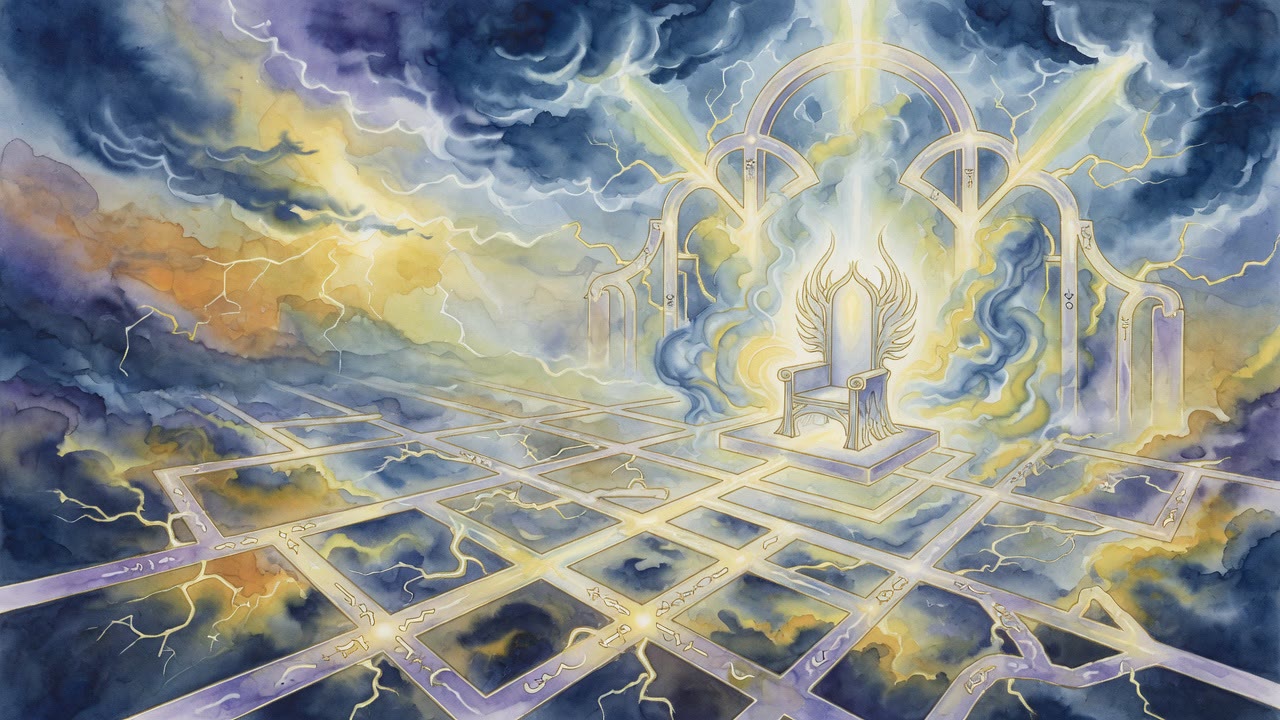
Through the gate, the throne chariot. The merkavah, the vision Ezekiel saw at the river Chebar, the four faces and four wheels and the living creatures and the dome of crystal and the figure of a man above the sapphire. The mystic who survived the journey to the seventh palace was seeking the direct confrontation with this vision, the experience of standing as close as a creature can stand to the presence of God without being destroyed by it.
Anaphiel opens the way. That is his name's meaning and his function: the branch-crowned one who is near God, whose crowns fill the space between the highest palace and the Throne, who holds the seal and recognizes those who have the right to pass. After him, there is only the vision itself.
← All myths