Asmodeus Killed Seven Grooms Before Tobiah Arrived
The maids would not call her Sarah. They called her Trouble. Seven wedding nights had ended with a body, and none of them were hers.
Table of Contents
The eighth grave was already measured in the yard. Reuel had learned the length.
 Click for full size
Seven Mornings With a Body
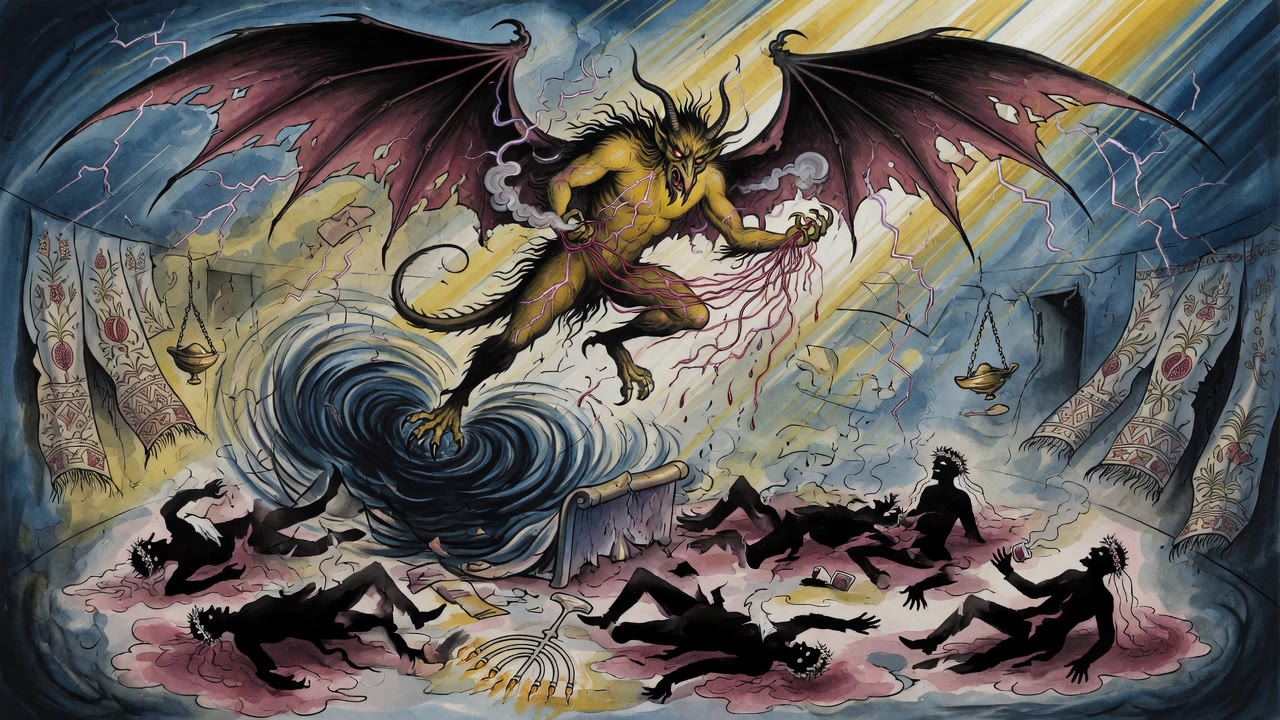
Sarah, daughter of Reuel of Ecbatana in Media, had been given to seven husbands. None of them had approached her after the way of all the earth. Asmodeus, king of the demons, killed each one before the marriage was a marriage. Seven grooms. Seven mornings with a body to explain.
The maidservants used it. They said to her face, "It is not right to call you Sarah. Call you Zarah, Trouble. You have been given to seven husbands and not one lasted the night. Why do you kill your husbands? It would be better for your father if you died, so he would not have to see a son or a daughter from you."
She had not lifted a hand. A demon had claimed her and could not possess her, so he killed anyone who came near.
Sarah Would Not Hang Herself
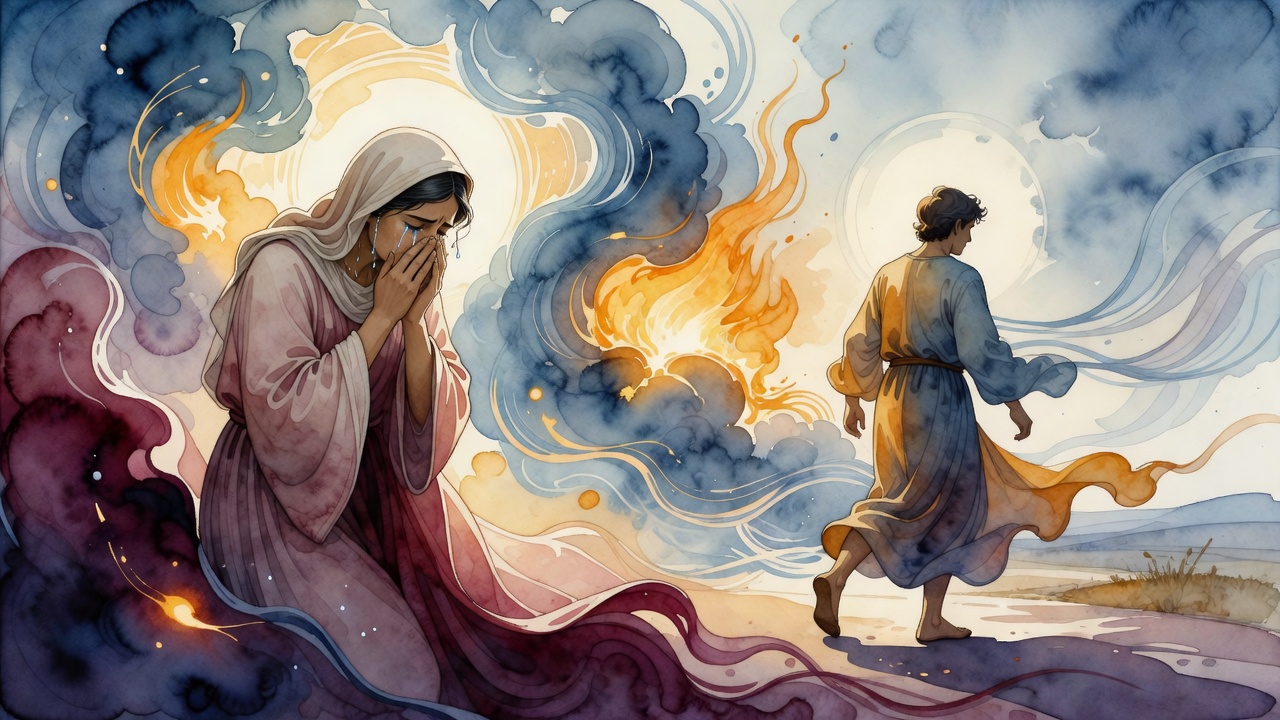
She went up to her father's upper room and wept three days. She thought of the rope. Then she thought of her father, who had no other child, and she would not put that grief on him.
She prayed instead. She told God she was pure. She named the accusations. She said, "Either take me away, or have regard for me and pity me, and let me hear reproach no more."
Seven men were dead in her wedding chamber. The house held her accountable for all seven. She asked to be removed from the house, or to be seen in it.
The Fish Smoke Drove Him Out
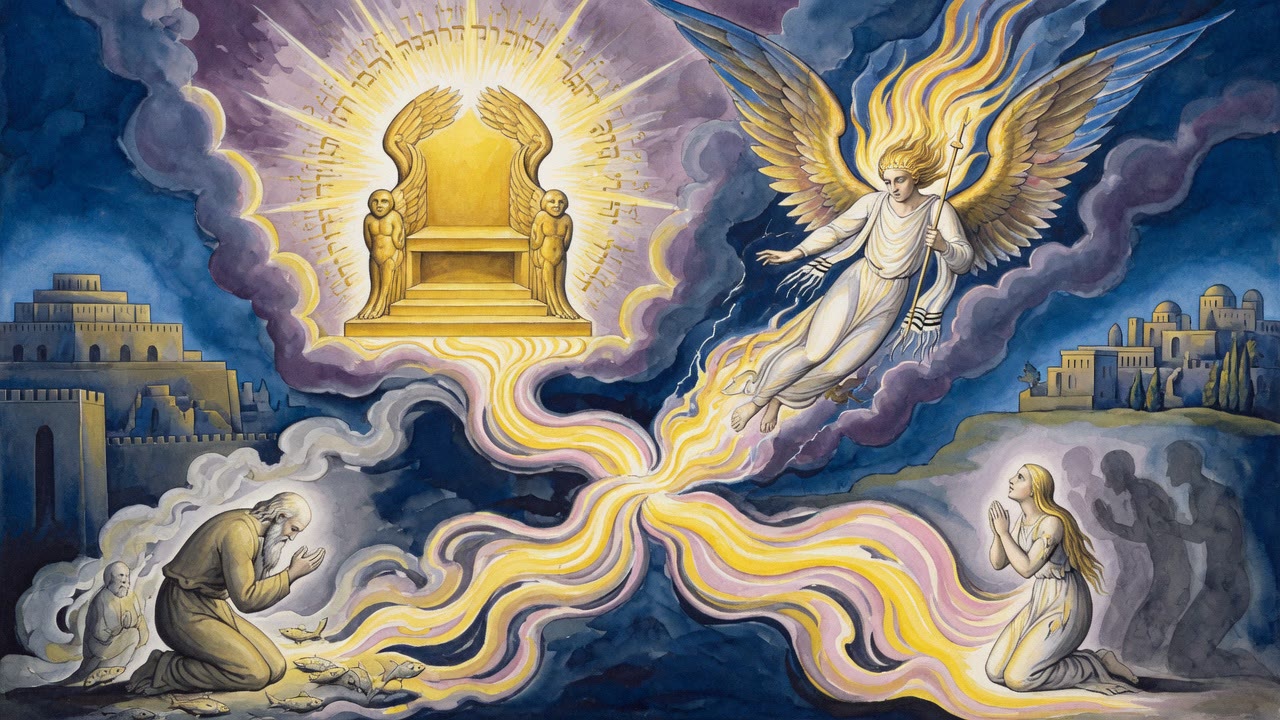
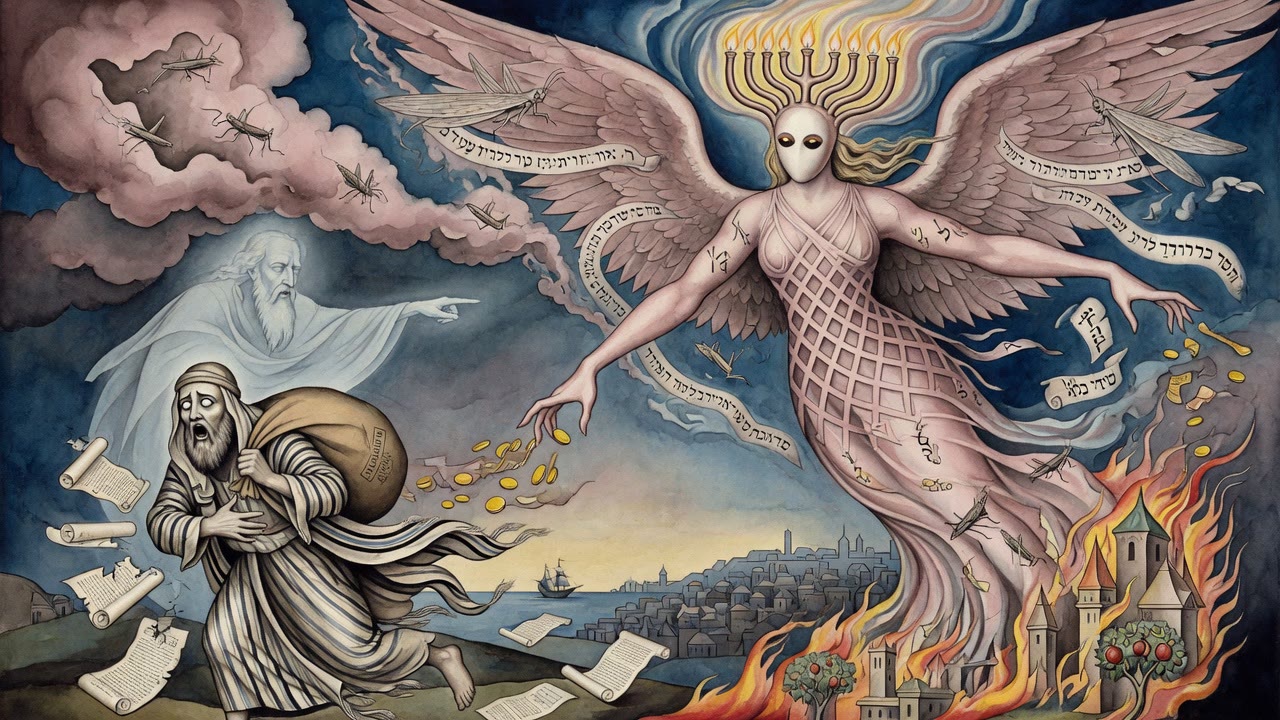
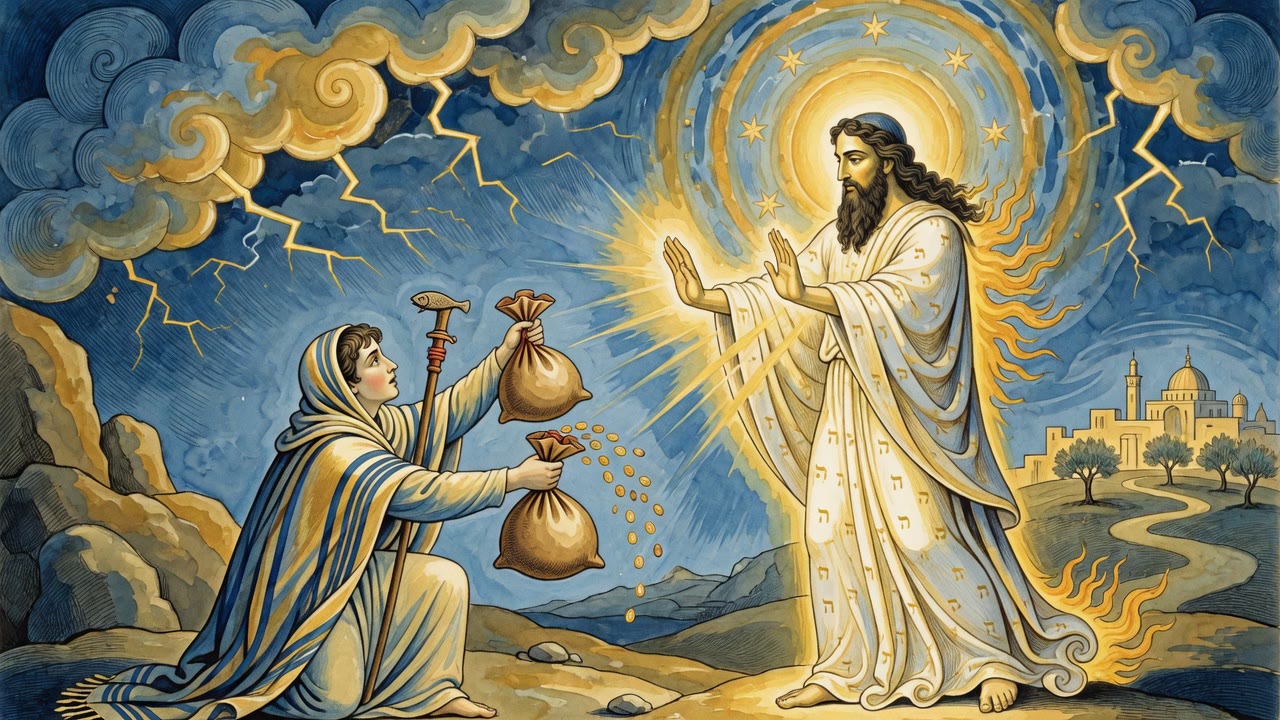
That same day, in Nineveh, Tobit's son Tobiah was packing for Media to collect a debt. An angel walked with him in a man's clothes and called himself Azariah. His name was Raphael.
On the Tigris a fish struck at Tobiah's foot. Raphael told him to keep the heart and the liver. He told him about Sarah daughter of Reuel. He told him to marry her. He told him the smoke of that fish would drive the demon out.
Tobiah arrived. He married her. On the wedding night he laid the heart and liver on the incense pan. The smell filled the room. Asmodeus fled as far as Egypt. Raphael followed and bound him there.
In the morning Reuel went out with a spade. The eighth grave stayed empty. His daughter was alive. Her husband was alive. The king of the shedim (שדים), the demons, was gone from the chamber.
The Angel Who Never Ate
When the debt was collected and the household had stopped shaking, Raphael spoke.
"Peace be unto you. Fear not. Bless the Lord for these great and wonderful things which he hath done unto you. All the time I was with you, you saw me eat and drink. I did neither. Write these things in a book. Let me go to the God who sent me."
They sent him away. He went up to heaven and appeared no more to Tobi and his son. The fish smoke had been enough. The Name behind the smoke was the thing Asmodeus could not bear.
The Same King Walked in Chains
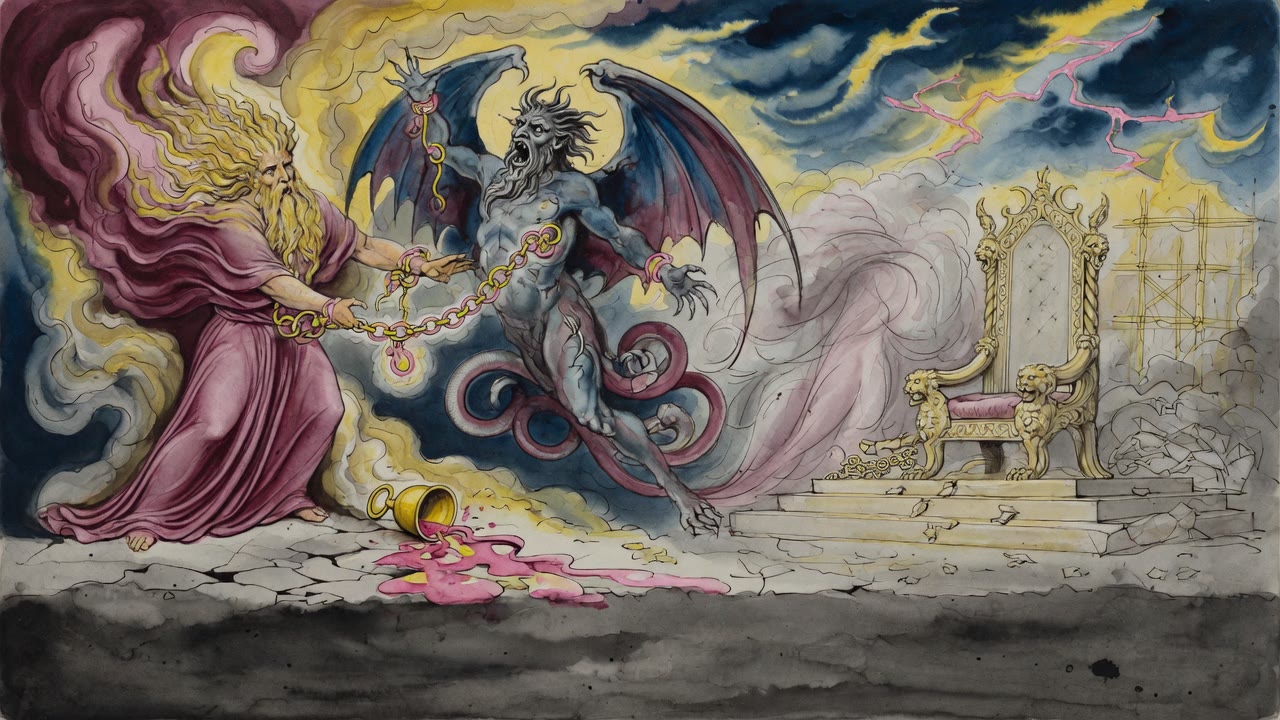
Years later Solomon needed that king of demons for the Temple. He sent Benaiah son of Jehoiada with a chain, a ring engraved with the Name, a bundle of wool, and a skin of wine.
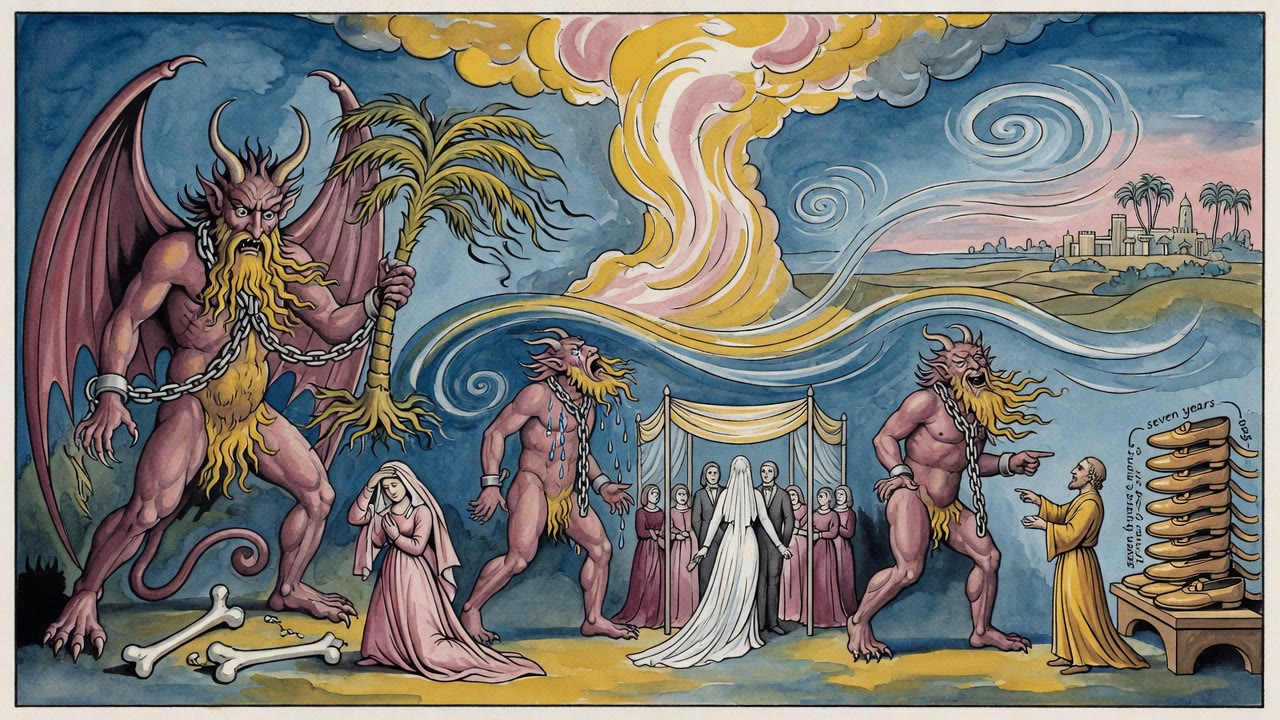
Benaiah drained Asmodeus's well from below, plugged the hole with wool, and poured wine in from above. The demon came down from heaven thirsty, quoted the verses against wine to keep himself from the cup, then drank until he slept. Benaiah dropped the chain on his neck.
"The Name of thy Lord is upon thee."
On the road to Jerusalem Asmodeus uprooted a palm, knocked a house over, and, turned aside from a poor woman's hut, broke a bone in himself and asked, "Is it not written, 'A soft tongue breaketh the bone?'" He set a blind man on the right path. He wept when a wedding party passed.
The same creature who had made seven weddings into funerals wept at a wedding he did not own, walking in a chain toward a king.
← All myths