David, Goliath, and the Debt Ruth Left Unpaid
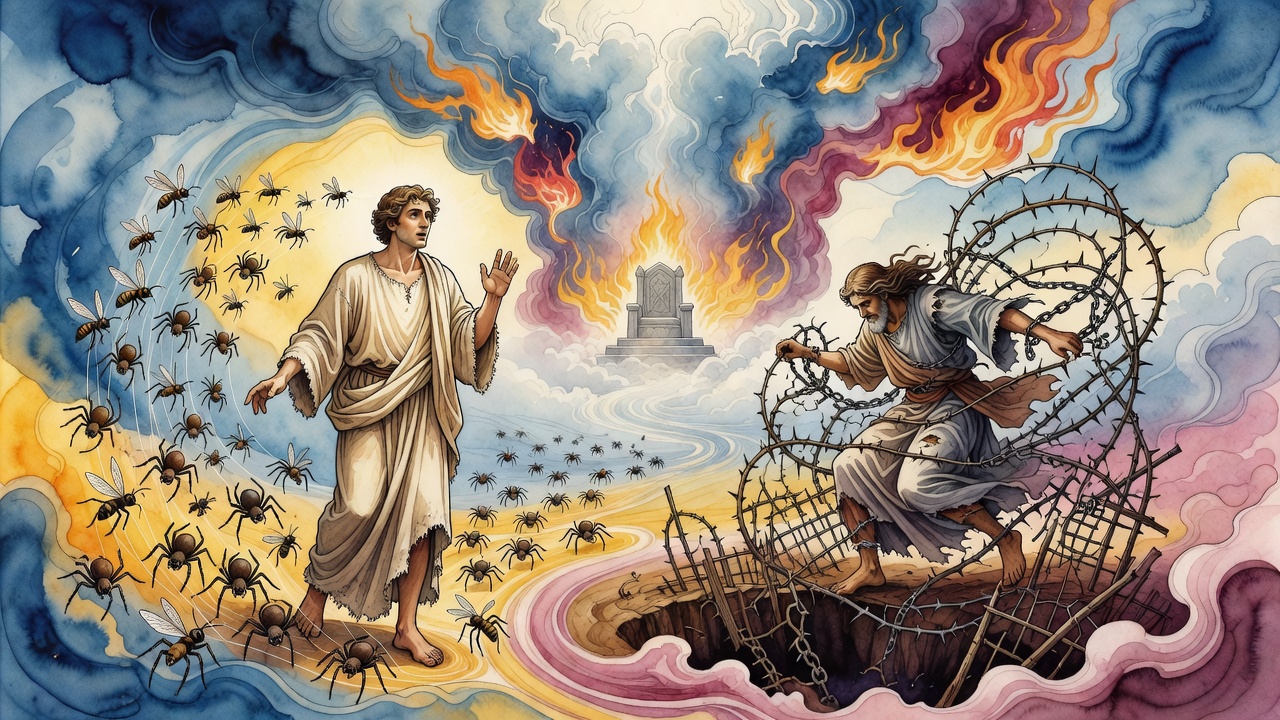
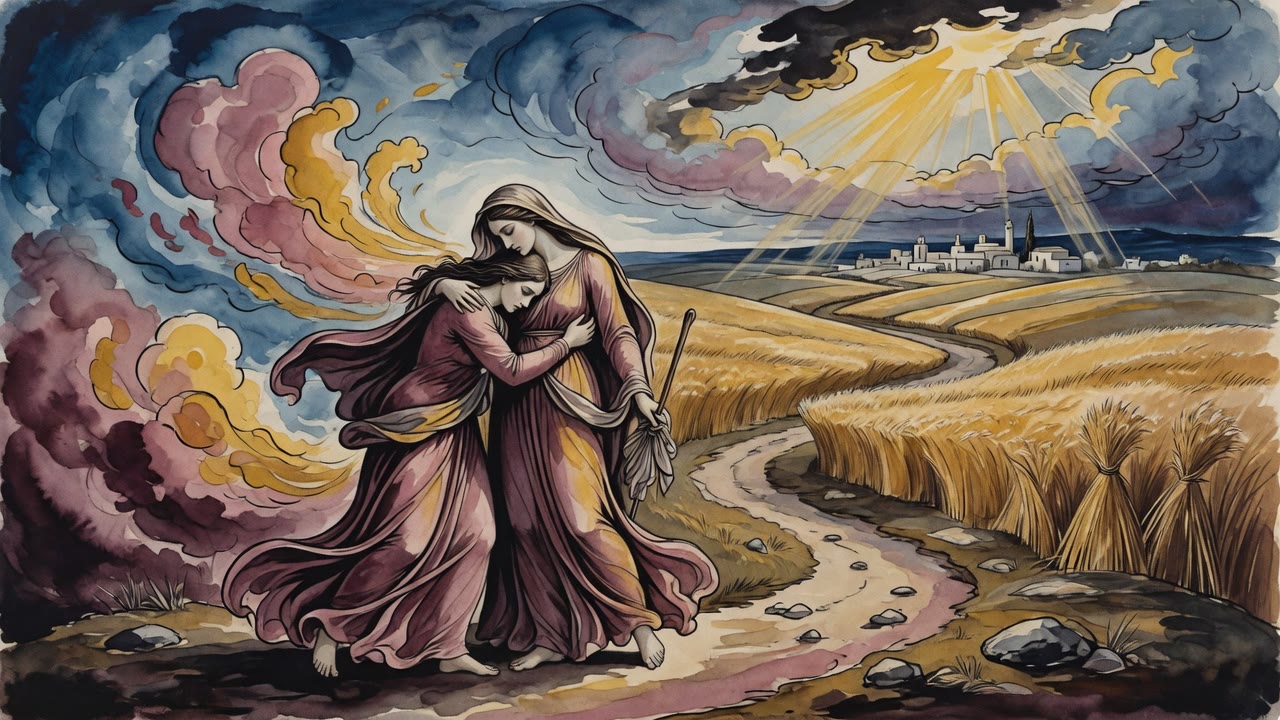
Naomi told both women to go home. Orpah kissed her and walked forty steps. Ruth held on. Their lines met in a valley with a sling.
Table of Contents
Naomi stood in the road with nothing left to give either of them. No sons. No land. No reason for two Moabite women to follow a widow into Judah.
 Click for full size
"Go home," she said.
Orpah kissed her and turned back toward Moab. Ruth held on and crossed the border with empty hands.
Forty Steps and Four Tears
Orpah did not vanish in a single stride. She walked Naomi forty steps before she let go. She shed four tears. Then she went home to her own people, and her line became warriors.
Those forty steps were a kindness, and God pays even a thin kindness in full. For the forty steps, her son Goliath was allowed to stand in the valley of Elah and display his strength for forty days. For the four tears, she bore four giant sons. The unpaid remainder of her life went another way. Men jeered Goliath as the son of a hundred fathers and one mother. The same road that paid her steps also grew a champion for Philistia.
Ruth's kindness ran the other direction. She crossed into Judah with nothing to gain. Boaz left grain for her. Obed was born. Jesse was born. David was born. The debt Ruth left unpaid was not a coin. It was a loyalty that kept collecting, harvest after harvest, until a shepherd stood in a valley facing the son of the woman who had turned around.
Two sisters, both daughters of Eglon king of Moab, chose opposite ways home. Their lines met where the armies had drawn a line in the dirt.
The Stone and the Heel
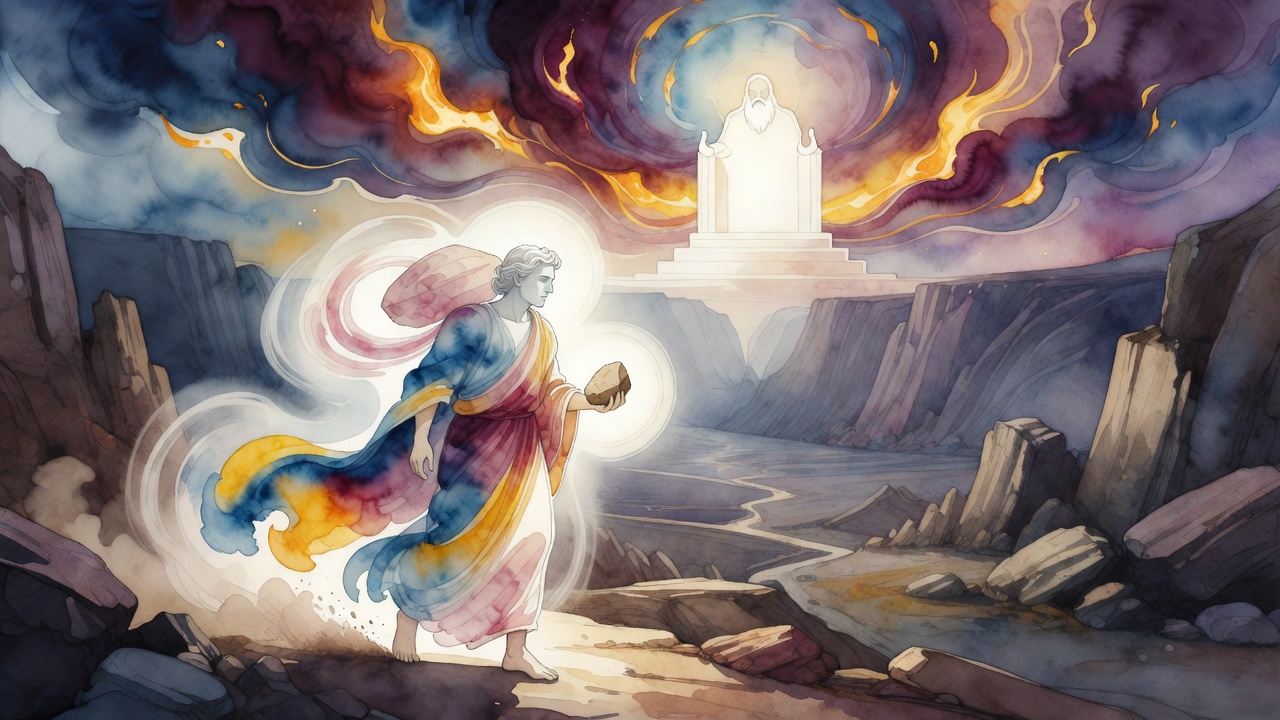
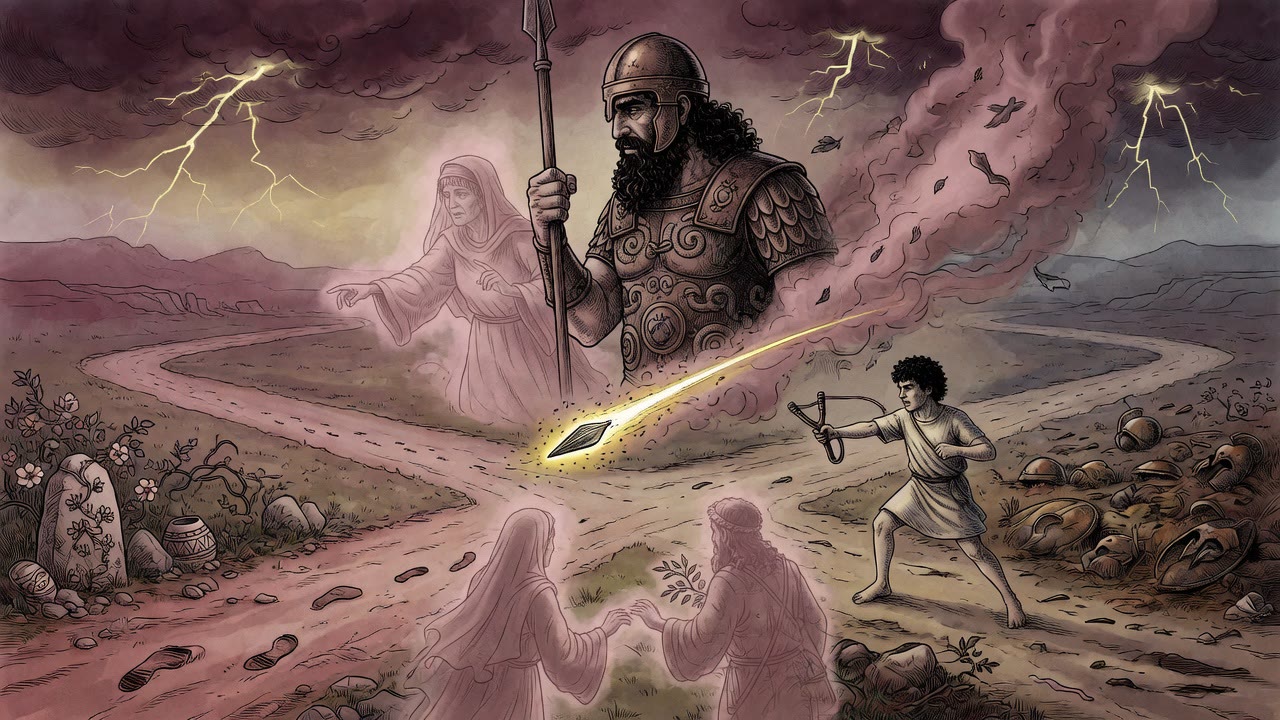
Goliath shouted across the no-man's-land for a man willing to fight him. He had done it for forty days, one day for each step his mother had taken with Naomi. Bronze sat on him in layers. Helmet. Breastplate. Greaves. A coat of mail the weight of five thousand shekels. David came down with a sling and five stones and refused Saul's armor because it was too heavy for him.
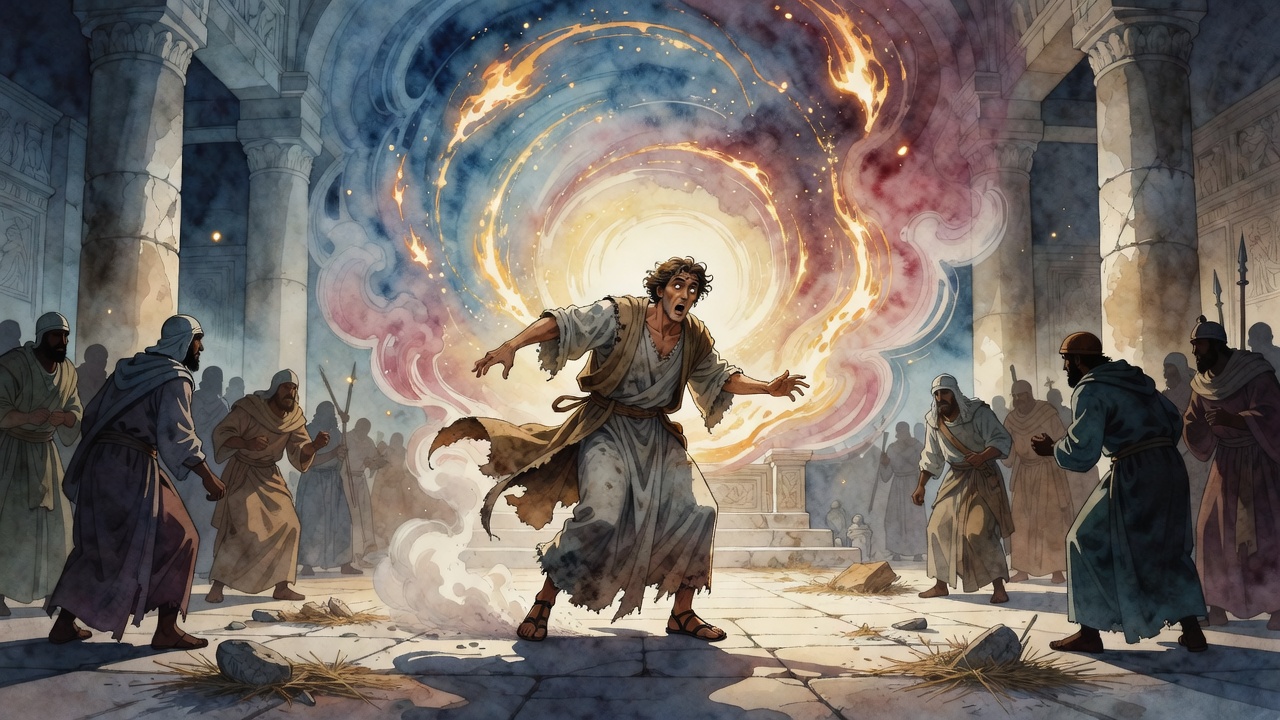
The stone flew. Goliath fell.
Then the practical difficulty. David stood over a giant sealed in overlapping suits and had no sword of his own. He did not know where the armor opened. Uriah the Hittite offered his services, with a price. Secure him an Israelite wife. David accepted. Uriah showed him the clasps. The suits were fastened together at the heels.
David knelt at the giant's feet, found the join, and drew Goliath's own sword from its scabbard. He cut the head free and carried it back through the Philistine line. The line broke. Saul sent Abner to ask whether this boy of Judah belonged to Perez or to Zerah, because Perez would confirm the suspicion that kingship was already walking toward him. Doeg said a descendant of Ruth the Moabitess was not even in the congregation. The argument went all the way to Samuel, and then to threats, before the ruling stood: Moabite men stay out, Moabite women do not. Ruth's crossing had to be legal before David's stone could be a king's stone.
A Wasp Lifted Abner's Foot
Years later David still had not taken the crown. He crept into Saul's camp while the king and his men slept, meaning only to carry off the cruse that stood between Abner's feet, proof that he could have killed and did not.
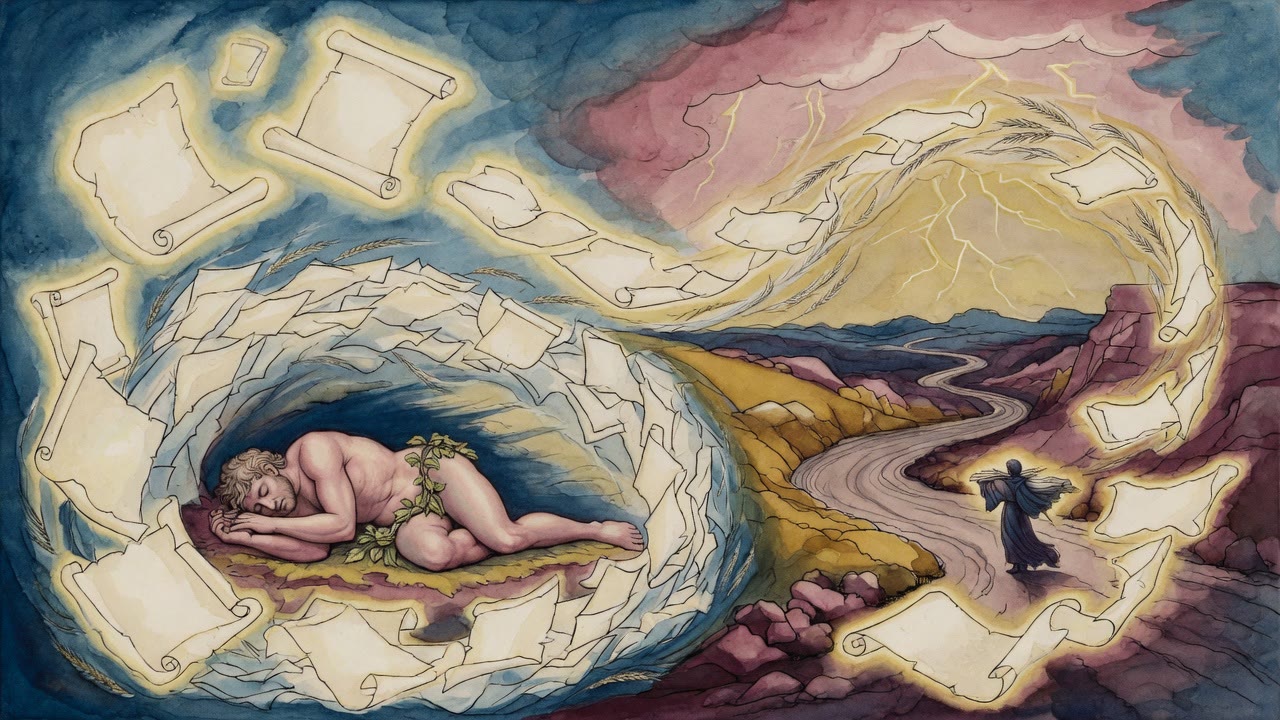
Abner's knees were drawn up. David took the cruse. As he backed away, Abner stretched in his sleep and pinned him between two legs like pillars. David could not move. His life sat under a sleeping giant of a man, and he had thought wasps good for nothing but maggots.
A wasp stung Abner. Abner moved his feet without waking. David slid free and ran with the cruse.
He had two clear chances, in those years, to end Saul and end the hunt. He declined both. The gap between what he could do and what he chose became the argument for his throne. He waited. The waiting cost him a decade in the wilderness, and even princes sat and spoke against him, and he still did not put the book down.
He Chose the House Over His Own Skin
Another giant from Gath caught him later. Ishbi had him, and David told Abishai what he had already said to God. Let the fall come on me. Do not ruin the house.
Abishai would not have it. "Reverse the prayer. Plead for yourself, not for your descendants. Let your children sell wax. Do not afflict yourself about their destiny."
They prayed together. Abishai uttered the Name. David dropped to earth uninjured, and both men ran, Ishbi after them. When the giant heard his mother was dead, his strength left him, and David and Abishai slew him.
The valley of Elah had been the first collection. Ruth's loyalty had produced the boy with the sling. Orpah's forty steps had produced the forty days of shouting. The stone flew through both decisions. The later giants were the rest of the four tears coming due. David kept choosing the dynasty over his own skin, and the unpaid kindness and the paid one never finished their argument in a single afternoon.
← All myths