Arphaxad, Shelah, and Eber Carried the Family Line From Noah to Abraham
Arphaxad was born two years after the flood, into mud that still remembered judgment. He and his sons carried the memory that led to Abraham.
Table of Contents
 Click for full size
Born While the Mud Still Remembered
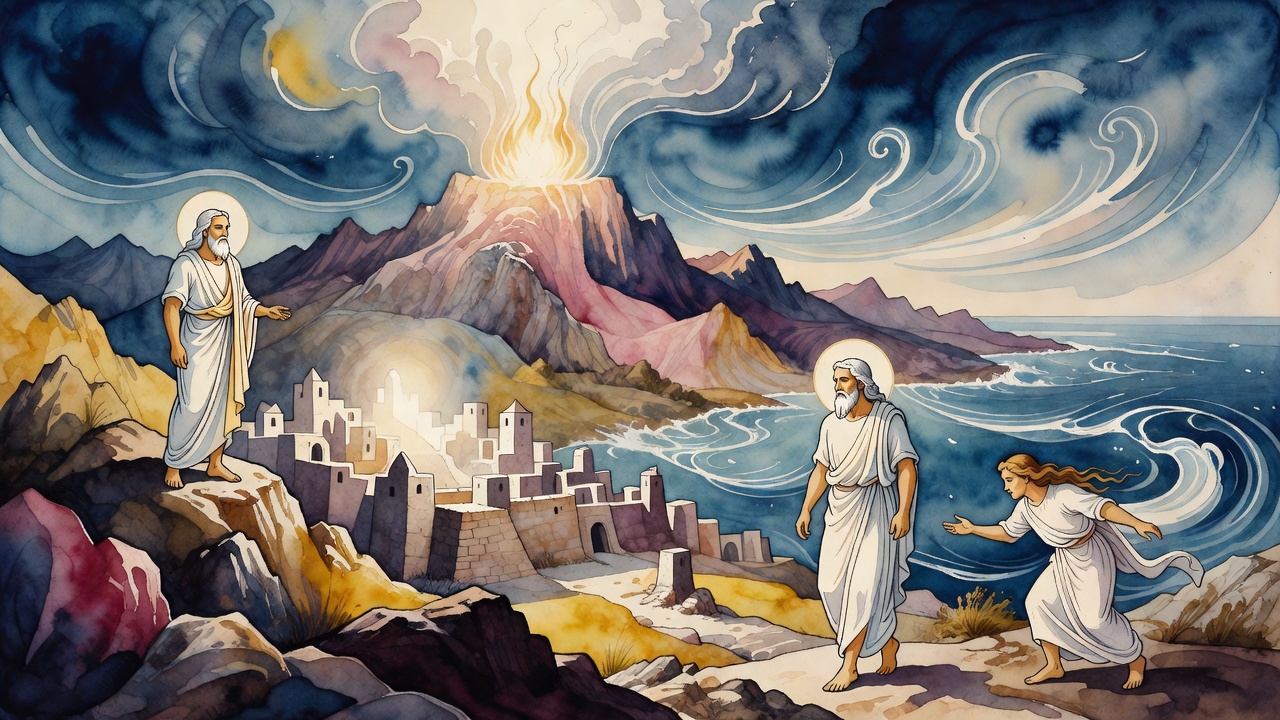
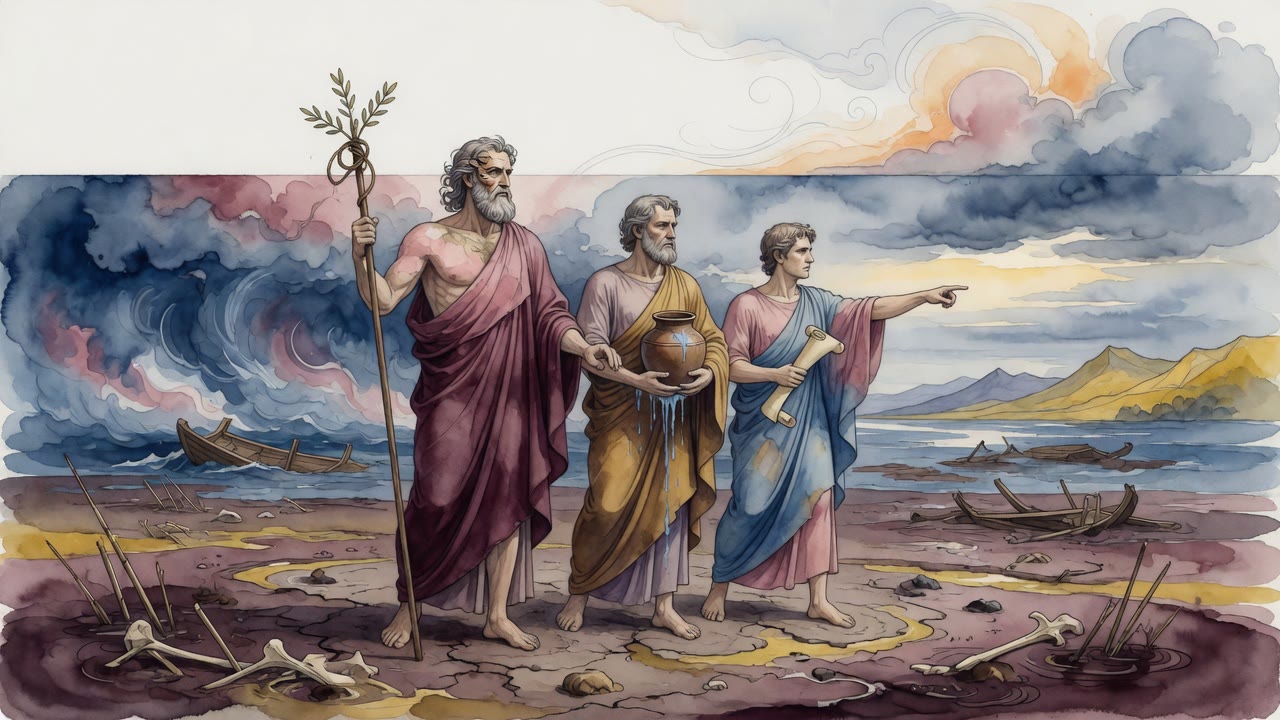
Arphaxad was born two years after the flood. That is the detail that changes everything about the name. He is not an abstract ancestor lost in the long genealogy between Noah and Abraham. He is a child born while the ground was still finding its level, while Noah could still walk to the edge of the settlement on Mount Lubar and look out at an earth that had been stripped and cleaned and refilled. Arphaxad grew up under the memory of total destruction.
His father Shem had built a city near Noah on the mountain. He named it after his wife, Sedeqetelebab, a domestic name in a landscape that had no other names yet because everything the flood took had included the names of cities and roads and territories. The world was starting over with household geography: a city named for a woman, built near a father, on the mountain where the ark had rested.
What the First Generation After the Flood Carried
A flood can destroy violence. It cannot automatically teach memory. Someone in the generation that did not see the waters rise still had to decide, every morning, to tell their children why the old world drowned. Arphaxad was part of that first generation. He had not been on the ark. He had only heard the story.
That is its own burden. The children of survivors know what happened but cannot feel the water in their lungs. They inherit grief and warning without the sensation that made the warning matter to the people who gave it. Arphaxad grew up inside that inheritance, in a city named for his mother, near a grandfather who had spent over a year in a wooden box while everything outside it died.
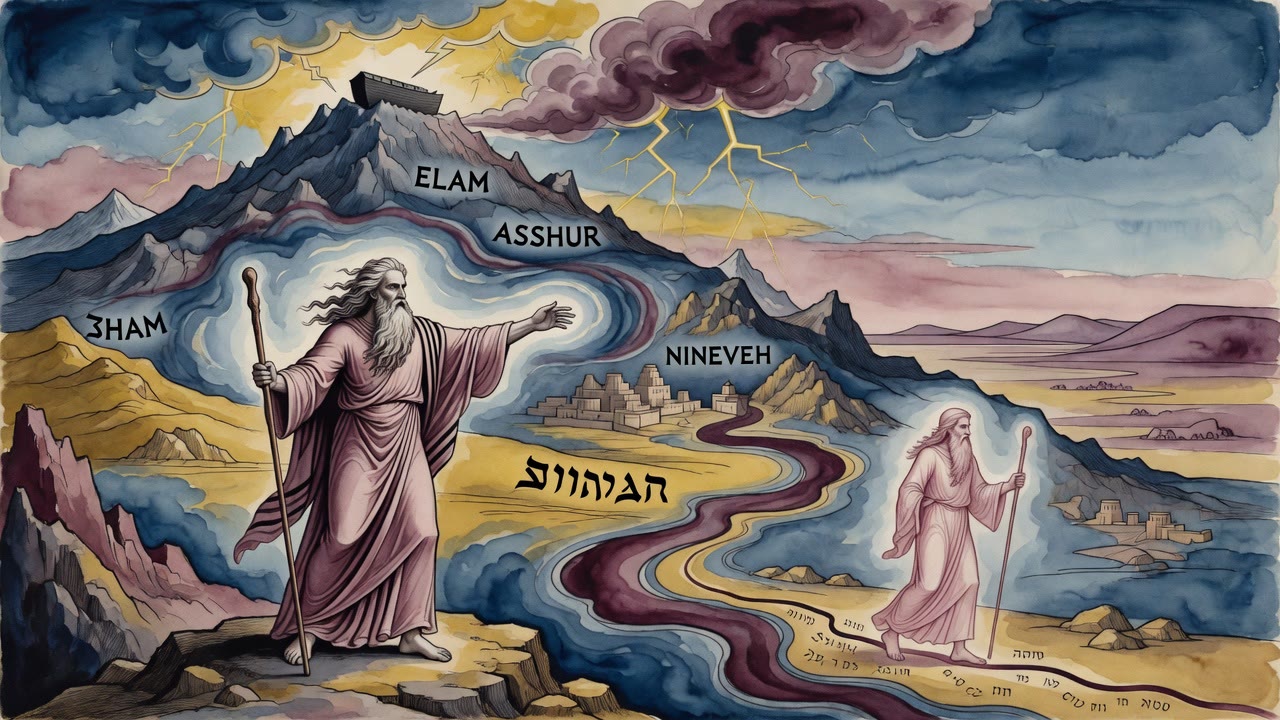
Shelah came from Arphaxad. Eber came from Shelah. These are the three generations between Noah and Abraham that Genesis names without pausing. The Book of Jubilees slows down long enough to give them context: they lived in the years after the flood, they populated the empty land, they held the chain of family and law that had to reach from the mountain of the ark to the tent of Abraham without breaking.
Eber and the Name That Survived Babel
Eber is the name that carries extra weight. The Hebrew word for Hebrew, Ivri, comes from it. Later tradition would look back at this line and see the origin not just of Abraham but of the people who would eventually stand at Sinai. Eber held the name before Israel had a name. He passed on to Peleg and Joktan the inheritance that Arphaxad had received from Shem and that Shem had received from Noah and that Noah had received from the books Enoch had written before the flood.
The transmission was never guaranteed. Any generation could have dropped it. Arphaxad could have looked at the empty world and decided that the old obligations no longer applied, that the flood had reset everything including the calendar of feasts and the laws of the angels and the sworn boundary of the family inheritance. He did not. Shelah did not. Eber did not. They passed it forward.
Jacob and the School That Kept Their Memory
The tradition knew how important these names were because Jacob, centuries later, spent fourteen years studying with Shem and Eber before he went to Laban. The school that Shem and Eber ran was the living institution that had preserved what Arphaxad received in the shadow of the flood. Jacob was not studying ancient history when he sat in their house. He was connecting himself to the chain that had run from Enoch through the flood and through these three plain names, Arphaxad, Shelah, Eber, into the world that Abraham had entered when God called his name.
← All myths