Eve's Soul Returned Through Four Righteous Women
Eli watched Hannah's lips move at Shiloh without a sound and decided she was drunk. She told him she was a woman of sorrowful spirit.
Table of Contents
 Click for full size
The First Woman's Unfinished Work
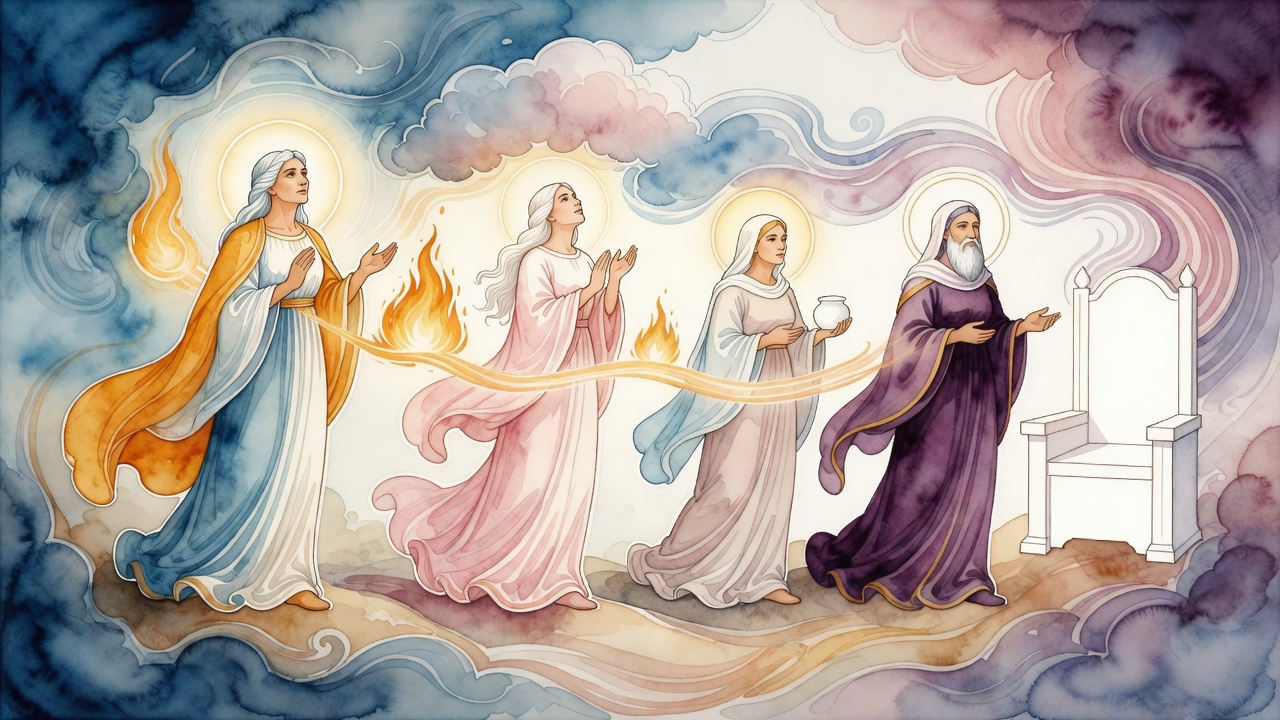
Eve's story does not end in Genesis. Her wound, her choice, her expulsion from the garden, these are not sealed inside the third chapter of the Torah and left there. One Kabbalistic tradition, preserved in the Yalkut Reuveni, a late anthology of mystical teachings, gives the first woman's soul a very long road back through history. It entered four women after her. Each one carried something of Eve's unfinished work and advanced the repair a stage further.
The chain is: Eve to Sarah, Sarah to Hannah, Hannah to the Shunammite woman who hosted Elisha, the Shunammite to the widow of Zarephath who fed Elijah. These are not casual connections. Each woman in the chain faced a form of the wound that opened in Eden and answered it differently than Eve had.
Sarah as the First Repair
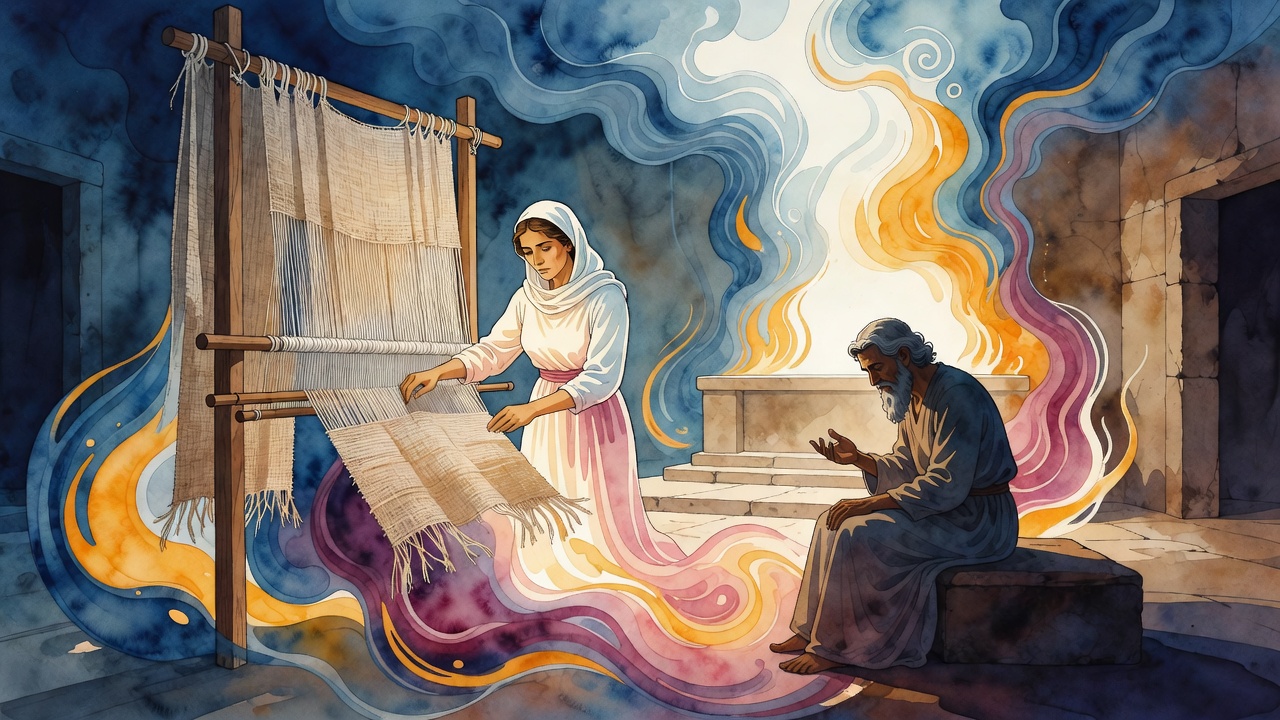
Sarah is the first repair because she is the first mother of Israel. She waited decades for a child. She laughed at the promise when the messengers came to Abraham's tent and denied the laugh when questioned. She was barren and old and the covenant seemed to stop with her body. Then Isaac arrived, and his name, laughter, carried inside it the memory of her disbelief transformed.
Eve had been given the gift of becoming the mother of all living and had used her first significant choice to open the gate of mortality for every person who would come after her. Sarah opened a different gate: the gate of covenant birth against biological odds. Where Eve had brought death into the story, Sarah brought impossible life. The soul of the first woman, the tradition says, needed that experience. To be the mother who received what seemed out of reach and held it.
Hannah and the Accusation of Drunkenness
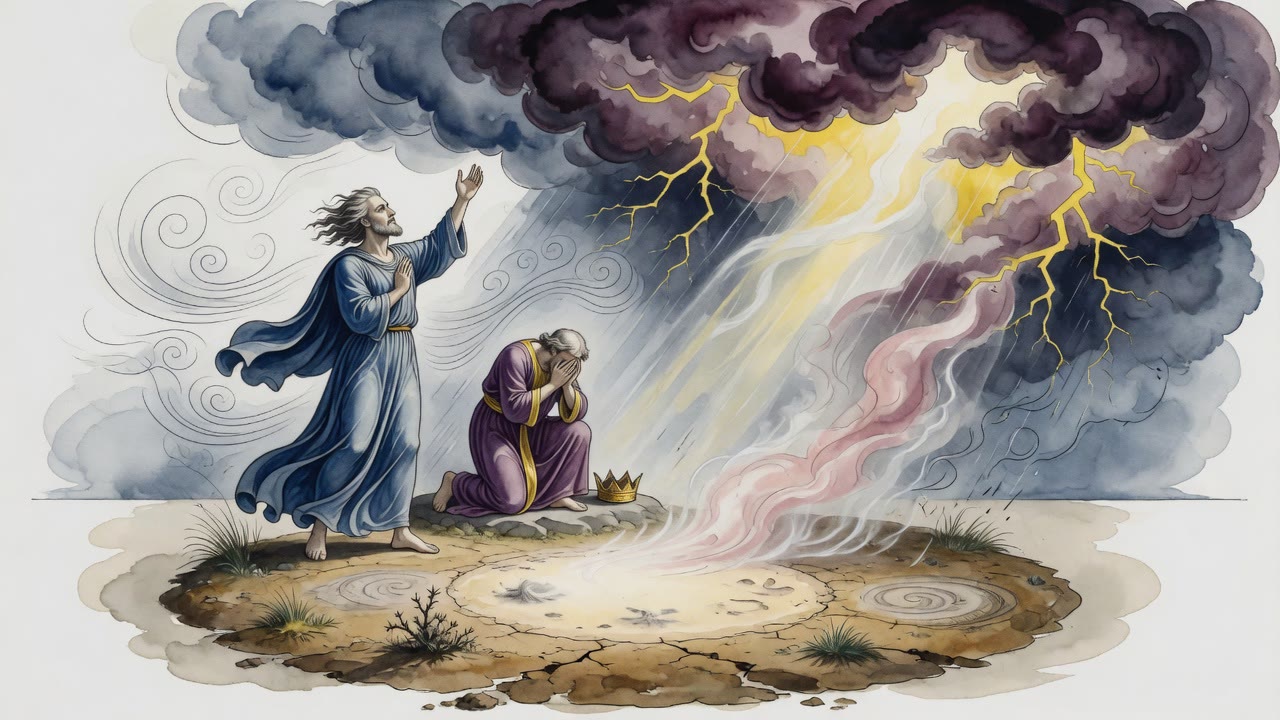
Hannah prayed at the sanctuary in Shiloh, her lips moving without sound, her desperation for a child so visible that the high priest Eli watched her and assumed she was drunk. He rebuked her. She answered him: I am not drunk with wine. I am a woman of sorrowful spirit, pouring out my soul before God.
The Yalkut Reuveni finds Eve in that phrase. A woman of sorrowful spirit. The tradition reads Hannah's answer as a hidden self-identification, a soul acknowledging that the sorrow has been carried for a long time, across more than one life. When Hannah's prayer was answered and Samuel was born, the repair was one degree further along. Eve's soul had learned to pray from a place of honest desolation, and the prayer had worked.
The Shunammite and the Son Who Died
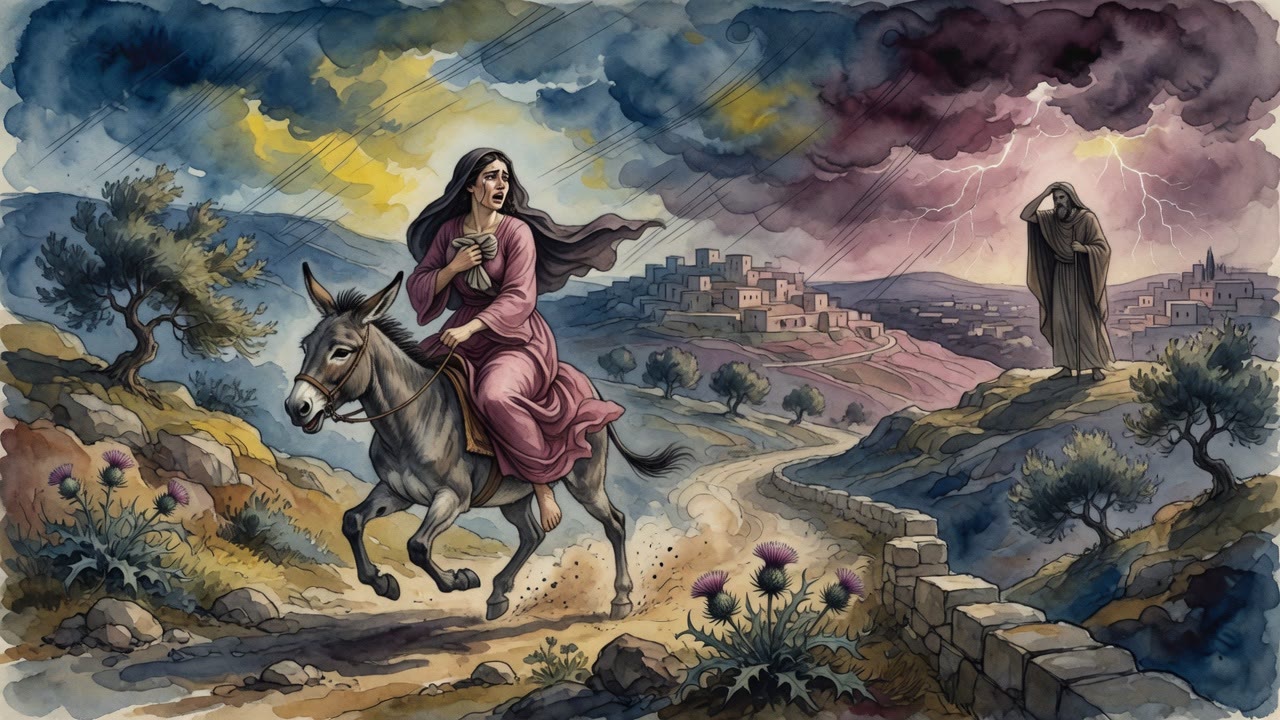
The Shunammite woman of Shunem built a room for Elisha and gave him a place to rest whenever he passed through. She asked nothing in return. When Elisha offered to speak on her behalf to the king or the army commander, she refused. She had no need. She lived among her own people.
Elisha's servant Gehazi pointed out what she lacked: a son, and a husband who was old. Elisha told her she would have a child within the year. She pushed back. She had stopped hoping. The year came and the child was born, and when the child was old enough to go to his father in the field he cried out that his head hurt and died in his mother's lap. The Shunammite traveled to Elisha without saying what had happened, found him, and held to his feet and would not let go. Elisha came to the boy and stretched over him and the child sneezed seven times and opened his eyes.
Eve's soul, in the Shunammite, learned what it is to receive life unexpectedly and then to lose it, and to refuse despair and hold fast to the one who could restore it.
The Widow of Zarephath and the Final Repair
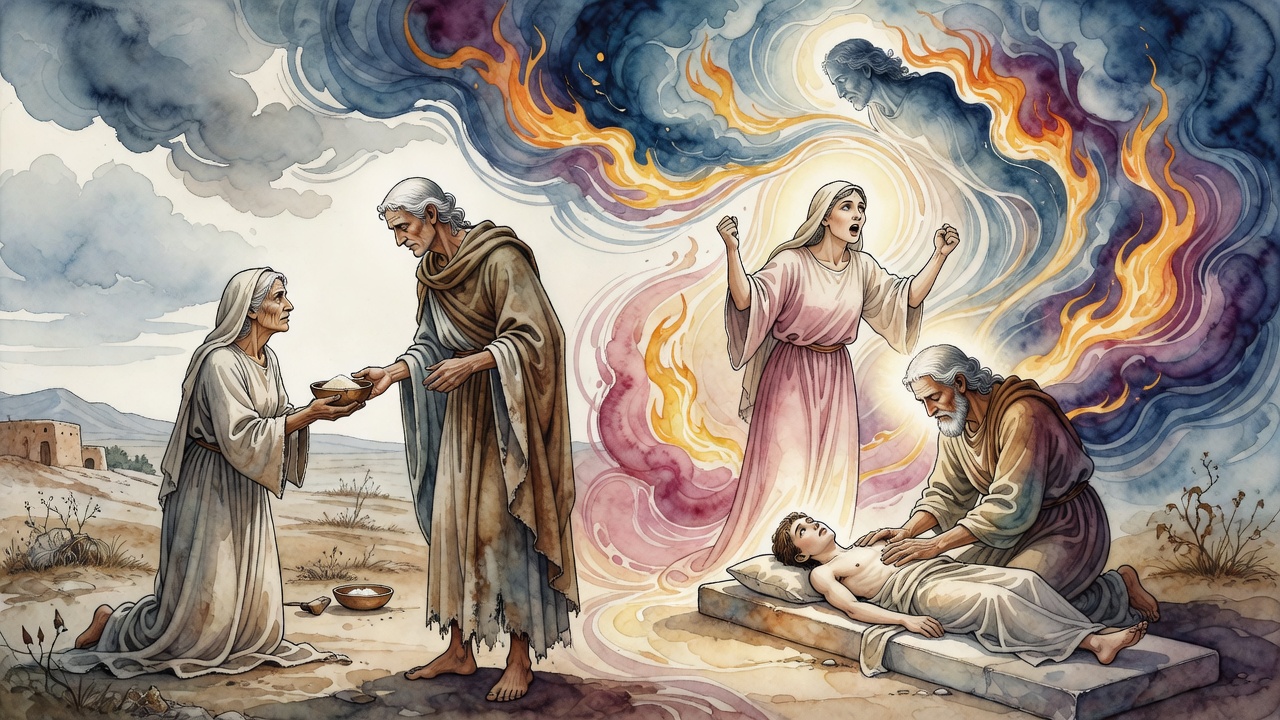
Pirkei DeRabbi Eliezer identifies the widow of Zarephath who fed Elijah as the mother of Jonah. She shared what she had when she had nothing left. The tradition says the act of charity was so complete that when her son died, Elijah raised him. Rabbi Simeon's teaching in the same text says tzedakah, charitable giving, has the power to quicken the dead in the future. The widow demonstrated the principle before it was fully articulated.
Through these four lives, the soul of Eve moved from disobedience and loss through impossible faith, sorrowful prayer, the refusal to accept death as final, and the act of giving that overcomes death. The repair was not finished in one life because no single life contains enough room for all of it.
← All myths