God Redeemed Israel Before Israel Deserved It
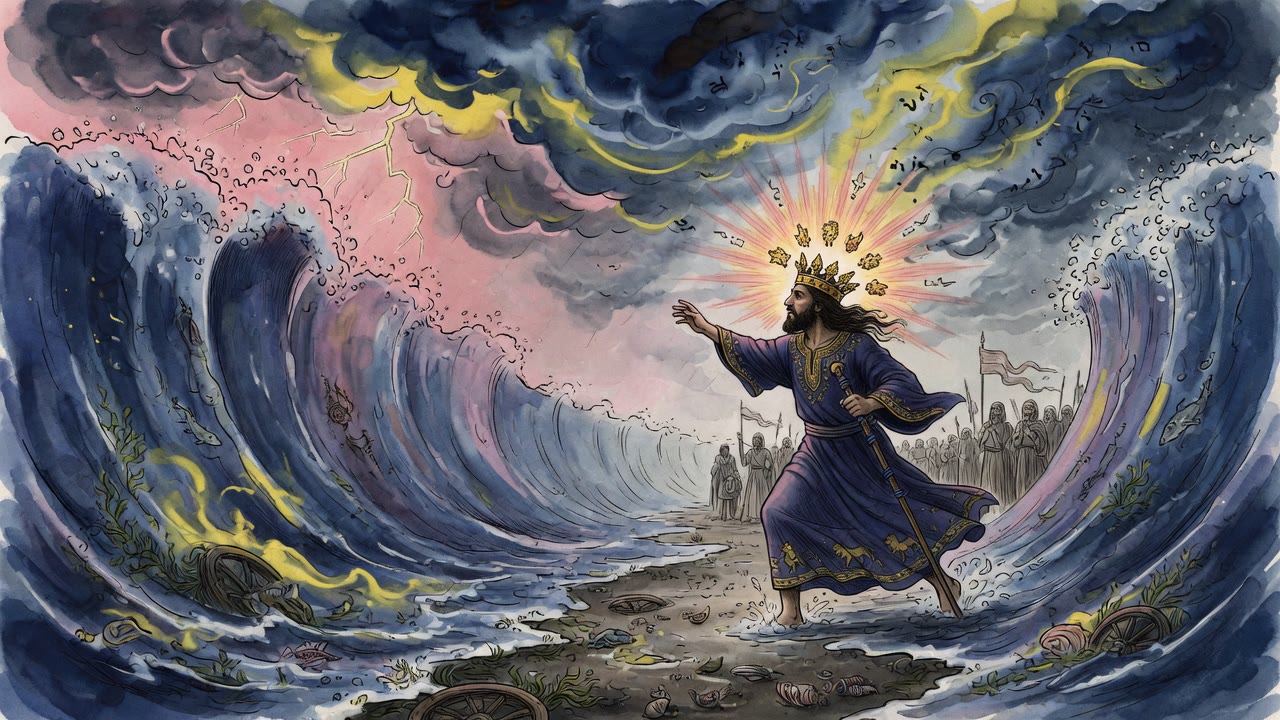
At the Red Sea, Israel and Egypt looked alike to strict justice. God split the water not because Israel was worthy but because an oath outranked merit.
Table of Contents
Israel stood at the edge of the sea with Pharaoh's army behind them, and the court of heaven had an ugly file open on both parties.
 Click for full size
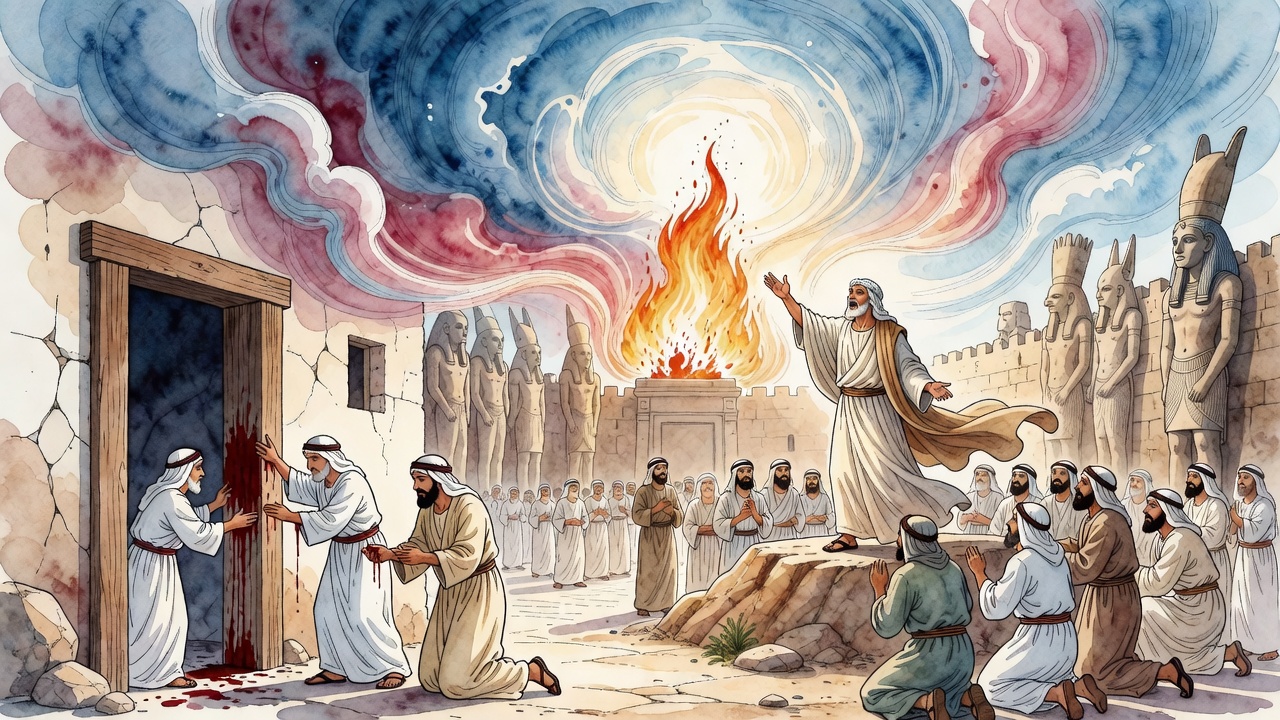
The clean story is slaves escaping and oppressors drowning. Vayikra Rabbah 23, the fifth-century CE Leviticus midrash, starts the story earlier, inside Egypt's habits, and the picture it gives is not clean. By the time Israel reached the shore, they had lived among Egypt's practices long enough that the two peoples had started to resemble each other in ways that strict justice would not overlook.
The Lily Was Hard to Reach
Rabbi Elazar takes the image from Song of Songs 2:2, a lily among thorns, and places it at the edge of the sea. In Vayikra Rabbah 23:2, he says redemption was difficult for God the way it is difficult to pluck a delicate flower from a thornbush. Not because the sea was wide. Not because Pharaoh was militarily formidable. The difficulty came from what strict justice saw when it looked at the people God was about to save.
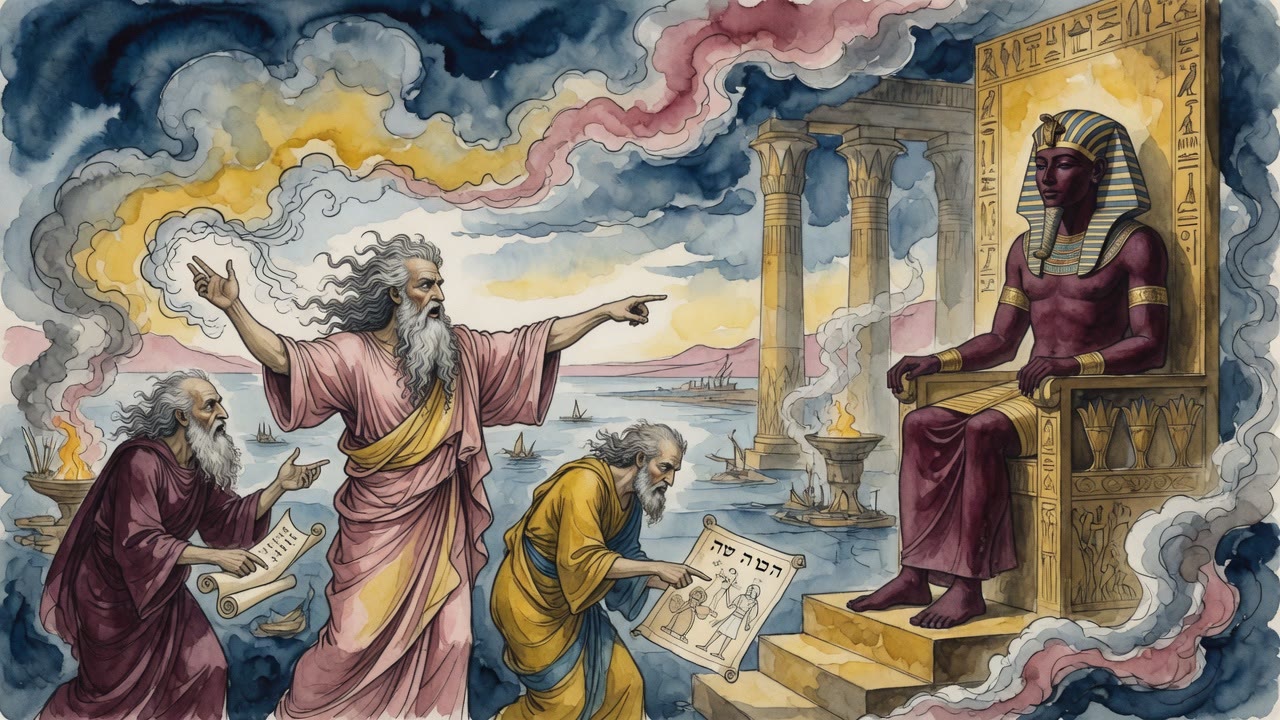
Egyptians and Israelites had both become uncircumcised in practice. Both had grown long locks in the Egyptian style. Both wore sha'atnez, the forbidden mixture of wool and linen. The midrash does not say Israel had been fully absorbed into Egyptian culture. It says the prosecution had details, not slogans. When the guardian angels of the other nations argued before the throne that both peoples deserved the same fate, they had specific evidence. Israel going through the sea and Egypt going through the sea would have looked, from strict justice's perspective, like two comparable groups receiving two comparable outcomes.
What Rebecca's Father Saw First
Vayikra Rabbah 23:1 builds toward the sea through a verse in Leviticus: you shall not follow the practices of Egypt where you lived, and you shall not follow the practices of Canaan where I am bringing you (Leviticus 18:3). Rabbi Yitzhak connects this commandment to Rebecca's story. Her father and brother were men of bad character. What saved her from absorbing their values was what Rabbi Yitzhak calls her own inner uprightness. She was the lily in the thornbush before she was the matriarch of Israel. The commandment not to follow Egypt's practices is addressed to people who have already been living inside those practices. It assumes contamination. It demands separation.
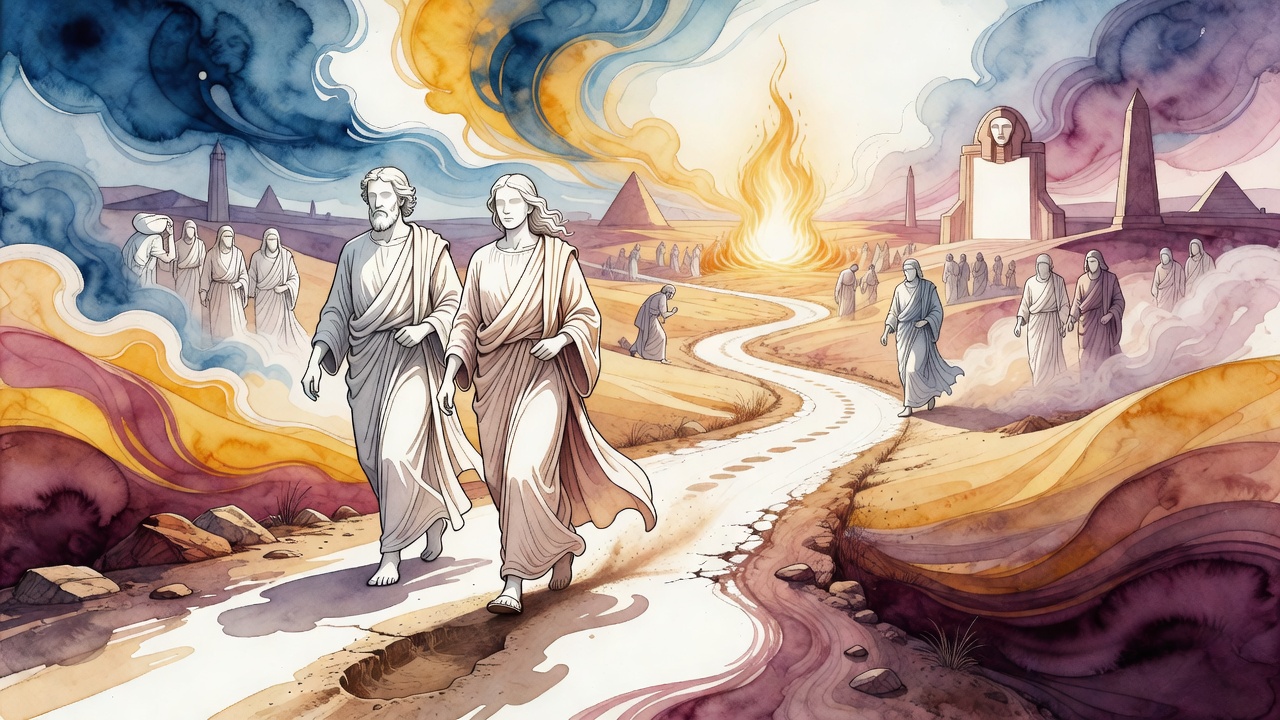
Israel coming out of Egypt was not a population that had been hermetically sealed from Egyptian influence for four hundred years. They were a people who had built the cities, eaten the food, worn the clothes, kept the hair, and breathed the air of a particular civilization for generations. The commandment they received at the beginning of the legal code about sexual morality was not theoretical. It was a response to a documented entanglement.
What the Oath Overruled
If the sea had split based on merit, both peoples might have drowned. Something else operated at the shore.
Vayikra Rabbah's reading does not make Israel's rescue a reward for righteousness. It makes it the fulfillment of a prior commitment. God had sworn to Abraham, Isaac, and Jacob. He had sworn to the patriarchs who walked uprightly before strict justice even had Israel as a case to evaluate. That oath was not contingent on what their descendants did in Egypt. It preceded the Egyptian period entirely. The prosecution could lay out the long locks, the linen woven into the wool, the foreskins left whole, and every item would be true, and none of it would reach the oath, because the oath had been spoken to men who were dust by the time the file was opened.
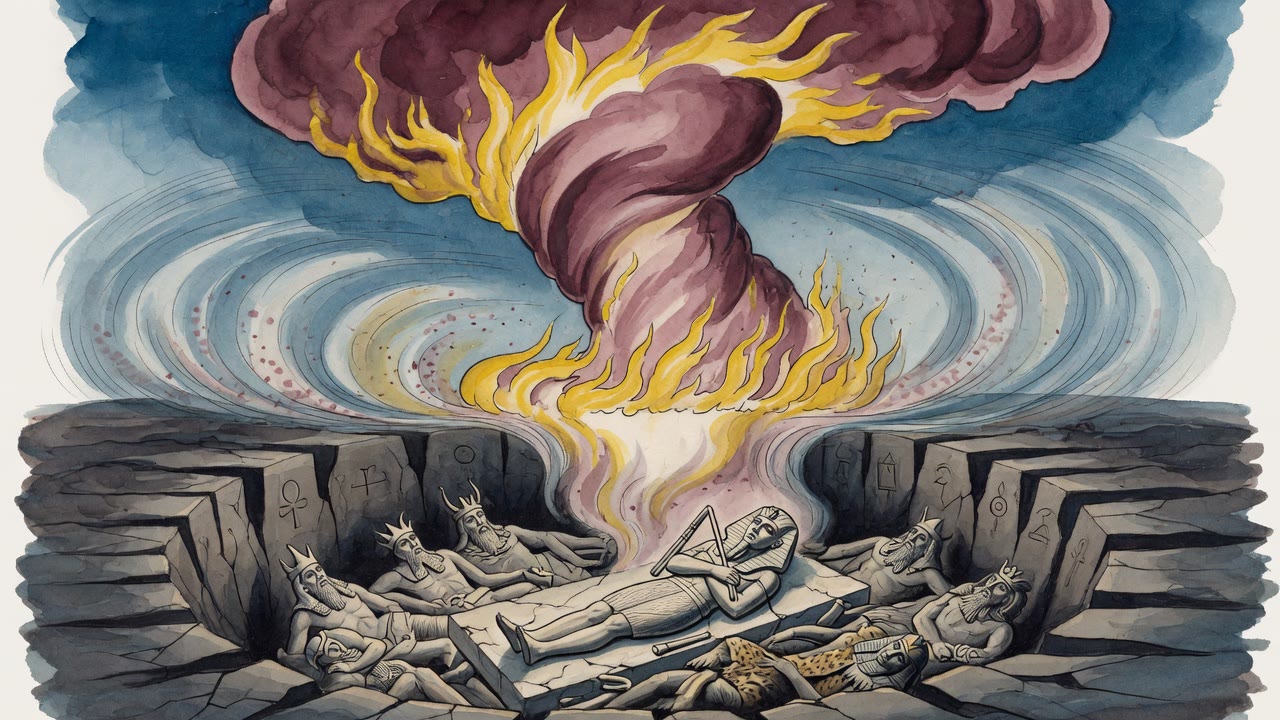
So the lily came loose from the thorns. The water stood up on either side and held, and Israel walked through on the seabed not because the prosecution had run out of evidence but because the evidence was answering the wrong question. Strict justice asked what these people had earned. The oath asked what had already been promised, and a promise made to the dead still binds the living.
The Lily Among Thorns Again
Rabbi Berekhya, also in Vayikra Rabbah 23, imagines God speaking to Moses: when you were in Egypt you were like a lily among thorns. Now that you are entering Canaan, remain like a lily among thorns. The warning is not that Israel became contaminated in Egypt. The warning is that the contamination was not finished with them. Canaan would present the same temptations. The thornbush was simply a different thornbush.
The law being given was not retrospective judgment. It was prospective instruction for a people the lily image acknowledged as fragile, beautiful, and genuinely at risk. The same plant that had survived Egypt by some thread of inner uprightness was being told that survival was not a finished act. It would have to keep choosing to be a lily in soil seeded with thorns, the way Rebecca had stayed upright in her father's house and the way Israel had stayed barely distinct enough at the sea for the oath to find a lily to pull free.
← All myths