The Heavenly Treasury Where Human Sorrows Are Counted
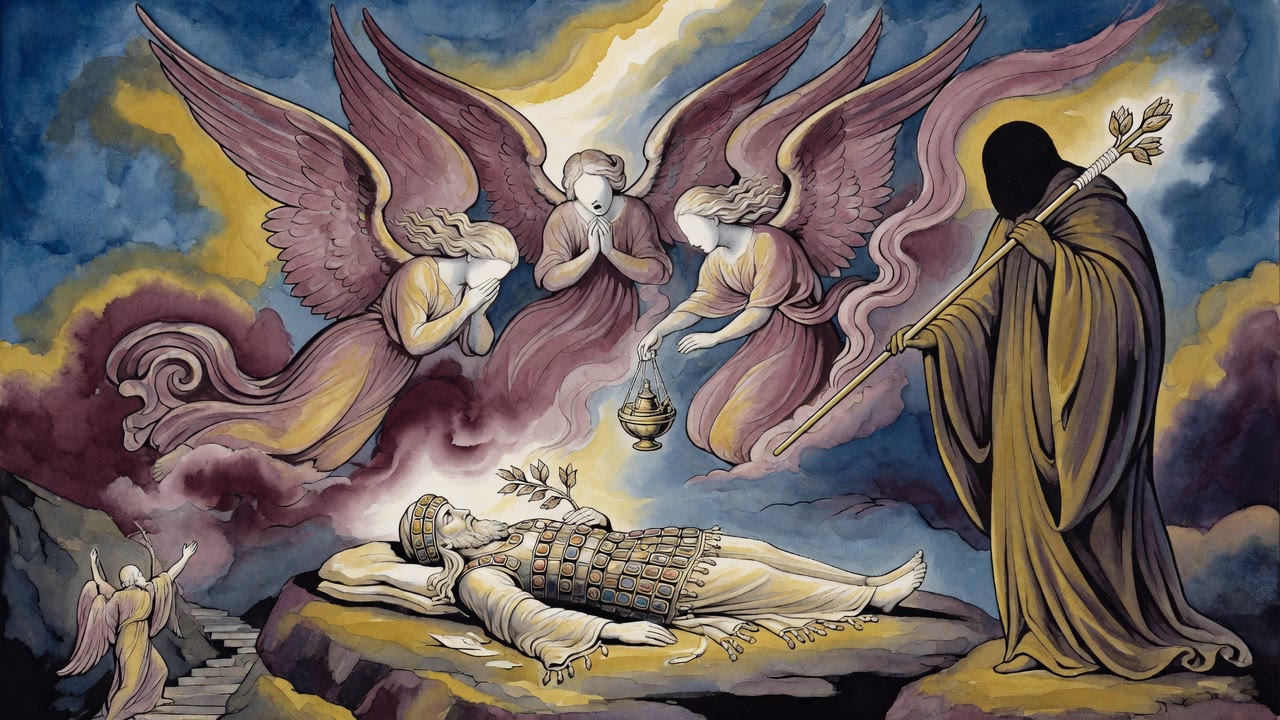
He fell backward when the voice struck. Hadariel put breath in him and walked him into rooms of ledgers. Angels sat there sewing crowns.
Table of Contents
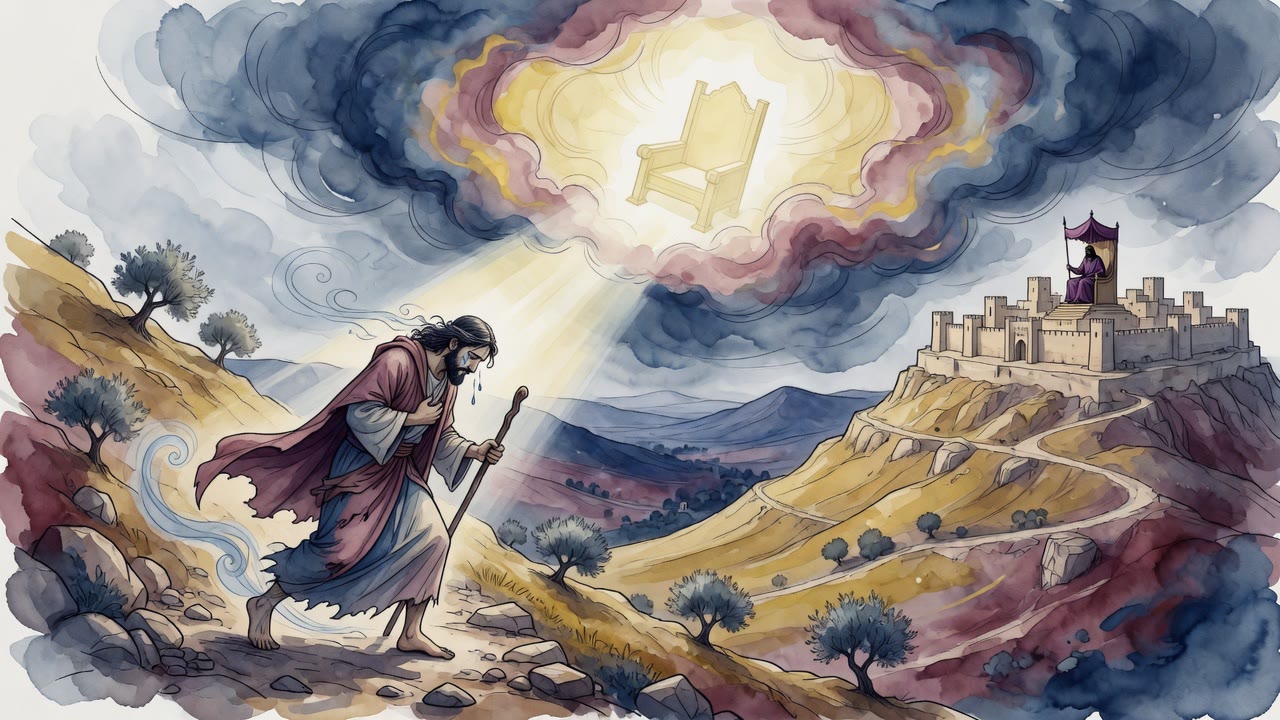
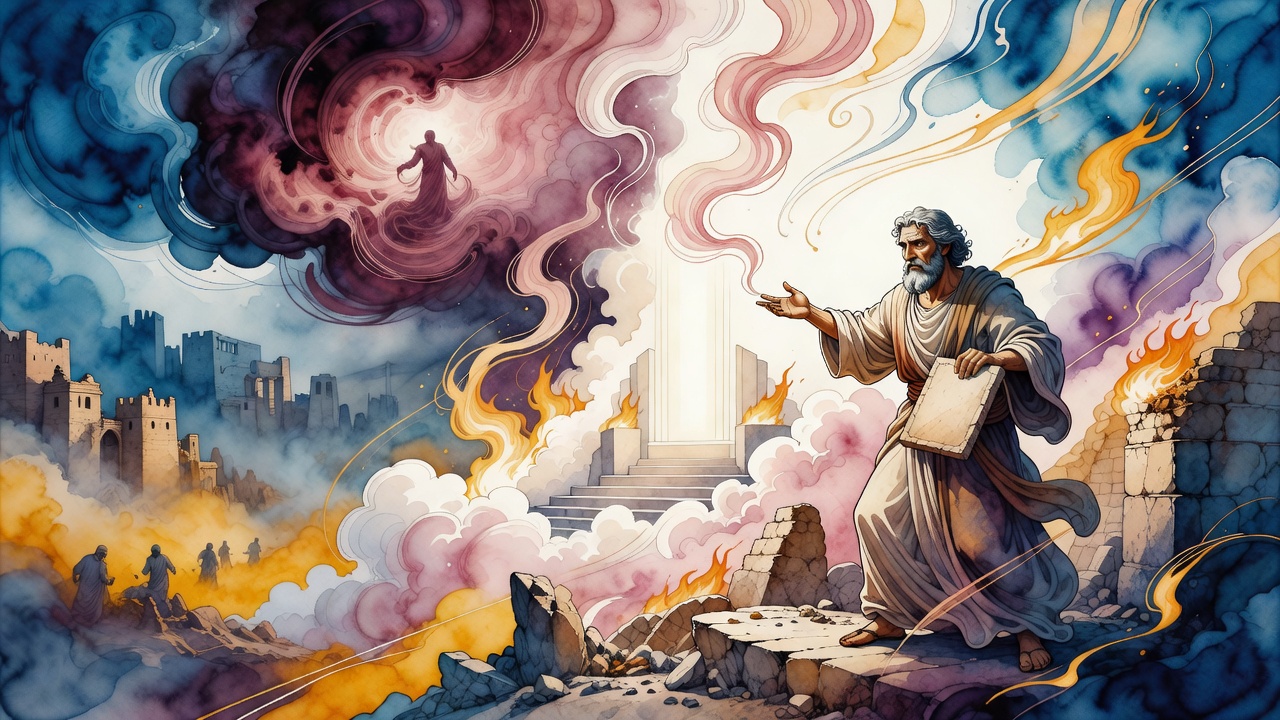
Rabbi Ishmael heard the voice and the hearing knocked him over. He fell backward and had no breath. The halls went white at the edges.
 Click for full size
Then the angel Hadariel came, put breath and spirit back into him, and stood him on his feet. "My friend, what came over thee?"
"Your Excellency," Ishmael said, "is there no restoration for Israel?"
Hadariel did not answer with a yes. He said, "Come, and I shall bring thee in to treasuries of consolations and to treasuries of salvations and shall show thee."
Ledgers for Sword and Famine
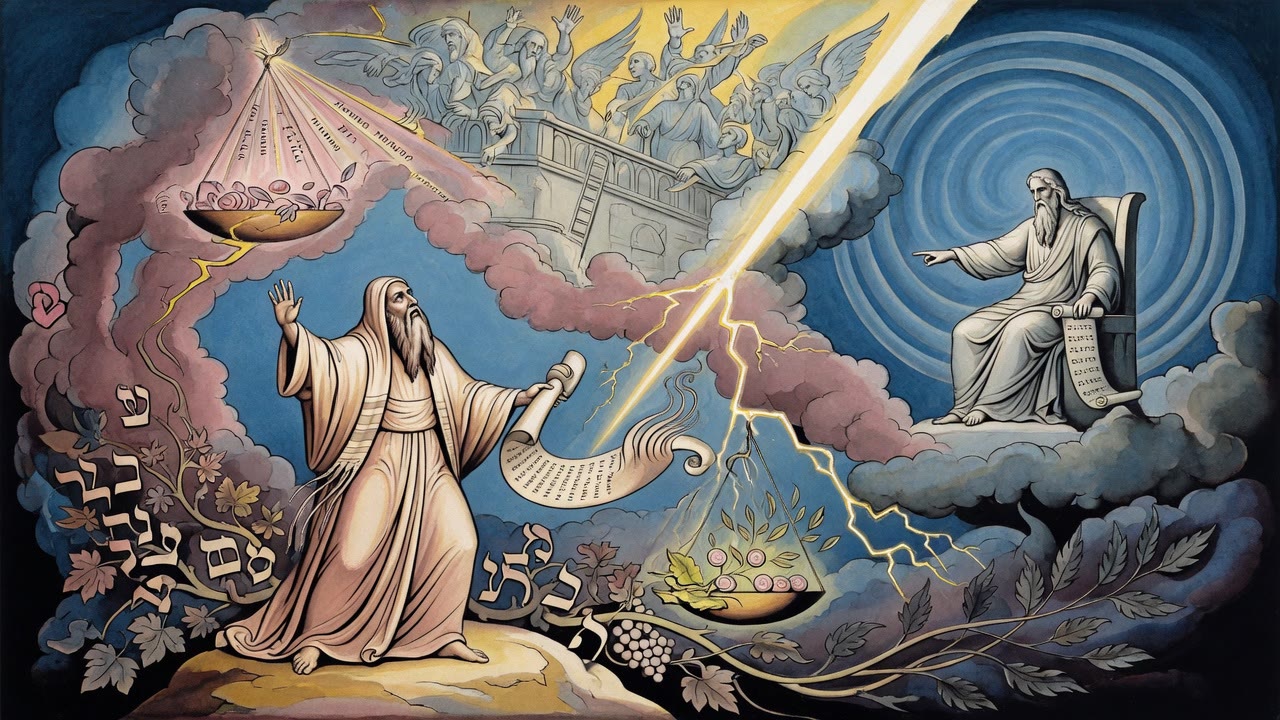
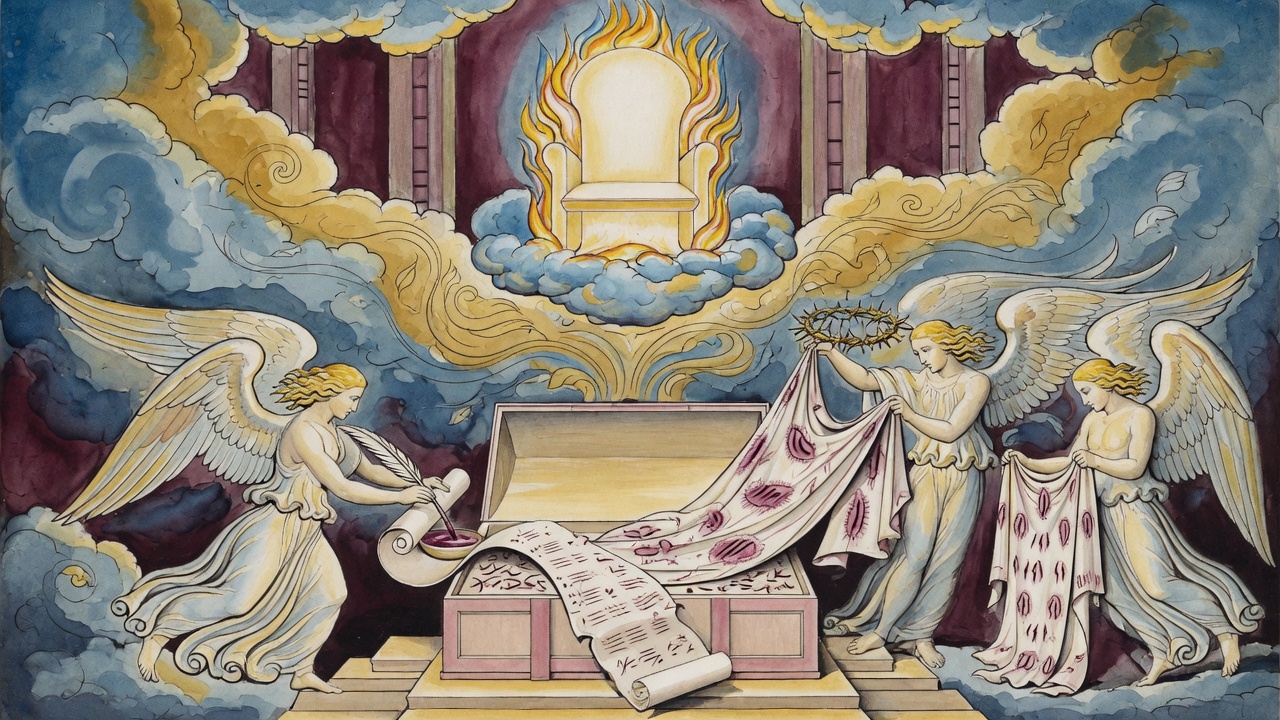
They walked. Rooms opened. The treasury was not gold. It held ledgers, each one a kind of wound. A book for those who would die by the sword. A book for famine. A book for captivity. A book for disgrace. Fresh hardships were written into the accounts every day, the ink still wet on names that had not yet been spoken below.
Ishmael had asked if Israel could be restored. The first thing he was shown was that nothing Israel had suffered had been misplaced. Sword and hunger and shame each had a shelf. A sorrow that is written down cannot be denied later. It has an address.
When Israel blessed God's name, those hardships were held back. Not erased. Held. The blessing did not empty the ledgers. It slowed the hand that copied from them into the world.
Silver Before the Refiner
Beyond the books, humanity lay open before God the way silver lies open before a refiner. Not softly. A refiner burns what has stuck to the metal. He knows which silver is alloyed and which is pure. He looks through families, not only through single lives: who was born of a forbidden union, who was wounded, who was cut, who came from slaves, who was unfit for the priesthood.
Ishmael had come asking for restoration. He was being shown the eye that would do the restoring. No surface held. No performance held. The gaze that counted sorrows was the same gaze that counted what a lineage had carried and what it had hidden.
For a man who has already been broken, that gaze is not only a threat. It is the first time the wound is treated as a fact. The ledger and the refiner belong to one work. Nothing that happened below is invisible to the one who made the bodies it happened to.
Angels Were Already Weaving Crowns
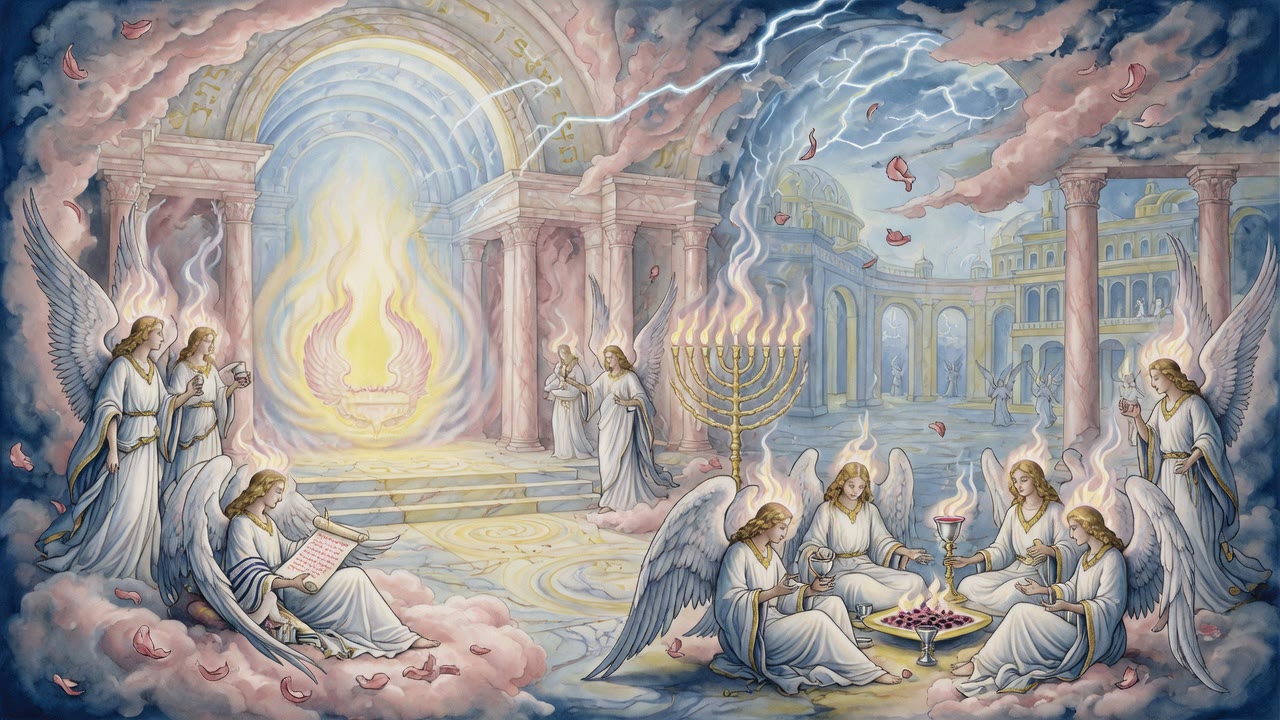
Hadariel brought him into the treasuries of salvations and the treasuries of consolations. Companies of ministering angels sat there working. They were weaving garments of salvations. They were making crowns of life and fixing precious stones and pearls into them. They were compounding spices and perfumed wines for the righteous.
The work was already in motion. Ishmael had asked if restoration would come. The angels had not waited for his question. They were sewing while the ledgers still filled. Garments cut to the shape of a particular shame. Crowns fitted to a particular death. Consolation was not a general light. It was being made to measure.
He stood among them and watched hands that would not be hurried. The wool went through. The stones sat in their settings. No one looked up from the work to explain it.
One Crown Waited for David
Then he saw one crown that was not like the others. The sun and the moon and the twelve signs of the zodiac were fixed in it.
"Your Excellency, for whom are these crowns?"
"For Israel," Hadariel said.
"And that different crown, for whom is that destined?"
"For David, the king of Israel."
Ishmael asked to see David's glory. Hadariel said, "My friend, wait for three hours until David cometh hither and thou shalt behold his greatness."
So Ishmael waited in a room where angels sewed and ledgers took more names and one crown sat ready for a king who had not yet walked in. Restoration was not a speech. It was a garment on a table and a crown with the sun in it and a clock of three hours that had already started.
← All myths