John Maccabee Drove Cendebeus to the Towers and Burned Them
The messenger reached Gazara before the knives did. John took hold of the men Ptolemy had sent, and none of them left the city alive.
Table of Contents
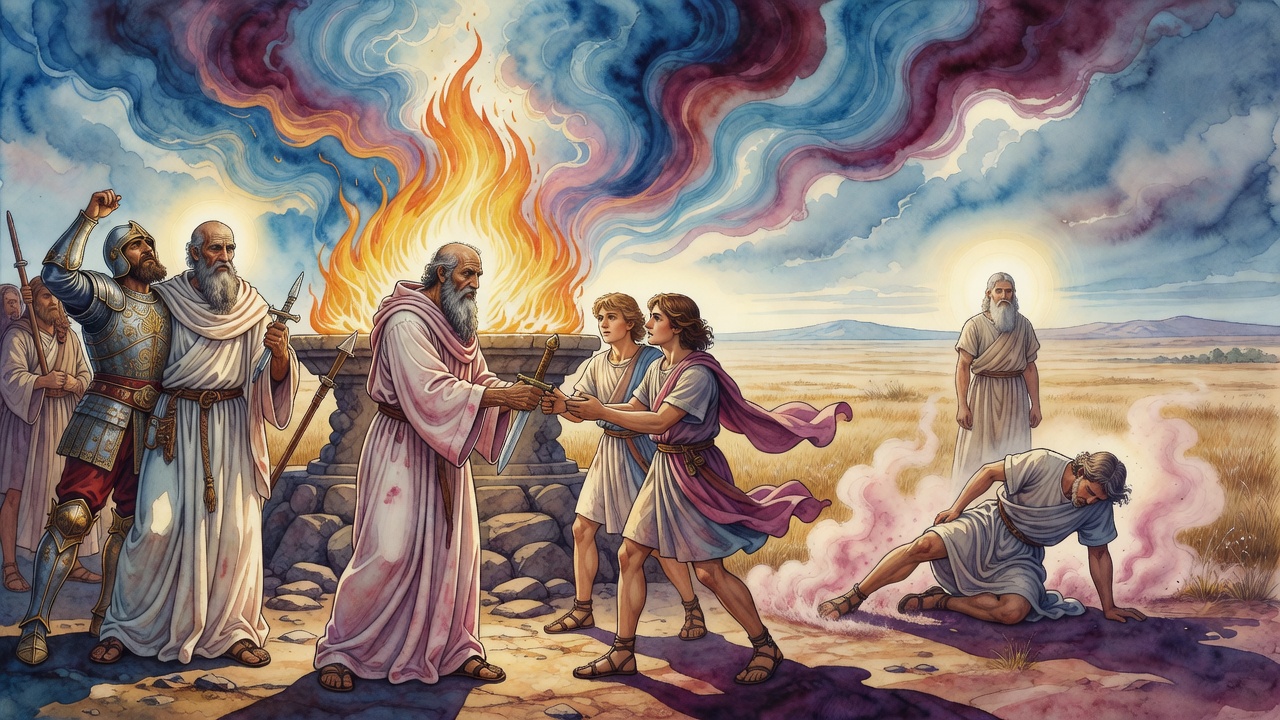
Simon died at a table. His son-in-law Ptolemy son of Abubus had invited him to a banquet at the fortress in Jericho, poured the wine, waited until the high priest's head was heavy, and killed him there, along with two of his sons. Simon had been high priest and governor for eight years. He had thrown the Seleucid garrison out of the Citadel, rebuilt Jerusalem's walls, and given Judea the longest stretch of quiet it had known in a generation. He died drunk because the man who held the eastern gate had decided the Hasmoneans were more useful dead.
 Click for full size
Ptolemy sent other men west, to Gazara, to finish the third son. He also sent letters promising silver and gold to anyone who would help him take Jerusalem and the Temple mount.
The Knives Reached Gazara Late
A messenger got to John first. "Your father and your brothers have been slain, and Ptolemy has sent to slay you also."
John was astonished. He did not freeze. He laid hands on the men who had come to destroy him and killed them, because he knew they had come to make him away. By dawn the plot in Gazara was a row of bodies, and the third son was still standing.
He became high priest in his father's place. That sentence is easy to write. It took months of intimidation, negotiation, and the kind of careful work a man does when his own table has just been proven unsurvivable. Ptolemy still held Jericho. He was already writing to the Seleucid king Antiochus VII that the moment had come. Antiochus agreed. He sent his general Cendebeus to put imperial power back on the coastal plain.
Two Brothers at the Brook
Cendebeus fortified Kedron, a town that commanded a road from the coast into the heartland. He stationed cavalry and infantry there and began raiding into Judea. The raids were a sentence. Maccabean independence had been an interruption. The empire was back.
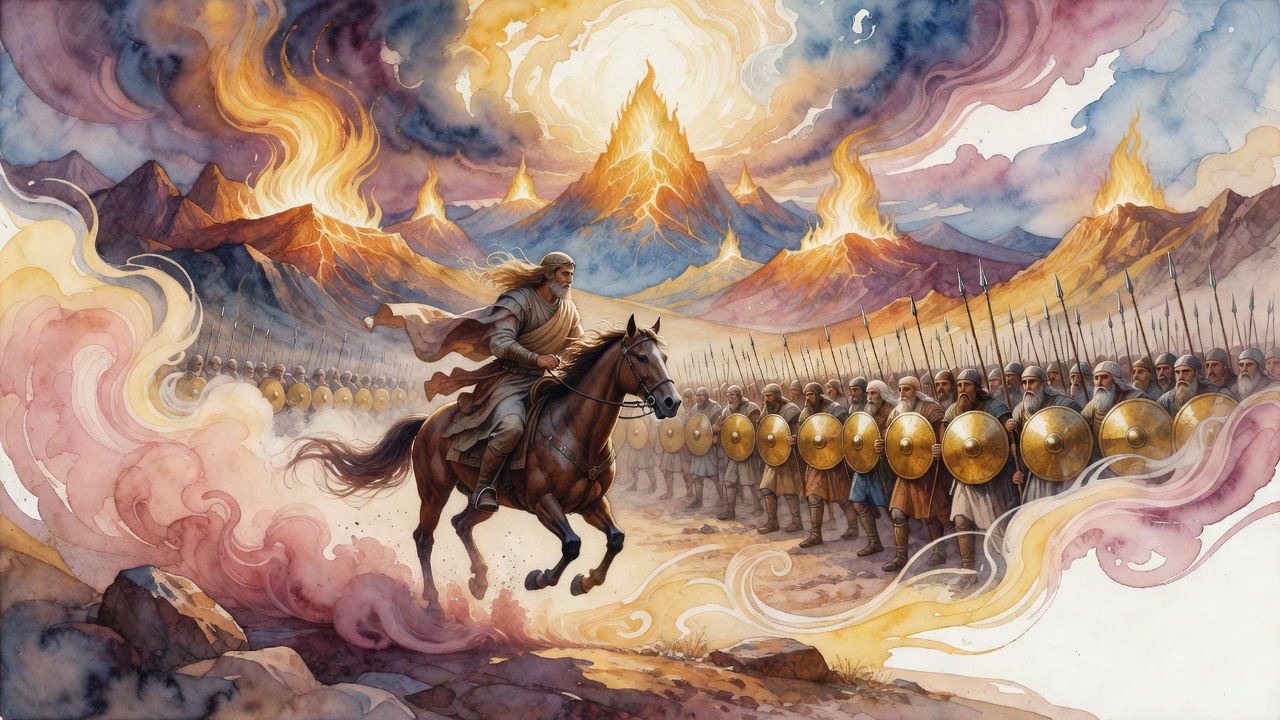
John gathered an army. His brother Judas came with him. They marched toward the plain and camped for the night with a water brook between them and Cendebeus' host, footmen and horsemen, a great force on the far bank. In the morning John's people looked at the current and were afraid to cross.
John went over first. His cavalry led through the water. The men, seeing him in the stream, passed over after him. Cendebeus' line fell back from the crossing toward the fortified towns they held.
The Trumpets Broke the Line
Then they sounded the holy trumpets. The same blast John's uncle Judas Maccabeus had used a generation earlier, when the nations lifted their eyes, saw him coming, and broke into the plain, pursued as far as Gazera and Azotus and Jamnia, three thousand of them cut down. The horn was not decoration. It was how this family started a fight they were not supposed to win.
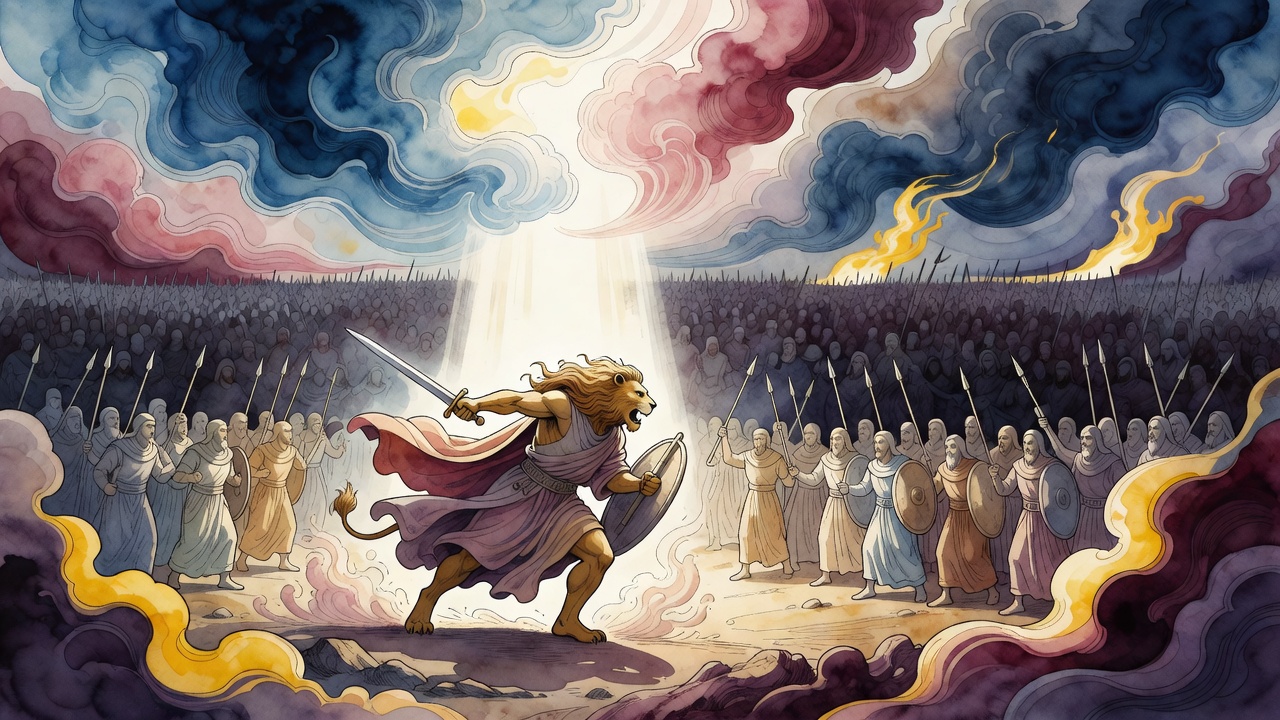
Cendebeus and his host were put to flight. Many of them were slain. The remnant ran for the stronghold. In the middle of the fighting Judas was wounded. He did not stop, and John did not stop for him. John still followed after them, all the way to Kedron, the town Cendebeus had built to anchor the return.
The Towers Caught Fire
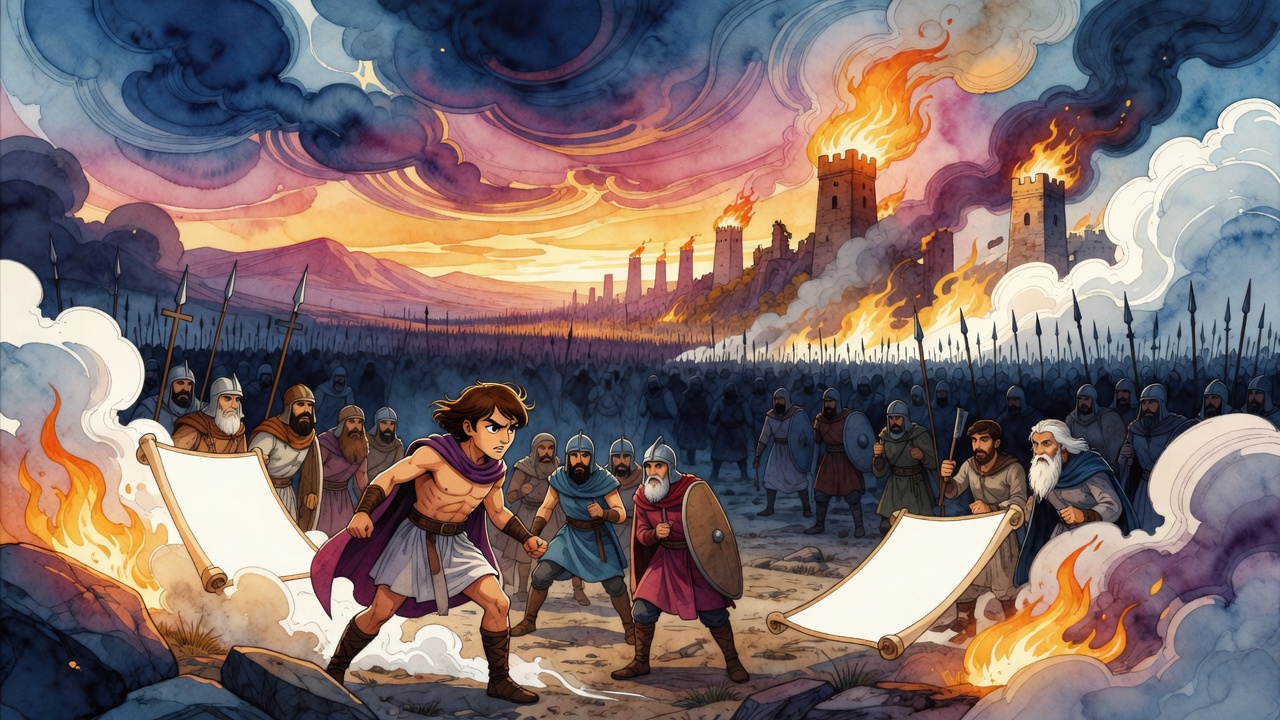
Cendebeus retreated into Kedron. John chased him through the soldiers who came out of the towers to make a stand, and then into the town. The remnant fled farther, to the towers in the fields of Azotus. John burned those towers. The cavalry spilled into the fields. The infantry ran into the burning stone and then ran out again into open ground, where the Hasmonean horse finished what the fire had started. About two thousand of them died there.
Cendebeus escaped. The campaign did not. The forts that were supposed to bring the empire back to the coast went up in smoke, and the young man who had received news of a banquet murder in the night, and seized the assassins before dawn, rode home to Judea in peace. The table at Jericho had not ended the house. The third son was high priest, the towers were ash, and the road from the sea was his.
← All myths