Joseph the Shabbat Lover Found a Fortune Inside His Friday Fish
Joseph spent every coin he had on Shabbat food, and a Gentile neighbor tried to cheat the prophecy that Joseph would inherit his wealth.
Table of Contents
 Click for full size
The Man Who Spent Everything on Friday
He was called Yosef Mokir Shabbat, Joseph who honors the Shabbat, because honoring the Shabbat was the one thing he did without limit. Every Friday he went to the market and bought the finest food available. Whatever the week had brought him, even if it had been meager, he spent what he had on Friday's table. His neighbors thought him reckless. He thought the Shabbat queen worth every coin.
Next door to him lived a wealthy neighbor, a Gentile, a Persian in some versions of the story, a man who had no interest in Shabbat but considerable interest in his own fortune. This neighbor consulted a soothsayer who told him something disturbing: all his property would eventually end up in the hands of Joseph, the Jew who honored the Shabbat. The neighbor decided to outwit this prophecy. He sold everything he owned, converted the entire estate into a single gem of extraordinary value, sewed it into the lining of his turban, and set out across the sea. His reasoning was efficient: if Joseph was fated to receive his property, there would be no property to receive.
What the Wind Did With the Turban
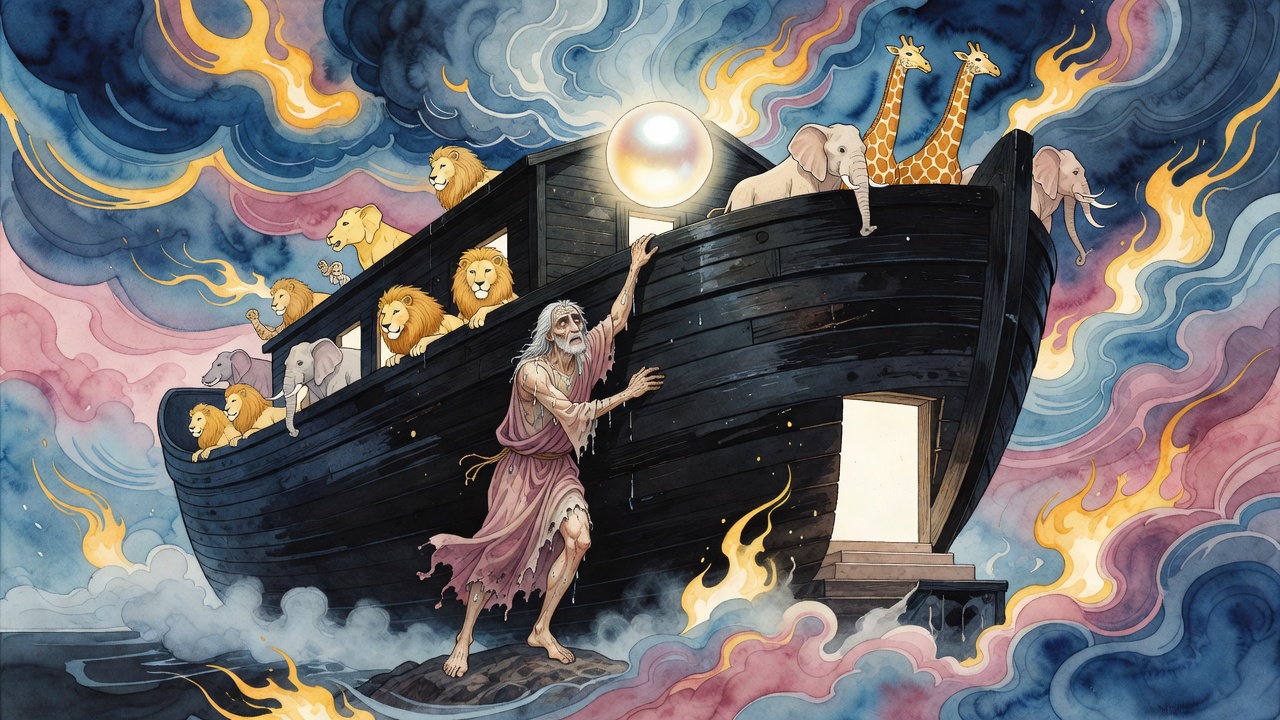
Crossing the sea, standing on the deck of the ship, a sudden wind came up and lifted the turban from the neighbor's head and dropped it into the water. The gem, sewn into the lining, went with it. A fish swallowed the gem. The fish was caught. The fish was brought to the market. It was Friday morning. The vendor shouted: fine fish, fine fish. Who buys for Shabbat?
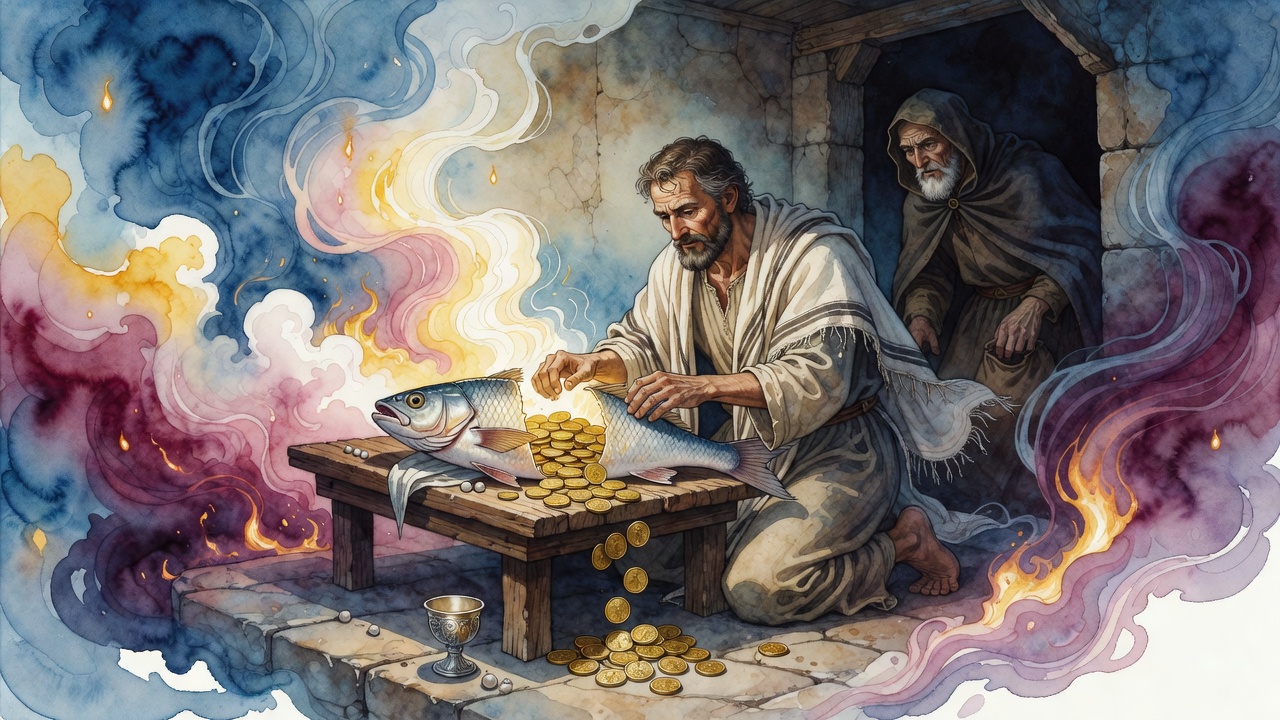
Joseph bought it. He bought it because he always bought the best fish on Friday. He brought it home. His household began to prepare it. Inside the fish, in the belly, was the jewel. Joseph had received his neighbor's entire estate through the belly of a fish he bought because it was the finest specimen in the Friday market and Shabbat deserved nothing less.
The Prophecy That Could Not Be Outwitted
The Talmud states the principle plainly. The one who lends for Shabbat is repaid by Shabbat. Joseph had been lending his own money to the Shabbat, spending lavishly on something that gave him nothing material in return, and the return came from a direction no one could have predicted or arranged. His neighbor had tried to prevent the transfer of wealth by converting his estate into a single portable object and putting it in his own hat. The wind had not been a random weather event. The wind was the mechanism through which the prophecy fulfilled itself, despite every human effort to frustrate it.
Some versions of the story add a scene between Joseph and the soothsayer after the fish. Joseph asks: what did you tell my neighbor? The soothsayer laughs and says: I can see what is fated but not how it will arrive. All I knew was that the wealth would come to you.
What the Employer Said at the End
A separate version of the story records a different wealthy employer who had the same prophecy about Joseph. He tried a different approach. He gave Joseph a job and gave him generous wages, calculating that if the wealth was already in Joseph's hands as wages, the prophecy was already fulfilled in the least threatening possible way. On the final day of work, he settled accounts. He put the wages in a bag, tied it closed, and tied it to the neck of a goat, meaning to carry it to Joseph. The goat escaped. It ran. The employer's son chased the goat and found Joseph's house and the goat standing at his gate. The bag of wages was delivered by a runaway goat. The prophecy, again, had found its own mechanism.
← All myths