Judah Rode Out and the Mountains Shone Like Fire
Gold and brass caught the sunrise and the ridges burned like lamps. Judah looked at the shine and still called his men forward.
Table of Contents
 Click for full size
The Mountains Caught Fire
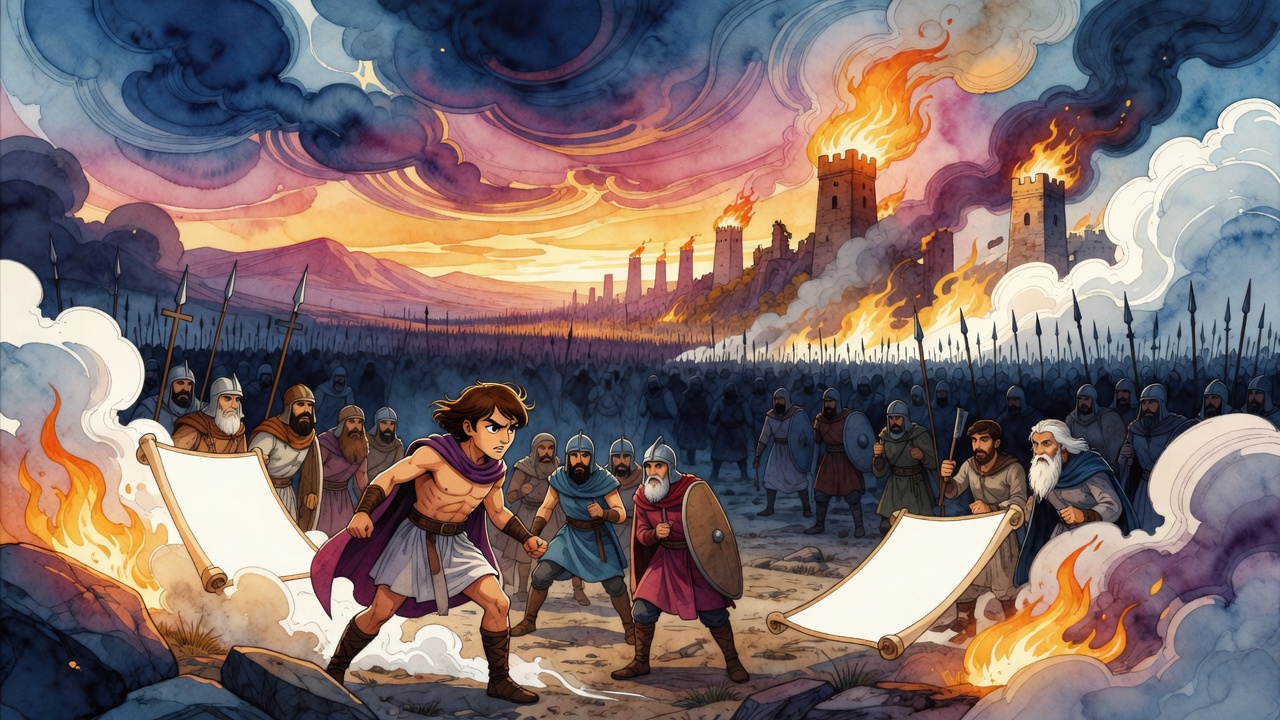
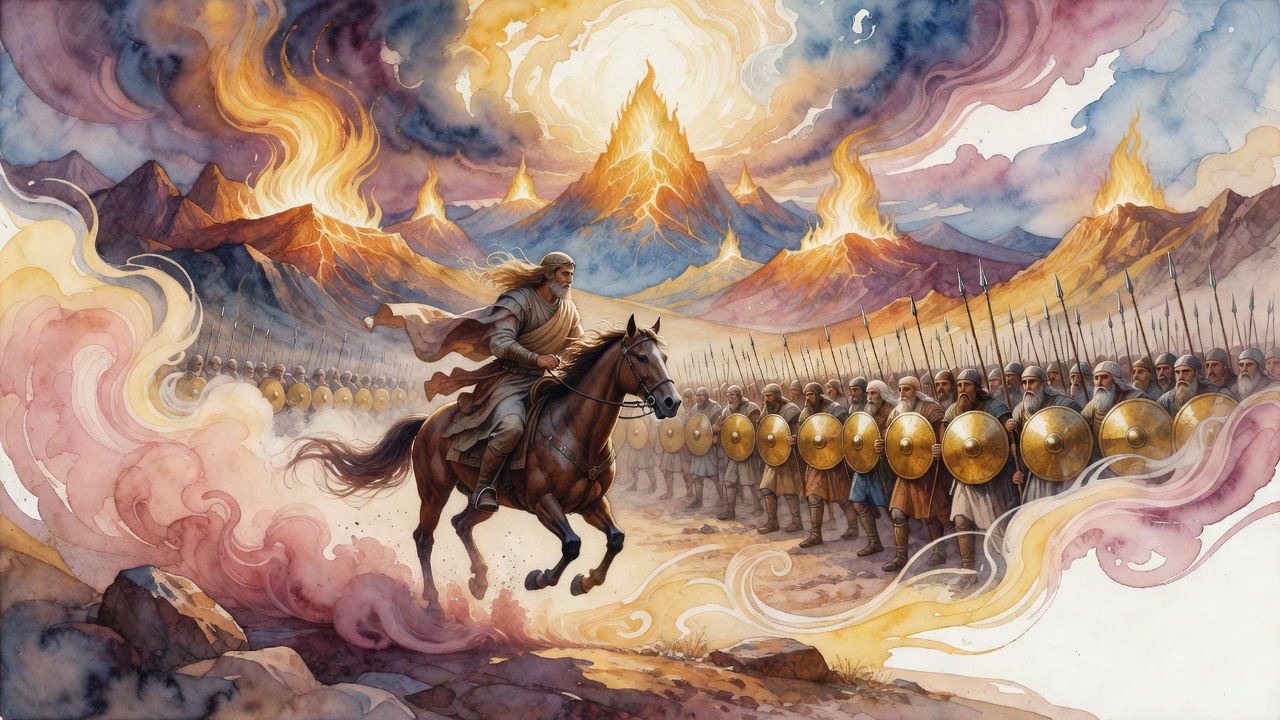
The soldiers on the ridges raised shields of gold and brass, and the dawn turned them into lamps. The mountains around the pass burned with ten thousand moving points of sun. Harness rattled. Cavalry creaked into line. Leather and iron and ten thousand feet on stone made a noise that reached the villages before the first spear did.
Part of the king's army spread on the high mountains. Part filled the valleys below. They marched in order, with signalmen ready, infantry set to hold, horsemen set to break a charge. Anyone who heard that multitude was shaken. The ground itself felt different.
Judah sat his horse at the edge of the pass and looked at the shine. The empire had come dressed as light. He could hear the rattling of the harness from here. He could see the signalmen on the ridges. He did not turn the column around.
Judah Called Them In
The fear of Judah and his brothers had already gone out ahead of them. Nations round about talked of battles a small band had no right to win. When king Antiochus heard, he opened his treasure, paid his soldiers for a year, and gathered a very strong army. He meant to end a rumor with metal.
His commanders had done the work. Ridges held. Valleys held. The plan assumed an opponent who would answer military logic the way a military opponent is supposed to answer.
Judah called his fighters together. He did not count the lamps on the hills. "It is all one," he said, "to save with many or with few." He was not appealing to arithmetic. He was appealing to something the signalmen had not modeled. Then he rode out.
The Trumpets Broke the Line
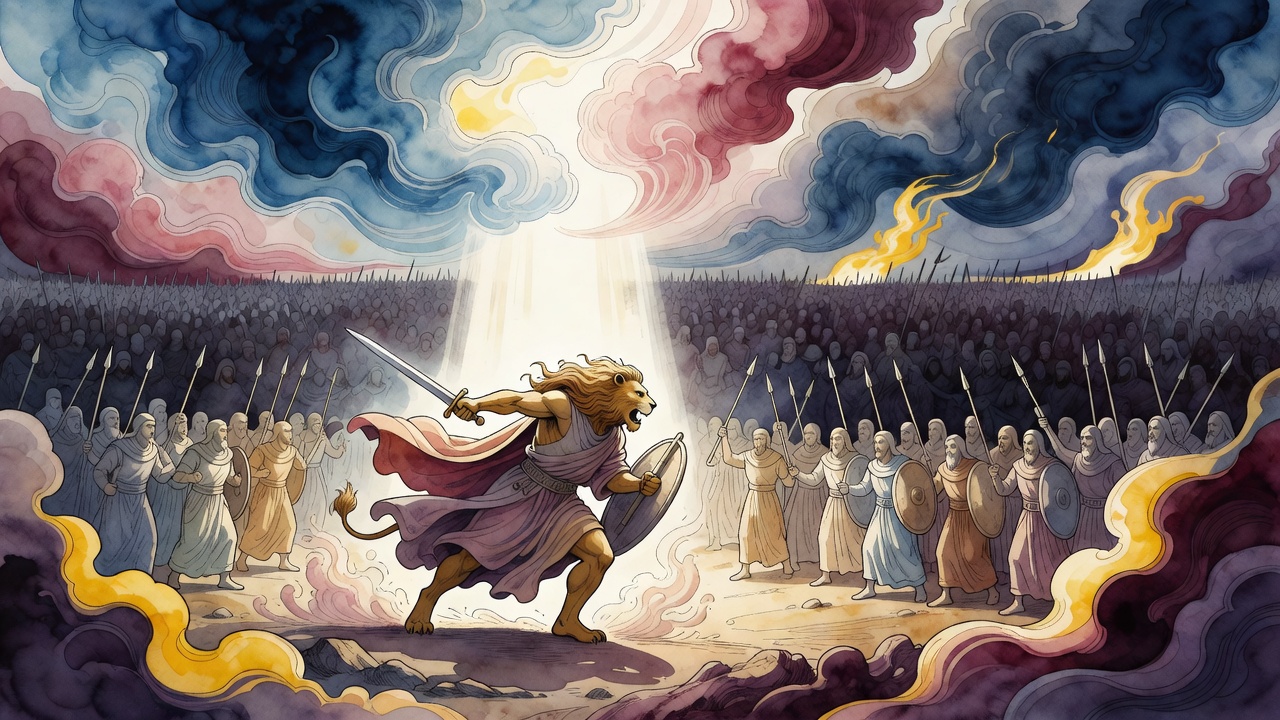
The king's men lifted their eyes and saw them coming. They went out of the camp to battle. Judah's company sounded the trumpets. Then they ran at the center of a professional host. A rebel band that had been melting into the hills for years was now charging as if the outcome were not theirs to calculate.
Judah's horse hit the first rank while the shields were still throwing sun. He did not wait for the cavalry to close. The gold that had made the mountains look like lamps was in his face, close enough to see the dents in the brass. His men came in behind him with the trumpets still in their mouths.
The formation that had been spreading across the landscape in careful order had to answer an attack it had not planned for. Men who fight a force they have already been told is helped from heaven fight differently than men who are simply outnumbered. The dread had arrived before the first trumpet. The charge only collected it.
They Chased the Host Into the Plain
The king's army broke. The same force that had lit the mountains like fire, that had shaken the ground with ten thousand feet, fled into the plain. Judah's men pursued them to Gazera, and to the plains of Idumea, and Azotus, and Jamnia. About three thousand of the hindmost were slain with the sword before the rest reached country that was not theirs.
Those who escaped ran into the land of strangers and carried the news to Lysias. The golden shields and brass harness that had made the morning look like it was on fire became the wreckage of a retreat. The fire belonged to the other side now.
They Carried Home What the Empire Left
Judah returned to the tents. His soldiers gathered gold and silver, blue silk, and purple of the sea. They lifted bolts of cloth the treasury had paid for and stuffed them into packs that had come into the field almost empty. One man held a gold shield up and laughed, because an hour ago that same shine had been a mountain on fire.
They went home and sang. They praised the Lord in heaven because it is good, because His mercy endures. On that morning it had been with few. The mountains had shone like lamps. Then the lamps were on the ground, and the song was going up from men who had ridden straight at the shine.
← All myths