Kainam Found the Watchers' Secrets and Hid Them From Noah
The rock had writing older than the rain. Kainam copied it into a hand Noah would never see, then went on looking for a city.
Table of Contents
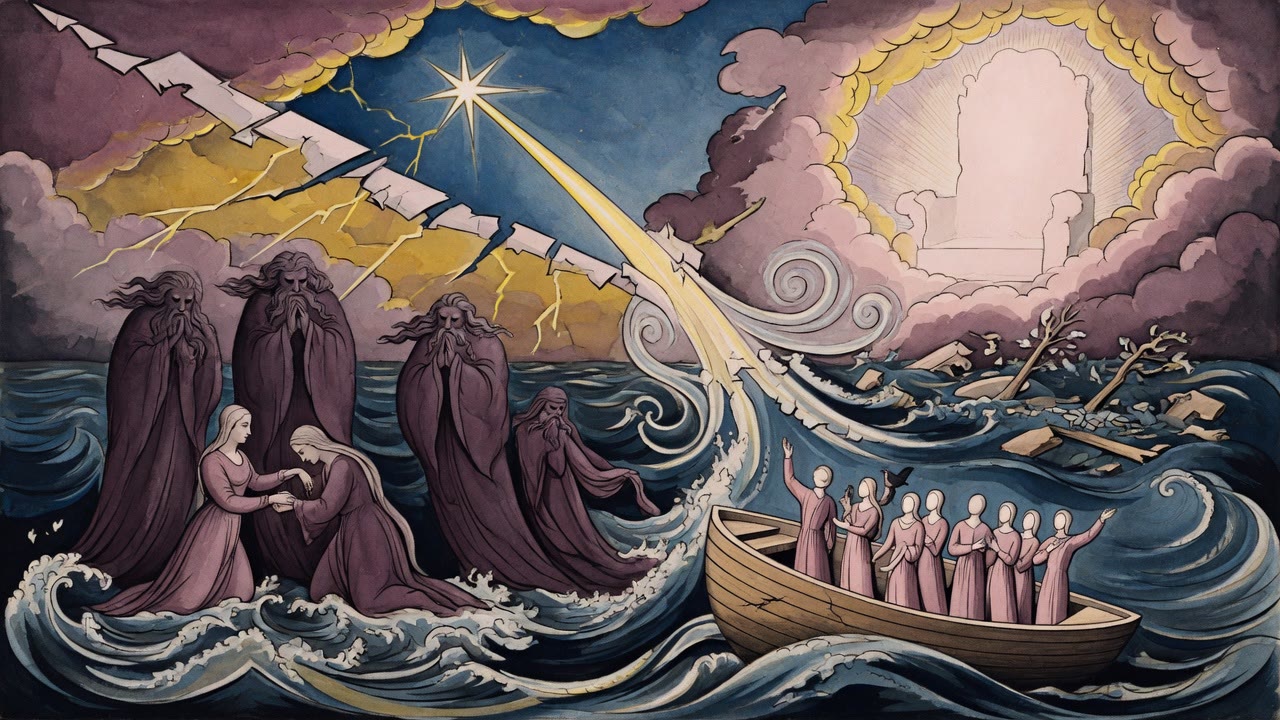
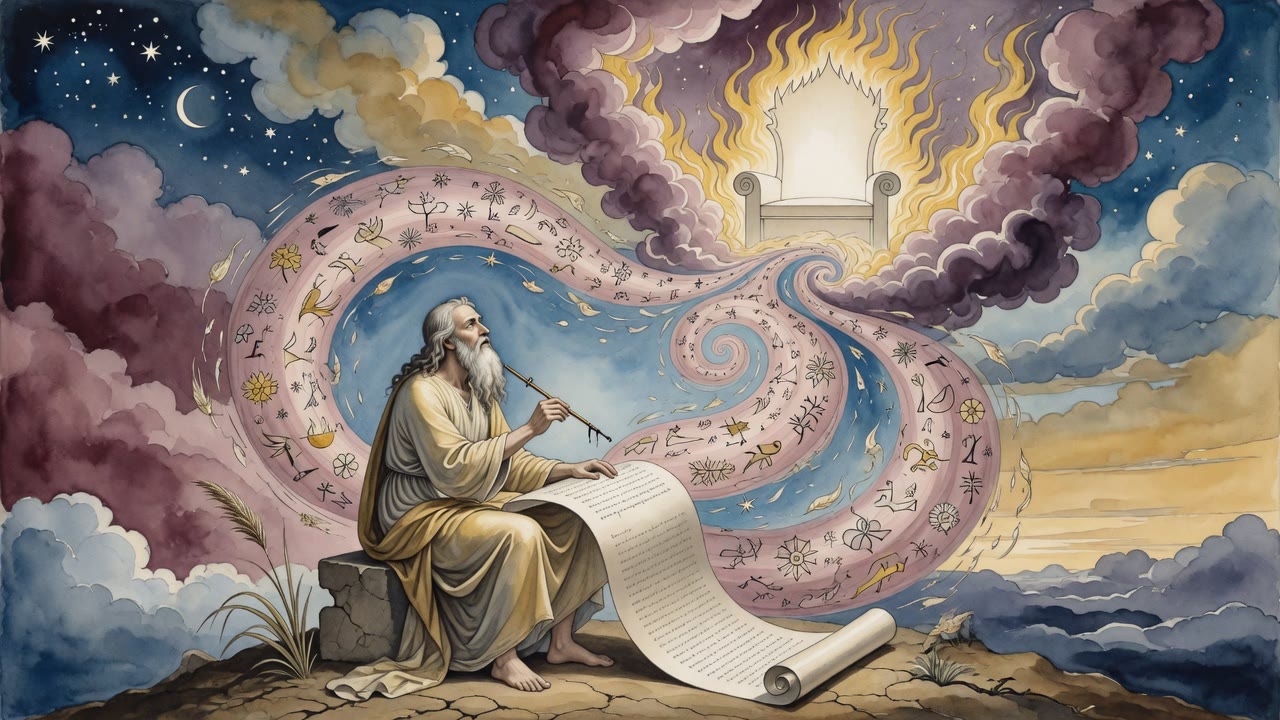
Kainam, son of Arpachshad, walked out after the Flood to seize a place for a city. The ground still gave under the foot in the low spots. He was looking for dry height, timber, a line he could claim. He found a stone with writing cut into it.
 Click for full size
The letters were older than the rain. The Flood had drowned the teachers. It had not drowned the lesson.
He Read What the Water Could Not Wash
His father had taught him writing. That skill was meant for deeds, names, the counting of years. On the stone it unlocked something else: how to watch the sun and the moon and the stars, how to pull omens out of their paths, how to read heaven as if it were a document a man could use.
This was the teaching of the Watchers, the angels who had come down before the world was washed. They had carved it for a generation that was gone. Kainam stood in a cleaned world with his finger in their groove.
He copied it. He put their archive into a hand he could carry. Then he did the thing that turned finding into sin. He did not take the copy to Noah.
Two Hundred on the Mountain
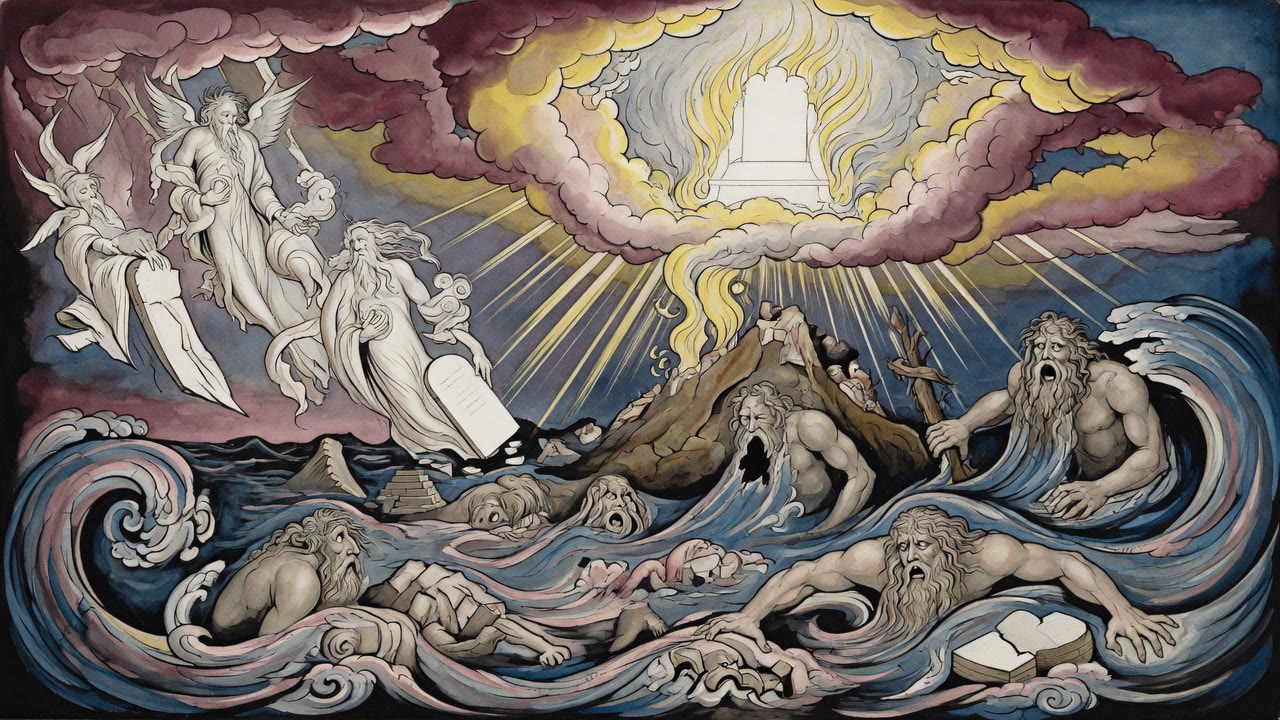
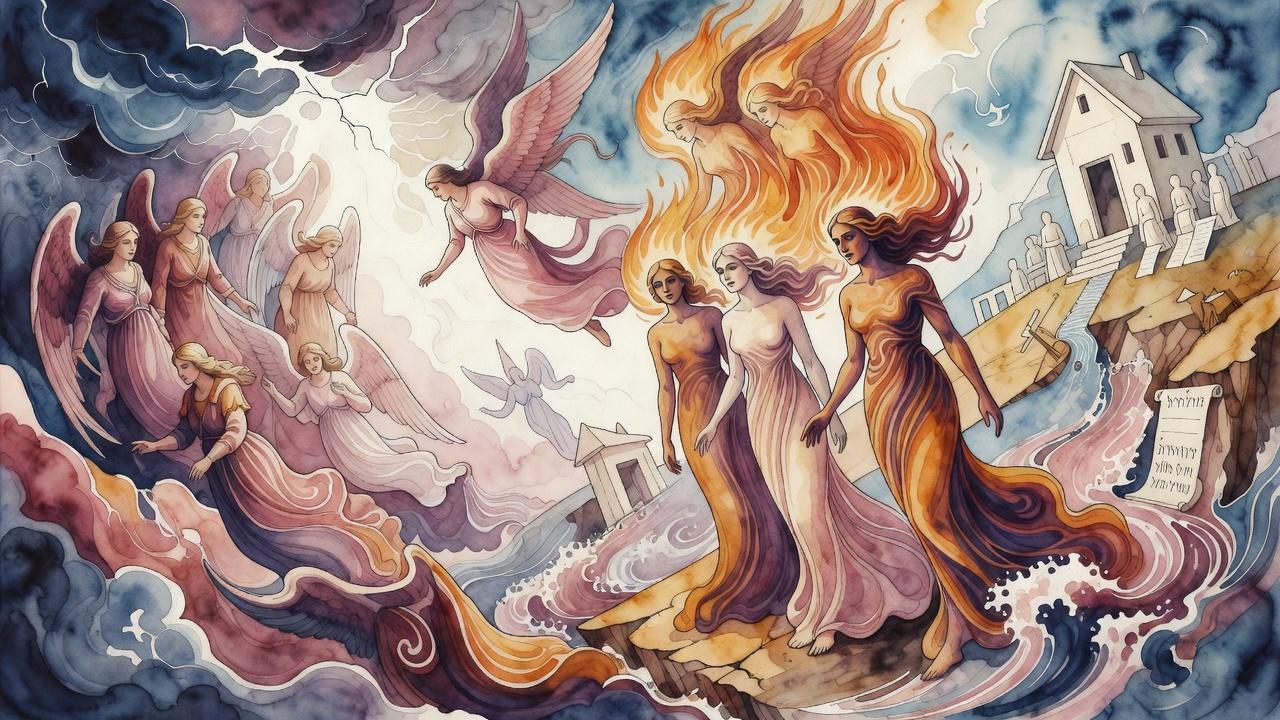
Long before the rain, two hundred angels had stood on the summit of Mount Hermon and bound themselves by herem (חרם), a ban they laid on their own backs. Shemhazai had been afraid he would be left alone in the sin. So they swore together. They took wives from the daughters of men. They taught charms, roots, the cutting of plants, the making of weapons, the paint around the eyes.
Their children grew three thousand ells tall and ate the flocks, then the people. The earth complained. Azazel taught knives and shields and rouge. The teaching Kainam would one day find in stone had already helped ruin a world once.
God had warned them. They had asked to go down and sanctify the Name among bodies. He had told them the evil inclination would rise in them too. They went anyway.
Istahar Spoke the Name and Rose
Shemhazai saw a young woman named Istahar. He wanted her. She named her price. Teach me the explicit Name you use when you go up to the sky.
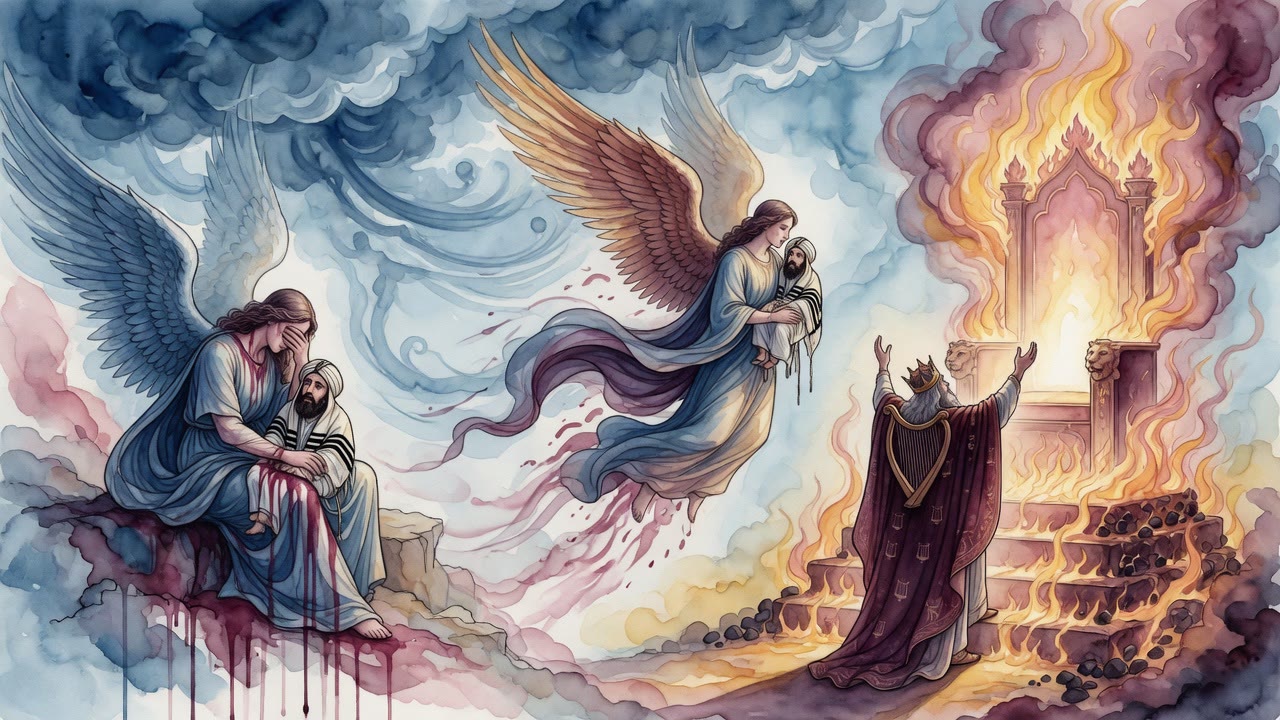
He taught her. She spoke it. She rose. She did not lie with him. God set her among the stars, in Kimah, the clustered lights, so the world would remember a human who used the Name to leave, not to take.
Shemhazai and Azazel watched her go, then took wives anyway and fathered sons. The stone-teaching stayed on earth. Istahar did not.
Sharp Stones in Dudael
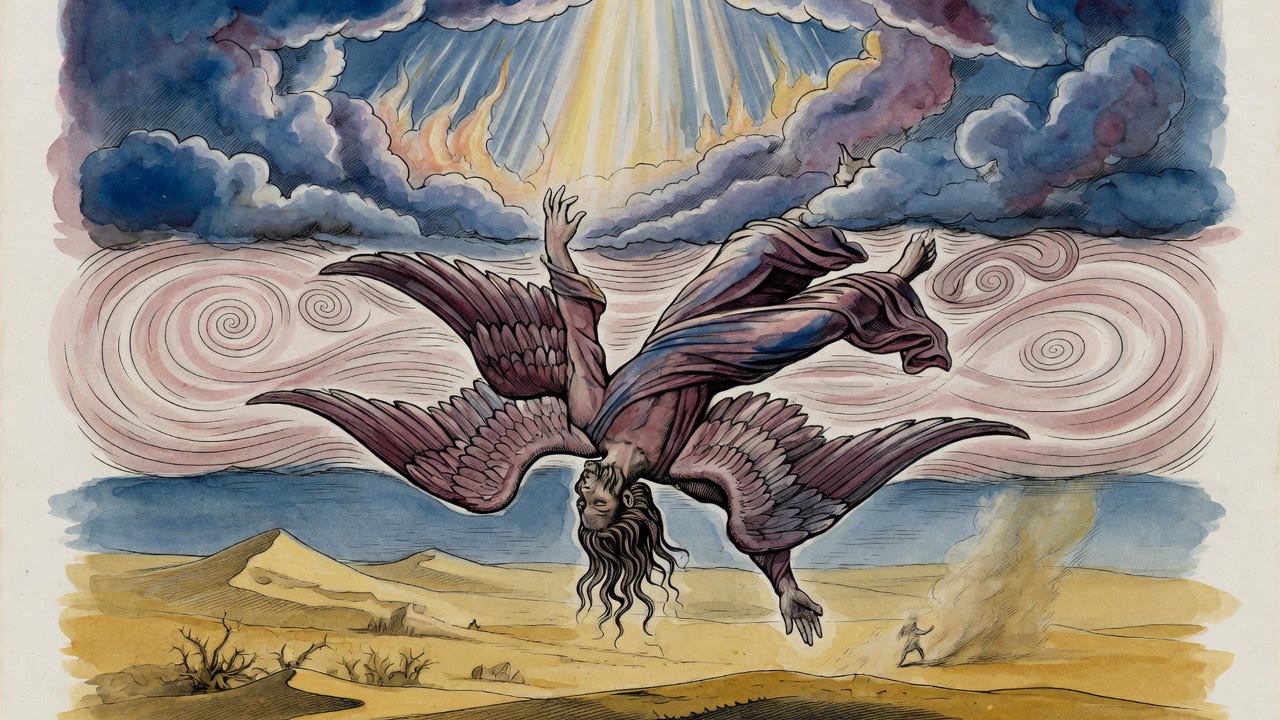
When the blood of the giants cried from the ground, four archangels brought the case. Uriel went to Noah with the news of water. Raphael bound Azazel and threw him into a pit of sharp stones in the desert Dudael, under darkness, to wait for judgment. Gabriel set the giant sons against one another until they died by their own hands. Michael made Shemhazai's company watch those deaths, then pinned the Watchers under the hills for seventy generations.
The teachers were under rock. Their writing was still on rock. That was the part the chains missed.
The Copy Noah Never Saw
Kainam finished the transcript. He hid it. Noah had walked with God through the year of rain and would have known what that star-lore had already cost. Kainam made a private judgment. The knowledge was his. The city he wanted would have a secret older than its first wall.
The Watchers had made the same kind of judgment when they descended. They had been wrong in bodies of fire. Kainam was wrong in a body of flesh, with a dry stone and a closed mouth.
He went on looking for a place to seize. Behind him the washed world glittered as if it were new. In his pack the old sky kept teaching.
← All myths