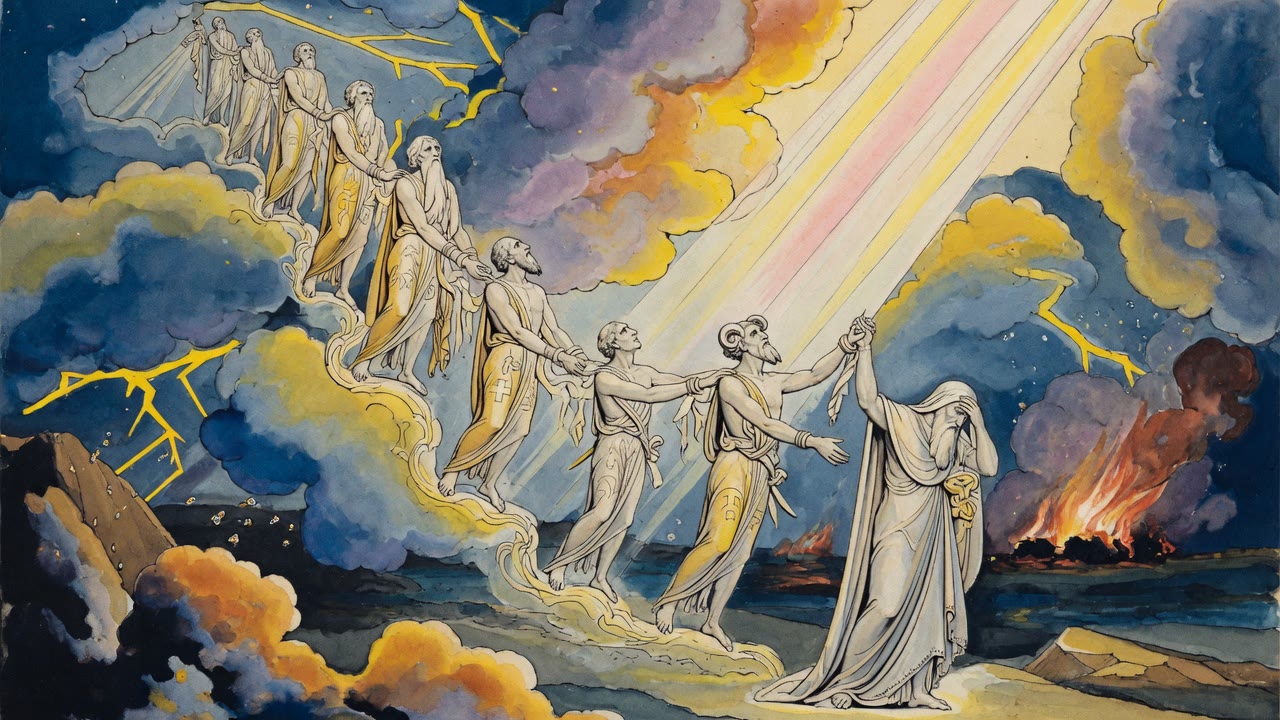
Lot Lived Among People Who Burned From Inside
Sodom stamped its name on coins and pressed them into a stranger's hand. Shops would not sell him bread. They took the coins off his corpse.
Table of Contents
 Click for full size
The Coins Came Back Off the Corpse
A stranger stood in the square of Sodom with coins in both hands. Each coin carried the city's name. A man had pressed them on him at the gate, smiling, as if the town were generous. The stranger went from stall to stall and asked for bread. The bakers looked at the stamp and shook their heads. The oil sellers did the same. No one would take Sodom's own money from a guest.
He lasted a few days. When he fell in the street, the same men who had given him the coins came back and took them off his body. Pride did not need a speech. It had a method, and the method ended at a corpse.
Judges sat. They had names that meant liar and perverter of justice. If a man was hurt, the court fined the wounded one for bleeding on a neighbor. A visitor was someone they could wait out. The wicked of Sodom did not hide what they were. They wrote it down.
Lot Chose the Green Plain
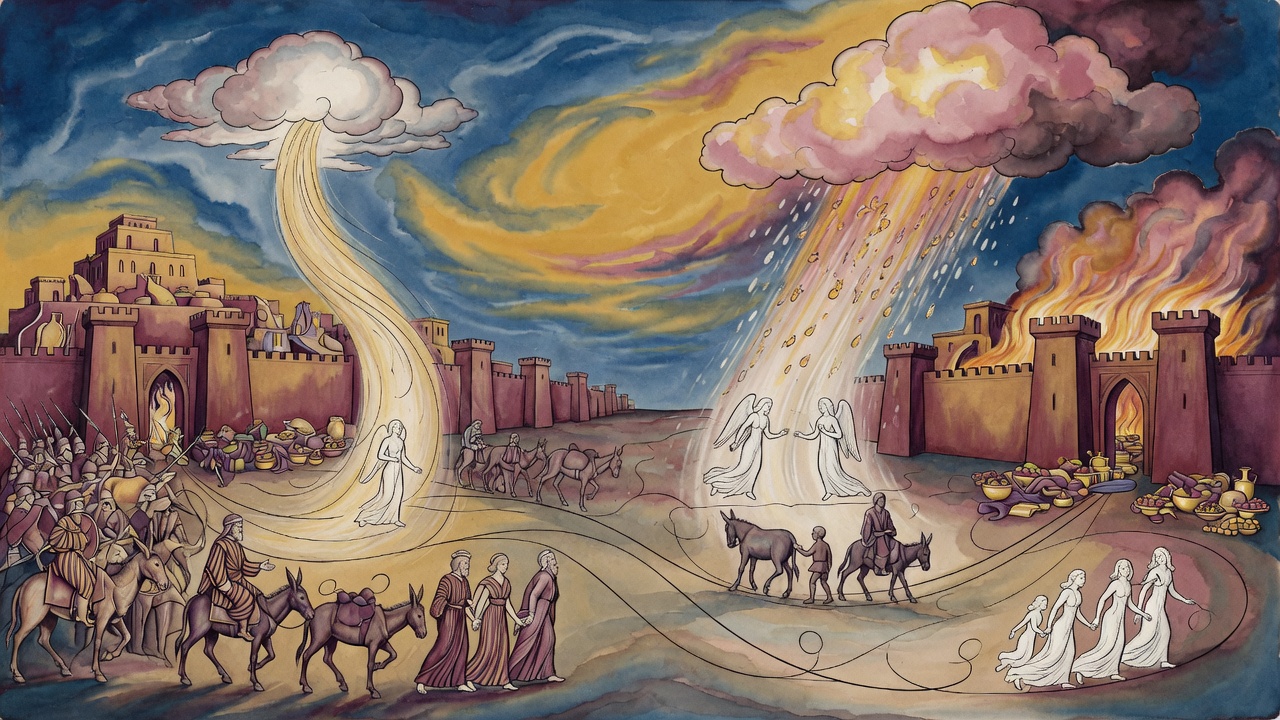
Lot saw that country before he saw the coins. In the fourth year he parted from Abraham and looked at the plain of the Jordan, well watered, green as a garden, and he chose it. The men of Sodom were sinners, exceedingly, before God. Lot went anyway.
Abraham had no child then. His brother's son walked toward a city that already knew how to starve a guest, and it grieved Abraham in his heart. He walked north and south and east and west, and God said all the land that you see, I give it to you and to your seed forever. Lift up your eyes. Walk the length of it.
Lot had taken the pretty water. God handed Abraham the rest, and the grief and the promise arrived in the same hour. Abraham did not run after him. He stood on the height and looked the four ways God had named. The nephew was already among people who burned from inside. The land under Abraham's feet was still a promise, not a house.
They Plotted on the Seventh Day
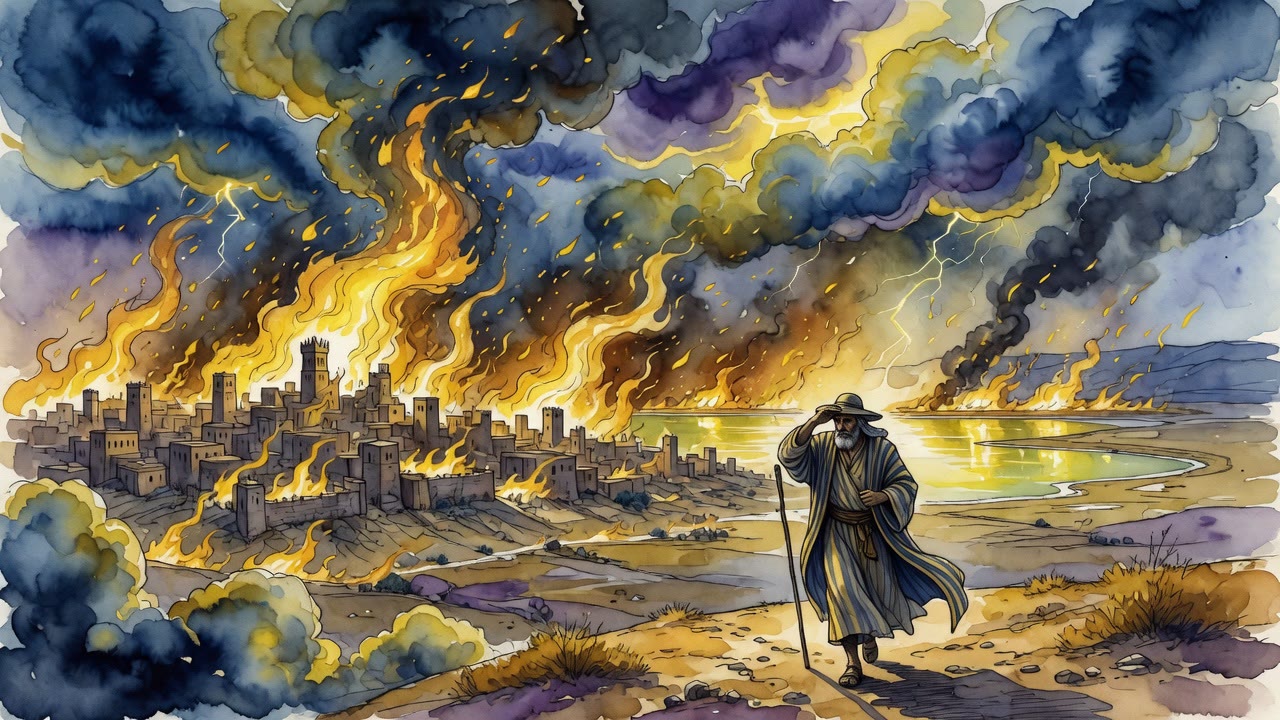
Sodom did not rest. On the seventh day, when Lot shut his door and kept Shabbat (שבת), the holy pause, his neighbors lay on their beds and went on working in their heads. They looked with their eyes and searched with their hands and pondered in their hearts to find a sin God hates, and then they did that sin. They had two paths. They left the good one.
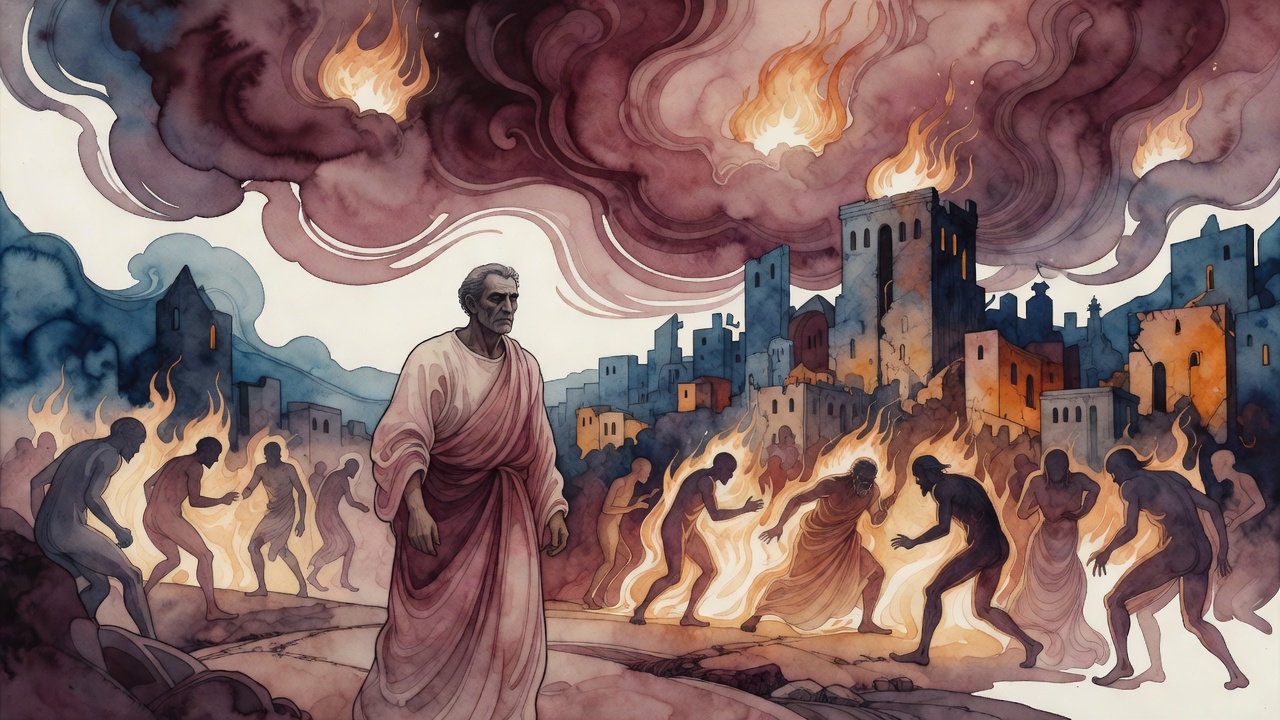
A man who plots iniquity on his bed does not need a torch. The fire is already in the room. Lot lived among that fire for years. He knew what the city did to strangers. He sat at the gate anyway, because someone had to see who was coming in.
On ordinary days they used the coins. On the seventh day they used the quiet. Wickedness in Sodom was not a mood that came and went. It was how they spent every hour, including the hour that should have been shut.
They Groped for the Door They Could Not See
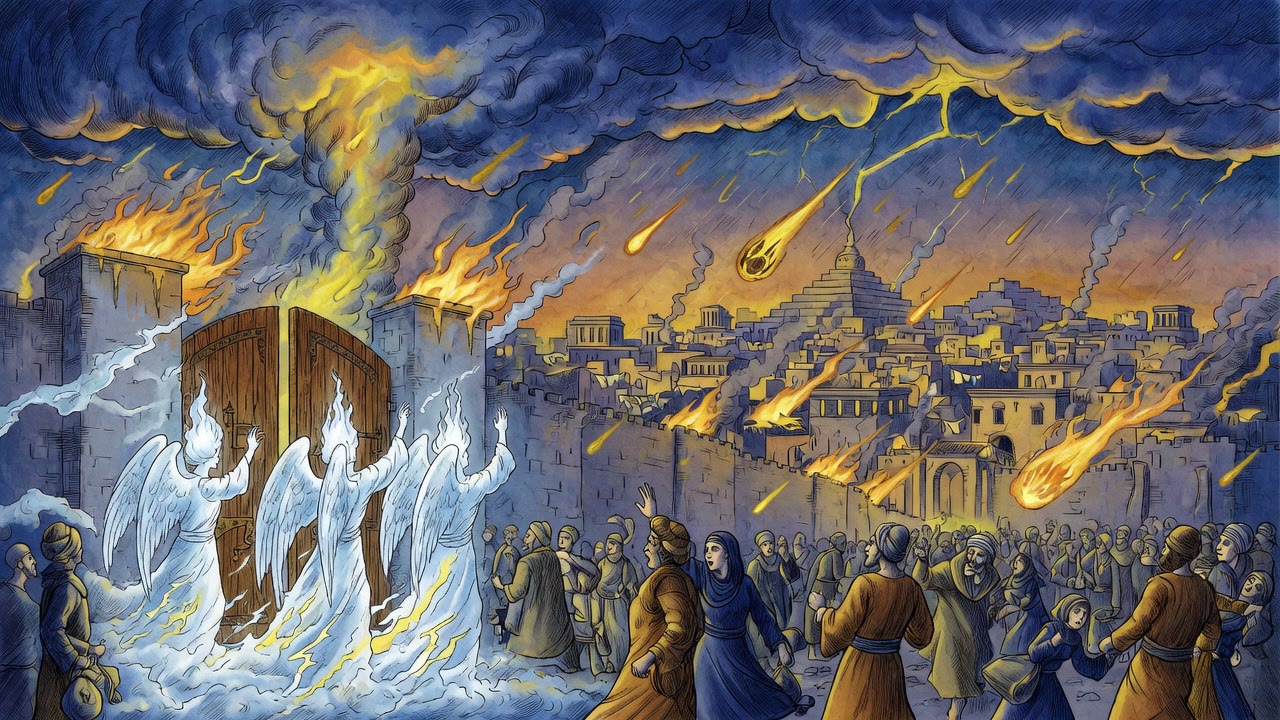
Two strangers entered. They were angels, though they looked like men on the road. Lot rose, bowed, and said, "My lords, turn aside to your servant's house." He fed them. He washed what the road had done to their feet. He did not send them into the street for the night. He knew the street.
The men of Sodom surrounded the house and demanded the guests. Lot went out and closed the door behind him. He begged them not to do this thing. They laughed at his standing. He was a sojourner. He had come to dwell, and now he would play the judge. They pressed in on him until his back hit the wood.
The angels reached out, pulled him inside, and struck the crowd with blindness. The men in the dark did not go home. They kept groping for the door, hands on the wall, hands on each other, still reaching for the house they could no longer find. Blindness did not stop them. A fire that burns from inside does not need to see where it is going.
← All myths