Lot's Wife Told the Neighbors There Were Guests in the House
Cattle licked the pillar down to nothing by evening. In the morning she was standing whole again on the road outside Tzoar.
Table of Contents
Lot brought two travelers home at evening, and his wife picked up a bowl and went out into the street.
 Click for full size
She knocked at the first neighbor she came to and asked for salt. "We have guests," she said. She said it at the next door and the door after that, and she went far enough along the row that everyone who mattered heard it from her own mouth. In Sodom a house with strangers in it was not a private matter. It was information, and she handed it out in daylight with a bowl in her hand and a reason on her lips that nobody could hold against her.
The City Came for the Guests
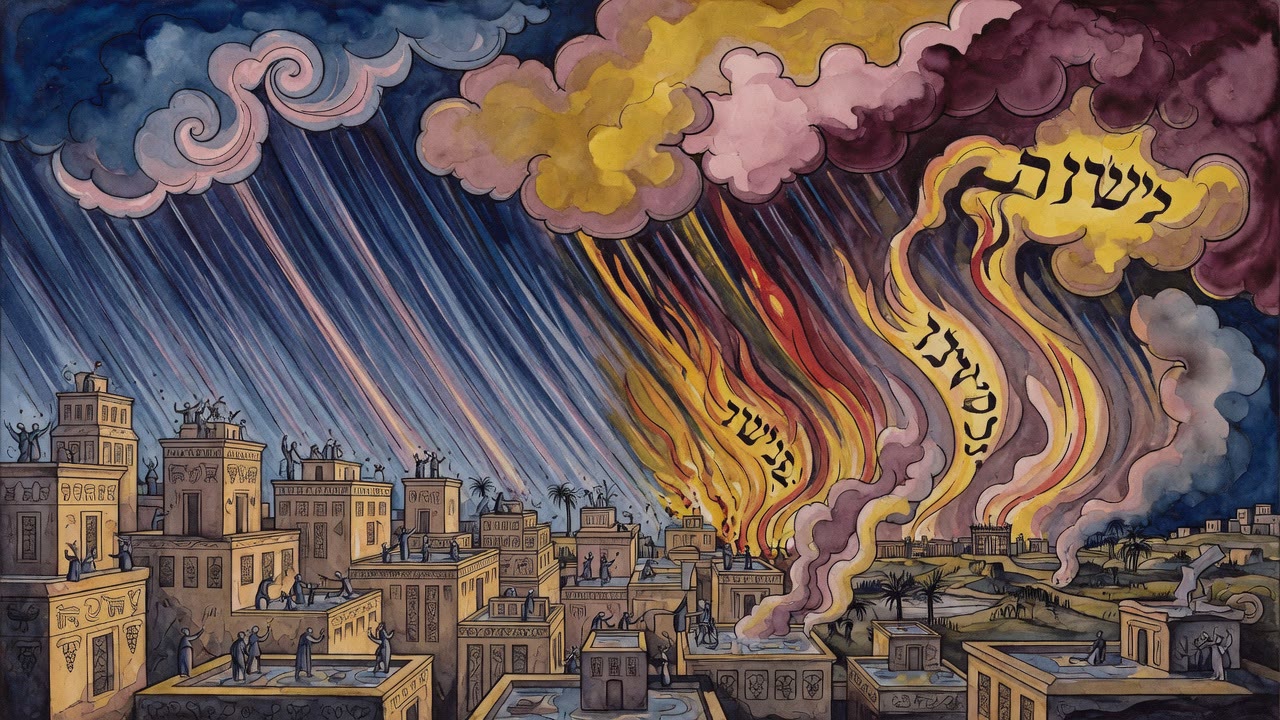
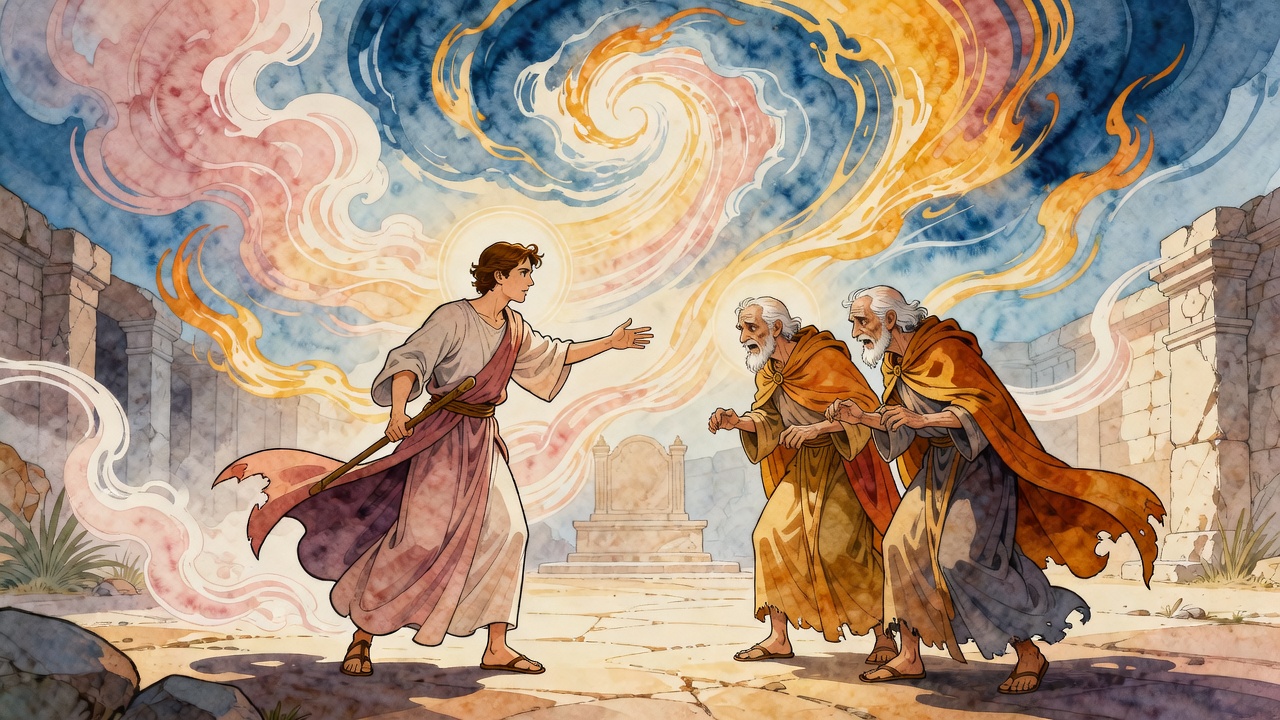
By full dark the whole city was outside the house, the young men and the old men, calling for Lot to bring out the two who had come in at dusk. He shut the door behind him and stood against it. The men at the gate were struck across the eyes and left groping along the wall, feeling for a doorway that was in front of them the whole time.
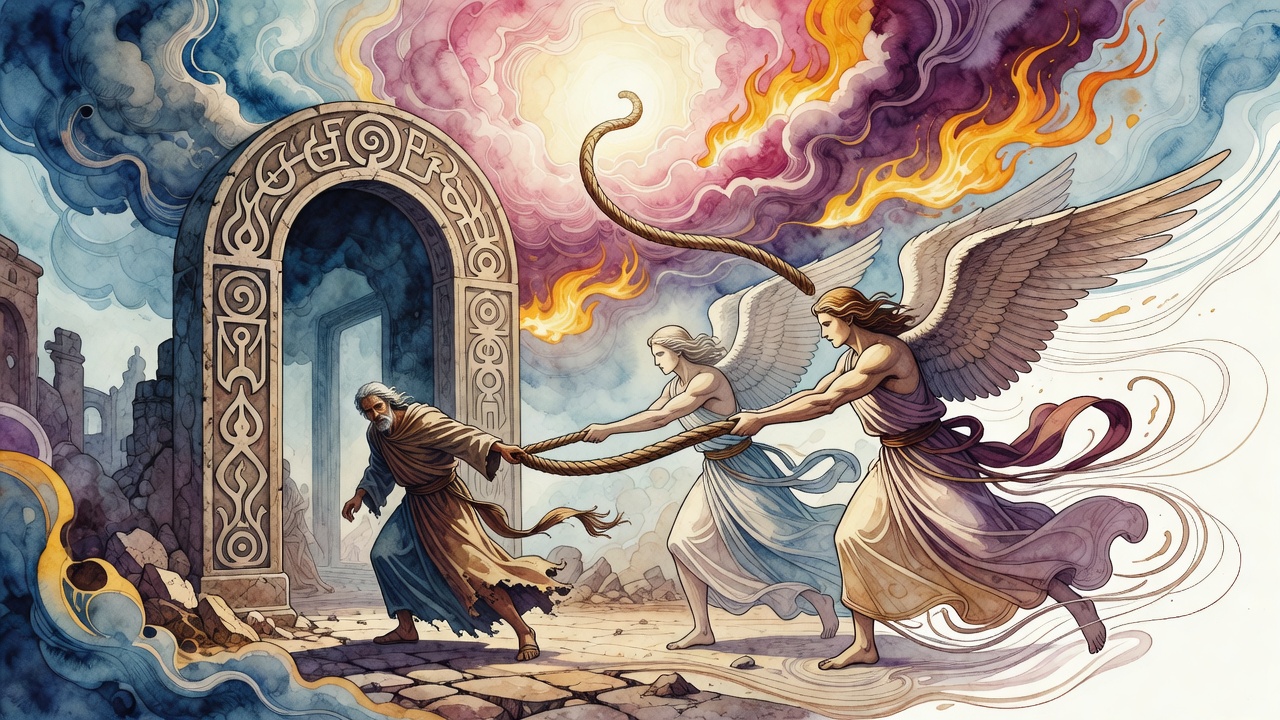
At dawn the two visitors told him to take his wife and his daughters and go, and Lot did not move. So they took hold of his hand, and his wife's hand, and the hands of both daughters, and walked the four of them out through the gate and set them down outside the city.
He Would Not Stand Next to Abraham
Run for the hills, he was told. Lot begged not to. He said out loud the thing he had been circling for years. "In this city I was counted a righteous man, because of who I was standing next to. Put me on that mountain beside Abraham and God will look at what I have done with my life the way He looks at what Abraham has done with his, and I will not survive the comparison. Let me go to the little one instead. Tzoar is close and it is small and there is not much guilt in it."
He got Tzoar. His wife walked out ahead of him on the road with one instruction, which was not to look behind her.
Her Daughters Were Still in the Street
She had married daughters back in Sodom.
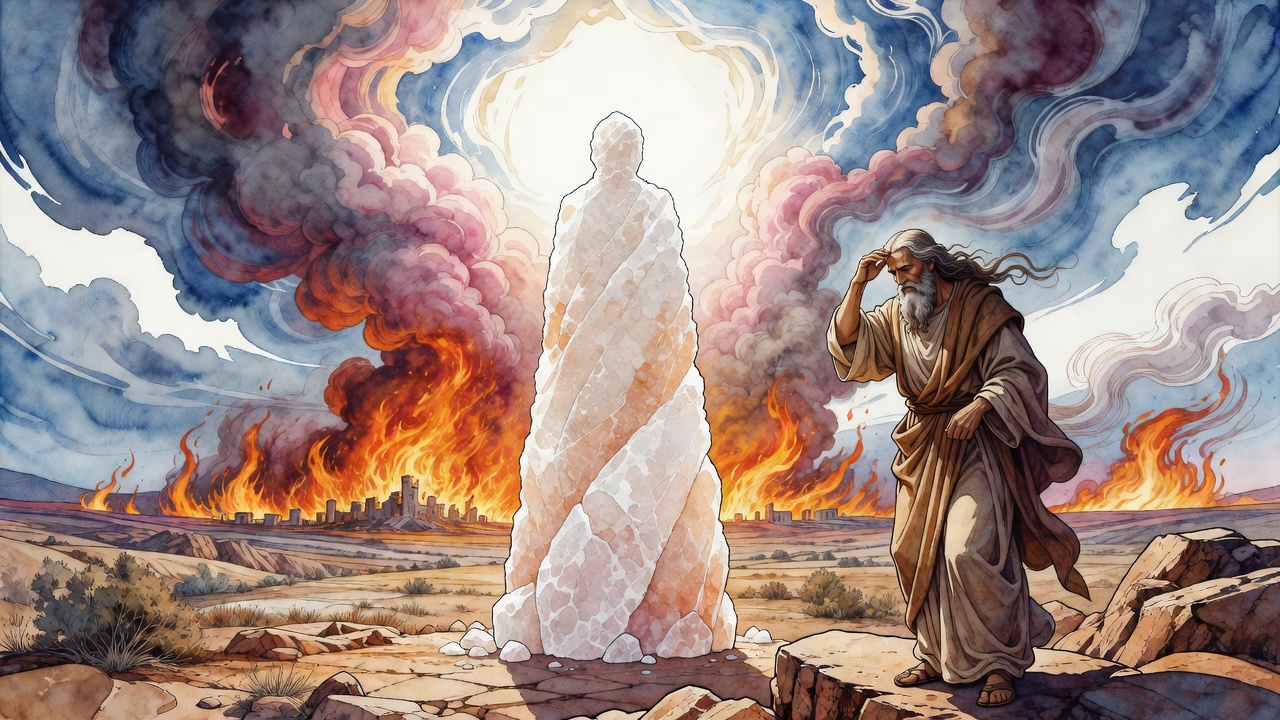
The order covered the burning city and the plain and the road. It said nothing about two women in houses she could still see the roofs of, and she was their mother, and the noise behind her was getting louder. Somewhere between the gate and Tzoar she turned her head.
She had gone out for salt on the night the angels came, and salt is what was left standing in the road.
The Cattle Licked Her Down Every Day
The pillar did not weather away and it did not fall over. Herds came down to the plain and the animals worked at it with their tongues the way animals do at any salt lick, all day, patiently, until by evening there was nothing there at all.
In the morning she was whole again. Full height, same place, facing the same direction.
Drovers brought their cattle back the next season and she was standing there. And the season after. Abraham was buried at Machpelah and she was standing there. Jacob went down to Egypt and she was standing there. Four hundred years of slavery came and went and the plain stayed empty except for one shape on the road outside Tzoar that nothing could finish eating.
What Moses Saw From the Top of Nebo
On the last day of his life Moses climbed the mountain and God showed him the country he was not going to enter, north to south, coast to river, and the vision ran down the plain as far as Tzoar.
She was in it.
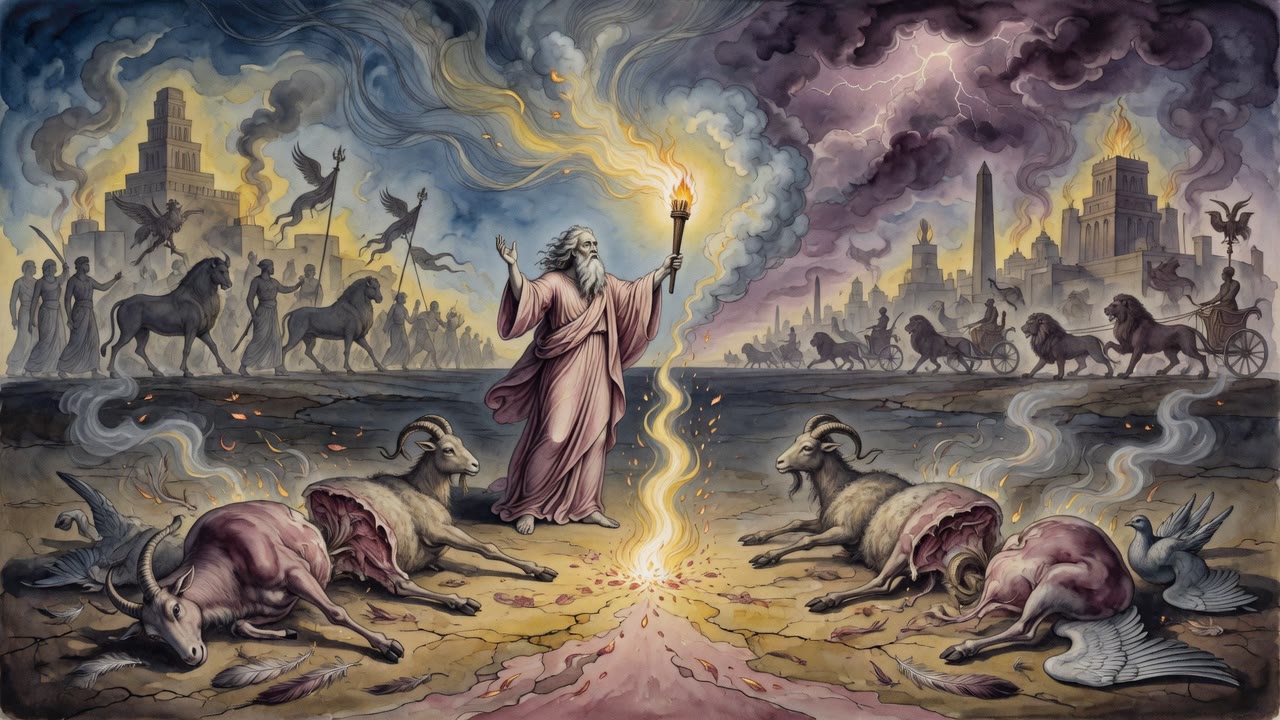
Beside her Moses was shown Gehinnom (גיהנם), the realm of judgment after death, narrow at the mouth and opening out wide underneath, the shape of a funnel seen from above. He was shown the men who would squeeze Israel in the exile to come, the collectors who would live among their own and go down with them when the whole thing collapsed.
Then the vision moved on to the next thing, and Moses looked at her for as long as he was given. He had spent forty years telling a nation not to turn around and go back to Egypt. He looked, and then he looked somewhere else.
← All myths