Mastema Kept One Tenth of the Spirits After the Flood
After the Flood Noah prays against evil spirits, Mastema bargains to keep one tenth of them, and angels teach Noah remedies to fight back.
Table of Contents
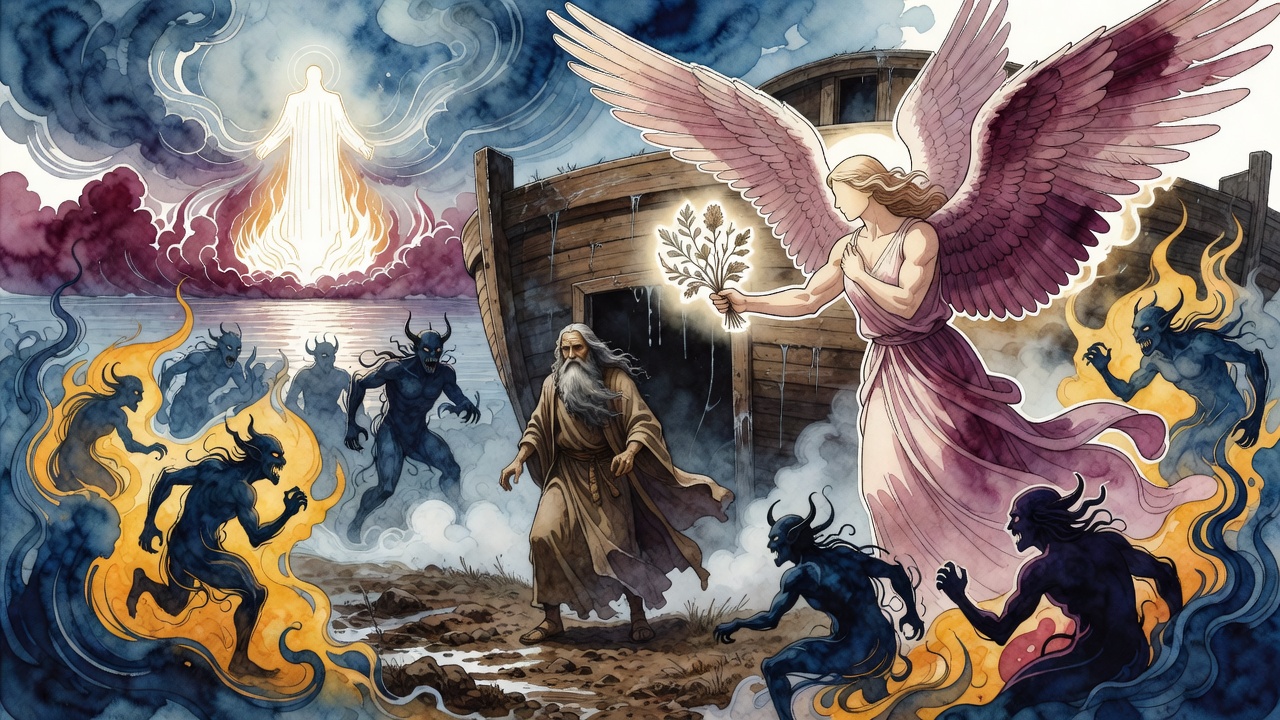
Mastema asked to keep a tenth.
 Click for full size
The Flood had ended. Noah had survived. The ark had opened. But Jubilees says the world was not clean of danger. Spirits still harmed Noah's grandchildren, and the chief of those spirits came before God to negotiate.
The Threat After the Flood
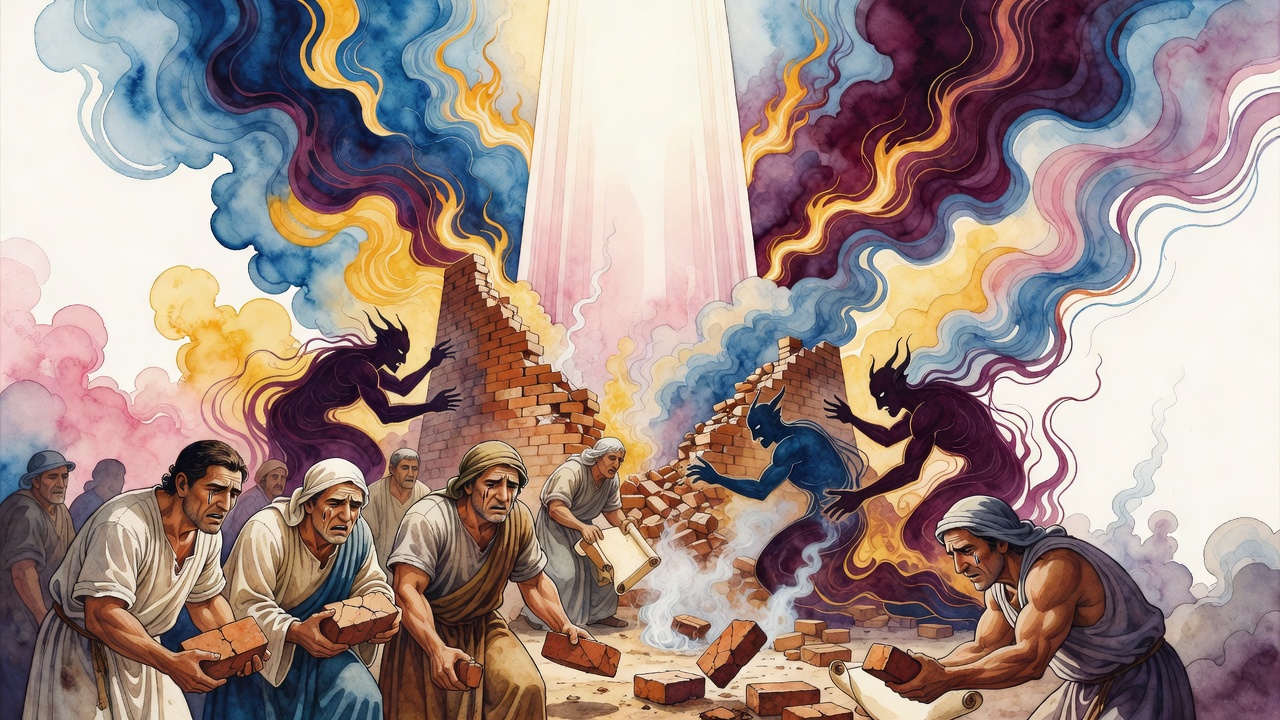
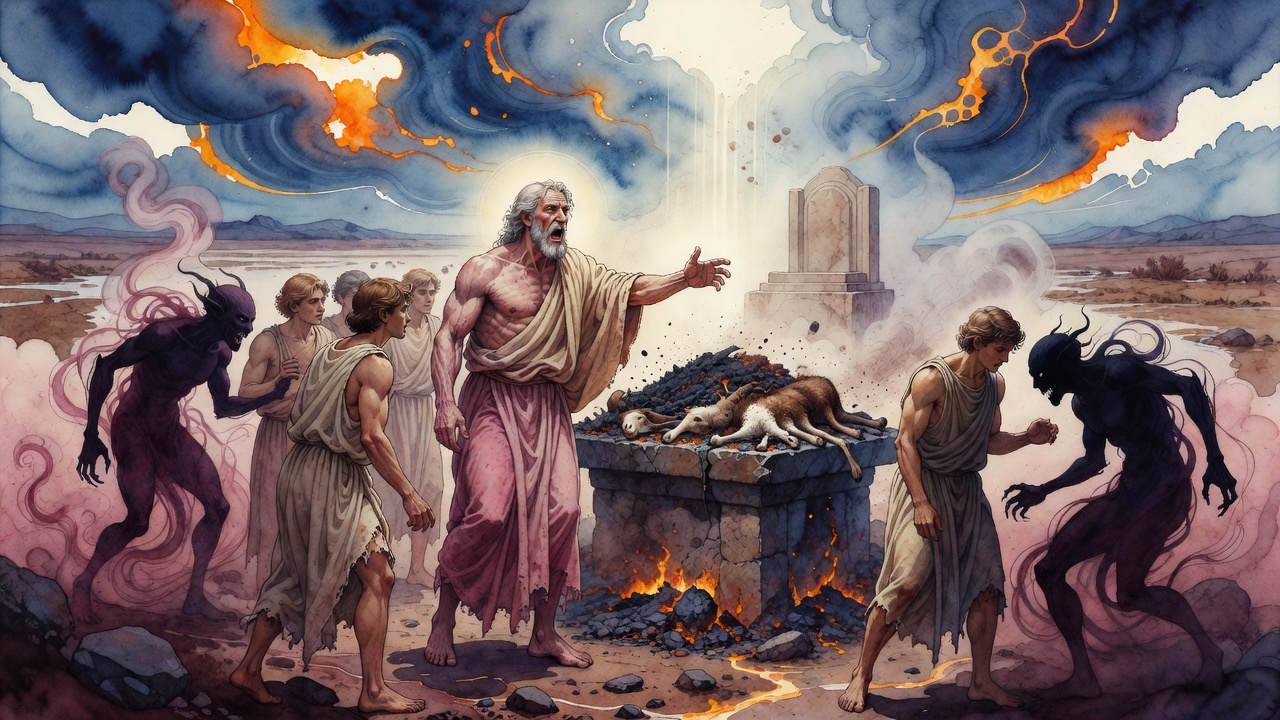
Jubilees 10, from the Book of Jubilees, a Jewish work usually dated to the second century BCE, looks past the familiar ending of the Flood story. Noah's family leaves the ark and begins to rebuild the world. Then the evil spirits, those born of the union between the Watchers and human women before the Flood, begin attacking Noah's grandchildren: leading them astray, blinding their minds, and killing them.
Noah prays. He appeals to God against these spirits, asking that they be sealed and bound, that his descendants be preserved from them. His prayer is long and specific. He names what the spirits are doing and asks for it to stop.
The angels, assigned by God to bind the spirits, begin their work. Nine-tenths of the spirits are bound. They are sealed. They will no longer roam freely through the human world.
Then Mastema intervenes.
Mastema Asked for a Remnant
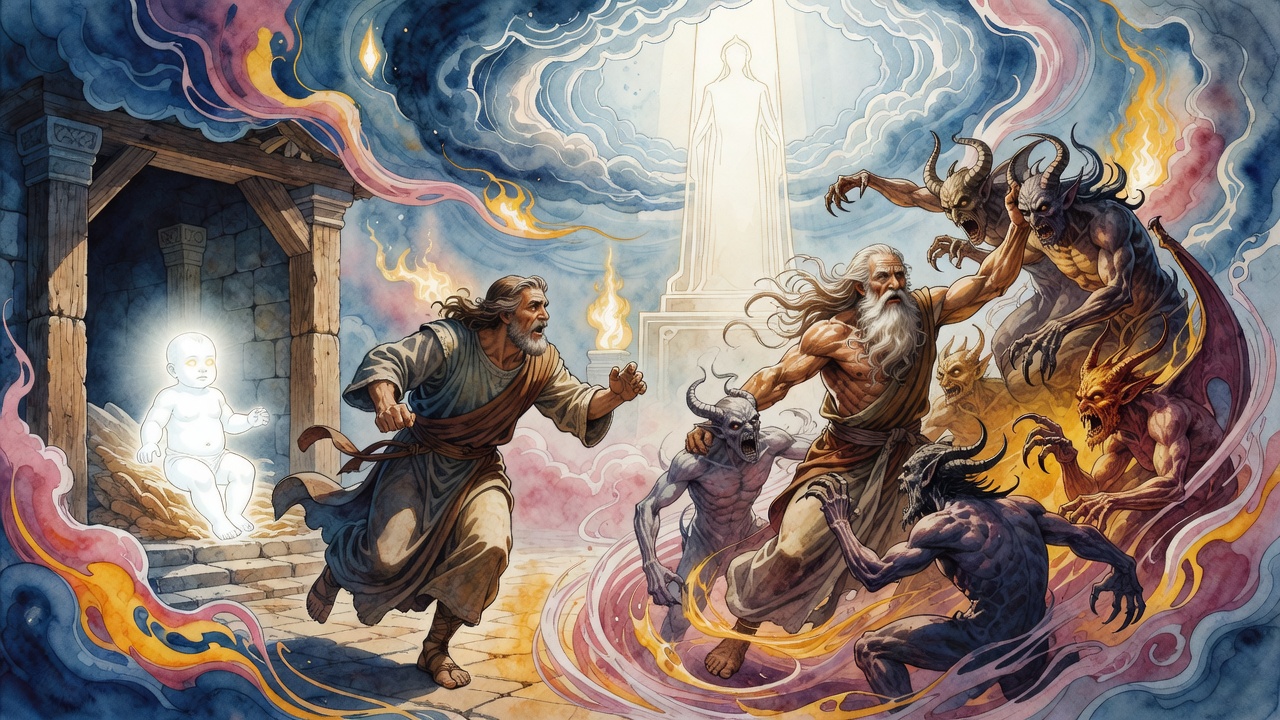
Mastema is not the accuser of the Joban tradition. He is not simply a title. In Jubilees he is a figure with agency and argument: the chief of the spirits, the one who commands the forces that test and corrupt human beings. He goes before God and makes a case.
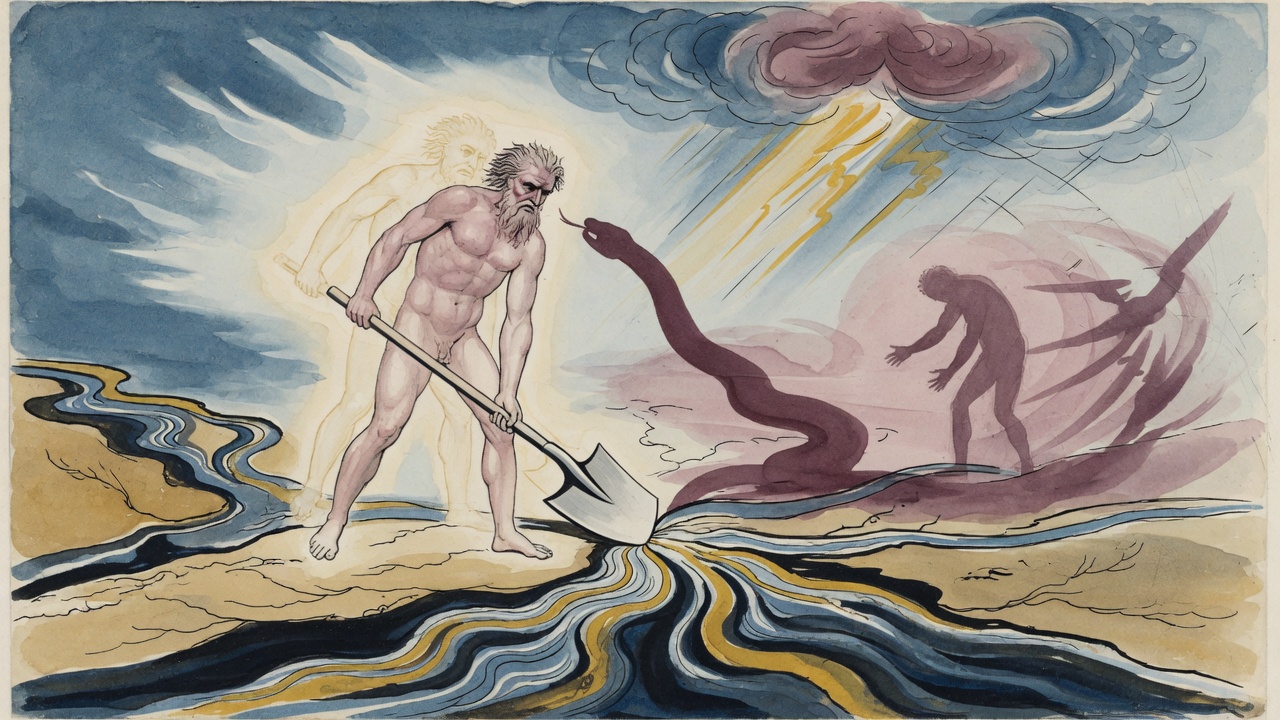
Lord of all, he says, if some of them remain with me, let them listen to my voice and do everything that I tell them. For if the spirits do not remain with me, I will not be able to execute the power of my will against the children of men. Because of the great wickedness of men, the binding of those spirits would remove the mechanism through which human choices are tested and their corruption plays out.
The argument is strange and uncomfortable because it has a logic. Human beings in the Jubilees worldview are not simply good people assaulted by outside evil. They have inclinations that must be tested. The testing requires testers. Mastema is arguing that he is a necessary part of how the world works.
God agrees. One tenth of the spirits remain with Mastema. The other nine-tenths are bound. The world is safer than it was, but not entirely safe.
Noah Learns Medicine to Fight Back
The bargain is followed immediately by a divine response to Noah that shows the negotiation was not a defeat. God sends angels to teach Noah medicine.
The angels teach him the healing properties of plants, how to use roots and bark and leaves against the illnesses the remaining spirits can cause. Noah writes everything down and gives the written record to Shem, his eldest son, who is told to keep it. This is the origin, in Jubilees, of medical knowledge: heaven's answer to Mastema's retained tenth.
The spirits that remain can harm. The remedies given to Noah can counter that harm. The world after the bargain is a world of contest: spirits press on one side, medicine on the other, and human beings work in the middle, using what they have been given to survive what Mastema is permitted to send.
Mastema Bound During the Plagues
Jubilees 48 completes Mastema's role by showing what happens when the remaining one-tenth is taken away even temporarily. During the exodus from Egypt, God bound Mastema so that he could not interfere with Moses and the plagues. The same power that had been permitted to remain now had to be removed for the exodus to proceed.
Mastema was sealed away when the stakes were highest. His one-tenth was not a permanent entitlement. It was a conditional presence, dependent on the purposes of the divine order. When those purposes required the liberation of Israel from Egypt, the space that Mastema occupied was closed. He could not do to Moses what he had done to Noah's grandchildren. He had to wait until the exodus was complete.
Then the world returned to its ordinary condition: nine-tenths bound, one-tenth active, human beings using the medicines Noah wrote down and the remedies passed through Shem's line to face the portion of danger that remained.
← All myths