Noah Got Drunk and Philo Refused to Call It a Failure
After the flood Noah planted a vineyard, drank wine, and became drunk. Most traditions see failure in it. Philo of Alexandria read the same verse and disagreed.
Table of Contents
 Click for full size
After the Flood, a Vineyard
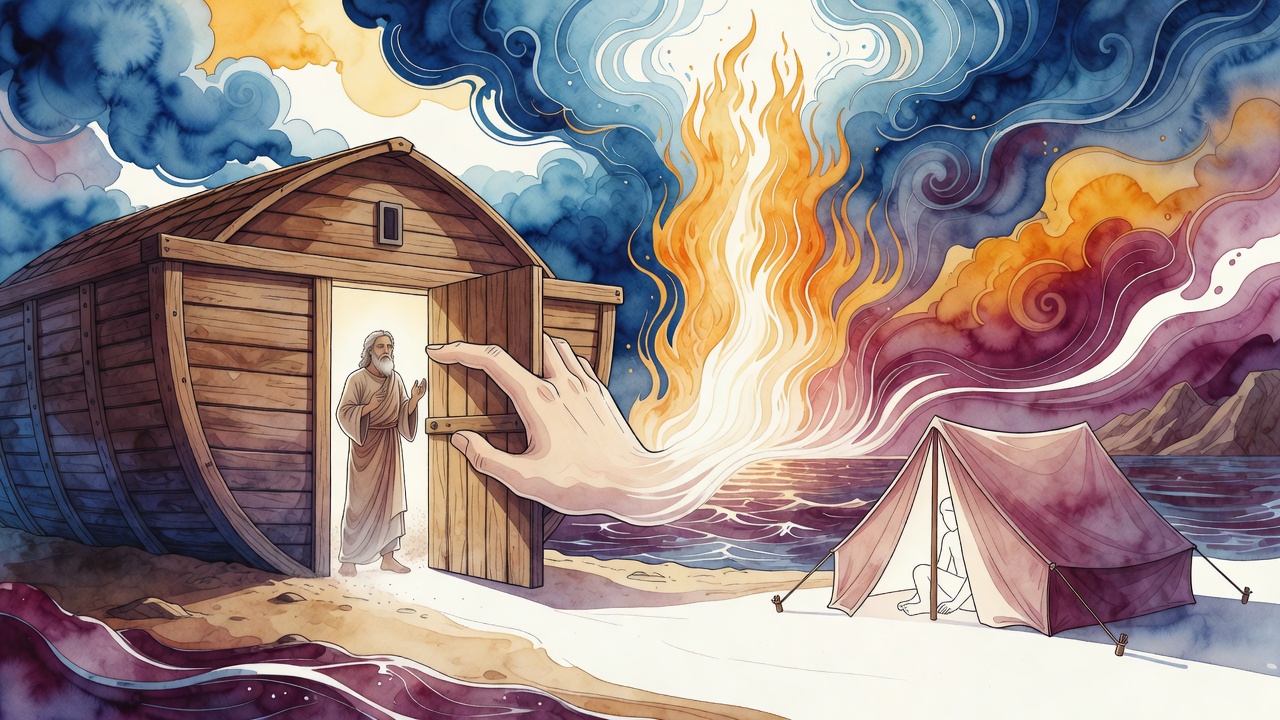
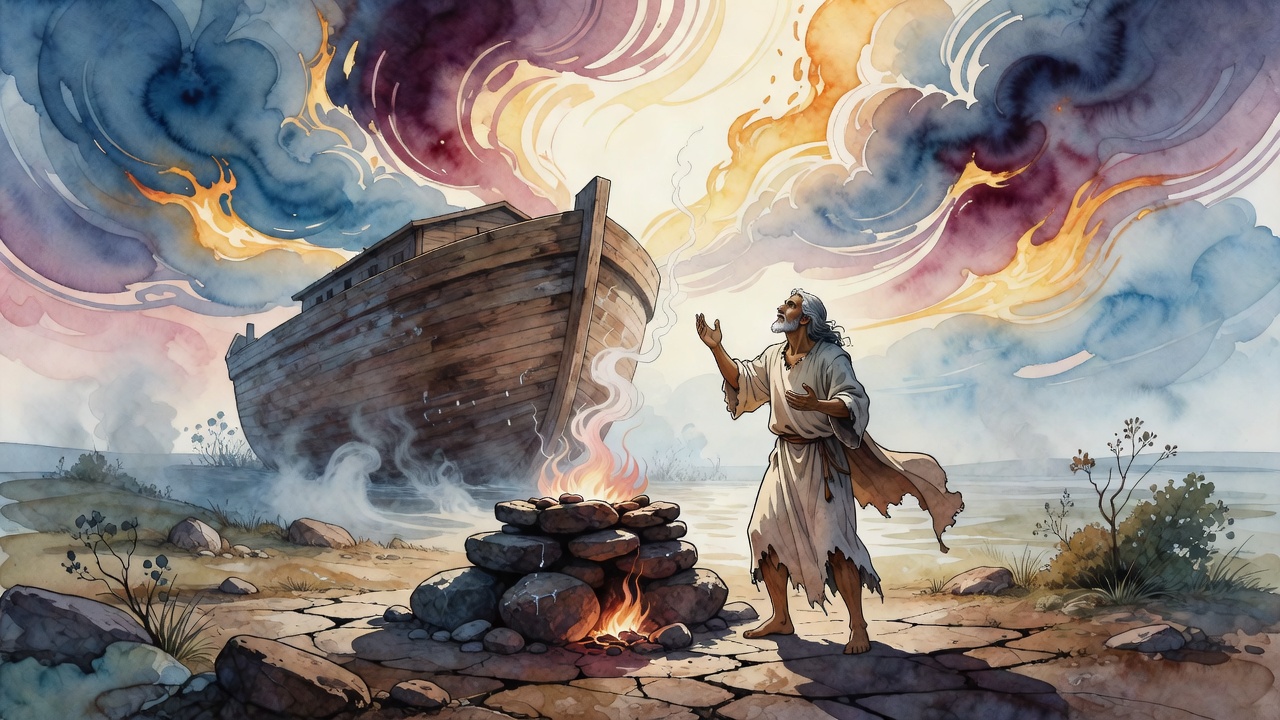
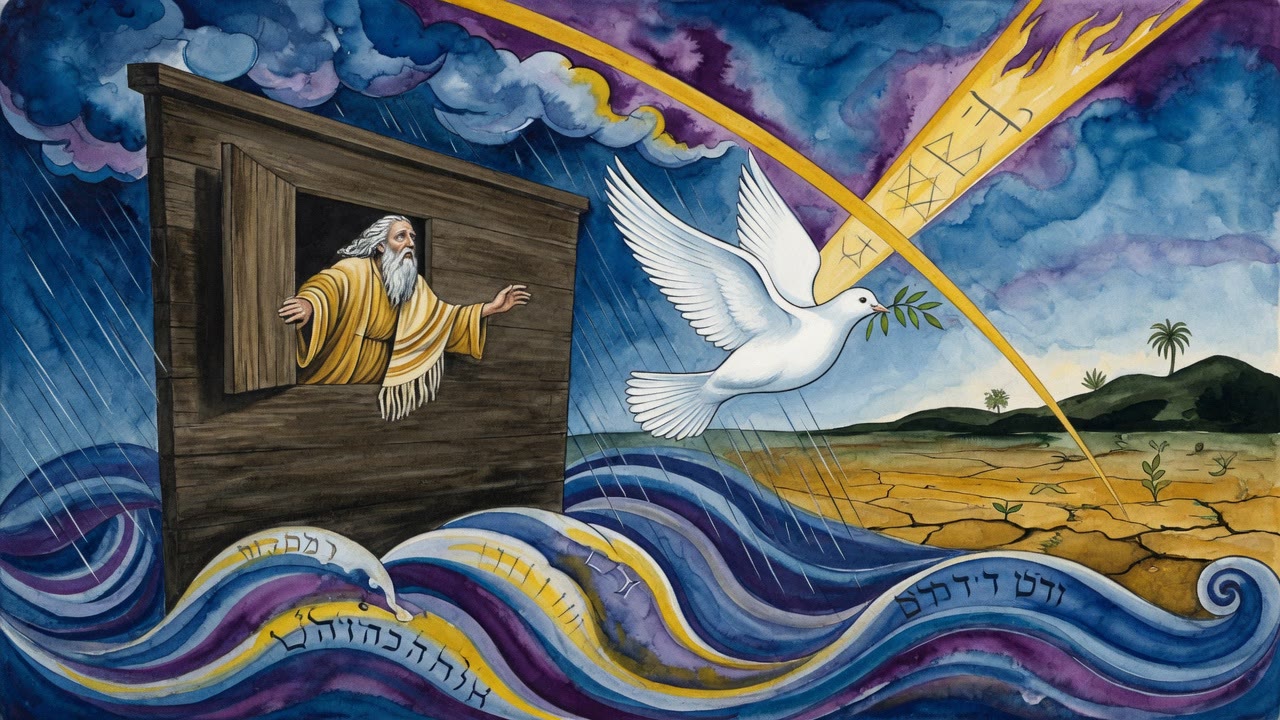
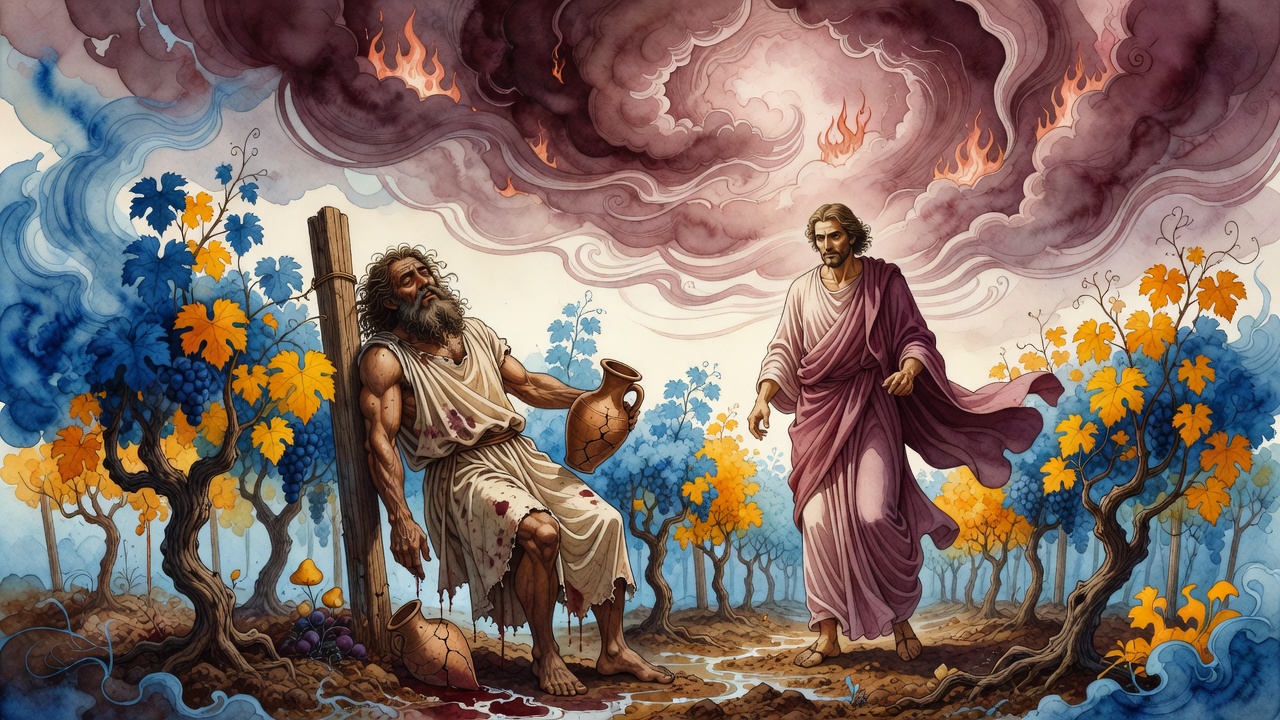
The ark came to rest. The water withdrew. The dove returned. Noah stepped onto dry ground, built an altar, and received from God the covenant of the rainbow. Then, according to Genesis chapter 9, he planted a vineyard. He drank the wine. He became drunk. His son Ham found him uncovered in his tent.
The morning after changed everything between Ham and his father, between Canaan and his uncles, between the lines of descent from Noah's three sons. A man who had walked with God and survived the destruction of the world stumbled in his tent the first chance he had.
Every reading of this passage, from antiquity forward, has to decide what to do with it. Most treat it as a moral failure, the first sin of the post-flood world, a cautionary note appended to the story of Noah's righteousness so that his righteousness would not be idealized too completely.
Philo of Alexandria, writing in the first century CE, declined to read it that way.
The Distinction That Changes Everything
The text attributed to Philo in the midrashic tradition opens with a careful reading of the Hebrew. Noah did not drink all the wine. The text says he drank. It does not say he drank without limit or that he consumed the entire cask. The person who drinks in the manner of the genuinely debauched consumes until nothing is left, driven by excess, needing to empty the vessel to satisfy the need. Noah drank. He stopped.
This is not the behavior of someone who failed. It is the behavior of someone who understood what wine was for and used it correctly, meaning up to the point of use and no further. The fact that he became drunk is not, in Philo's reading, a sign that he drank too much. It is a sign that he drank exactly the amount that produced the effect wine is designed to produce.
Two States the Word Describes
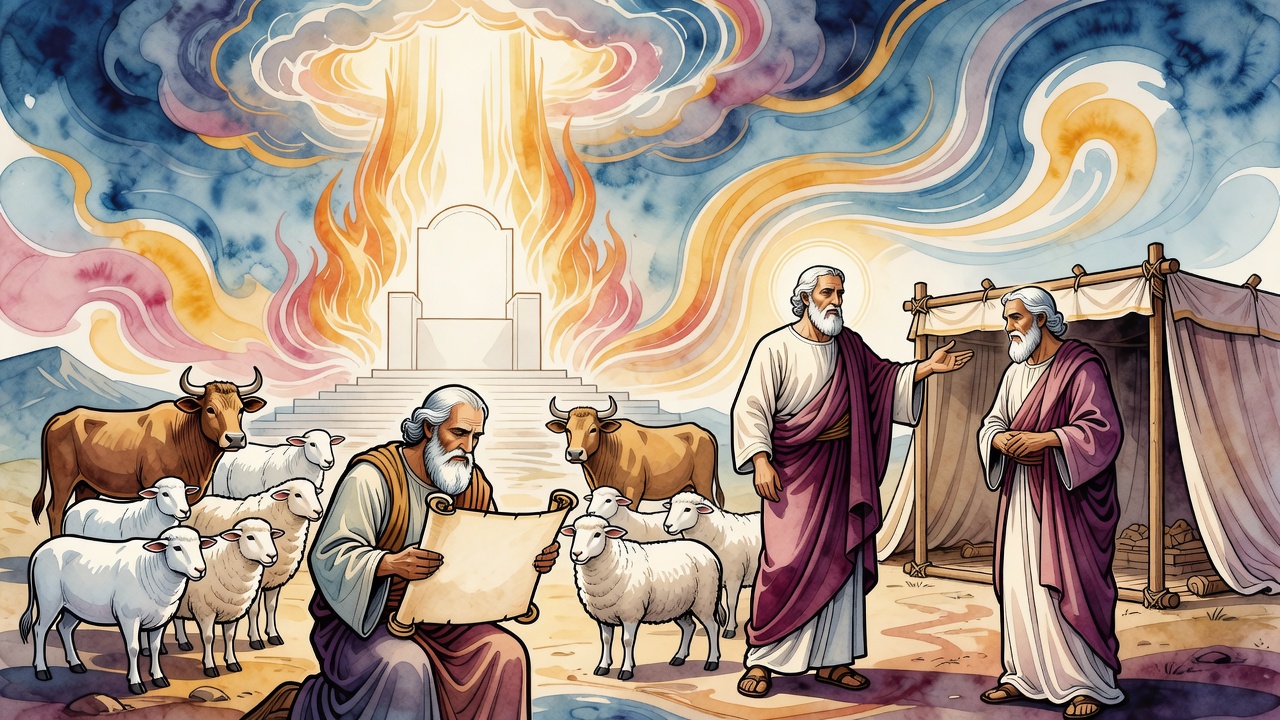
Philo then presses further into the word drunk itself. He argues that the word in Greek and Hebrew can describe two entirely different states that look identical from the outside but have opposite causes. One kind of drunkenness comes from too much wine and produces stupidity, loss of control, shame. The other kind comes from a soul so full of divine wisdom and joy that it overflows into the same external signs: loosened inhibitions, uncovered sleep, complete rest.
The prophets described themselves as drunk on the spirit. Mystics described union with the divine as intoxication. The incapacity they reported was not stupidity but the incapacity of someone so saturated with something real that ordinary bodily discipline became unnecessary. Noah's drunkenness, in Philo's reading, was this second kind.
He had just survived the destruction and rebuilding of the world. He had served as the vessel of continuity for all life. He had held the weight of that for a year. When he sat in his tent and drank his wine and let his body relax completely, what looked like failure was release. The man who had been required to be upright through the flood was finally permitted to lie down.
What Ham Saw and What It Cost Him
The tradition is careful about Ham's action. He saw his father. He went and told his brothers. He made the uncovering a fact that other people knew about. Shem and Japheth walked in backward, looking away, and covered their father without seeing what they were covering.
The contrast in the tradition is not between shameful exposure and modest concealment but between two postures toward the uncovered dignity of a parent: the posture that looks, reports, and makes the vulnerability public, and the posture that does not look, does not report, and covers without needing to understand what it is covering.
Ham's failure was not that he witnessed his father in a compromised state. It was that he turned a private and vulnerable moment into news. Whatever Noah was experiencing in that tent, whether physical intoxication or spiritual saturation, he had not chosen to share it with anyone. Ham made that choice for him.
The curse that followed was proportionate to the action. Ham had made his father's uncovering into something public, so the consequence settled on Ham's son Canaan, into the public future of nations and territories and the relationships between peoples that would be visible for generations. The private moment became permanently historical because Ham had forced it to be.
← All myths