Noah Learned Medicine to Fight Post-Flood Demons
The waters were gone, and the spirits were still loose. Noah's grandchildren sickened. He asked God to take the demons off the children.
Table of Contents
 Click for full size
The Spirits Walked Out of the Water
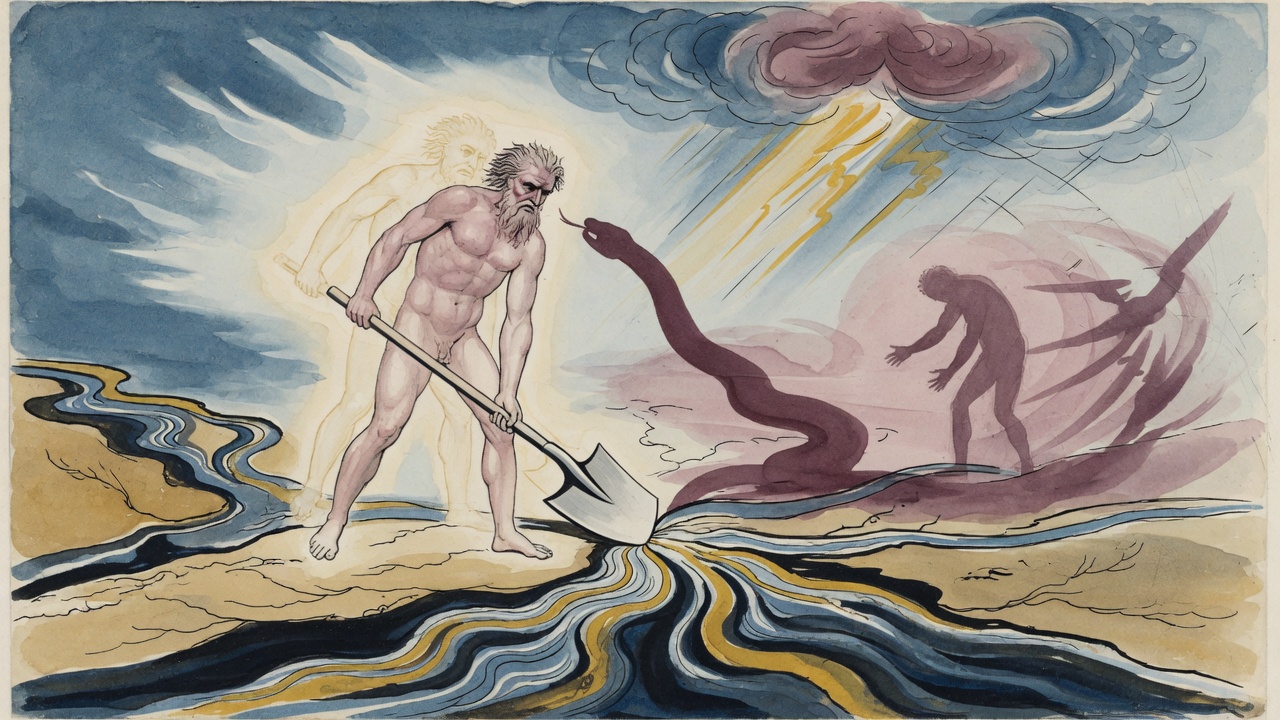
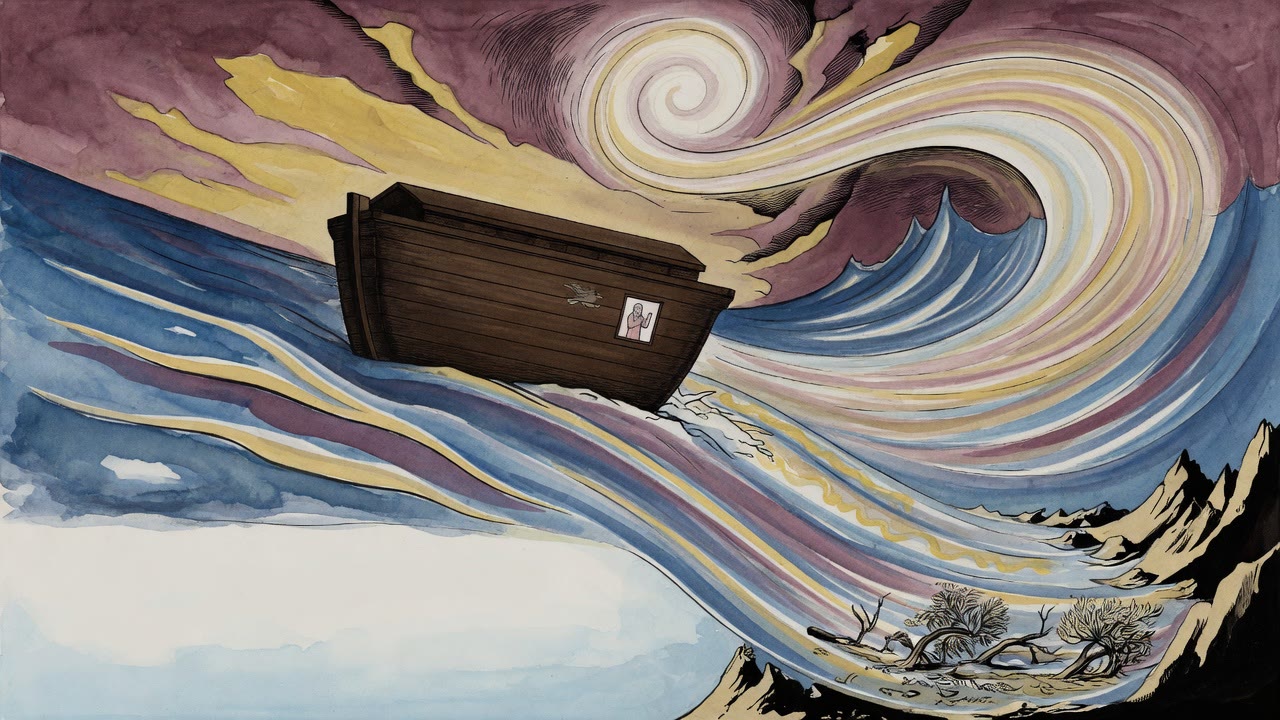
Noah lifted a grandchild whose skin was too hot. The dove had already found a leaf. God had set a bow in the cloud. The world looked washed. It was not empty of what he feared.
The children of his children began to grow, and they sickened. Something invisible moved through the new houses and put its hands on them. The Flood had drowned flesh. It had not drowned the spirits that had used flesh as a door.
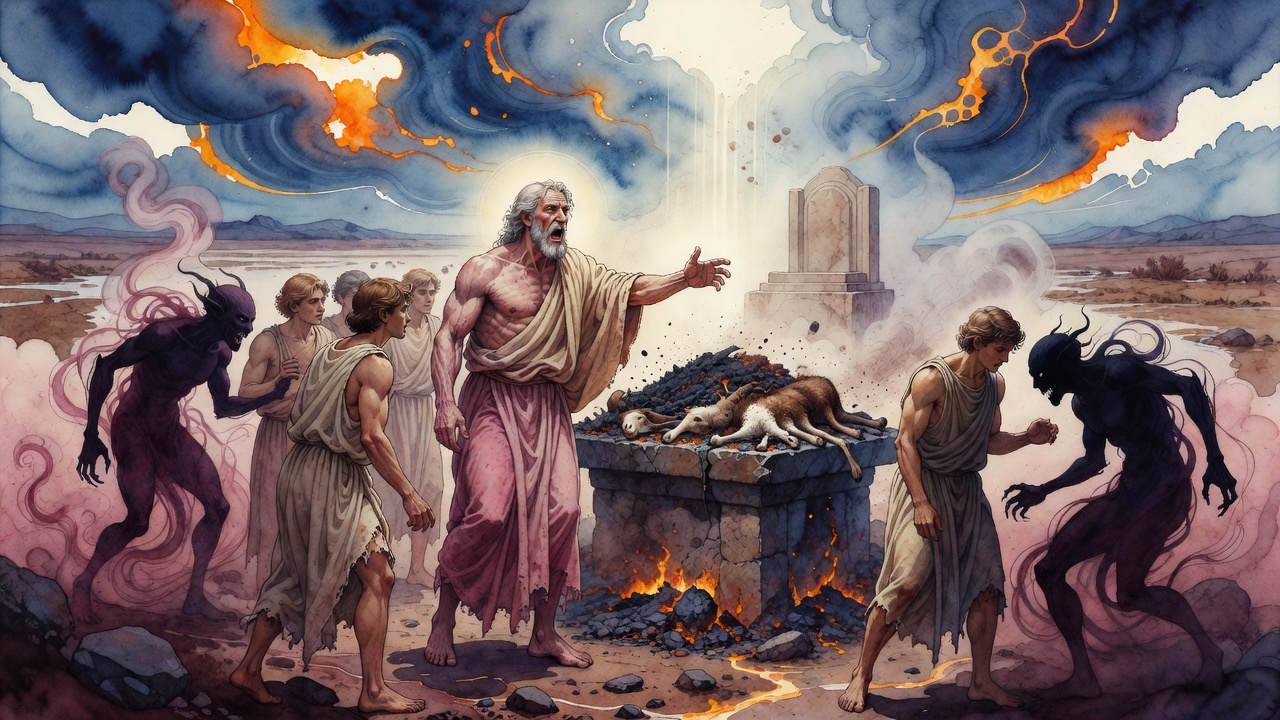
Noah held the hot child and prayed the way a man prays when the water is gone and the danger is not.
"Do not let the spirits rule over my children," he said. "Do not give them power to destroy them."
Mastema Asked for a Tenth
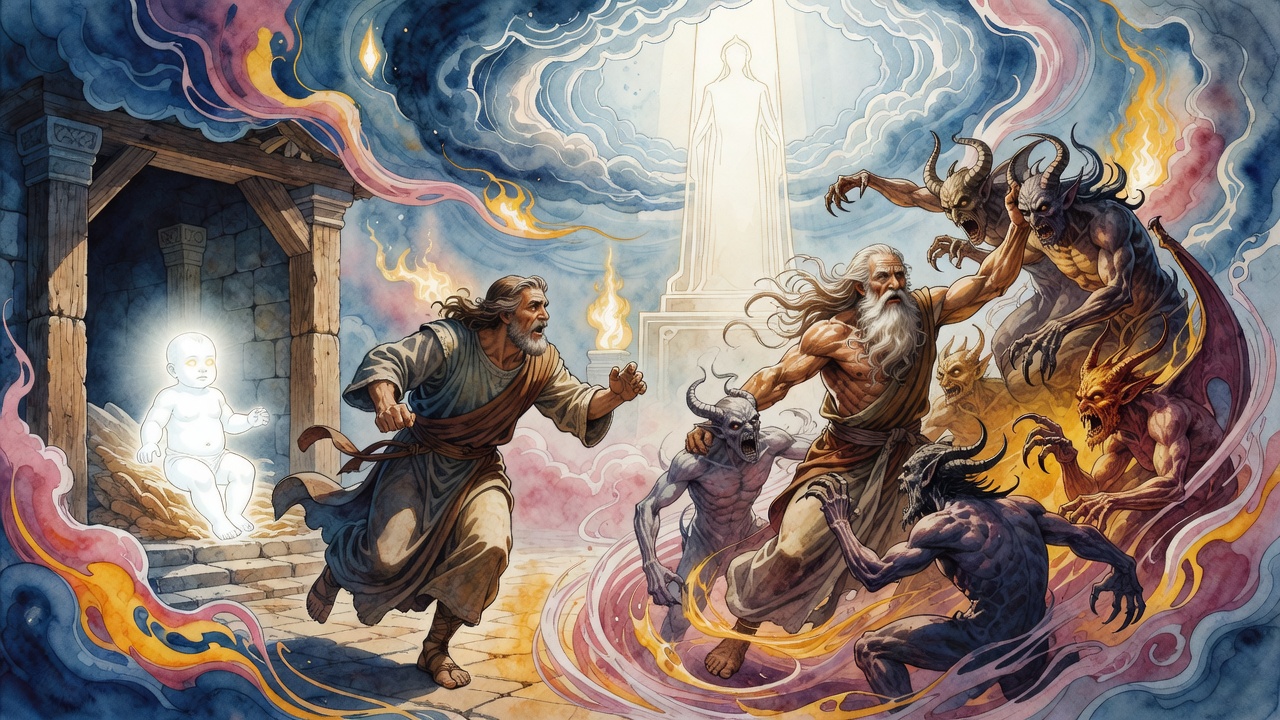
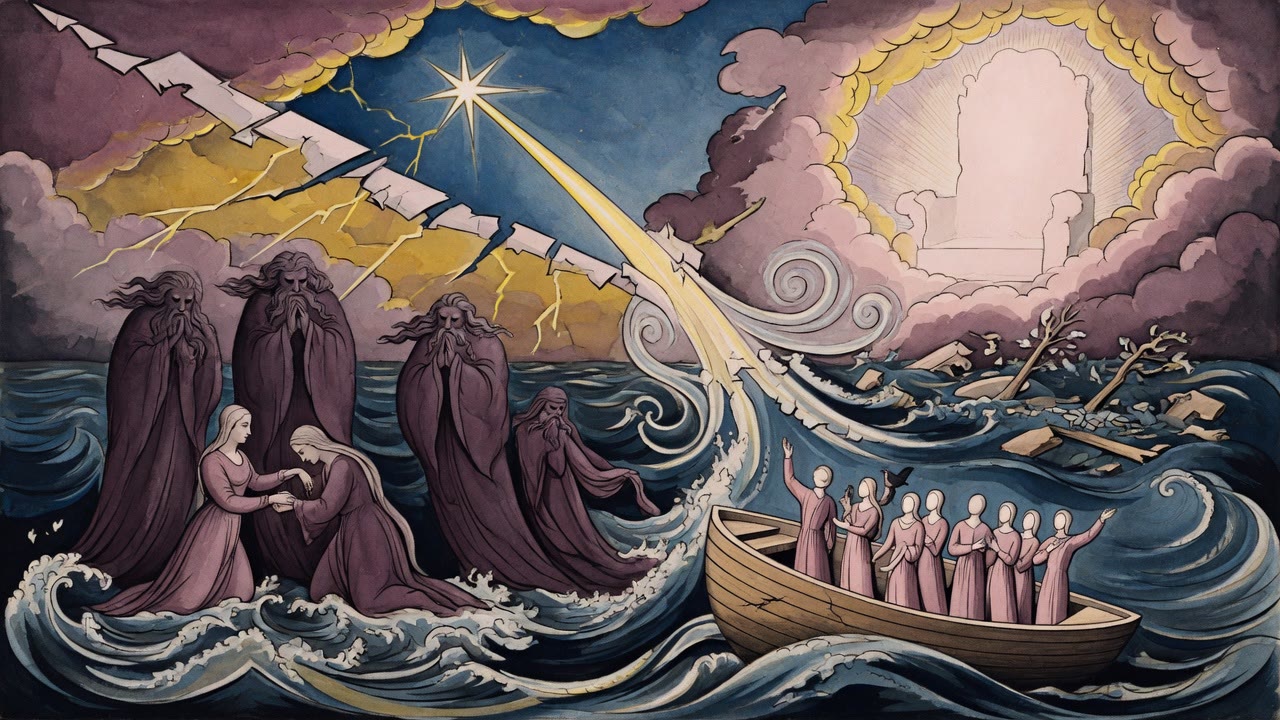
Heaven answered with ropes. Most of the evil spirits were bound and taken to a place of condemnation, where they could not reach a living throat. Nine parts in ten. The air over the new fields went quieter.
Then Mastema, prince of the accusing spirits, stood and argued for his keep.
"Leave me a tenth," he said. "I need servants. Let them stay loose in the world to test human beings and do the work that has to be done."
The request was granted. Nine-tenths went into bonds. One-tenth stayed. Noah looked at the children who were still his to protect and knew the prayer had been answered only in part. He had been given a smaller war, not a finished one.
An Angel Named the Herbs
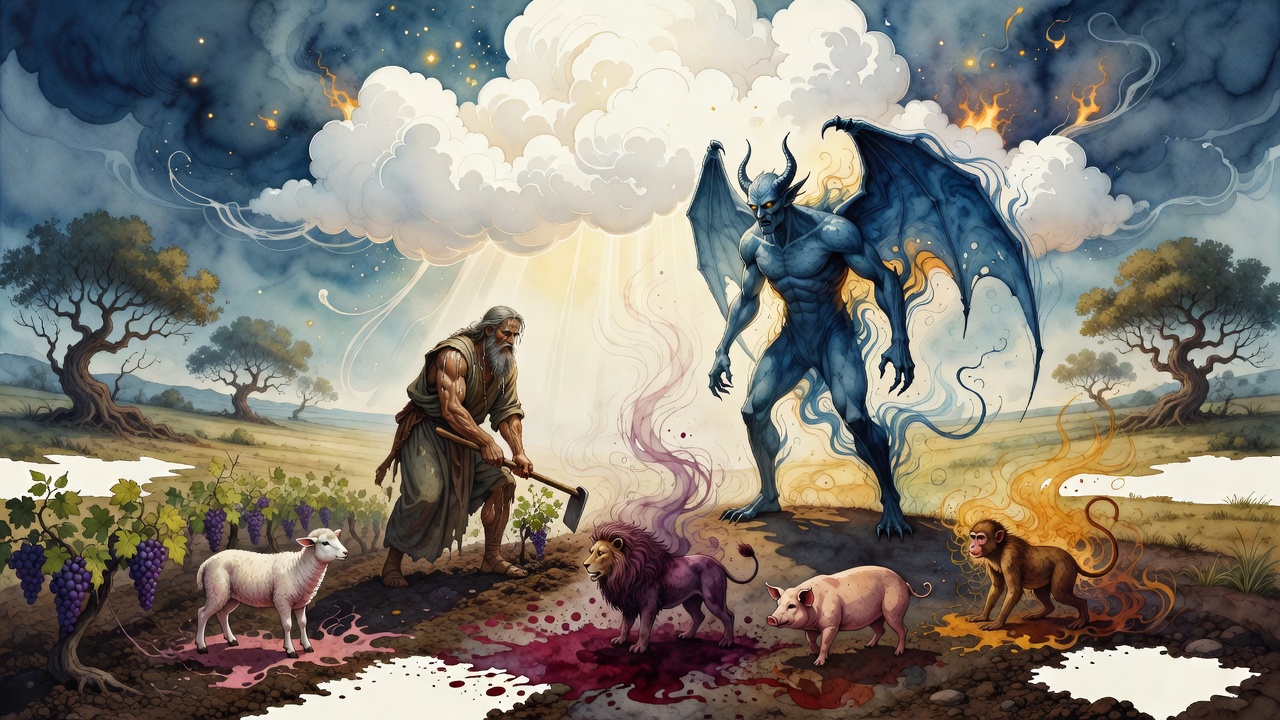
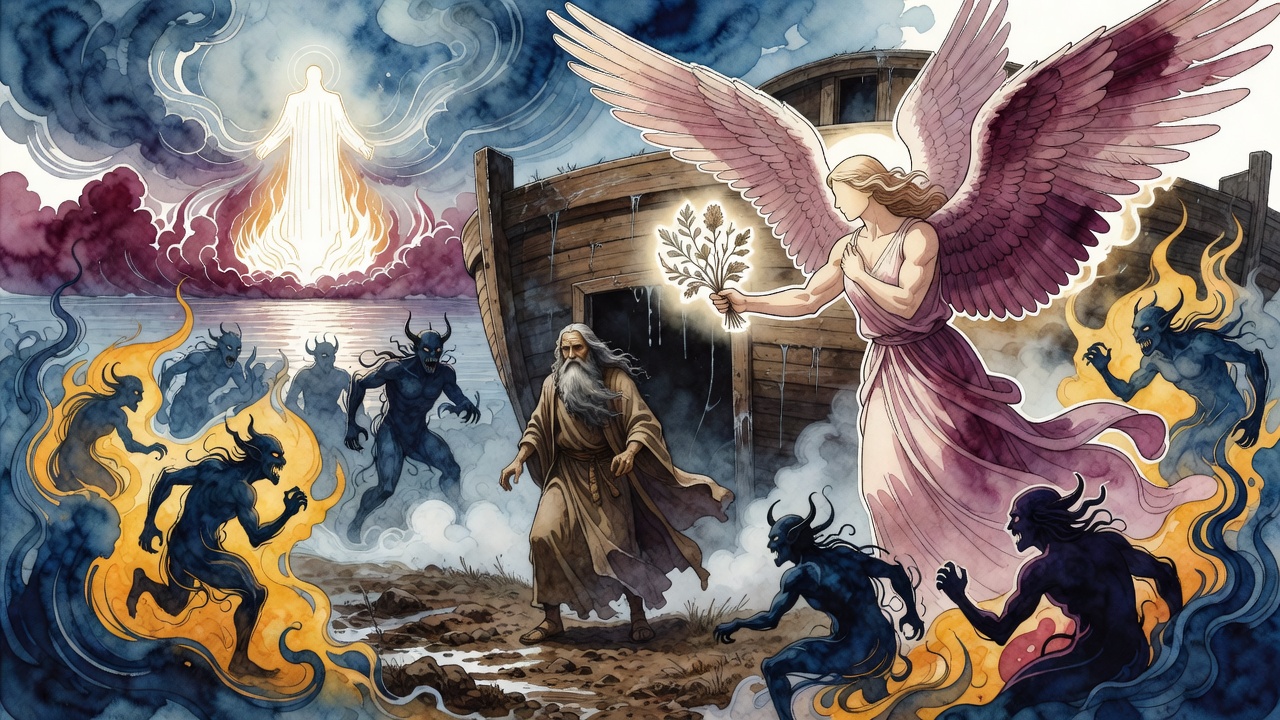
The second answer arrived walking. God commanded one of the angels to teach Noah. Not law. Not the calendar of offerings. The names of diseases the remaining spirits could throw, the ways those diseases hooked a body, and the herbs of the earth that could drive them out.
The angel walked him through the plants. This leaf for this burning. This root for this shaking. This mixture when a spirit had ridden in on a fever. Noah learned the names as he wrote. He made a book of medicine to fight the demons that still walked after the Flood. He put the book in the hands of Shem, the son he loved above the others, so the knowledge would travel with the covenant line and not die in the ark's shadow.
The same ground that grew the spirits' work grew the cure. Noah had to learn both if his grandchildren were going to live.
Hezekiah Hid the Book
Generations later, King Hezekiah of Judah took that inheritance off the table. He hid a Book of Remedies that held cures for nearly every disease. People had stopped praying. They opened a recipe, dissolved the pain, and never asked why the pain had come. A sinner could skip the part where suffering turns a person back toward God.
Hezekiah wanted the asking to return. He hid the book. When Sennacherib's army came, he also stopped the aqueduct of Gihon, so the easy water would not sit there for an enemy. Both acts had the same stubbornness. Take away the shortcut. Force the harder meeting.
The sages later praised him for hiding the remedies. They praised him for dragging his idolatrous father Ahaz to burial on a rope hurdle, so wickedness would not be dressed in royal honors, and for smashing the bronze serpent Moses had made once the people burned incense to it. They blamed him too. He showed his treasures to the Babylonian delegation, and that vanity would cost Judah later. The herbs were still in the ground. The book was not in anyone's hand. Anyone who wanted healing had to ask.
← All myths