How the Ark Kept Time Through the Flood in Jewish Legend
The flood lasted a precise solar year. Inside the ark, Noah tracked every day and dove flight. He was not just surviving. He was keeping time for the world.
Table of Contents
 Click for full size
Inside, Noah Knew the Day
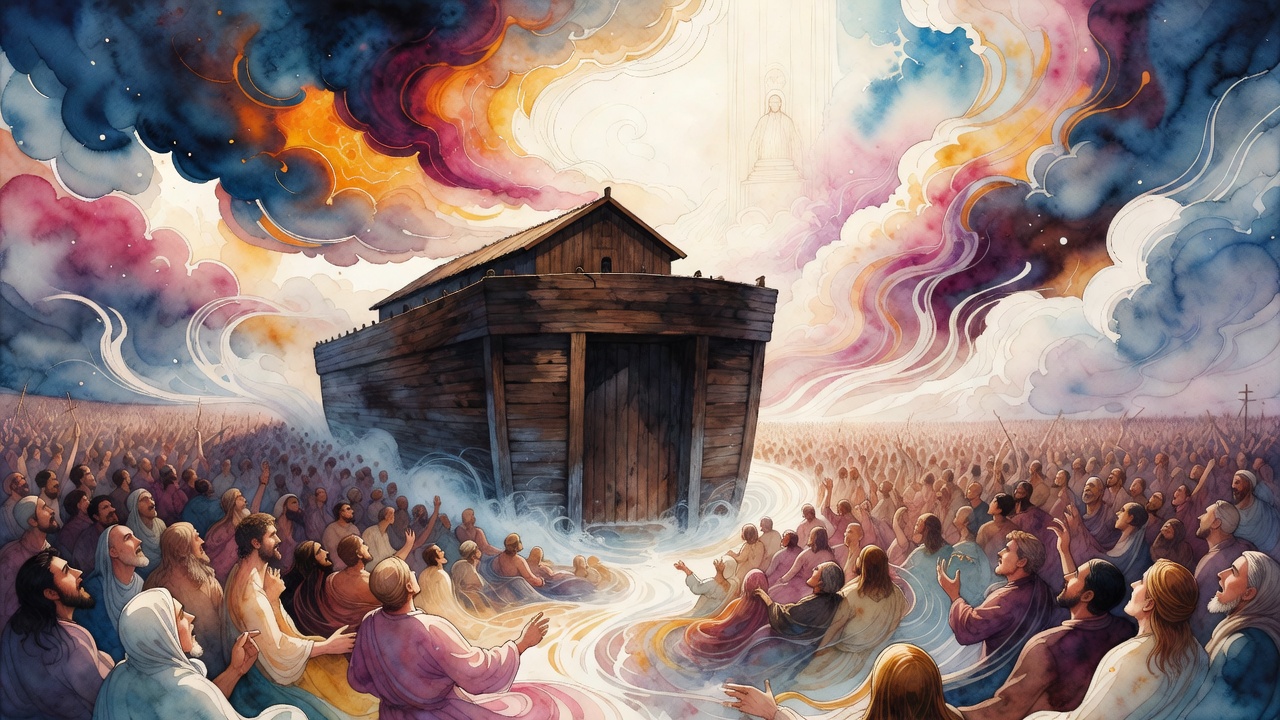
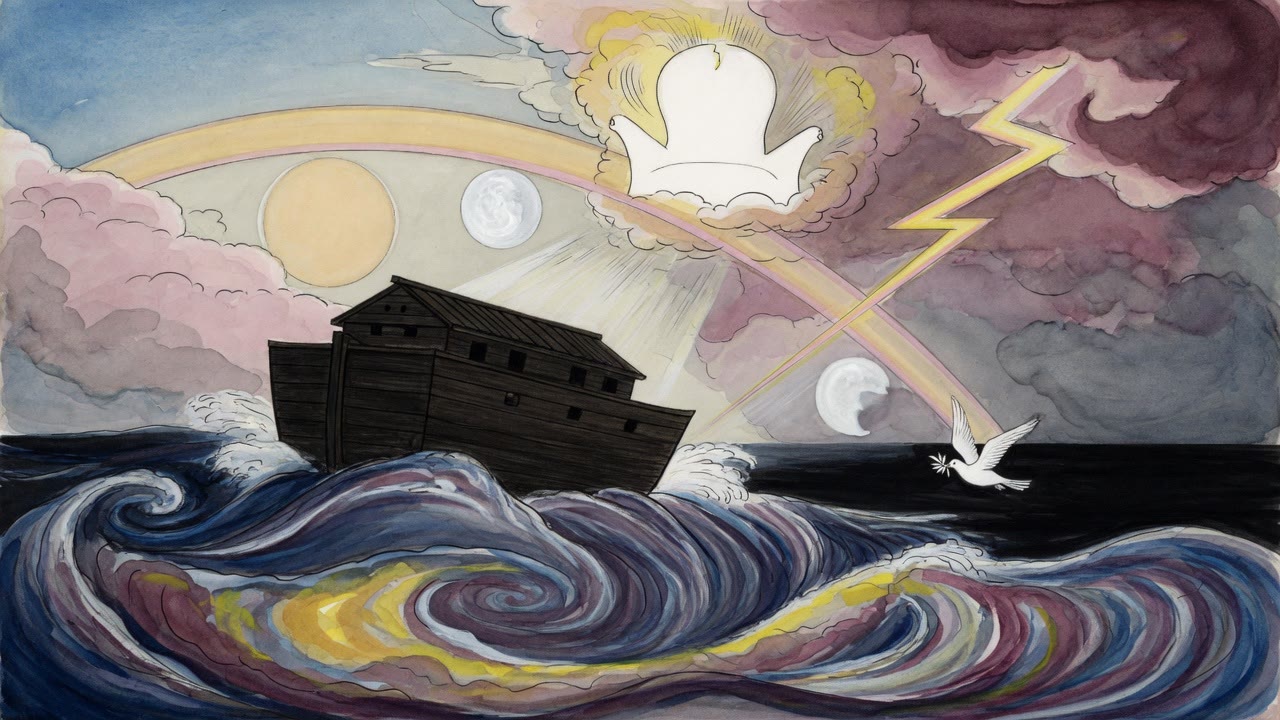
The world outside was a single undifferentiated surface of water. Every landmark was gone. Every horizon was the same horizon. There was no sunrise over a particular mountain, no moon reflected in a familiar river, nothing by which a person marks the passage of days. The flood had erased all that. But inside the ark, Noah kept counting.
He kept the Sabbath. Every seventh day, in the middle of the flood, inside a wooden vessel carrying every creature on earth and moving with no destination, Noah observed the day of rest. He knew which day it was because he had been counting from the beginning, and he kept counting because the days mattered even when the world that gave them their shape was underwater.
The Precise Timeline of the Flood
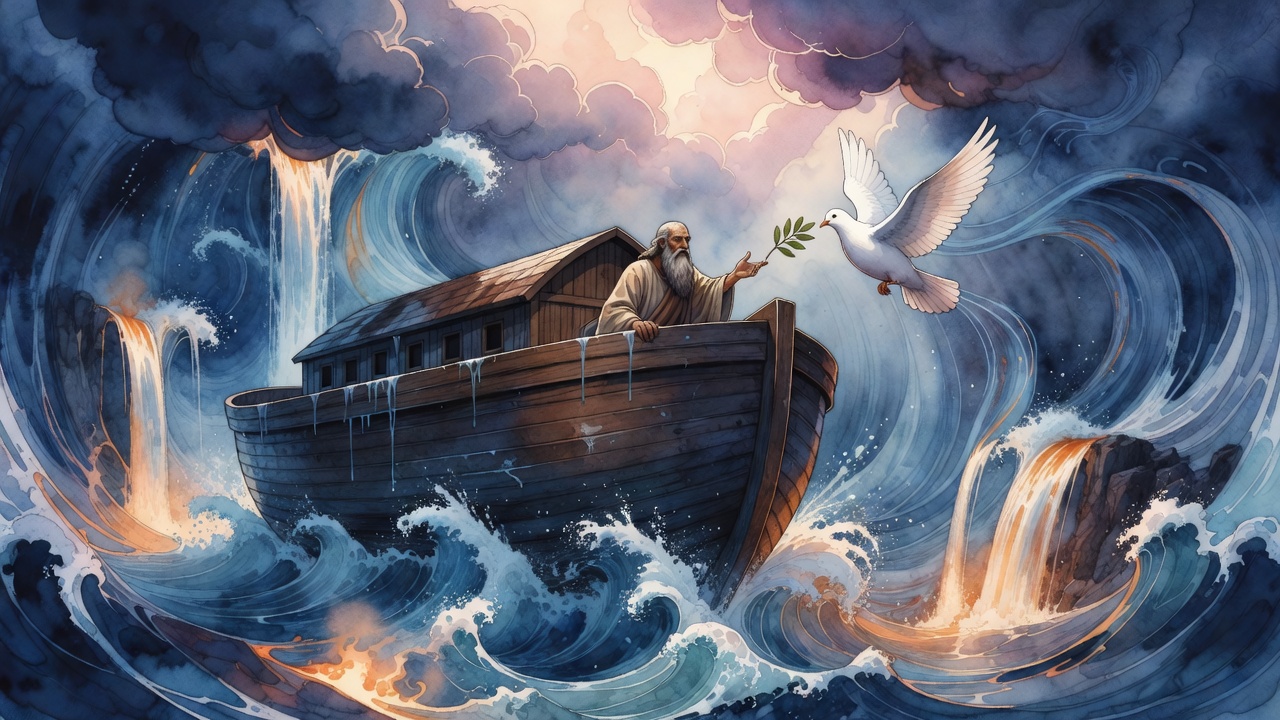
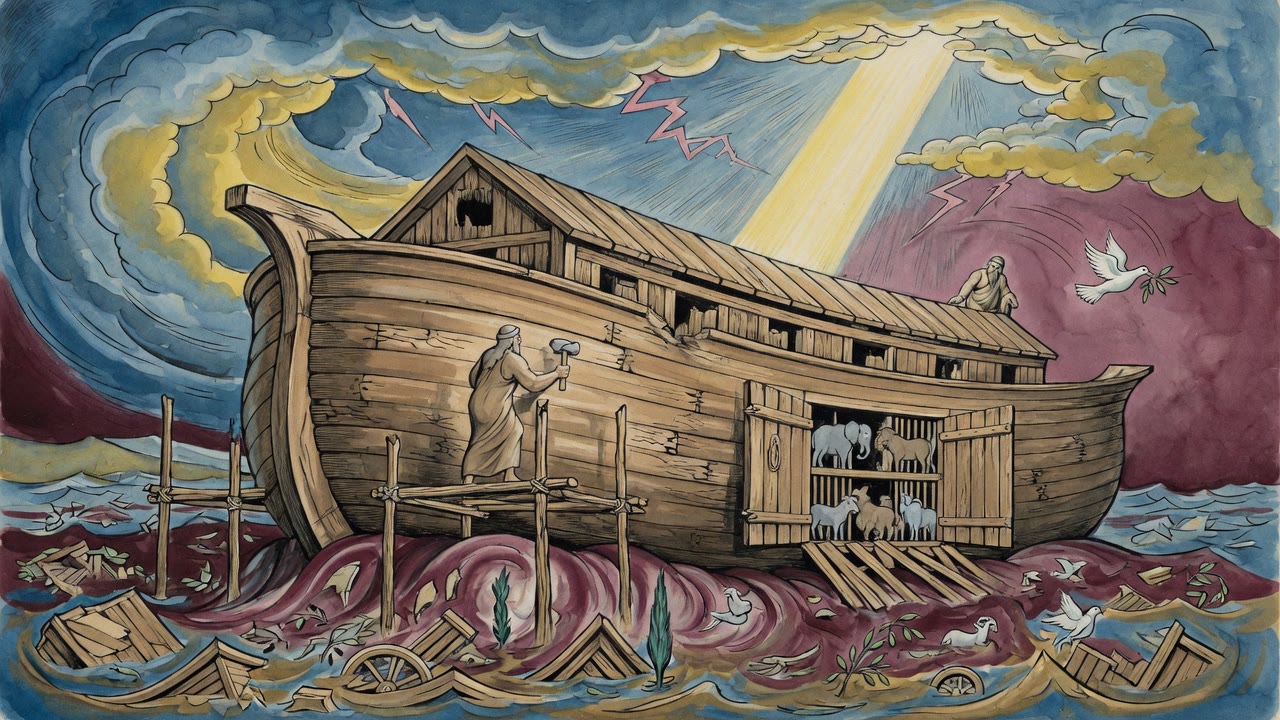
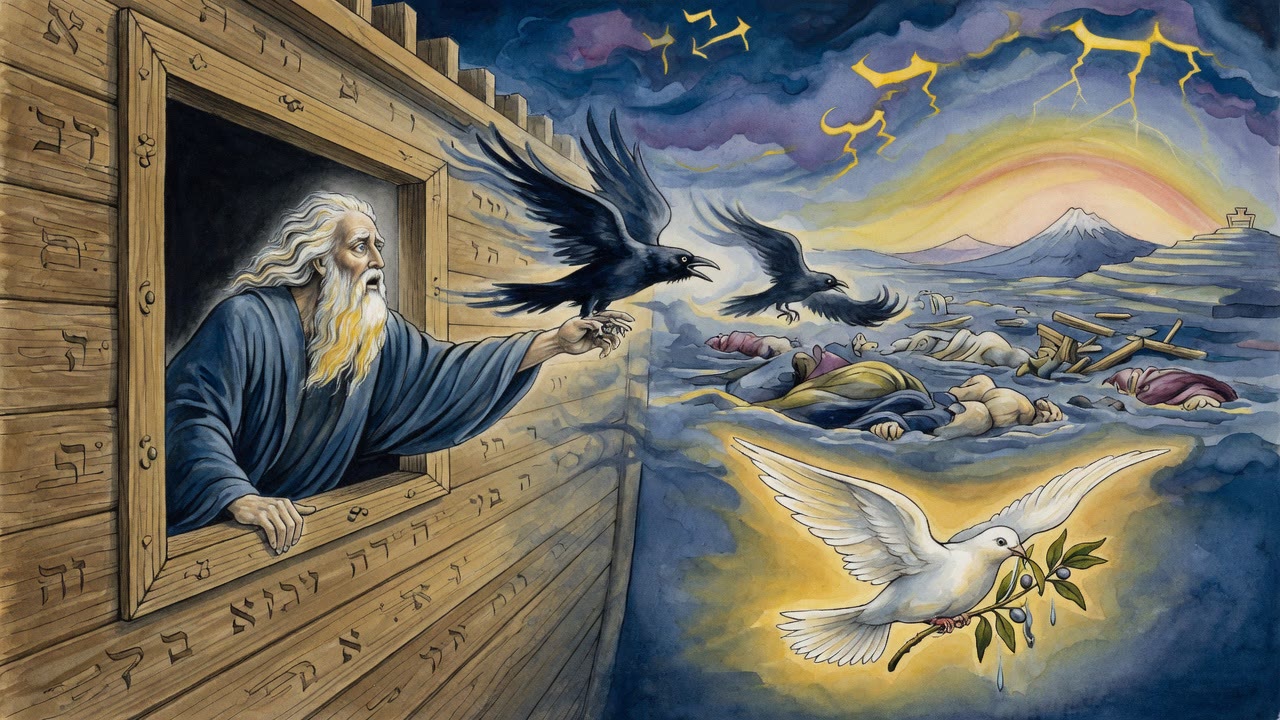
The waters began to abate on the first of Siwan, dropping a quarter of an ell each day. After sixty days, on the tenth of Ab, the mountain summits reappeared above the water. Ten days before that, on the tenth of Tammuz, Noah sent out the raven. A week later came the dove, the first of three flights, each separated by seven days. The waters did not fully subside until the first of Tishri. Even then, the ground was too mired to be livable, and the ark's inhabitants remained inside until the twenty-seventh of Heshwan, completing what the tradition calls a full sun year: twelve months and eleven days.
Every date in this sequence is named. No interval is vague. The tradition did not remember the flood as a period of chaos and waiting. It remembered the flood as a liturgical year, with precise days marked in the same way the sacred calendar marks feast days and fast days. Noah inside the ark was doing what Israel would later do in the wilderness: counting days in the absence of the landmarks that ordinarily make counting possible.
Only the Uncorrupted Animals Entered
Before Noah could keep time inside the ark, he had to know who was inside it with him. The tradition records that the animals came in pairs, as commanded, but not all animals were eligible. Only the animals that had not corrupted their ways were taken onto the ark. The lion went in with the lion, the dove with the dove, and the angel kept watch at the door, turning away any creature that had mixed its kind or acted against its nature in the years before the flood.
This meant Noah's passengers were not simply representatives of species. They were the uncorrupted remnant of species. The ark preserved not just variety but a particular kind of variety, the animals that had lived according to what they were. Noah's job was to keep that remnant alive until the calendar said the flood was finished.
Why Precision Mattered
The Book of Jubilees, which preserved these dates, was written by people for whom the sacred calendar was a theological argument. If you keep the wrong calendar, you celebrate Passover on the wrong day, you fast on the wrong day, you observe Sabbath out of alignment with heaven. The calendar is not an administrative convenience. It is the structure by which human life runs parallel to the divine order.
Noah keeping time inside the ark was not a survival technique. It was a statement that the flood had not broken the calendar. The world outside was formless water, but inside this wooden structure, Sabbath arrived every seventh day, the dates were known, and the year could be completed properly. When Noah stepped out of the ark on the twenty-seventh of Heshwan, he stepped out on a named day. The world resumed with its dates intact.
← All myths