Orion and the Pleiades Marched Before God on the First Shabbat
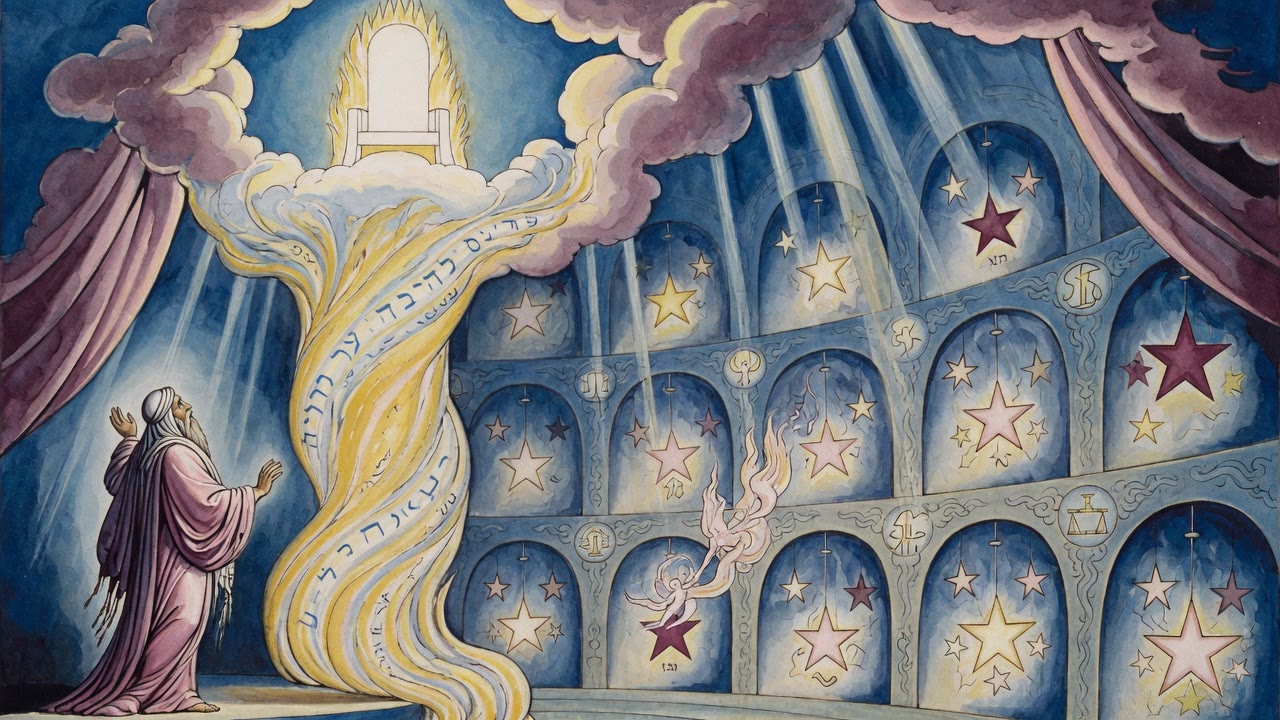
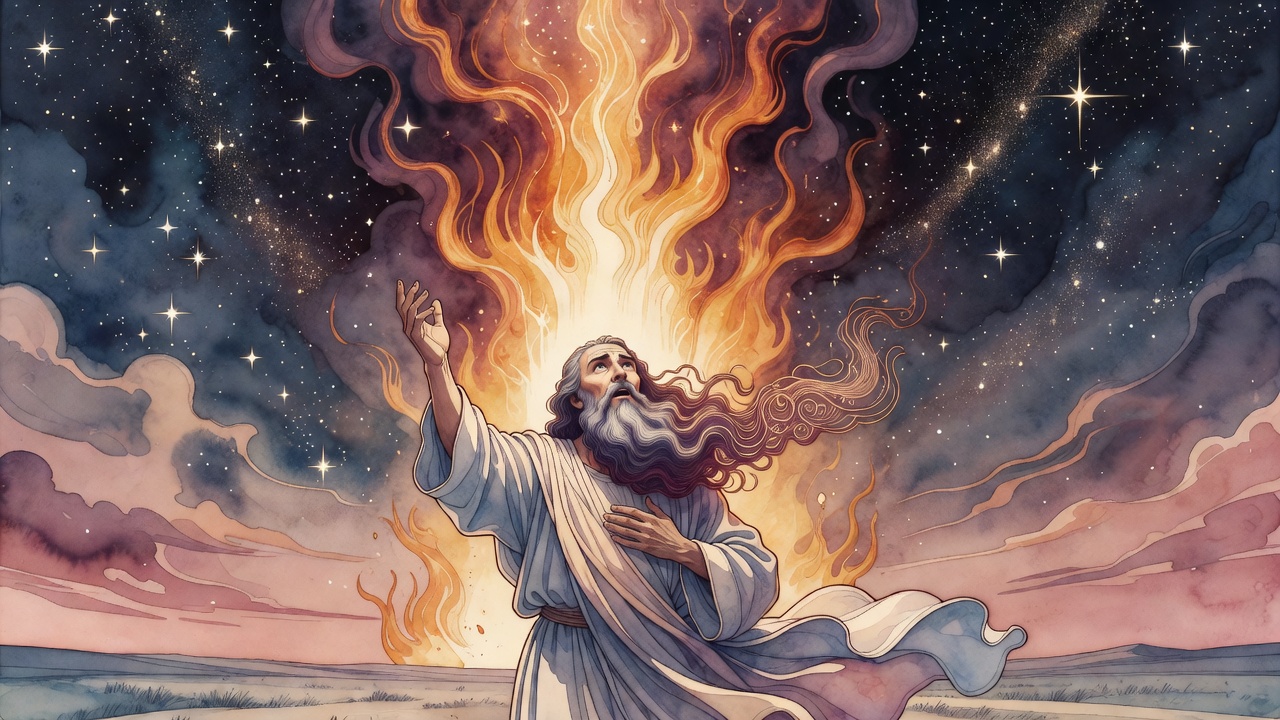
On the first Shabbat all creation paraded before the throne, and the constellations took their place in line beside the angels.
Table of Contents
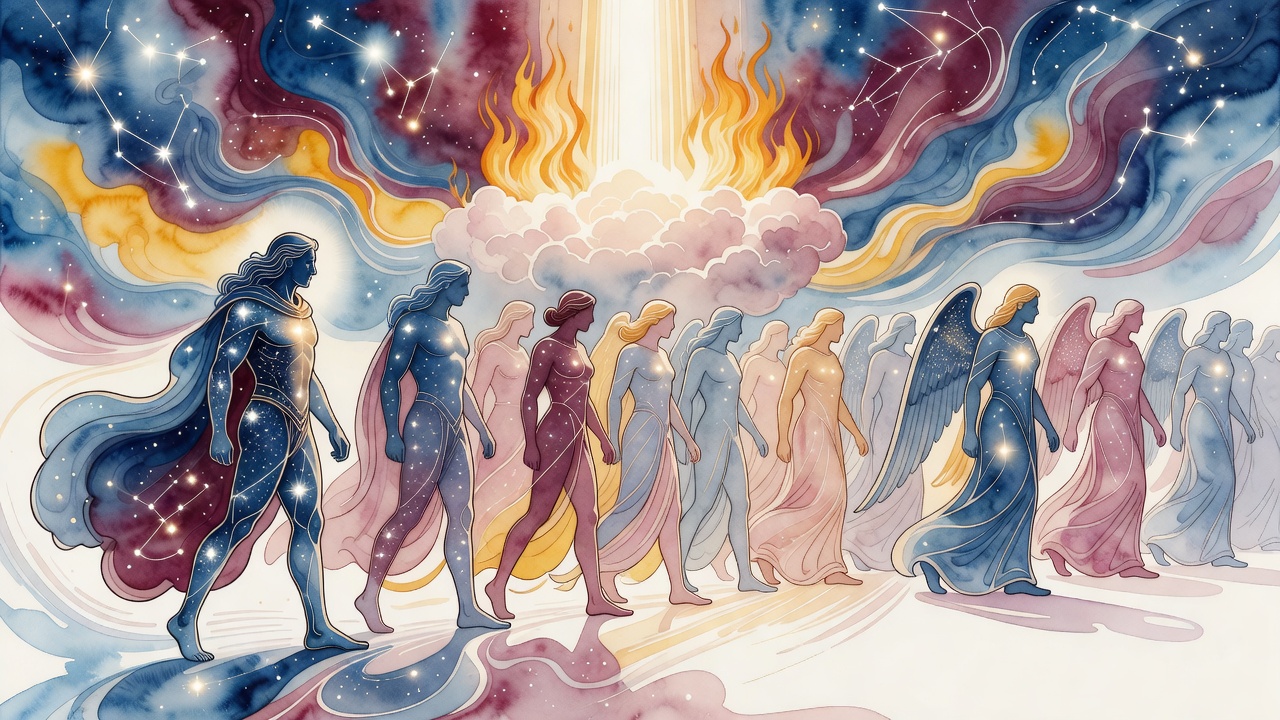
On the seventh day, when God rested, every created being that had ever been summoned into existence was called to parade before the throne.
 Click for full size
The angels of water came first, then the angels of rivers, the angels of the seas. The mountains sent their angel, the hills sent theirs. The sun and moon moved in their appointed places in the procession. Then came the mazalot, the great constellations, and among them Orion and the Pleiades took their positions in line. Not as observers. Not as decoration. As summoned beings whose majesty was real and whose purpose was service.
Paradise sent its angel. Gehinnom (the place of punishment after death) sent its angel. The reptiles, the beasts, the fish of the deep, the locusts of the fields, the birds of the air: all of them had their place in the procession. Creation stopped pulling at itself and faced its Maker. That is what the Sabbath meant when it was first kept above, before Israel ever heard the word.
The Stars Are Called, Not Worshipped
Jewish tradition had a specific problem with the sky. Other nations named the stars as gods, built temples to the planets, organized human affairs around the assumption that the heavens ruled. The Torah prohibited this with unusual force. You shall not serve them. You shall not bow down to them. The sky is not a pantheon.
The Sabbath procession in Ginzberg's synthesis of the rabbinic sources answers the prohibition with something more interesting than a mere prohibition. The stars are not gods because they are servants. Orion and the Pleiades march because God calls them. Their light is real. Their position in the heavenly hierarchy is real. But they have a position precisely because they were created, placed, and are subject to the One who called them into existence on the first day of creation and summoned them into his court on the seventh.
That is not a diminishment of the constellations. It is a recognition that genuine majesty, the kind the sky actually has, belongs to created beings who serve their purpose with complete fidelity. The stars are majestic because they do not waver. They do not fail to appear. Every night they are present at their stations, the cold pinpoints of the Pleiades clustered close, the broad belt of Orion swung up over the horizon at its fixed hour. That faithfulness is the evidence of their greatness, and it points toward the One who designed them to be faithful.
Heaven Proclaims That Nothing Is Like God
Heikhalot Rabbati, the palace mysticism text compiled between roughly the sixth and eighth centuries CE, describes a moment when the very cosmos participates in the liturgy of heaven's uniqueness. The sun and moon, the Pleiades and Orion, all radiate their light as a form of testimony. The text's question is the central question of every Sabbath above: who is like our Maker? Who is like the Lord our God?
The answer is given not in words but in the silence of comparison. Every magnificent thing that exists, from the largest constellation to the smallest flame, exists as a created object. None of them is like the One who called them into being. Their beauty is evidence. Their order is testimony. Their presence in the procession on the first Shabbat, standing in rank between the archangels and the holy living creatures, is the universe's way of answering its own question. The light pours out, the question hangs, and the silence that follows is itself the answer.
The Sea Was Bound and Time Began
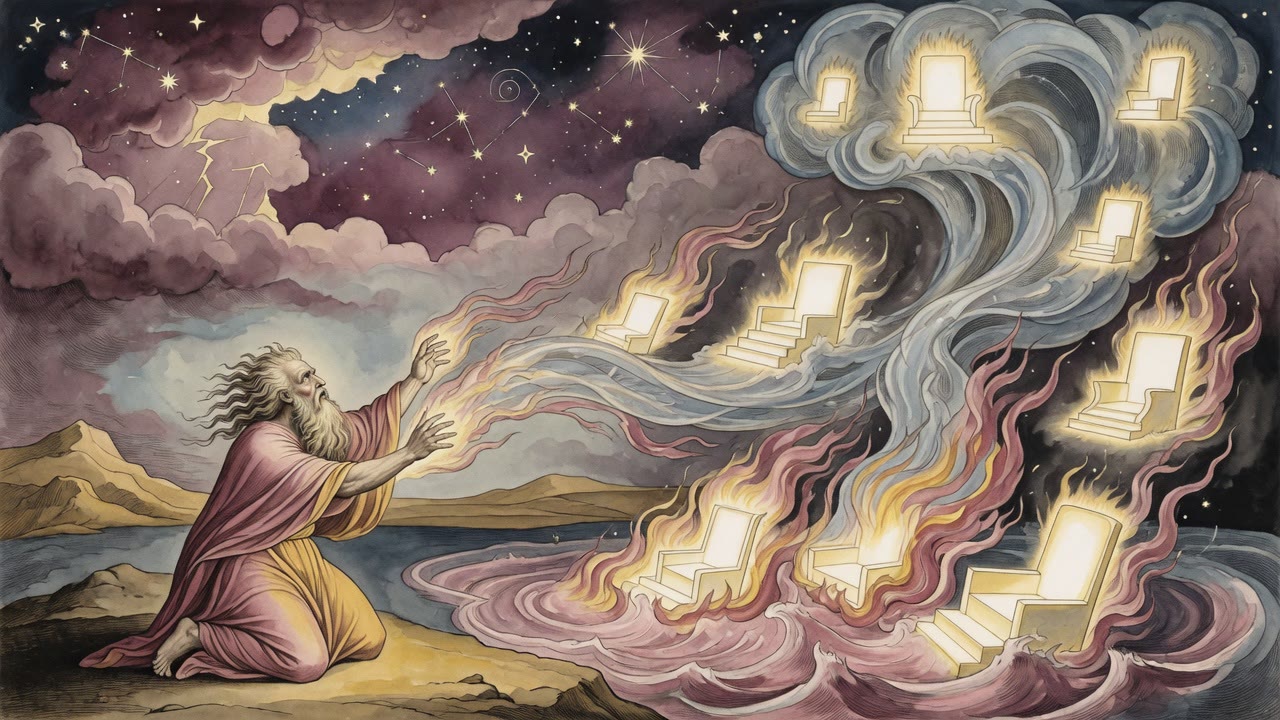
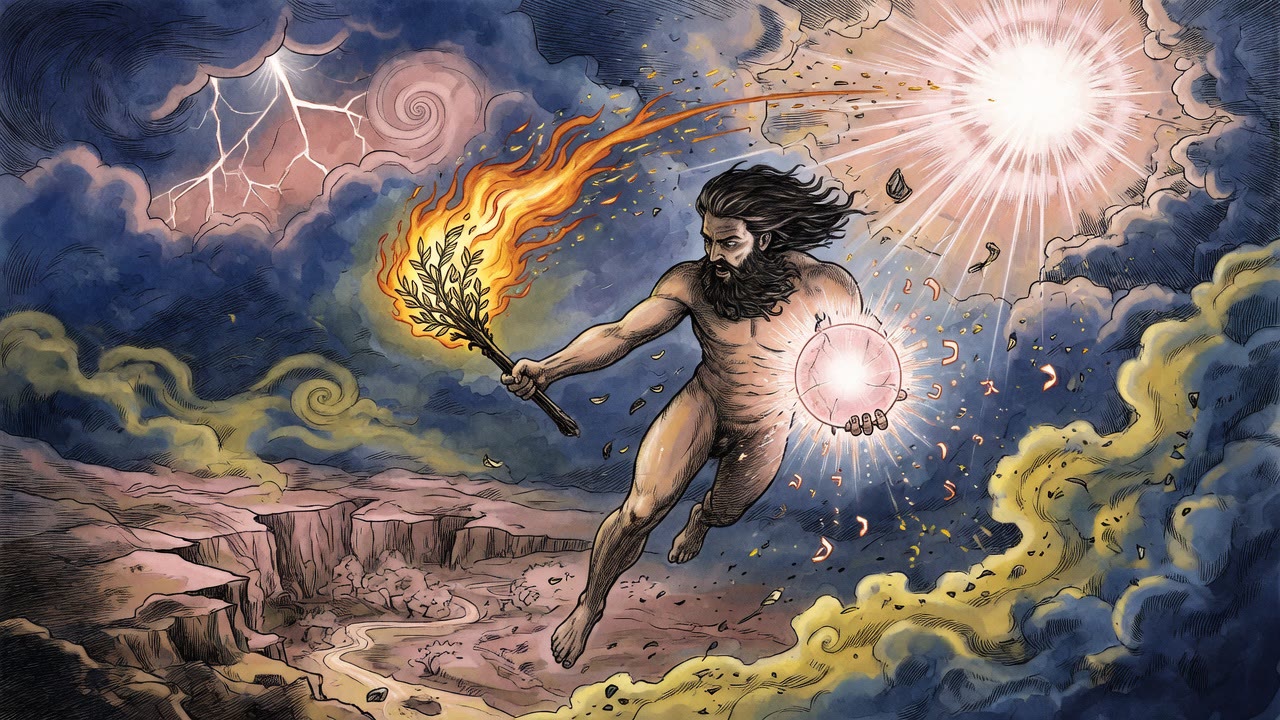
The mazalot are not only servants in the liturgy. They are the mechanism of the calendar. Shemot Rabbah, the midrashic collection on Exodus probably compiled in the ninth or tenth century CE but drawing on much older materials, tells the story of why Nissan became the first month. When God tried to lay the foundation of creation, the waters rose again and again and destroyed the foundation. The flood climbed back over the work each time it was set down, and the ground would not hold. God finally spoke to the sea and established a covenant: the waters would retreat and stay within their bounds. The sea fell back. The dry land held. That same act of boundary-setting organized time itself. The months are counted from the month of the Exodus because that is when the boundary between slavery and freedom was drawn.
The Constellations Carry the Blessing Down
The constellations regulate that calendar. The Tikkunei Zohar, the sixteenth-century kabbalistic expansion of the main Zohar, connects the mazalot to the seasonal cycle, which is in turn connected to the flow of divine blessing downward through the worlds. Every star-governed season is a conduit for something that begins above and reaches below. The turning of Orion and the Pleiades across the months is not idle motion. It is the opening and closing of channels through which blessing descends.
The calendar, then, is not merely agricultural. It is cosmological. When Israel sanctifies the new month, they are participating in the same order that put Orion and the Pleiades in their places at the beginning, the same order that bound the sea and drew the boundary of time. The procession that marched before the throne on the first Shabbat never stopped. It turns overhead every night, and every faithful star at its station keeps the count.
← All myths