They Mocked Phinehas for His Lineage and God Answered Them Publicly
After Phinehas stopped the plague, his enemies attacked his mother's lineage. God answered by publicly establishing his priestly identity through Moses.
Table of Contents
 Click for full size
The Plague Had Stopped and the Mockery Began
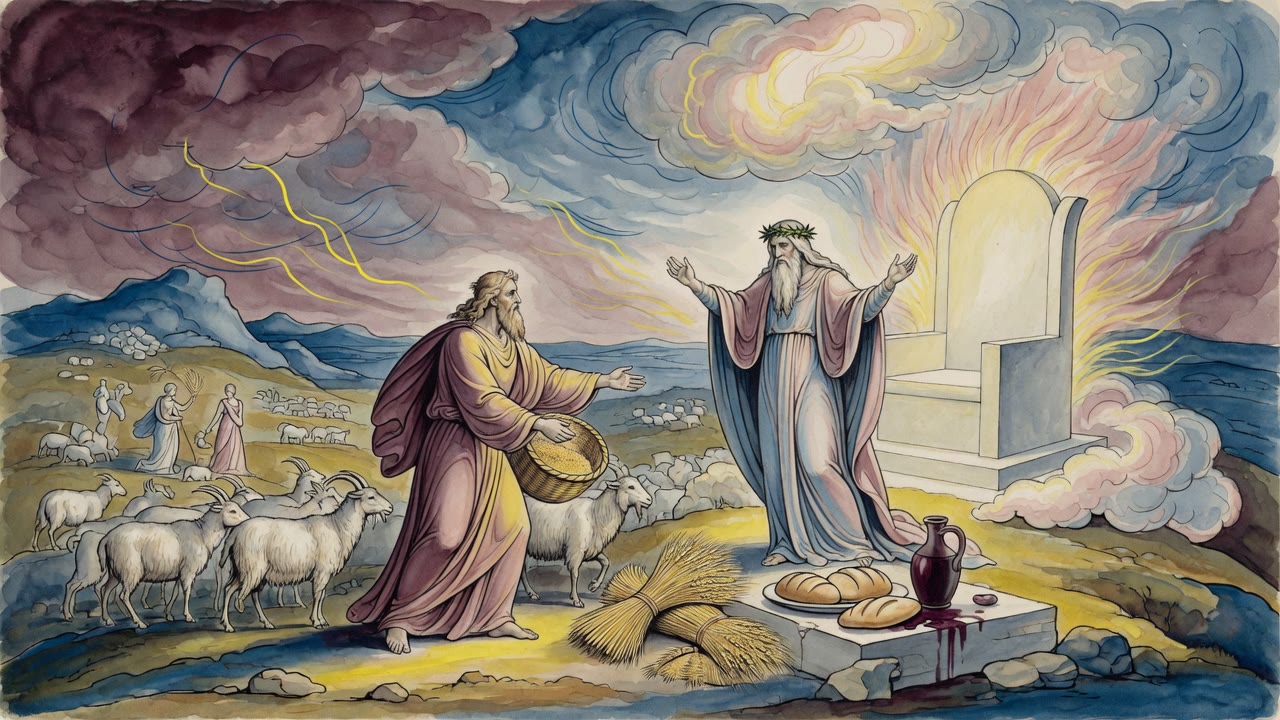
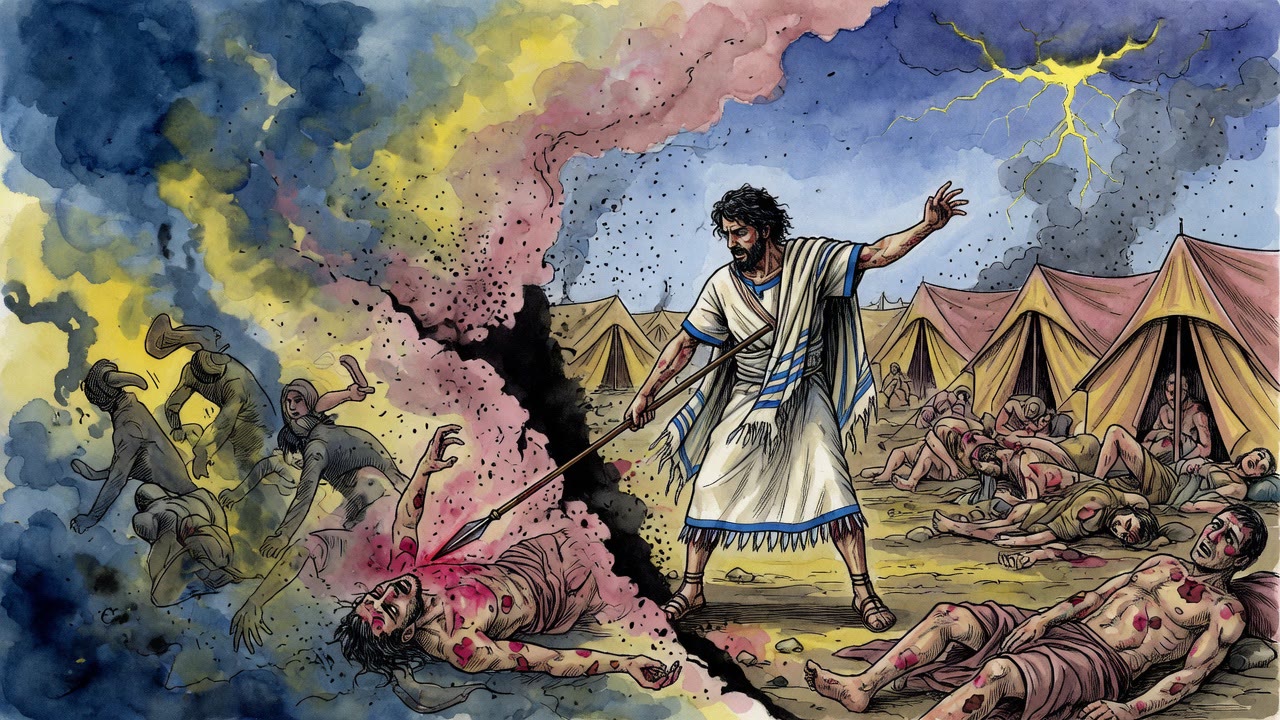
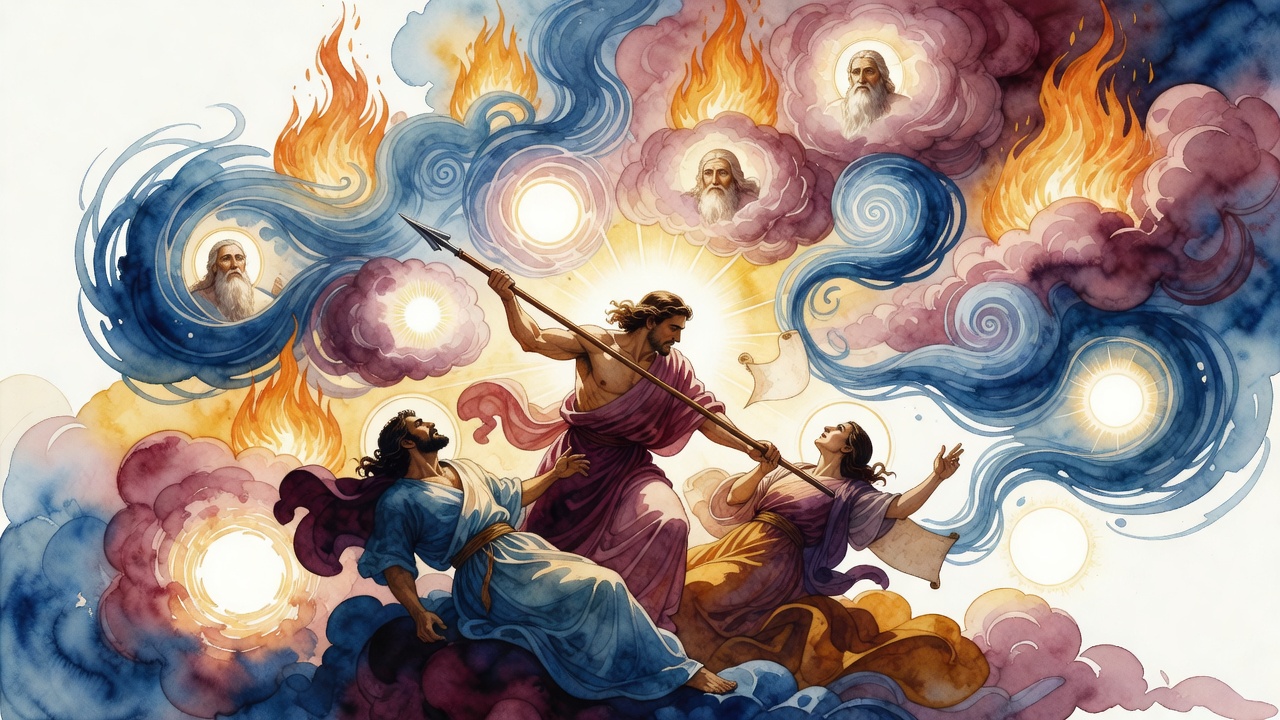
Twenty-four thousand dead. Then silence. The plague that had been moving through the camp of Israel stopped the moment Phinehas's lance went through Zimri and Cozbi. The stopping was immediate and absolute, the kind of correlation the tradition never treats as coincidence. Phinehas stood at the center of the camp with the bodies on his lance, and the first thing his enemies found to say about him was: look at the grandson of a man who fattened calves for idol worship.
The grandfather they meant was Jethro. Before his conversion, before he became the priest who recognized the God of Israel and brought Moses wisdom about how to delegate judicial authority, before he was Moses's father-in-law and the man whose seven daughters had been kind to a stranger at a well in Midian, Jethro had been a priest of idols in Midian. The specific charge the mockers raised, that he fattened calves for pagan sacrifice, was a real and specific accusation about Jethro's pre-conversion career, carrying the full weight of everything Israel had just been punished for at Shittim. Cozbi, whose death had ended the plague, was Midianite. Jethro had served Midianite gods. The implication was not subtle.
Contamination by Lineage
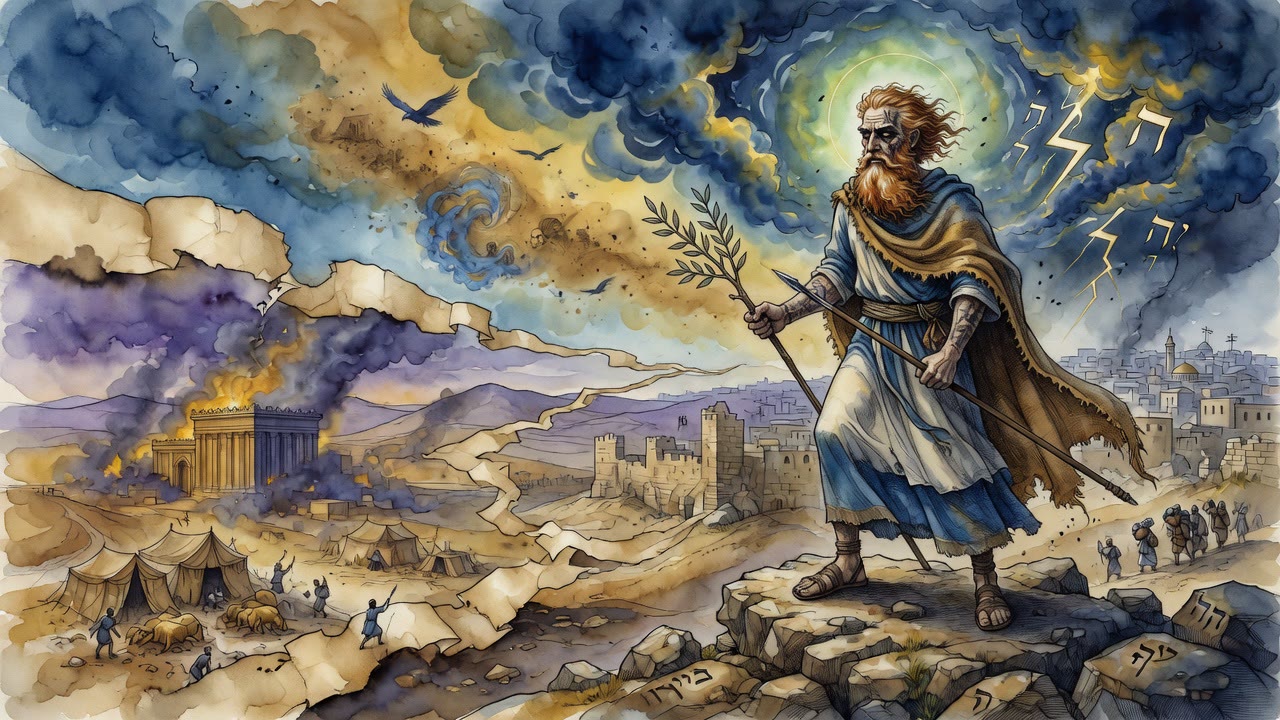
The Legends of the Jews, Louis Ginzberg's compilation published between 1909 and 1938, drawing from Numbers Rabbah (5th-century Palestine) and from the midrashic tradition, records the mockery in exact terms: look at this son of Puti, whose maternal grandfather fattened calves for idol worship, and he dares to slay a prince of Israel. The mockers were doing a classic strategy of contamination by lineage. They could not argue that Zimri had not sinned. They could not argue that the plague had not stopped when Phinehas acted. They could not dispute the outcome or the causation. So they went to the bloodline. He came from impure stock. His act was tainted by origin. Disregard the result and look at the ancestry.
The same logic that had driven the seduction at Shittim, the appeal to kinship and shared ancestry made by the Moabite women to the Israelite men, was now being deployed in reverse: Phinehas's kinship with Jethro, with Midian, with the very category of person that Zimri's sin had implicated, was supposed to disqualify him retroactively from the act of enforcement that had just saved thousands of lives.
What God Said to Moses
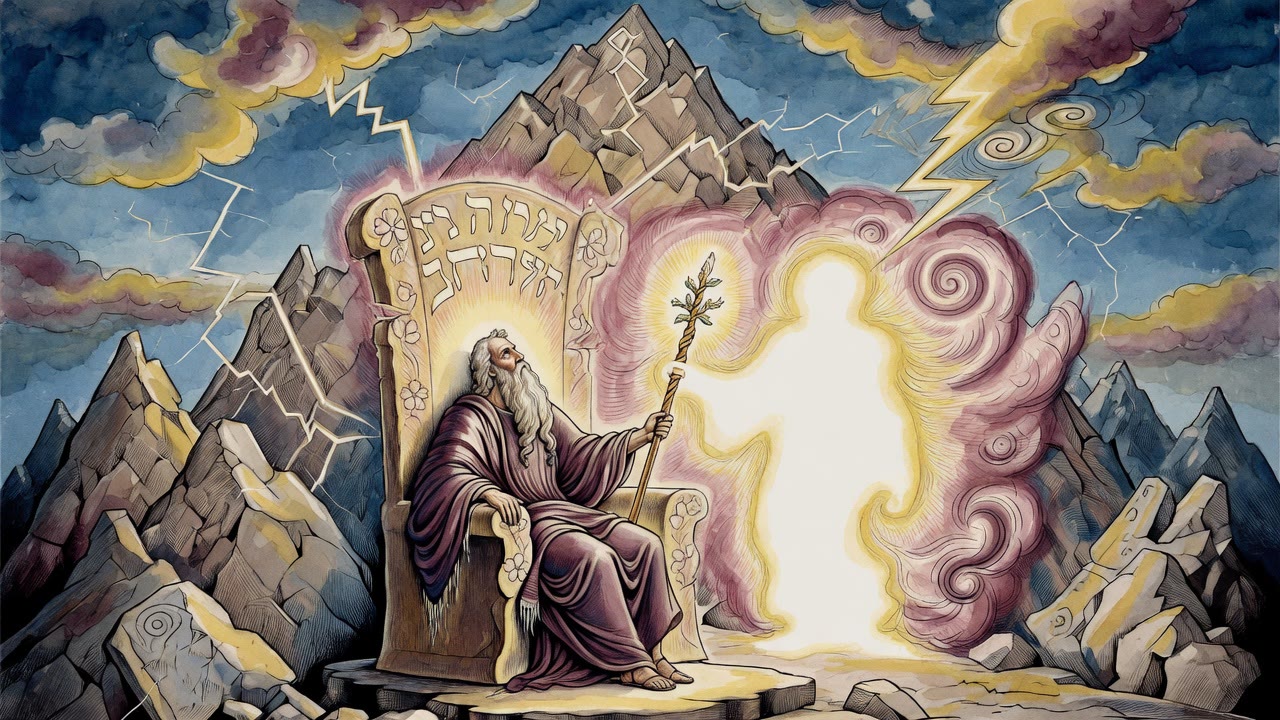
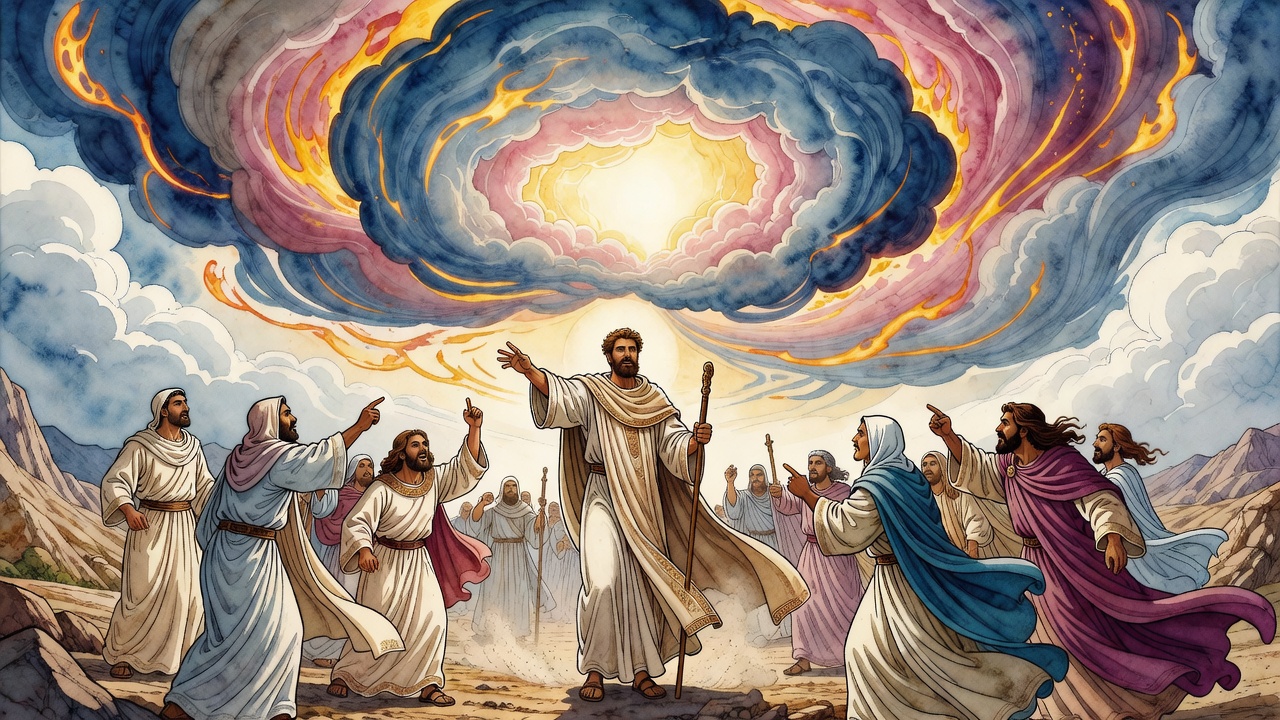
God's response was to make the identity claim publicly and permanently in the text of Torah itself. God told Moses to record the following: Phinehas the son of Eleazar the son of Aaron the priest. Not the son of Puti. Not the grandson of the Midianite idol priest. The son of Eleazar. The grandson of Aaron. The man who had turned My wrath away from the children of Israel, who was zealous for My sake among them, so that I did not consume the children of Israel in My jealousy.
The Ginzberg tradition notes the deliberateness of the identification. God did not say Phinehas and leave the lineage to inference. God named the line three generations back, going up through Eleazar to Aaron, the line of priestly holiness, the line that defined who Phinehas was for the purposes of the covenant and the priesthood and everything that followed. The maternal line, the Jethro connection, the Midianite grandfather. God bypassed all of it and identified Phinehas by the line that mattered for what he had just done.
What the Covenant of Peace Actually Gave Him
After the identification, God gave Phinehas the brit shalom, the covenant of peace, and the brit kehunah olam, the covenant of everlasting priesthood. The covenant of peace is striking given what Phinehas had just done with a lance. He had not acted in peace. He had acted in zeal, in violence, in the execution of a judgment that left two bodies on a shaft of metal. The peace God offered him was not the peace of the act but the peace of what the act had accomplished: the plague stopped, the wrath turned aside, Israel still standing on the east bank of the Jordan rather than destroyed at Shittim.
Phinehas threw the two bodies on the ground and cried out to God afterward: why have You slain twenty-four thousand for the sins of these two? The angels were furious at his audacity. Who was he to question the Almighty? God told them to leave him in peace. He is a zealot, God said, the son of a zealot. He preserved the seed of Abraham. The identity God named was not just genealogical. It was the shape of a man who had acted when no one else could, had survived twelve miracles, had ended a plague, and was now standing in a camp full of corpses asking God to explain why it had taken so long.
← All myths