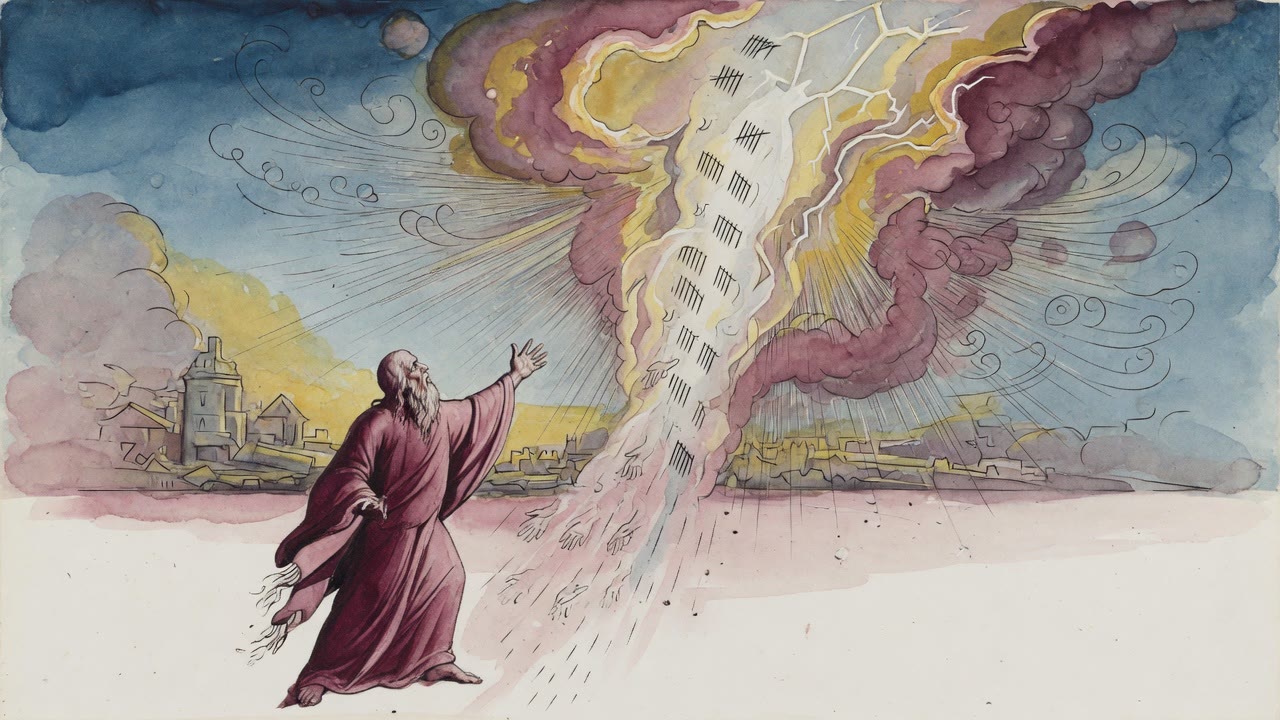
Rabbah Bar Bar Chana Saw a Fish Destroy Cities When It Died
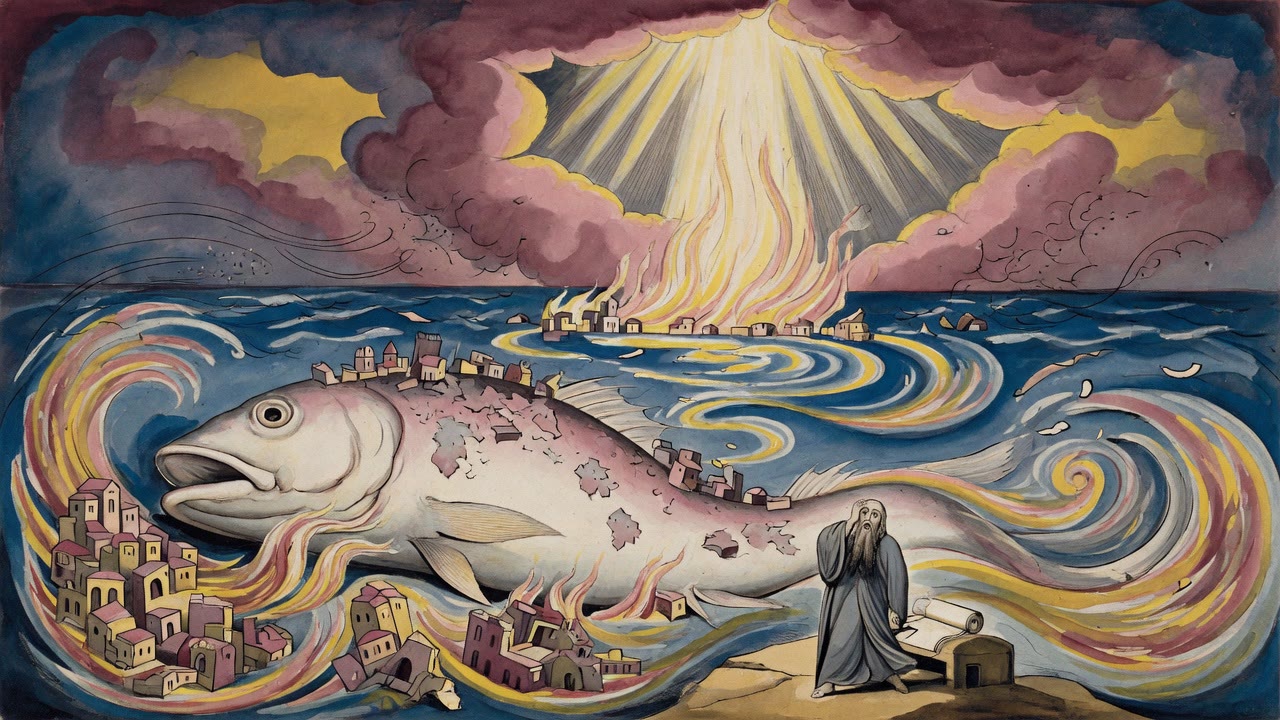
A mud-eater in a nostril killed a fish the size of a coast. When the sea threw the body ashore, sixty cities went under the weight.
Table of Contents
 Click for full size
The Fish Hit the Shore
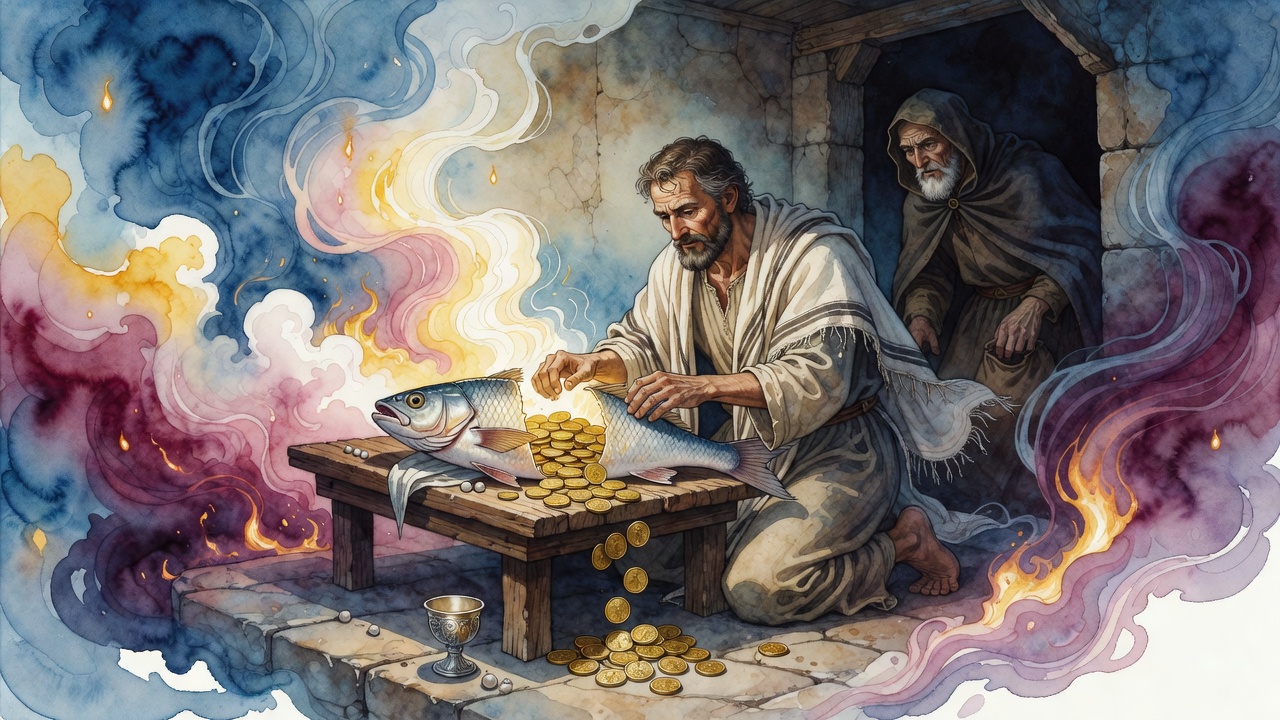
Rabbah bar bar Chana was on the water when a fish died of a parasite so small it had lodged in a nostril and eaten mud. The sea threw the body ashore. Sixty cities went under the impact. Sixty more cities ate from the flesh. Sixty more salted what remained. From one eyeball, sailors filled three hundred flasks of oil.
Twelve months later he came back. Workers were still cutting beams from the bones to rebuild the towns the landing had crushed. A creature that large had been killed by something that lived in its nose. He told it as he had seen it. He did not apologize for the size.
Another time the ship sailed between a single fish's two fins for three days and three nights. The fish was swimming against the wind. The ship was running with it. Rav Dimi later said a kettle of water could heat in the time that hull covered sixty parasangs. A horseman shot an arrow and the fish outran the arrow. They were not rounding a reef. They were crossing a body.
On another run the ship found a fish covered in sand and grass, a creature carrying a world on its back. The sailors took it for an island. They climbed out, baked bread, and cooked on its hide. When the skin grew hot, the fish flipped. If the ship had not been close, they would have drowned. For an afternoon a world had been a hide, and the hide had rolled.
The Frog, the Snake, and the Tree
He saw a frog the size of the fortress of Hagronya, and Hagronya was sixty houses. A snake came and swallowed the frog whole. A raven came and swallowed the snake. The raven flew up and perched in a tree, still holding the snake that still held the frog.
"Come and see," he said, "how great is the strength of the tree." The tree did not break. It held the raven, the snake, the frog, the stacked weight of things that should not fit inside each other. Rav Papa bar Shmuel heard the report and said, "If I had not been there, I would not have believed."
He also saw a bird standing in water that came only to its ankles. A carpenter dropped an axe into that water. The axe took seven years to reach the bottom. The bird was not standing in a puddle. The water was that deep, and the bird was that tall. Rav Papa's sentence still held. A man who had not stood there would not have believed. Rabbah had stood there. He kept the pictures.
He Struck the Wave With the Name
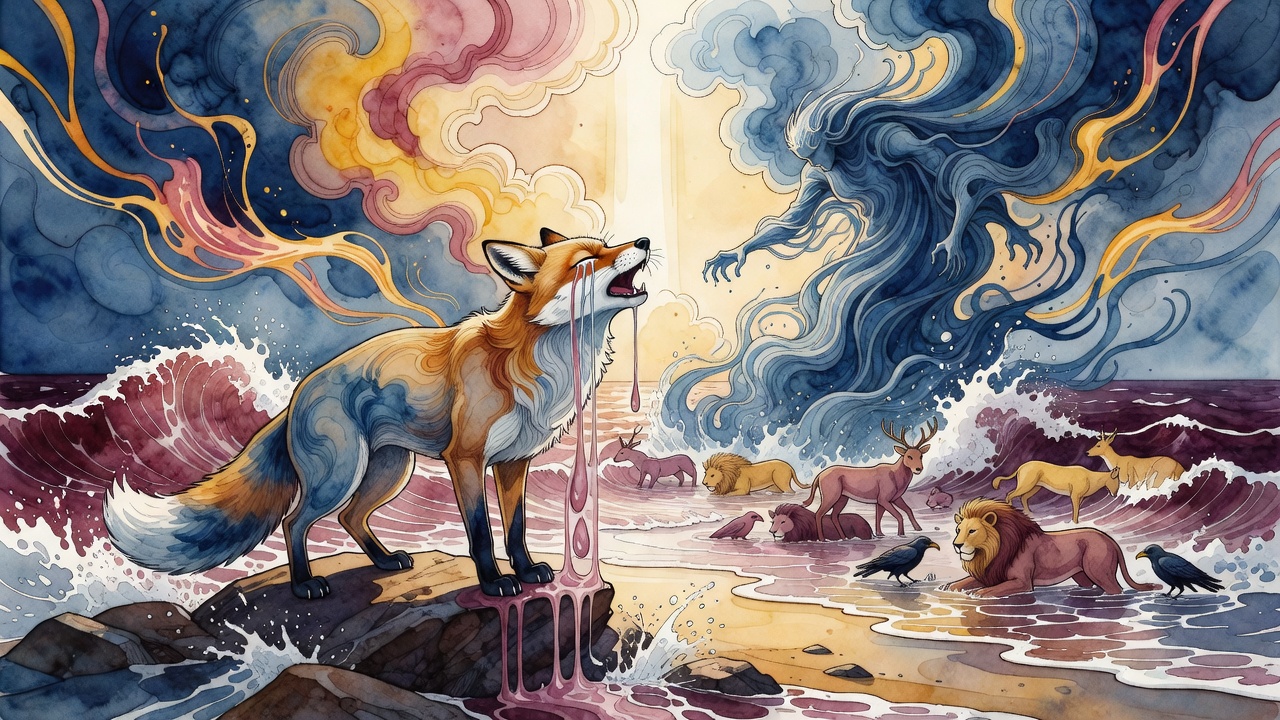
The waves on that sea were not only tall. They were fringed with fire, and they sank ships. Between one wave and the next lay three hundred parasangs. A wave rose until he saw the resting place of a small star. If it had risen higher, the blast would have burned them.
The only defense was a club engraved with the words: I Am That I Am, Yah, the Lord of Hosts, Amen Amen Selah (Exodus 3:14). He struck the wave with that inscription. The water fell back. The Name written on wood against water edged with fire.
Sailors who knew the club slept a little. Sailors who did not watched the fringe of flame and did not sleep. The sea remembered being unrestrained. The club remembered who had named Himself from a bush.
Wool Came Up Scorched
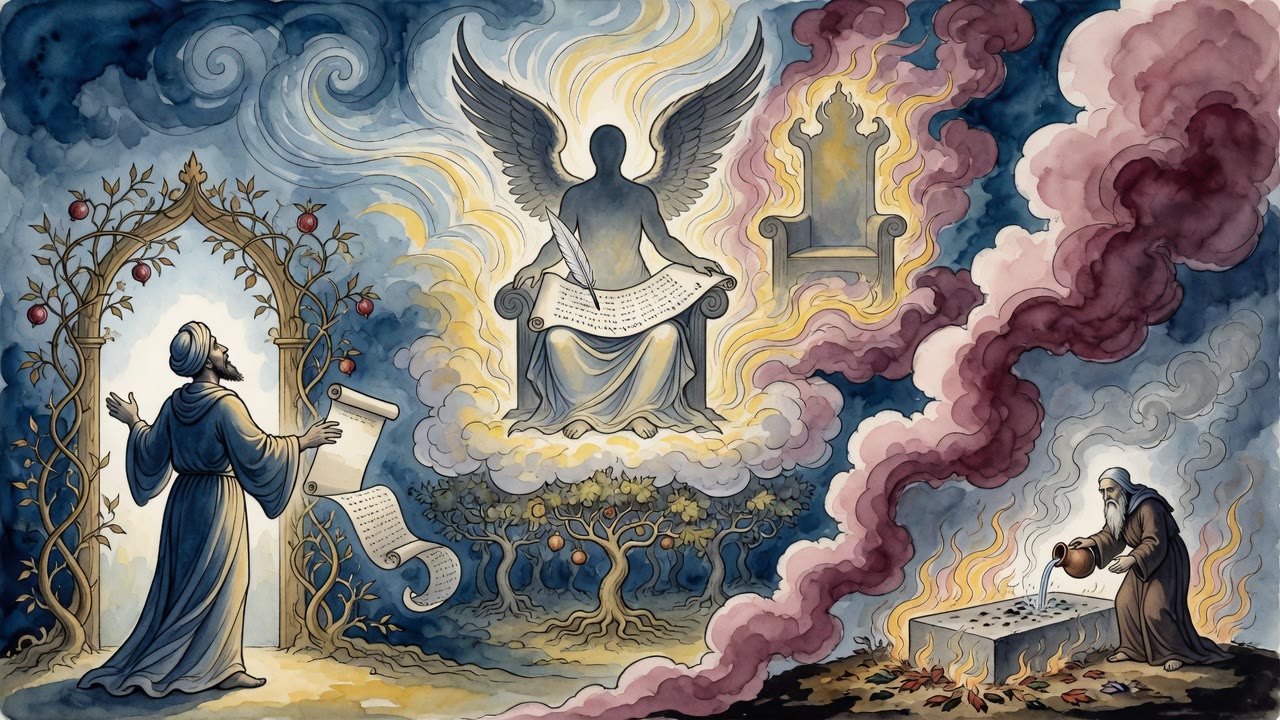
An Arab guide led him off the water and into the desert. "Come, I will show you the swallowed of Korah." Two cracks in the ground emitted smoke. The guide soaked wool in water, fixed it on a spear, and lowered it into the rift. When he pulled it up, the wool was burned.
"Listen," the guide said. From the smoke Rabbah heard voices. "Moses and his Torah are true, and they are liars." Every thirty days Gehinnom (גיהנם) cycles them back to that spot like meat in a pot, and they say it again.
The guide took him on to Sinai, ringed with scorpions as tall as white donkeys, and to the place where earth and heaven touch. Rabbah set his basket in a window of the sky, prayed, and reached for it. It was gone. "Are there thieves here?" The guide told him to wait. The wheel of the sky turns. Tomorrow the window would come around again, and the basket with it.
He waited. The basket came back. The dead of Korah did not. They kept the argument that had opened the ground, and they kept losing it out loud.
← All myths