Rachel Sent Akiva Away and Made Him Great
She married the shepherd and lost her father's house. Twelve years later she told a neighbor she would send him away for twelve more.
Table of Contents
Akiva was forty and could not read a letter of Torah. He worked as a shepherd for Kalba Savua, a man so rich the dogs in his house left the bowls satisfied.
 Click for full size
Kalba Savua's daughter Rachel looked at the shepherd anyway.
The Deal at the Flock
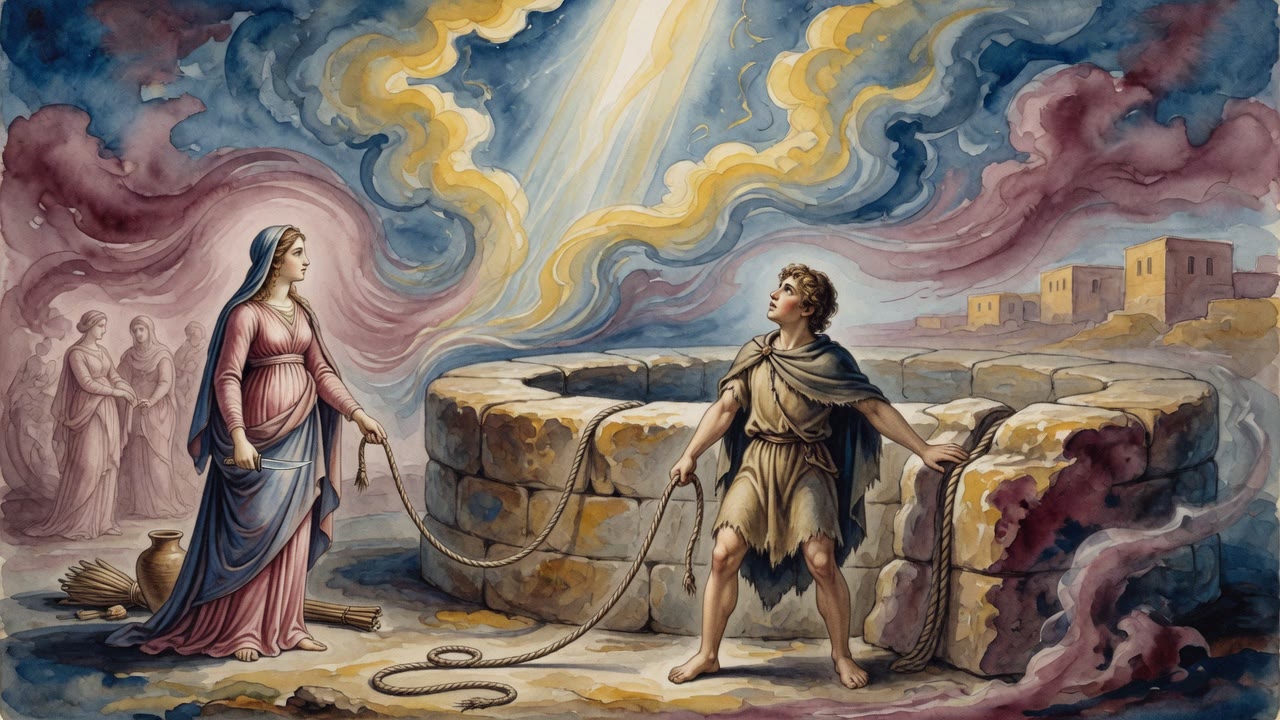
She offered him a bargain. If he would go and study Torah, she would marry him. Akiva agreed. She knew the cost before she spoke it: her father's approval, the house, years of marriage at a distance while he sat among children learning letters.
They carried the courtship in secret until her father found out. He raged. Akiva was the son of a convert, rumored to descend from Sisera, ignorant, unlettered, old enough to be her father. Kalba Savua threatened to throw her out and cut her off. Rachel stood her ground. She married the shepherd. She left the mansion for a shack.
Kalba Savua disowned her when the marriage was done.
Water Wore a Hollow in Stone
After a short married life she sent him away. "Go study," she told him. "Go to the academy far from here. I will wait."
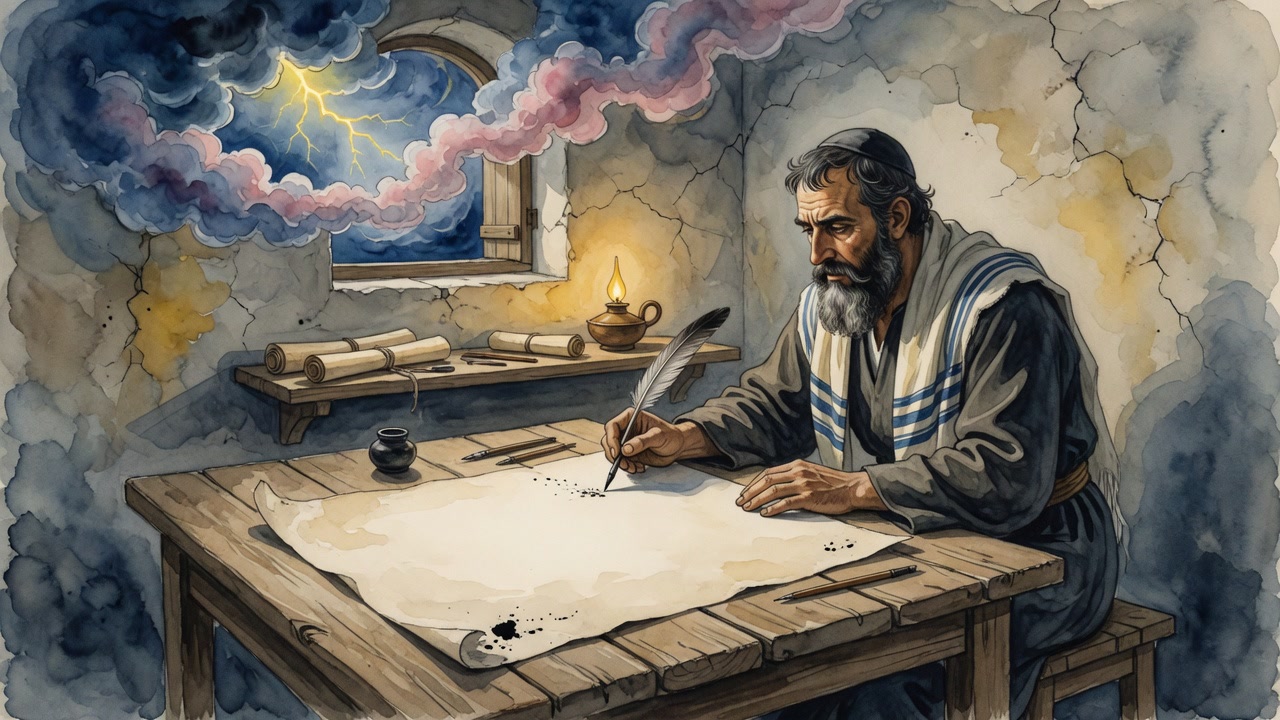
On the road his nerve failed. He was already old. A mind that had not learned in forty years, could it now take in Torah? More than once he thought of turning back.
He sat by a spring. Water dripped from a ledge onto stone. Not a river. A thin steady drip. He looked at the hollow it had worn. A hard thing, struck softly and constantly, gives way. If water could carve stone by patience, Torah could carve a heart that was patient enough to let it work.
He stood up and kept walking. He sat with children in the primary school and learned the letters they already knew. Then he went further, under Rabbi Eliezer ben Hyrcanus and Rabbi Yehoshua ben Chananiah. He studied twelve years. He came home with twelve thousand students behind him.
She Sent Him Back Without Seeing Him
He reached Jerusalem and paused at the door of his house. Inside, a neighbor was blaming Rachel. You married a man who could run away and leave you a widow for a dozen years on the crazy pretext of college.
Akiva listened. He waited for her answer.
"Would that my husband were here and could listen to me," Rachel said. "I would permit him, I would urge him, to stay another twelve years if it would benefit him."
He turned away without seeing her face. He took the sentence as a command. He left Jerusalem again. She had sent him once with a bargain. She sent him a second time without knowing he stood on the other side of the wood.
Everything Mine and Yours Is Hers
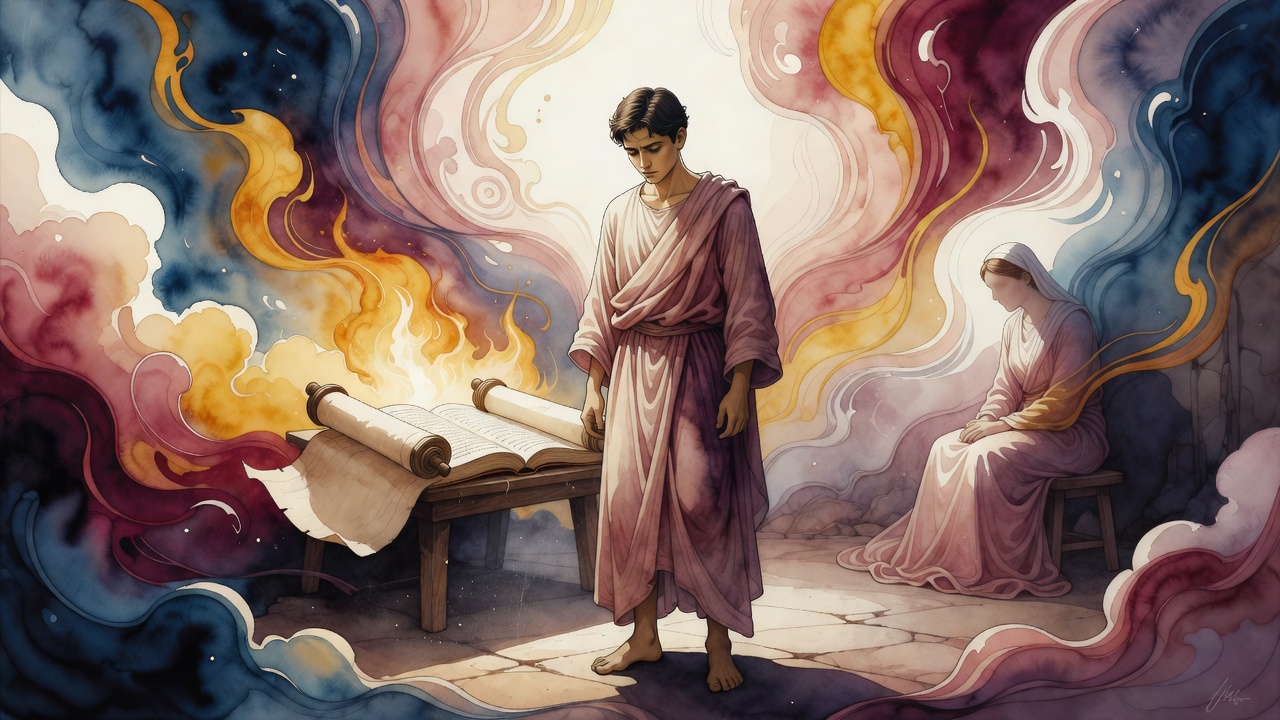
He returned with twenty-four thousand students. Well-nigh all Jerusalem came out to honor him. Rachel came poorly dressed. Years of a disowned woman's life leave marks. Students moved to push the ragged woman away from the great rabbi.
Akiva stopped them. "Let her come," he said. "Everything that is mine, and everything that is yours, belongs to her. Your Torah is her Torah. She is the reason it exists."
Kalba Savua had long repented of the vow that cost him his daughter and his happiness. He came to Akiva to ask about annulling it. Akiva made himself known as the old servant and rejected son-in-law. The two were reconciled. The father who had thrown her out now looked on himself as favored above other fathers in Israel.
Moses Sat in the Back Row
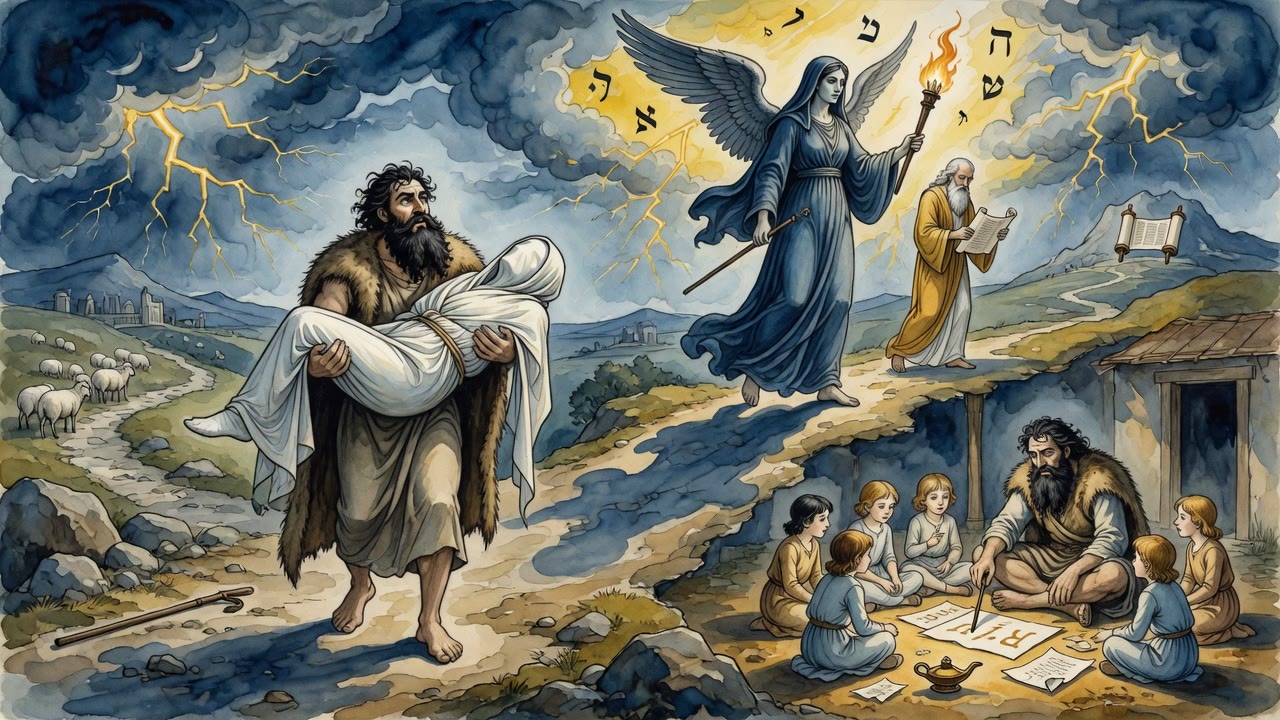
In another chamber God showed Moses the inner rooms of the future. Rows of scholars and judges sat in the court of hewn stones, interpreting Torah in forty-nine ways. Moses saw Rabbi Akiva explaining the meaning of the crowns upon the letters.
Moses said he did not care to be God's messenger. Send one of these.
God ordered the Angel of Wisdom to carry him to a place of myriads of scholars, all interpreting, all using the same formula: this is a law given to Moses at Sinai. Moses recognized that even the greatest of later generations would still depend on him. Then he was ready to go.
Rachel did not know she was sending that inheritance forward. She knew she was marrying a shepherd she believed in. She sent him twice. The second time he heard her through a door and did not knock.
← All myths