Rava Made a Man and Rabbi Zera Sent Him Back to Dust
Rava sent the man he had made walking toward Rabbi Zera's house. The man had a face, two hands, and no answer waiting in his throat.
Table of Contents
 Click for full size
He Sent the Man Walking
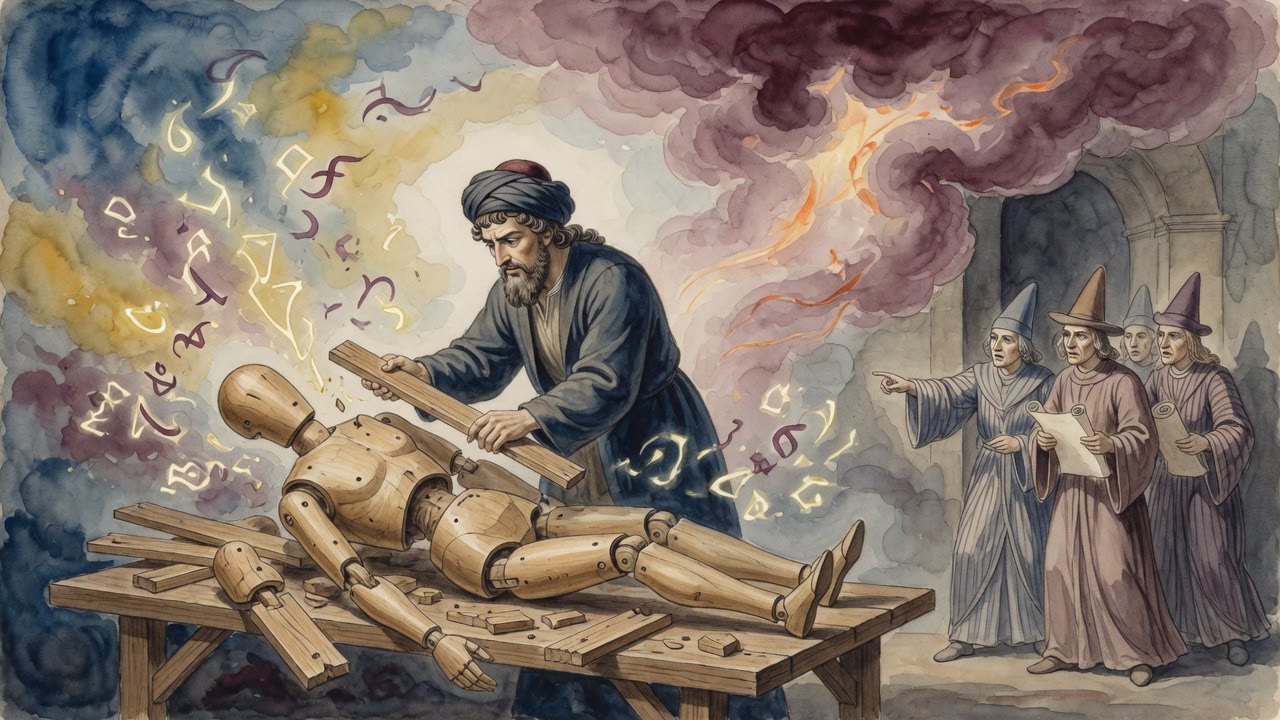
Rava made a man in the study house and set him on his feet.
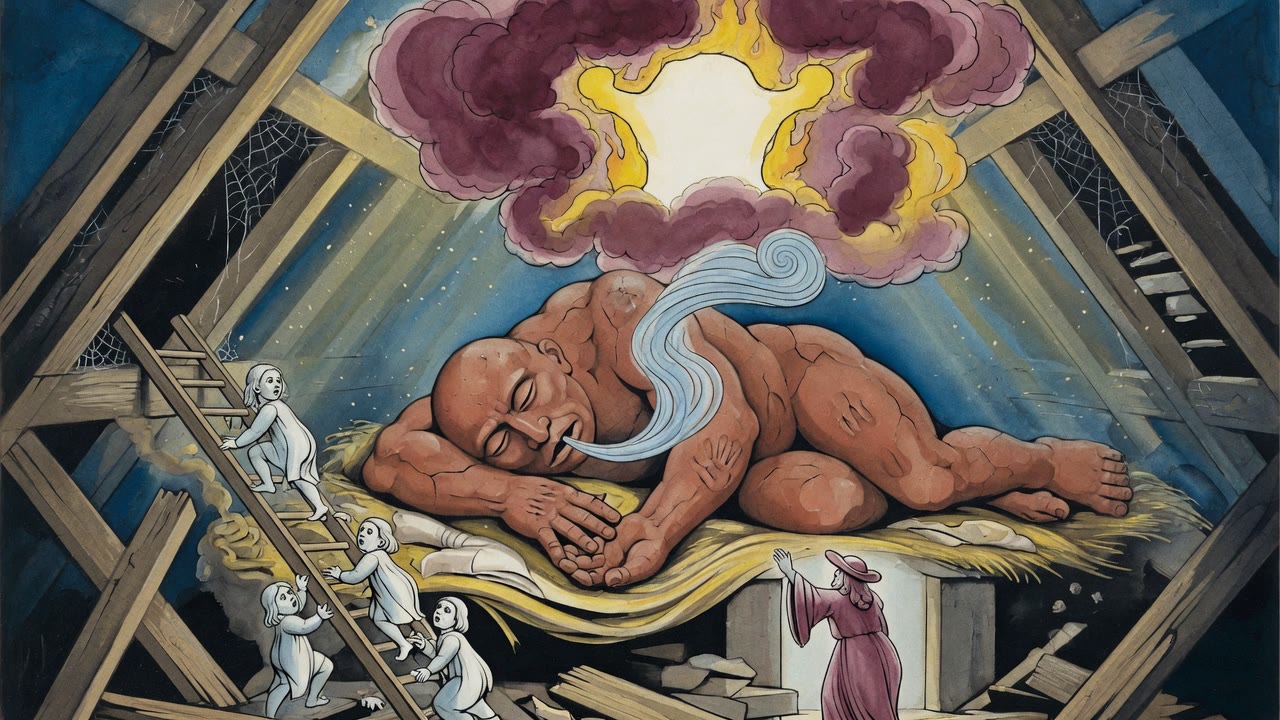
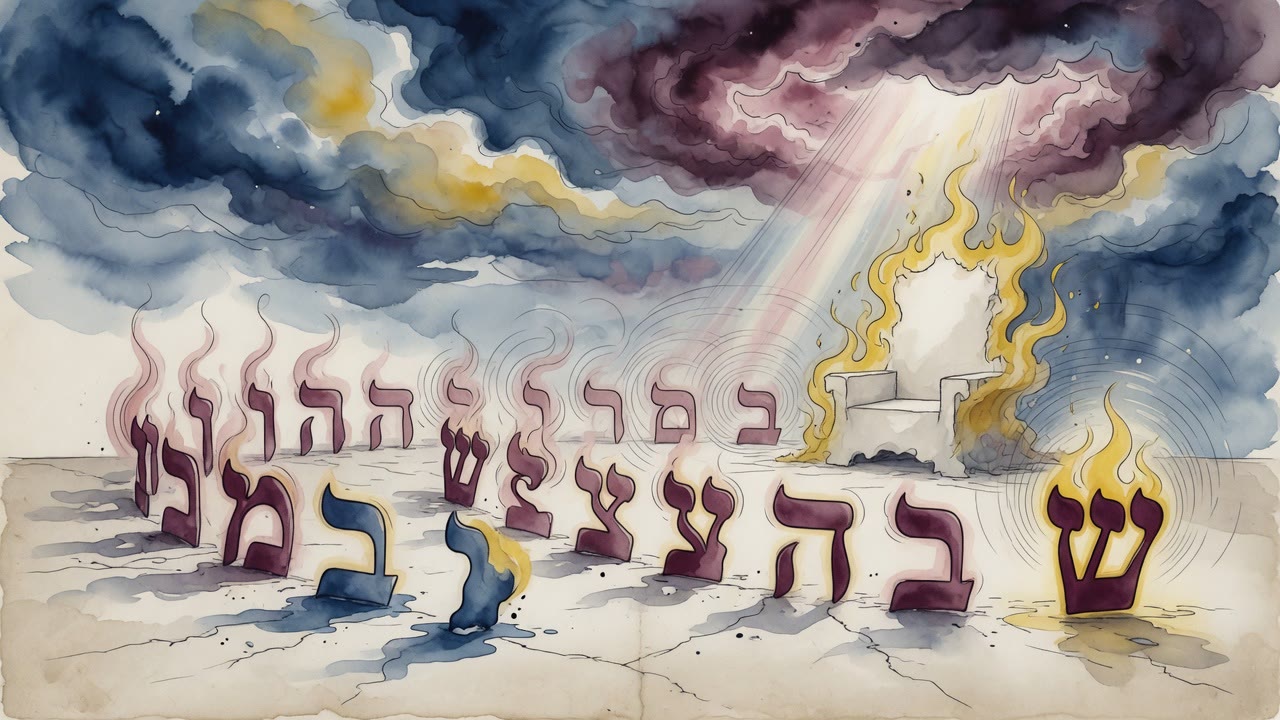
The claim had come first. "If the righteous wished," Rava said, "they could create a world." A student near the window made a sound that was almost a laugh. Rava did not open a scroll to prove it. He took the twenty-two letters he had worked until they were no longer a recitation, and he used them on a heap of dust by the door. Knees locked. A chest rose. Two eyes opened and did not water. The mouth was the right mouth. It stayed shut.
The man stood. He had weight. He had a shadow on the floor. Rava put a hand on his shoulder and turned him toward the street. "Go to Rabbi Zera," he said. The man walked. His steps were even. He did not ask which house. He did not look back at the dust he had come from.
A Question with No Reply
Rabbi Zera was at his table when the visitor filled the doorway. A cup sat at his right hand, still steaming. He looked up. He spoke a greeting. He asked a name. He asked about the road. The visitor stood in the courtyard light and gave him nothing. No word. No sound in the throat. Not even the small noise a mute man makes to show he heard.
Zera spoke again, slower. He rose. He came close enough to see the lips. They were shaped for speech. They did not move. The eyes were open and empty of the look that means a person is about to answer. Zera waited one more breath. The visitor did not take it.
The silence was not stubbornness. God had breathed into Adam's nostrils, and that breath had become a nefesh (נפש), a living soul that could reply. The chest in the doorway rose and fell. It did not reply.
Return to Your Dust
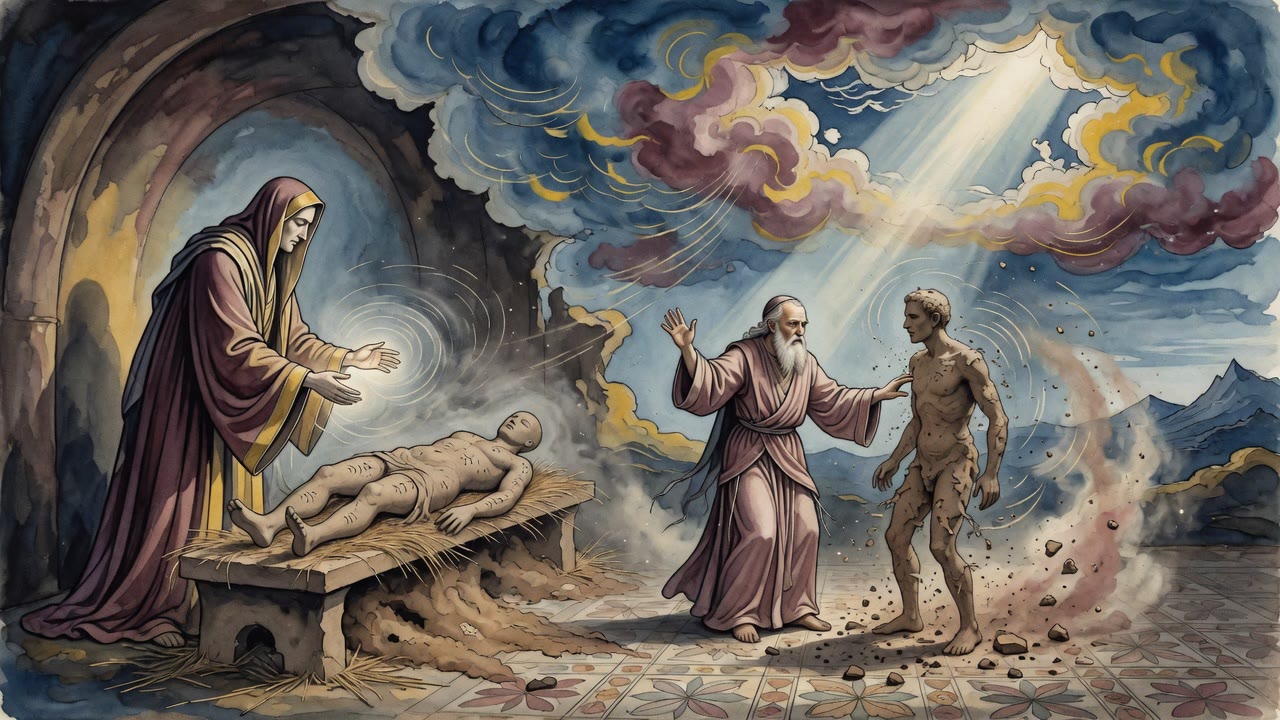
"You are from the companions," Rabbi Zera said. "Return to your dust."
He did not raise his voice. He did not reach for a staff. He named what stood in front of him: a work of the scholars who sit with the Book of Formation, the Sefer Yetzirah (ספר יצירה), and try the combinations God used when He spoke a world. The man took the sentence the way clay takes rain. He went down. Dust took him back. The doorway stood empty, and a little grit clung to the threshold where feet had been.
Rava's proof had walked across town and failed a greeting. A body can be assembled. A reply cannot. The missing piece was not height or heat or the color of the eyes. It was the mouth that would not open.
A Calf on Friday Afternoon
Two other sages sat with the same book and did not try a man. Rav Hanina and Rav Oshaya spent every eve of Shabbat over the letters. They made a calf, a third-grown animal with real hide, and they slaughtered it and ate it for the holy day. The meat took salt. The blessing took a cup. They did not send the calf walking to anyone's door.
A table can hold a created animal. A doorway cannot hold a created man. Rava had reached for the larger work. Zera had measured it in one exchange and poured it back into the floor. The calf fed a Sabbath. The man could not even return a greeting.
The Student in the Glass
Later, much later, a teacher and a student sat over the same Book of Formation and wanted more than Rava had wanted. They wanted the spark itself. They swore on a Torah that the work would run to its end. The student drew the lot. The teacher called the Angel of Death. The body was cut, laid in a sealed glass, sprinkled with what the book named as the sap of life.
Months passed. In the fifth month a human form showed through the glass. In the sixth, veins. In the seventh, a twitch in a finger. The teacher looked in and felt dread instead of joy. He had proven the letters could build. He had not proven they could give a mouth that answers. He shut the room. The glass held a shape that moved and still was not a person anyone could greet.
Rava's man had walked. Zera had spoken. Dust had answered the only way dust can.
← All myths