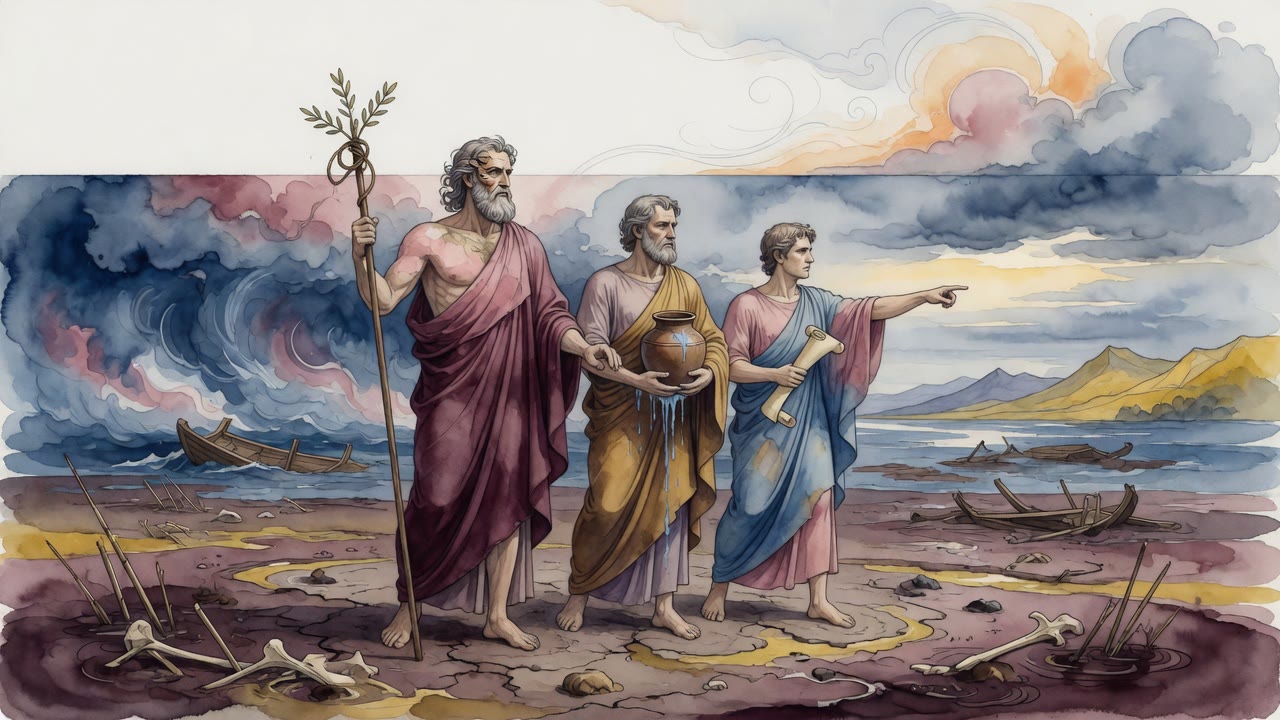
Shem Built a City and Japheth Went to the Sea
Shem named his city for his wife on the mountain of the ark. Madai came back later and asked Noah to change his lot.
Table of Contents
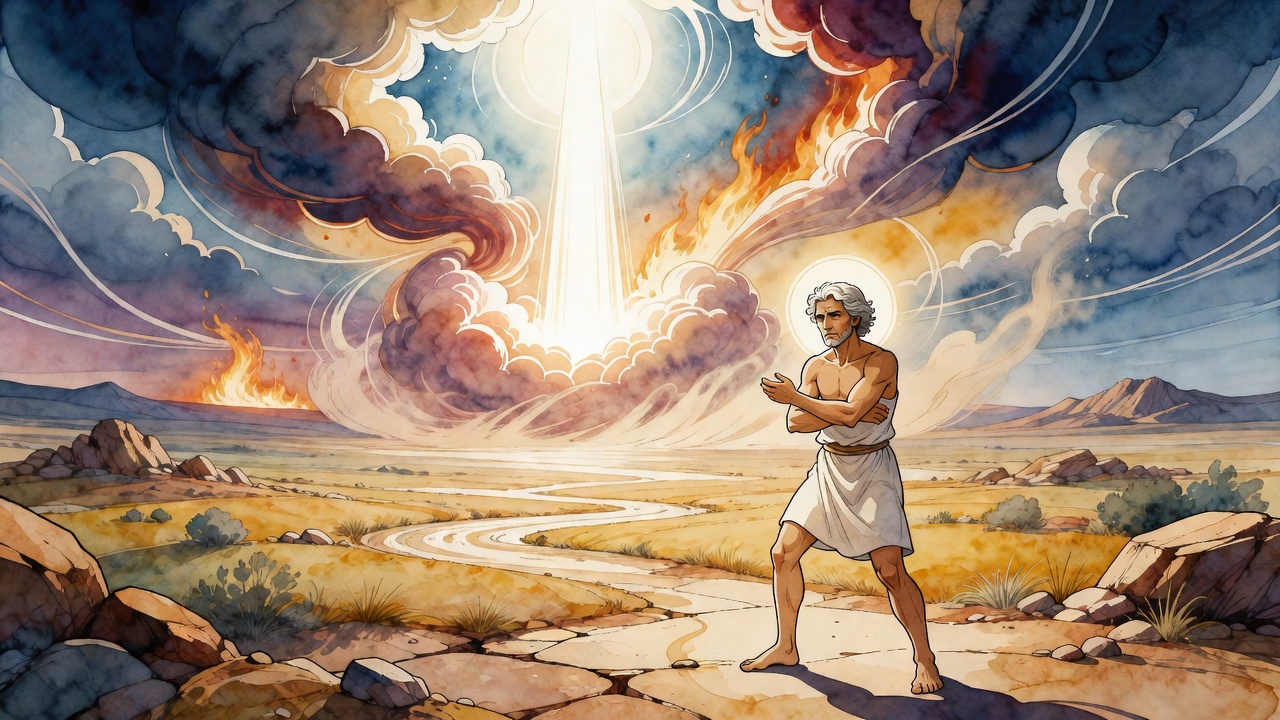
Noah came down off the ark onto wet stone and built an altar before he built a house. Mount Lubar still held the boat behind him. He did not go down to claim a valley. He stayed.
 Click for full size
His sons built near him. The new world began as three families on a mountain, putting up walls for the women who had lived through the flood in a wooden box.
Cities Named for Wives
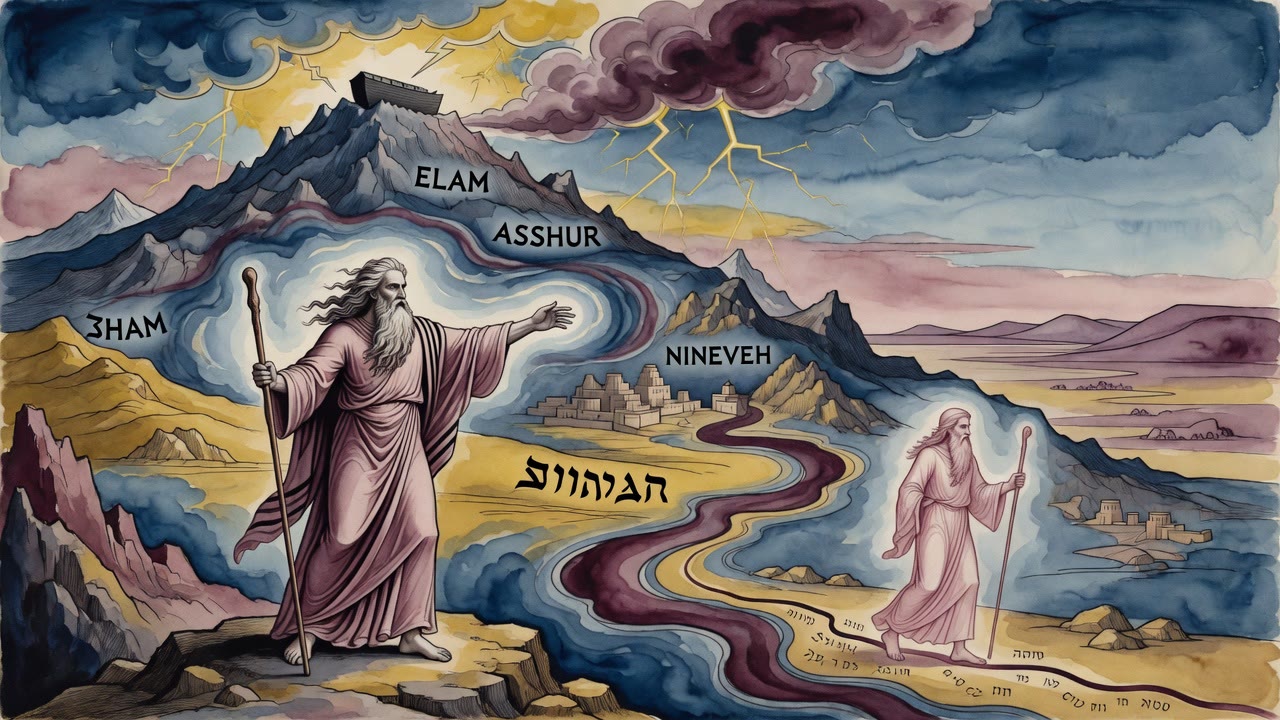
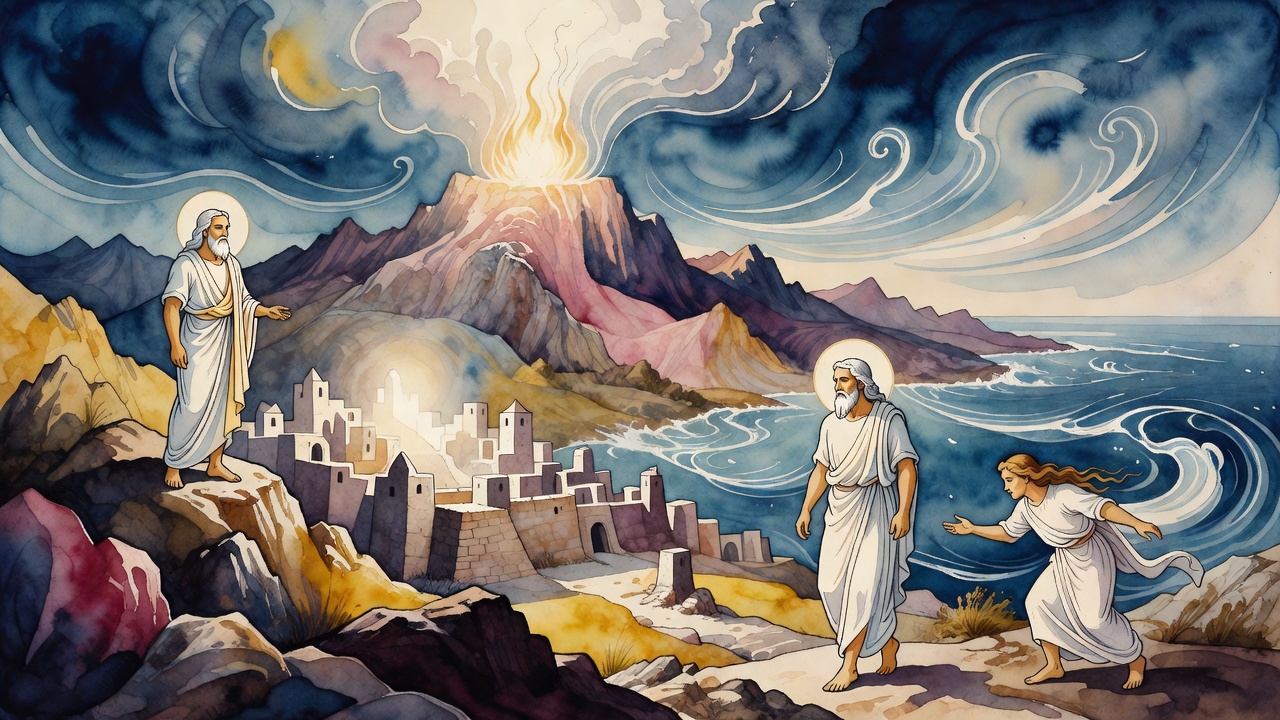
Shem built his city close to Noah's city on the slope. He named it Sedeqetelebab, after his wife. Noah had already named his own city after his wife on the same slope. Two doors. A walk between a father's house and a son's.
A third city went up to the south and took the name Naelatamak. A fourth, Adataness, watched the west. Four towns near the mountain of the ark, and the names they carried were women's names, household names, the names of wives who had come out of the boat onto a mountain that still needed to be lived in.
Arpachshad was born to Shem two years after the water receded. The earth was still learning how to be dry, and already there was a child who had never seen the flood.
Madai Asked for a Better Lot
When the lots were drawn, Shem received the middle band of the earth, neither the hot share nor the cold one. In that portion sat the Garden of Eden, Mount Sinai, and Mount Zion, three holy places set facing one another, the navel of the earth held for his generations.
Japheth received the north and the islands. Five great islands, and a great land in the cold. Ham received heat. The map was clean until a grandson opened his mouth.
Madai, son of Japheth, did not want his portion. The northern share felt too far from the mountain, too far from Shem, who was his father-in-law. He came to Noah and to Shem and asked for a different piece of the earth than the one that had fallen to him. He wanted a dwelling near his wife's family, closer to the center, away from the cold his grandfather had been given.
They heard him. They gave him land near Persia and the Bactrian country, close enough to Shem's territory to quiet him. He went there. His descendants settled it. The lots had been spoken in front of the holy judge, and still a grandson's preference put a crease in the map.
Canaan Took the Wrong Coast
Canaan, son of Ham, did not ask. He had been given a territory. He did not go to it. He dwelt in the land of Lebanon from Hamath to the entering of Egypt, he and his sons, and the land took his name because he sat down on it.
Noah's grandsons bound themselves by an oath in the presence of the holy judge and in the presence of Noah their father. They cursed Canaan beyond all the sons of Noah for the seizure. He had heard them. He had not hearkened. He stayed on the coast that was not his, and the name Canaan became a marker of a broken border as much as a place on a road.
Ham's other sons took what they had been handed. Cush went furthest east. Mizraim settled west of him. Put further west still. Canaan should have been last, west of Put on the sea of his own portion. He chose a different sea.
Japheth Went Toward the Sea
Japheth did not argue. He took his sons toward the sea and dwelt in the land of their portion, the cold north, the islands, the coasts far from the mountain where the ark still sat like a memory too large to move.
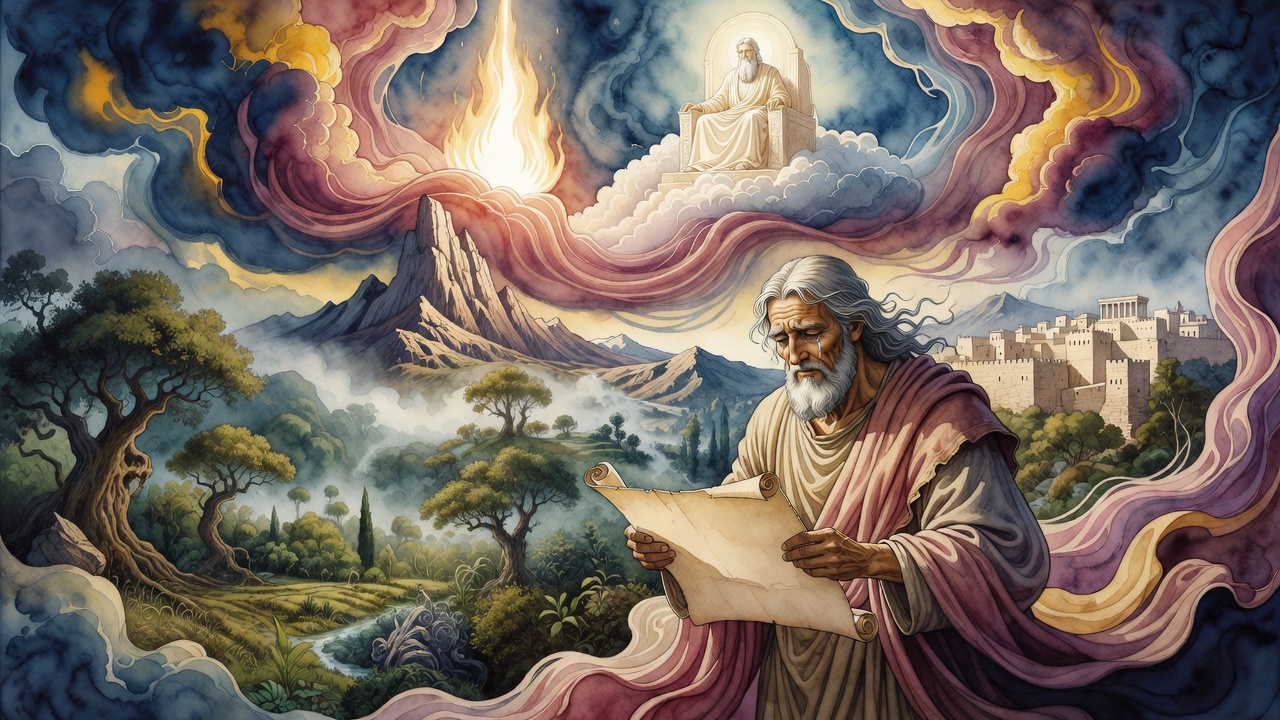
Shem stayed on Lubar a while longer, building close to his father, naming things after the women in his household, watching his sons spread toward the horizons the lots had assigned. He was the son who had once walked backward with a cloak to cover Noah. He built near rather than away. Eden, Sinai, and Zion were in his share, and the line that would run through Arpachshad and Shelah and Eber would one day reach Abraham, but that was still a long walk from a city named for a wife.
Madai had asked and been moved. Canaan had taken and been cursed. Japheth had gone where the lot sent him, toward water that was not the flood. On the mountain, two cities still faced each other across a short slope, a father and a son, the first geography of a washed world measured in the distance between doors.
← All myths