A Man Saw a Snake in Israel and His Hair Never Grew Back
He went up the hill for firewood. The snake lay in the scrub and never looked at him. His hair came out before he reached the bottom.
Table of Contents
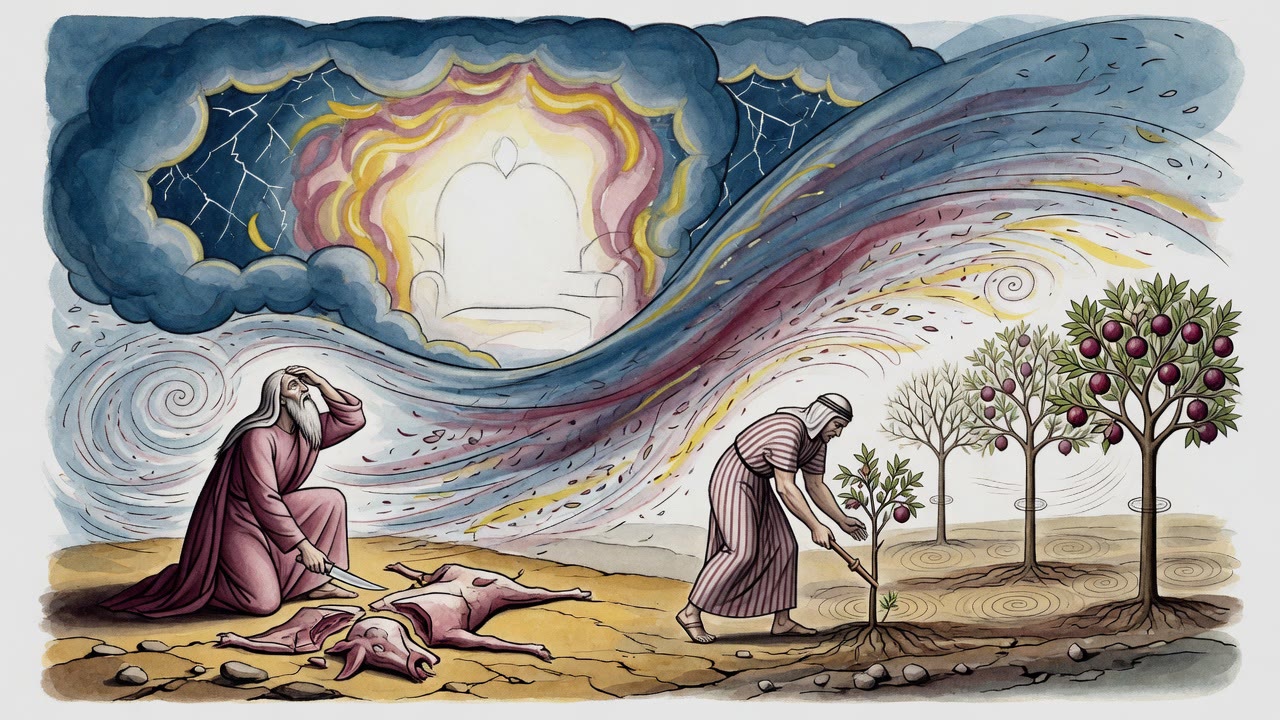
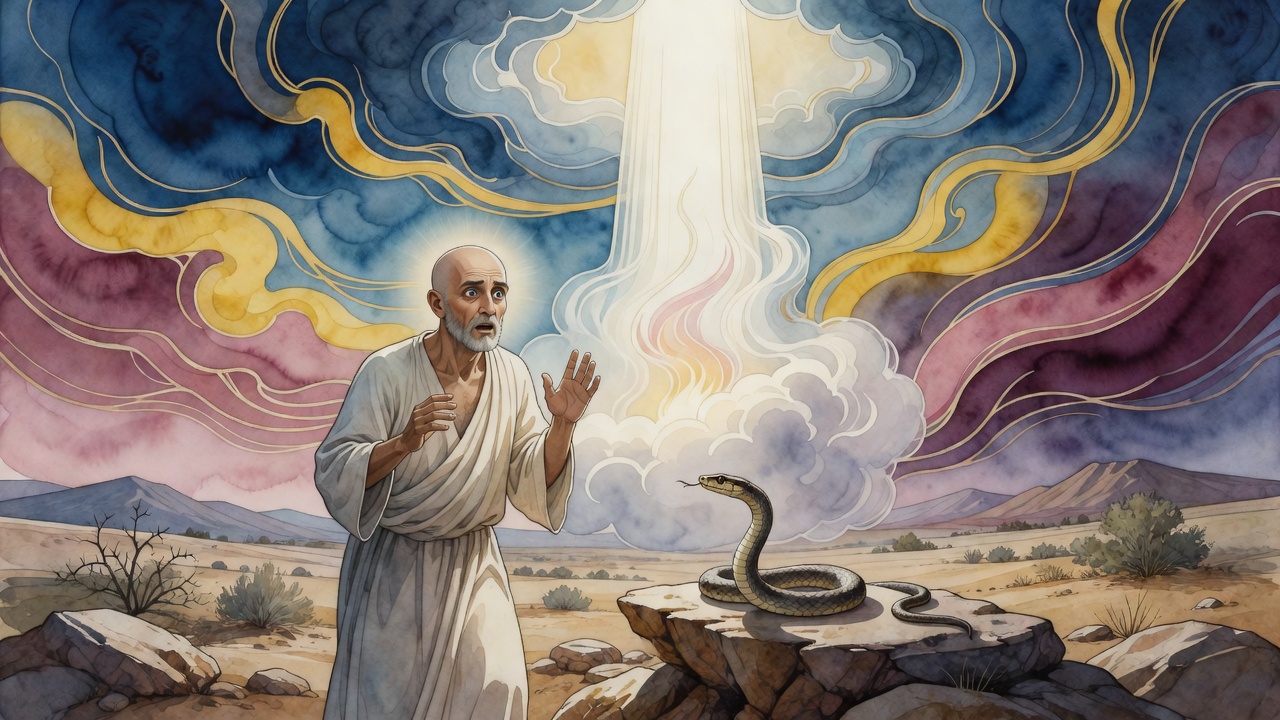
He climbed the hill in the middle of the afternoon to gather wood, the way he had climbed it a hundred times. He was pushing through the low brush, snapping what he could reach, when he looked down and there was the snake.
 Click for full size
It had not noticed him. It was not coiled at him, not raised, not tracking. It lay in the scrub doing whatever a snake does when it is alone, and he stood over it and looked at it and it never looked back.
His hair came out. Not over the following days, not in patches through a fever. In the moment of seeing it, the hair left his head, and it never came back. He walked down the hill carrying his wood and a scalp that had gone bare on the climb, and from that day people called him Merutah, the torn one, the man who had been plucked.
He died bald. Nothing else about the encounter was ever explained. The snake had not touched him.
Akiva Heard It From Yehudah
Rabbi Akiva did not find this in a book. He said plainly where he got it. Rabbeinu Hakadosh told me. That is Rabbi Yehudah HaNasi, the man who assembled the Mishnah, and what he handed down to his student was not a ruling. It was the story of a bald man on a hillside in the Land of Israel.
Akiva passed it on the same way, without a mechanism, without a lesson attached. A man in the Land of Israel saw a snake. His hair fell out. He was called Merutah until the day he died. The wilderness Israel had crossed on the way there was nine hundred parasangs of desert, a stretch full of snakes and scorpions and the illnesses that live in such ground. Merutah's mark was not a bite. It was a look.
The Groomsman Who Would Not Reach the Canopy
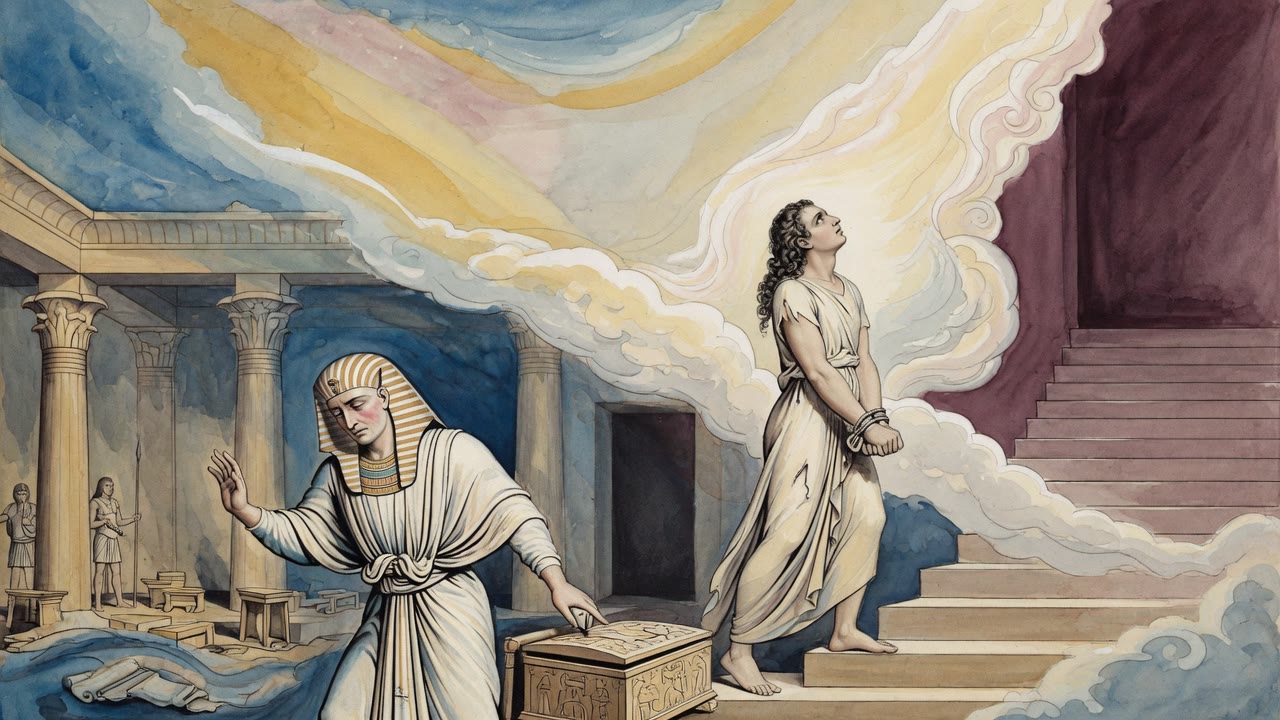
There was a man who was made groomsman to the king's daughter. He read in the stars that he would be the one to bring her out of her father's house, and he read in the same stars that he would not walk with her to the bridegroom's house, and would not stand under the canopy when she was married.
He began to cry.
They asked him what there was to cry about, since the whole thing had gone well.
"I wore myself out getting her out," he said. "I am not going with her to the canopy."
Moses said the same sentence about himself. "I wore myself out bringing Israel out of Egypt. I am not entering the Land with them." He knew it on the day Pharaoh released them, at the beginning, before the sea, before Sinai, before the forty years. He got them out. He was not going in.
He died on the mountain in Moab with the whole country laid out in front of him and no road down into it. Merutah, who had never taken a nation anywhere, walked up a hill inside the Land looking for kindling, and the Land marked him for life.
The Land That Lacked Nothing
Every country has something it does not have. One grows grain and buys its oil. One has water and imports its wheat. That is the ordinary condition of a place on the earth, and it is why the world itself carries a name that means a mixture, tevel (תבל), because it is all of them stirred together and none of them complete.
Of this one country they said it lacks nothing. Bread would be eaten there without stinting. Nothing would be lacking in it. Then they pushed the pun one step further, from mixture to seasoning, tavlin (תבלין), and asked what the seasoning of the world is. Torah, they said. Among the nations there is no Torah. Whatever the world is, it is flavored from that one strip of ground.
So the land was worth what Moses paid for it and worth what it cost Merutah. A glance can pluck a man bald. A lifetime of labor can still leave a prophet on the wrong side of the river. Both prices are real.
The Voice Above the Scorpions
Rabbah bar bar Chanah traveled with a merchant who offered to show him Mount Sinai. They went. When they got there the mountain was ringed with scorpions the size of white mules, standing between him and the place where the whole thing had started.
He did not get closer. From somewhere above the scorpions he heard a voice, and the voice was not speaking to him.
"Woe is Me, that I swore that oath. And now that I have sworn it, who can annul it for Me?"
The oath was the exile. The One who had sworn it was standing outside His own mountain with the rest of them, wanting it undone, bound by His own word, and grieving in a voice loud enough for a passing traveler to overhear.
Moses never walked down into the country. Merutah walked into it and came down bald. God stood at the mountain and could not take back the sentence that had put Him outside it. The land that lacks nothing still exacts a price from everyone who loves it, even from the One who swore over it.
← All myths