Terah Was Born Into a World the Ravens Were Eating
The seed never made it under the soil. Ravens took it off the surface the year Terah was born, until the fields went hollow.
Table of Contents
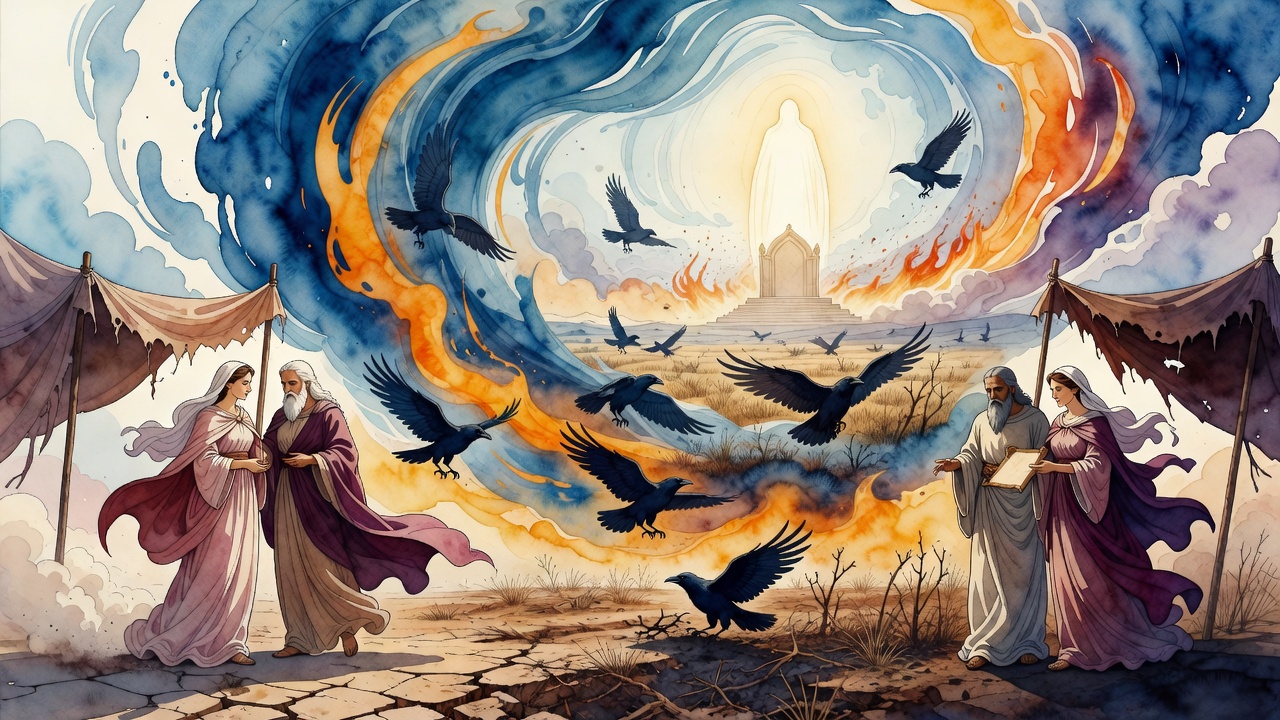
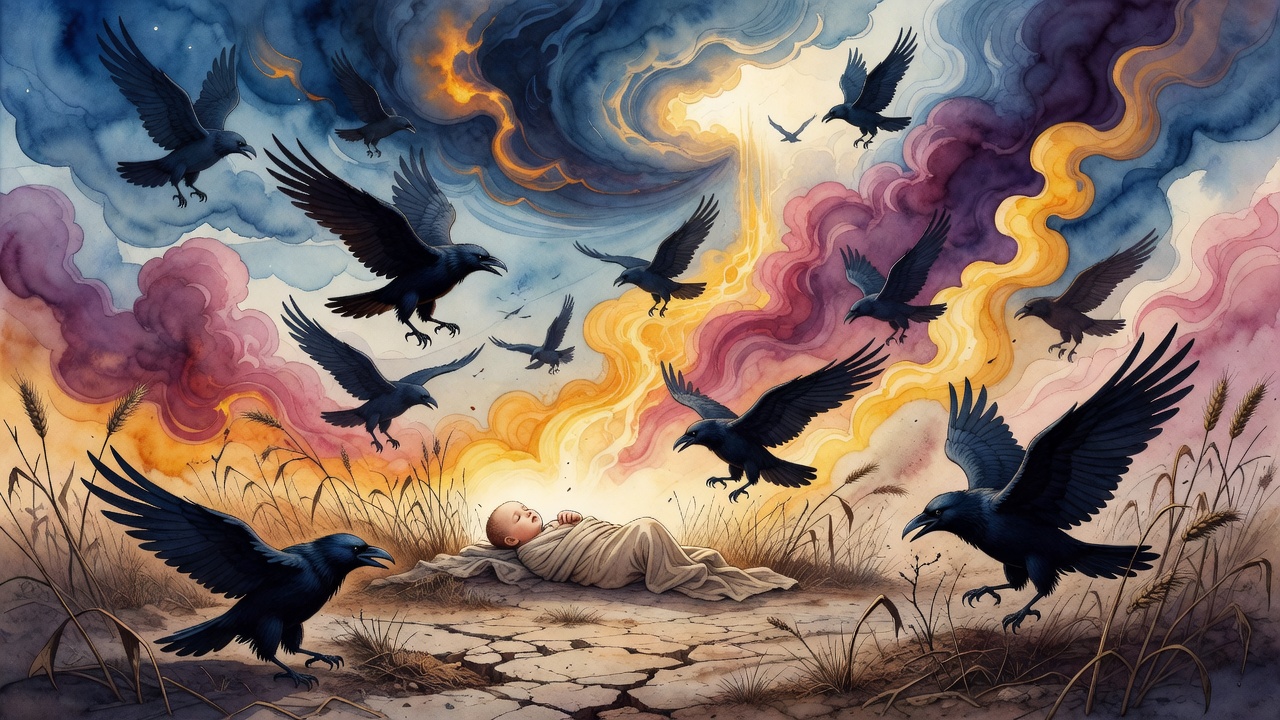
The seed never made it under the soil. Ravens took it off the surface, grain by grain, the year Terah was born. Not a few birds at the edges of fields. A cleaning. They came down on the sown ground before the plough could bury anything, and they left the furrows bare.
 Click for full size
People ate what they had stored and planted again. The ravens came back. They planted a third time. The birds came back again. Fruit was stripped before it could ripen. What little grain survived was scratched out of the earth with a whole day's work for a handful. The generation that received Terah was starving slowly, year by year, in a land that should have been able to feed them.
Mastema Kept a Tenth
After the flood, God bound the spirits who had corrupted the world before the waters came. Mastema (משטמה), hostility, chief of those spirits, came forward with a bargain.
"Leave some of them before me," he said. "Let them listen to my voice. Without them I cannot execute the power of my will on the sons of men." He wanted agents. He wanted the capacity to lead astray, to corrupt, to test. Great, he said, is the wickedness of the sons of men. He claimed he needed a workforce to match it.
God agreed, and did not agree all the way. Nine-tenths of the spirits were bound in the place of condemnation. One-tenth remained, active in the world, answerable to Mastema. That was the arrangement that governed the years of Terah's birth. The ravens were his permitted instruments. The famine they made was the exercise of a legal tenth under the post-flood decree.
Prince Mastema sent the birds to devour the seed that had been sown, to destroy the land and rob human beings of their work. A hungry people is easier to bend. A hungry line is easier to thin before it can produce the son who will leave Ur.
A Boy Born Into Hollow Fields
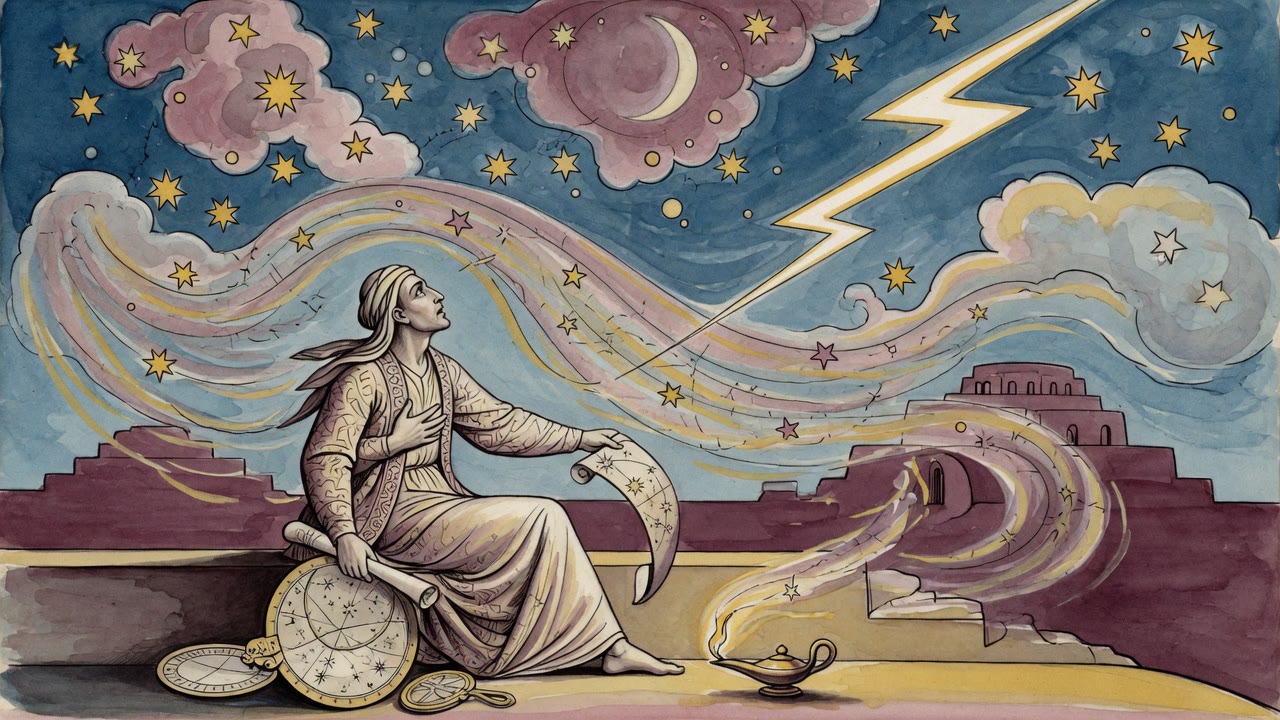
Terah grew up in that hollow world. His fathers had taught the researches of the Chaldees: how to read the sky, how to take omens, how to treat the heavens as a chart a man might outguess. In Ur the idol trade ran beside the empty granaries. Desperate people paid for any object that promised to mediate between their prayers and a sky that would not feed them.
Terah learned the business. He learned to carve the figures and set the prices. He learned to treat the gods as merchandise in a market that never went satisfied. The ravens kept coming. The seed kept dying on the surface. A man can grow used to hunger the way he grows used to a crooked beam in a roof. He stops looking up.
He took a wife from the Chaldees. The household waited on harvests that did not come. Into that house a son would be born who would not learn to stop looking up.
Abram Ran Toward the Cloud
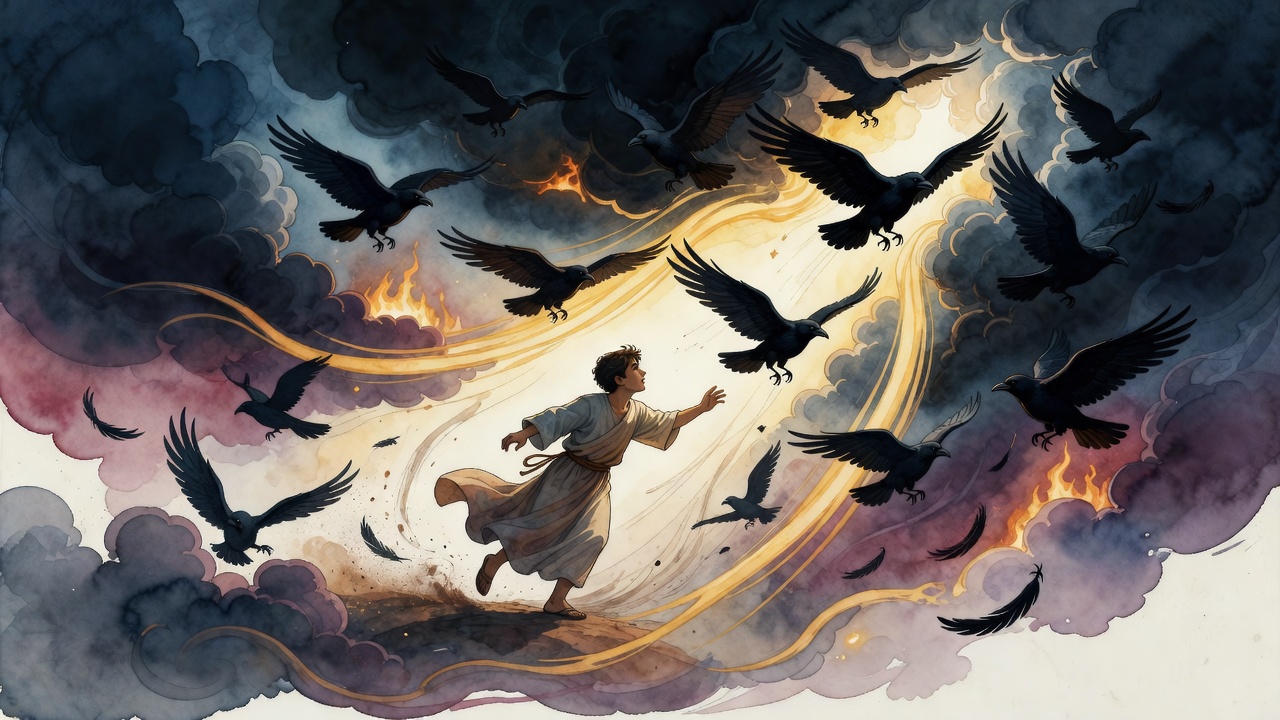
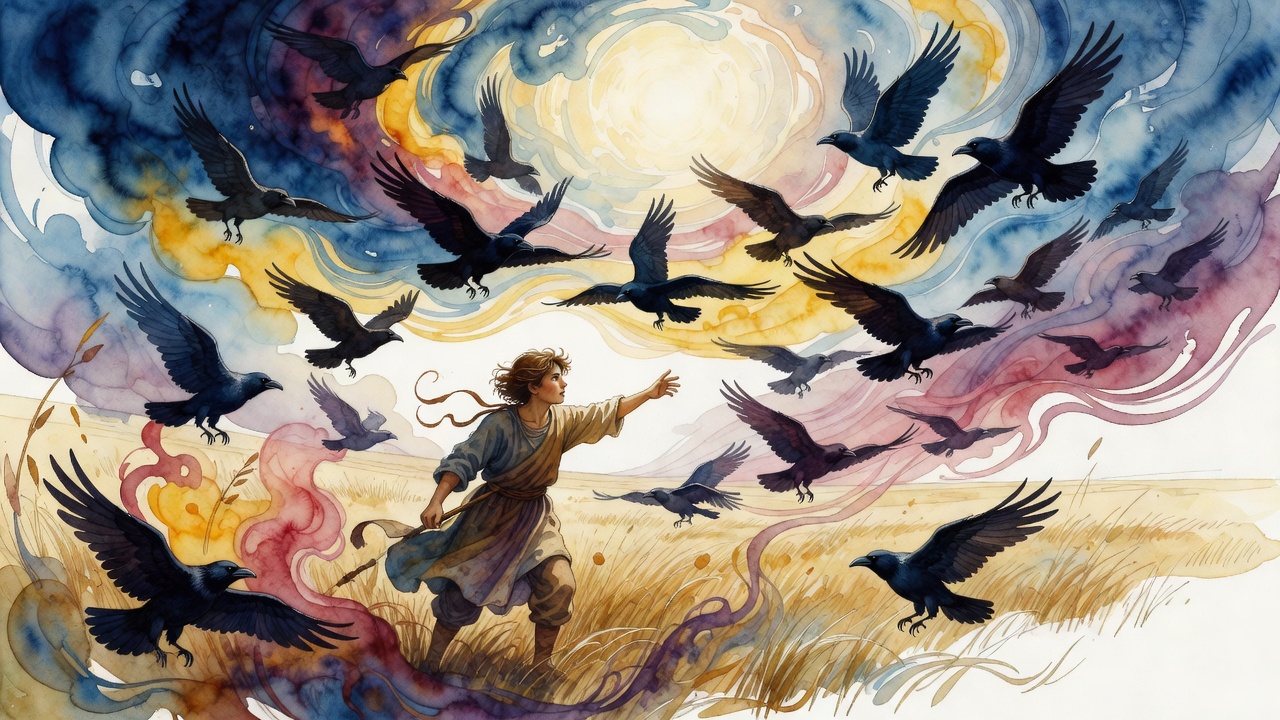
When Abram was fourteen, sowing season came again. Everyone went out to the fields, working together, and also guarding. A dark cloud of ravens came down, hungry, ready to take the seed off the dirt before the earth could close over it.
The boy did not wait for nets. He ran toward the cloud.
He did not wave his arms only. He spoke. "Do not come down. Return to the place you came from."
The ravens turned back.
He turned them back seventy times that day. Seventy. Not a single bird stole a single seed in the land where Abram stood guard. No net. No trap. The boy who would later refuse his father's gods and leave the Chaldean sky-reading stood in a field Mastema had been stripping for years, told the birds to go, and they went.
The First Full Harvest
That year the earth produced. The fields yielded what they were supposed to yield. The family harvested enough to eat and enough to store. It was the first full harvest in years, and it happened because a fourteen-year-old refused to let the permitted tenth finish its work.
Abram did more than shout. He taught the people a plough that covered the seed as it went, so the surface no longer offered a free meal to every black wing. Speech first. Then a tool. The birds lost their legal snack. Mastema's tenth was still in the world. It did not get that field.
Terah had been born into a world the ravens were eating. His son, still a boy, took the field back by mouth and by wood. The famine that had named those years did not get to name the line that would walk out of Ur toward a God the Chaldean charts had never held.
Mastema kept his tenth. Abram kept the seed under the soil. The next planting went in covered, and the ravens found dirt where grain had been.
← All myths