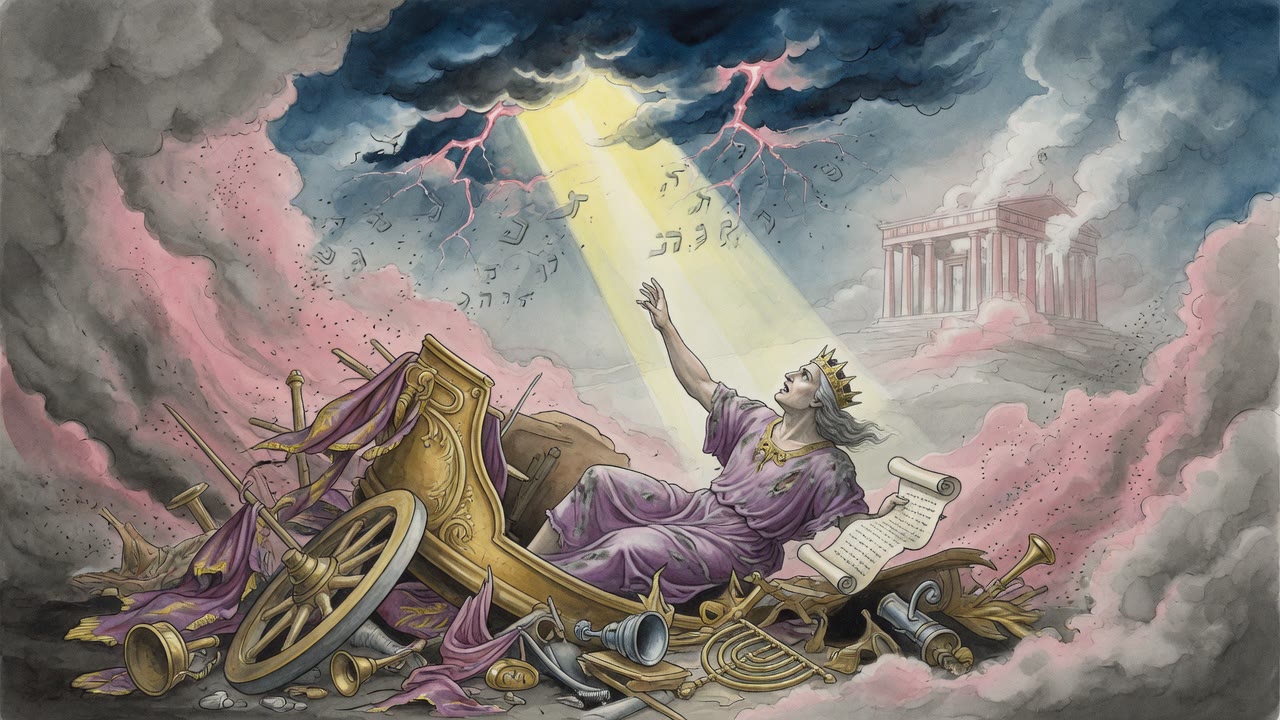
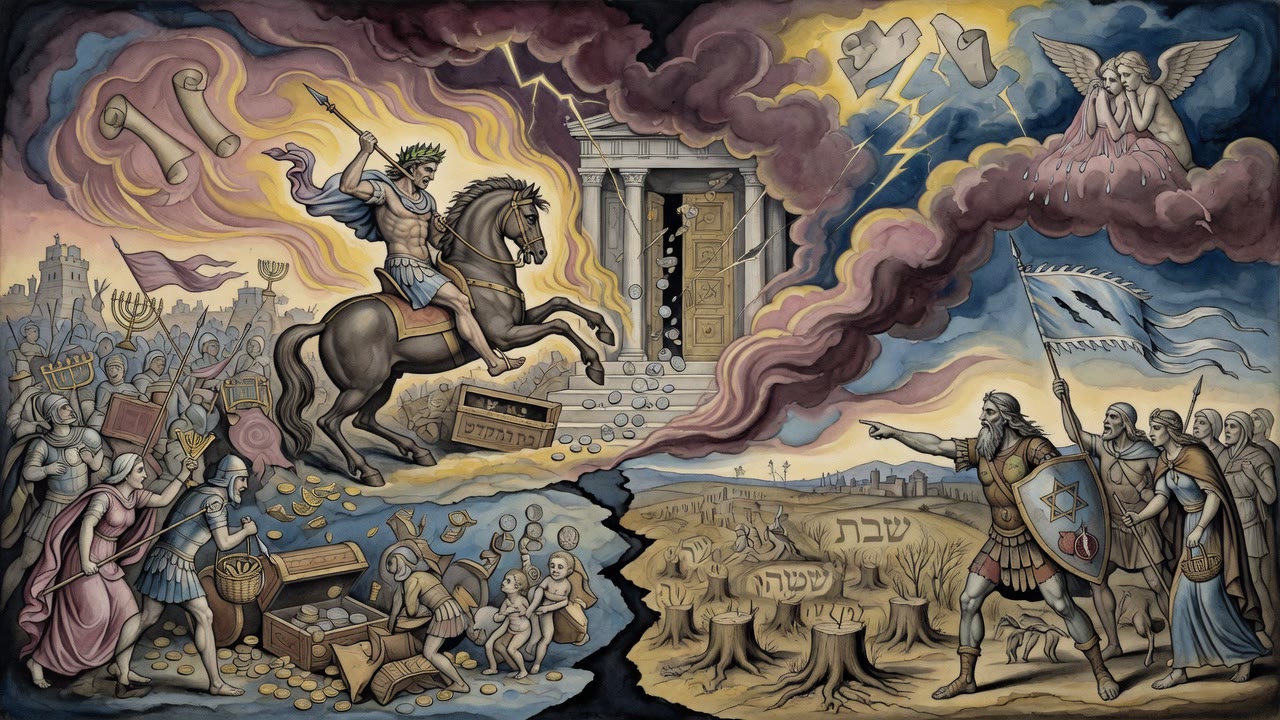
The Mother Who Sent Seven Sons to Die and Did Not Flinch
Antiochus tortured six sons in front of their mother and she watched each one die. Then she told the youngest not to let the king touch him.
Table of Contents
 Click for full size
The Pan Was Heated First
They set the brass pan on the coals and left it there until the metal went from black to red, because Antiochus wanted the eldest of the seven brothers to see it before anyone asked him a question. The demand itself was small, and that was the point of it. One mouthful of swine's flesh, taken where the officers could witness it, and the whole family could walk out alive. His advisers had told him to go at the covenant directly, at the Sabbaths and the new moons and the circumcision, so a public mouthful was worth more than a battle.
The eldest did not wait to be reasoned with. "Why waste words to teach us?" he said. "We have already been taught by our forefathers." Then he told the king that he and his brothers would sooner be strangled than turn from the laws of their fathers, which was a bold thing to say beside a pan that was already glowing.
They cut out his tongue first, since the tongue had done the refusing. Then his hands and his feet came off. Then they put what was left of him into the pan while he was still breathing, and the smoke went up past his mother and his six brothers, who had been placed where they could not look away.
Six Times the Same Answer
The second son was brought forward with the smoke still hanging in the room. They flayed the skin from his flesh and pulled the hair out of his head, and then they put the question to him in its cruelest form, asking whether he would eat pig meat before the rest of him came off his bones. He said no, so he followed his brother into the pan.
By the third, the king's men had stopped expecting speeches, but they got one anyway. When they ordered him to put out his tongue, he stretched out his hands along with it. "From heaven I received these limbs," he said, "and for the sake of God's law I give them up, trusting that He will restore them." Antiochus had come into that hall to be obeyed, and instead he stood there marveling at a boy on a table.
The fourth was tied and beaten with whips, and as his breath went out of him he said it was better to trust in the Lord than to trust in men (Psalms 118:8), because he would wake to a life without end while the king would not wake at all. The fifth granted the obvious, that the power to condemn was in the king's hand, and then he called him a son of Death and told him not to imagine that God had forsaken this nation. The sixth went the same way, still defiant, and the day was not over.
Between the deaths the brothers told one another to take it happily and with a good heart, and their mother said it along with them. She stood the whole time. She told each son on his way to the pan that the God who made the world would renew his body and pay him what his actions were worth, and then she watched what the pan did to him, and then she turned and said it again to the next one. The officers kept an eye on her for a flinch and did not get one.
The King Changed His Method
Six were dead and not one of them had recanted, which unsettled the officers more than the screaming had. They had watched pain sit in those faces without ever seeming to reach the eyes. So Antiochus put the pan aside as an argument and went looking for the leverage he had not used.
He offered the youngest silver and gold, and a place among the king's own companions, which meant a house and a rank and a future, all of it available that afternoon. The boy would not take any of it, so the king turned to the mother.
He asked her to persuade her last living child. It was not, on its own terms, an unreasonable request, since she had lost six and here was one who could still be kept. So he gave her permission to speak. Through six deaths she had been allowed to do nothing except stand and watch, and now the man who had killed them was handing her the last of her children and telling her to talk.
What She Said in Their Own Language
She bent down to the boy. The guards let her get close, and the hall went quiet the way a room goes quiet when the man in charge is waiting for something he wants, and the king watched her mouth move without following any of it, because she spoke to her son in the language of their own people.
"Do not fear this executioner," she said. "Accept death, and I will receive you back with your brothers."
That was the whole of it. She did not argue resurrection with a child who had just watched six brothers burn, and she did not explain herself, and she never asked him whether he was willing. She told him what she believed was waiting, in the words a mother keeps for her last child, and she sent him to the pan as though it were a doorway into a room where she would be standing.
Then the boy straightened up and spoke to the throne. His brothers were already drinking an everlasting life after a short pain. He was not going after them out of fear of any man, since fear of a man was a small thing next to hope in God. And the man of blood sitting in front of him had a judgment coming that no army would talk him out of.
She Lay Down Among Them
The king had heard his offer refused twice in one afternoon, once by a child and once by the woman he had personally armed with the power to save him, so he did to the seventh what he had done to the six, and worse, since there was nothing left to be gained by restraint.
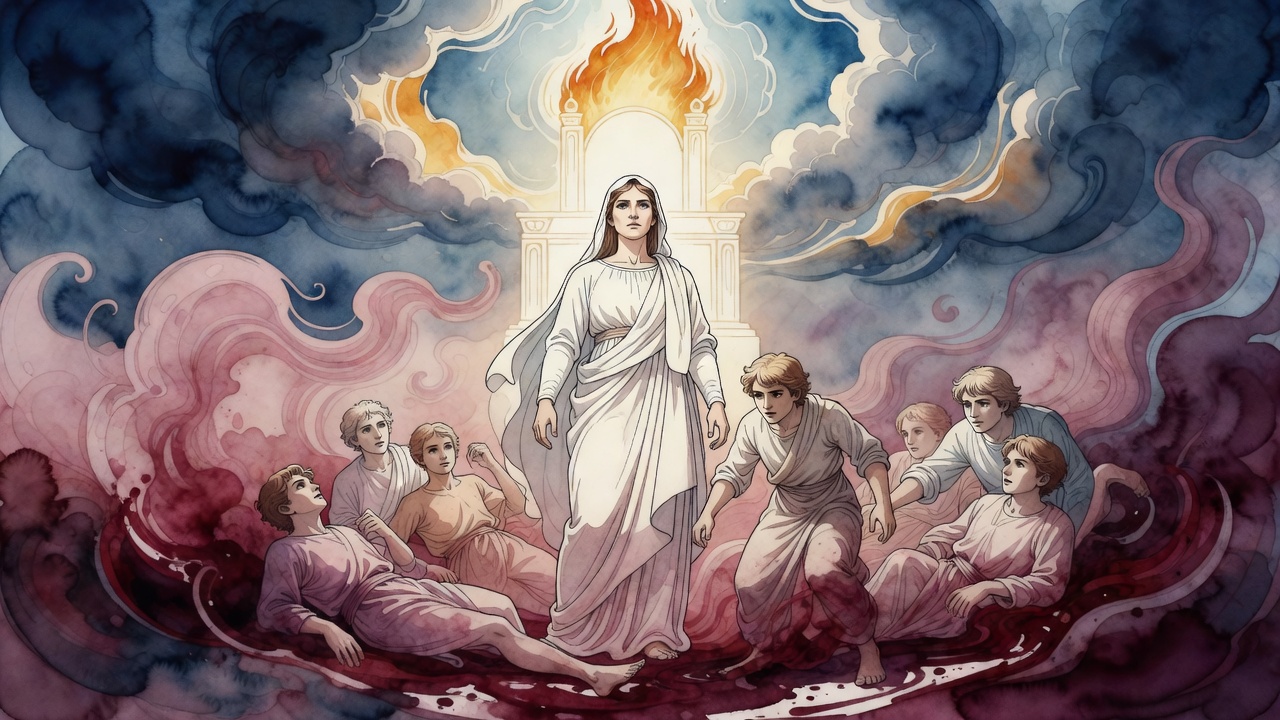
Then the hall was finished. Seven bodies lay where the soldiers had dropped them, and the woman who had stood through all of it walked in among them and spread out her hands. "O exalted and awe-inspiring God," she said, "now I will come. Now I will die with my sons in the place You have prepared for them."
She went down onto their bodies, and her spirit went out of her there, on the same floor, before the coals had gone cold. Antiochus had come into Judea to break a covenant by making one family eat, and he left that hall with eight dead and nothing broken.
← All myths