The Throne of Glory Bows and Rivers of Joy Pour Before It
Three times a day the throne bent low and asked the King to sit. The beasts under its legs never saw the top. They carried it anyway.
Table of Contents
 Click for full size
The Throne Asked the King to Sit
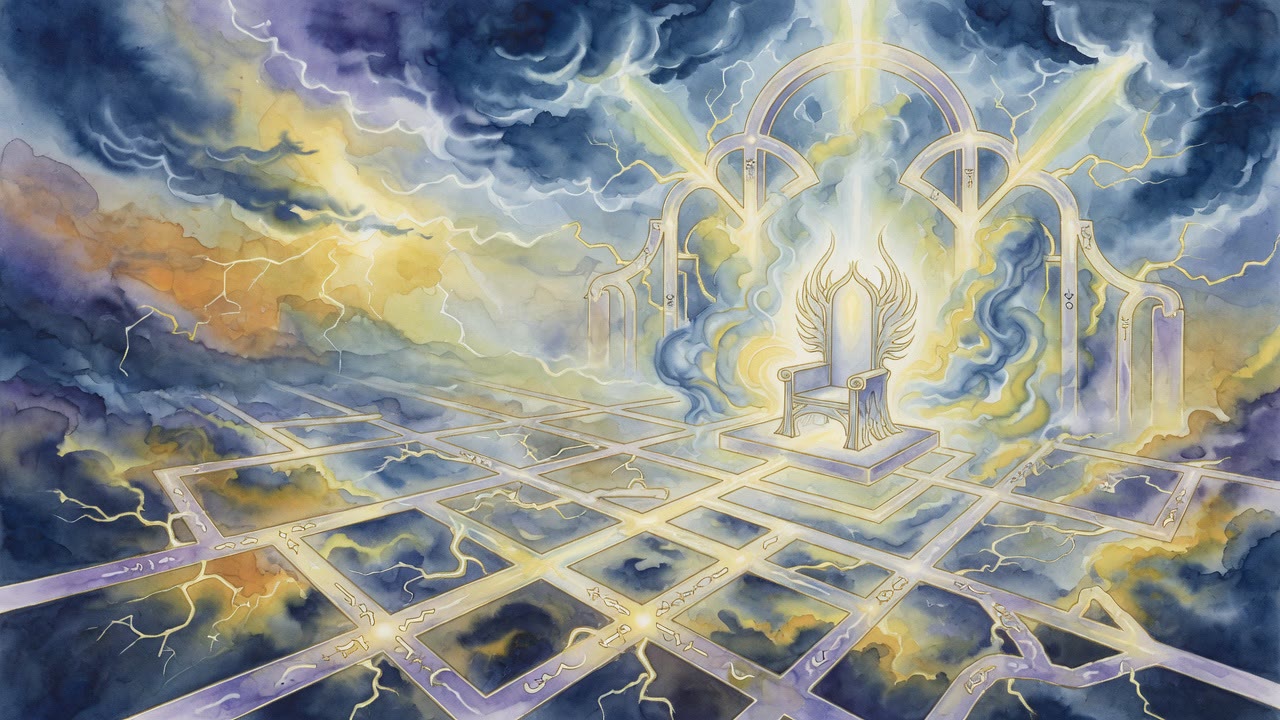
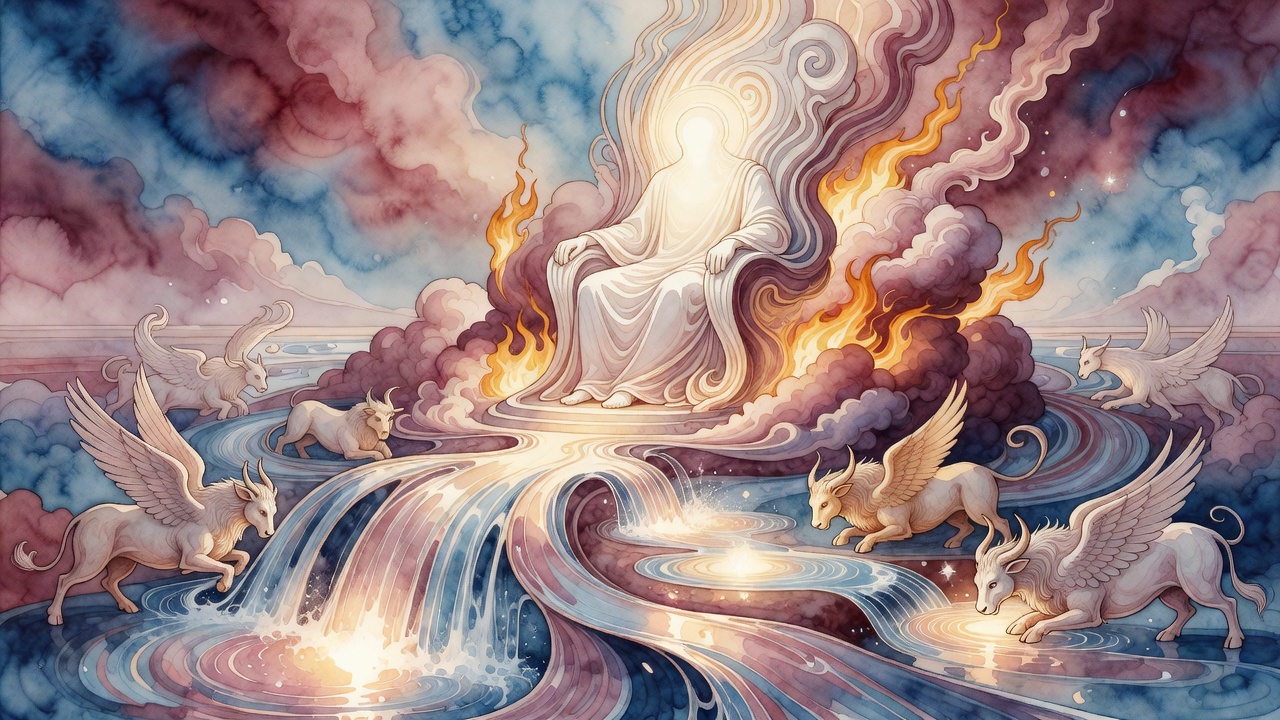
The Throne of Glory bowed until its face was low. Three times a day it did this, and three times a day it spoke.
"Zoharariel, Lord God of Israel, seat Yourself on me," it said. "Your weight is a delight. It does not hang heavy."
God sat. The seat that asked for the sitting received it the way a servant receives a guest he has wanted all night. No one commanded the bow. The highest seat in heaven made itself a request.
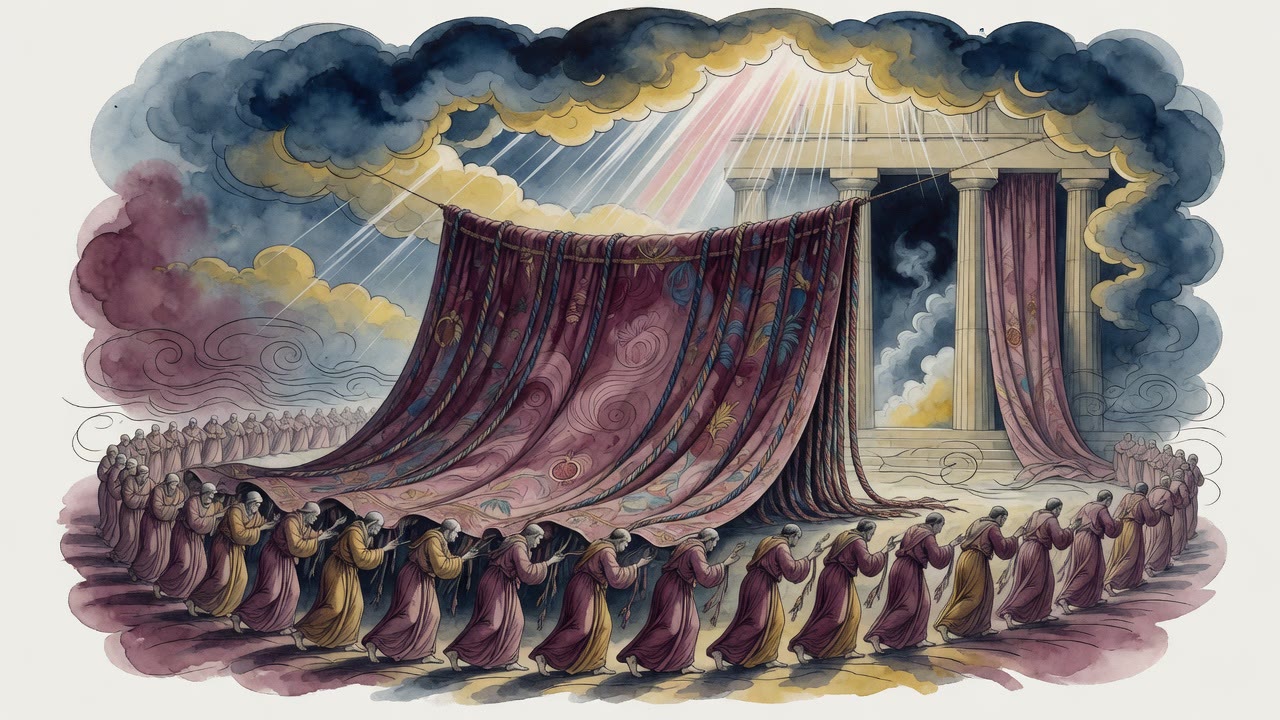
Below that request the holy beasts stood harnessed. Cherubim. Ophanim. Hayyot (חיות), the living creatures. They stood under the legs and felt the King come down into a seat they could not see.
Rivers Left the Seat Without Water
From before the throne the rivers came. Not water. Joy. Rejoicing. Jubilation. Content. Love. Friendship. They poured themselves out and grew stronger as they ran, and they passed through the gates of the seventh heaven.
Harps sounded from the beasts. Drums sounded from the ophanim. Cymbals sounded from the cherubim. The noise gathered into one tumult and went forth when Israel, far below, said "Holy, holy, holy."
The rivers did not wait for a dry season. They issued because the King was seated, and because a people on earth had opened its mouth. Heaven drank what poured. The carriers drank it through the weight in their necks.
An angel of the Presence went and came upon the seventh heaven, walking on the heads of the cherubim and the ophanim and the holy beasts. The beasts held still for that tread. They had been made for bearing, not for looking up.
The Beasts Lived Under the Legs
How many mighty ones bear that seat? They stand laden day and night, evening, morning, and noon. They stand in trembling, in terror, in fright, in shivering, in shaking, and in fear.
Their life is the underside. They do not climb the arms of the throne. They do not look over the rim. Fire streams from their own mouths, one hundred and eighty-five thousand myriad parasangs of it, and still they hold.
If they behold anyone going and coming in the height, they faint and fall backward. The place is too near. They recall God's name in the height and make Him hear the reminder of it, and there is no searching out the sound of that work.
A beast shifted its shoulder under a leg of the throne and the whole row of them took the new weight without speech. Dawn was still a rumor. The rivers ran over their backs unseen.
God Blessed Them Before the Day's Weight
Each day, when dawn began to show, the King sat and turned toward the beasts.
"To you, Beasts, I speak," He said. "Creatures, I cause you to hear. You bear the throne of My glory with a whole heart and a longing soul. Blessed be the hour I created you. Exalted be the planet under which I formed you. May the light of the day you came into the thoughts of My heart shine. You are a precious thing I have prepared and completed."
Then He told every other creature He had made to be silent, so He could listen to the prayer of His children. The blessing was not a ribbon tied on after the labor. It was the food of the labor. The beasts took it into their limbs and went back under the legs.
They had come out far enough to hear. They went back under far enough to carry. The throne bowed again and asked, and God sat, and the day began with a King who had already spoken kindness to the ones who would shake until night.
They Came Out Before the Praise Was Done
In the afternoon, when the hour of minchah (מנחה), the afternoon prayer, arrived, the King sat again and began to praise them. He did not finish.
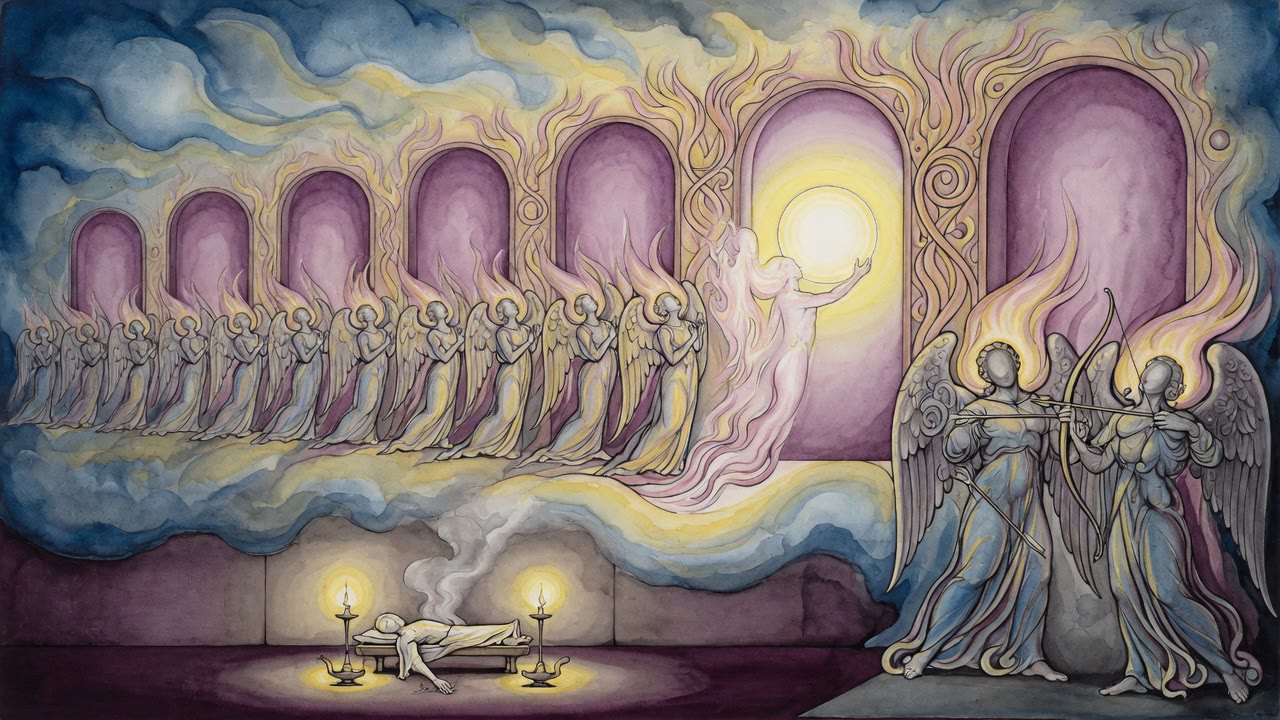
The holy beasts came forth from beneath the throne, mouths full of exultation, wings full of jubilation. They clapped. Their feet danced. They encircled their King, one on His right, one on His left, one before Him, one behind Him.
They embraced Him. They kissed Him. They uncovered their faces. The King of glory covered His own. The seventh heaven broke like a sieve because of the splendor of their faces, the beauty, the dignity, the mercy, the brilliance of the appearance they had kept hidden under the seat all day.
They had lived beneath. For one hour they came out. The throne, which had asked to be sat upon, held the King while the carriers danced around the sitting. Israel said "Holy" again, and the rivers poured, and the sieve of heaven let the light of those faces through.
← All myths